
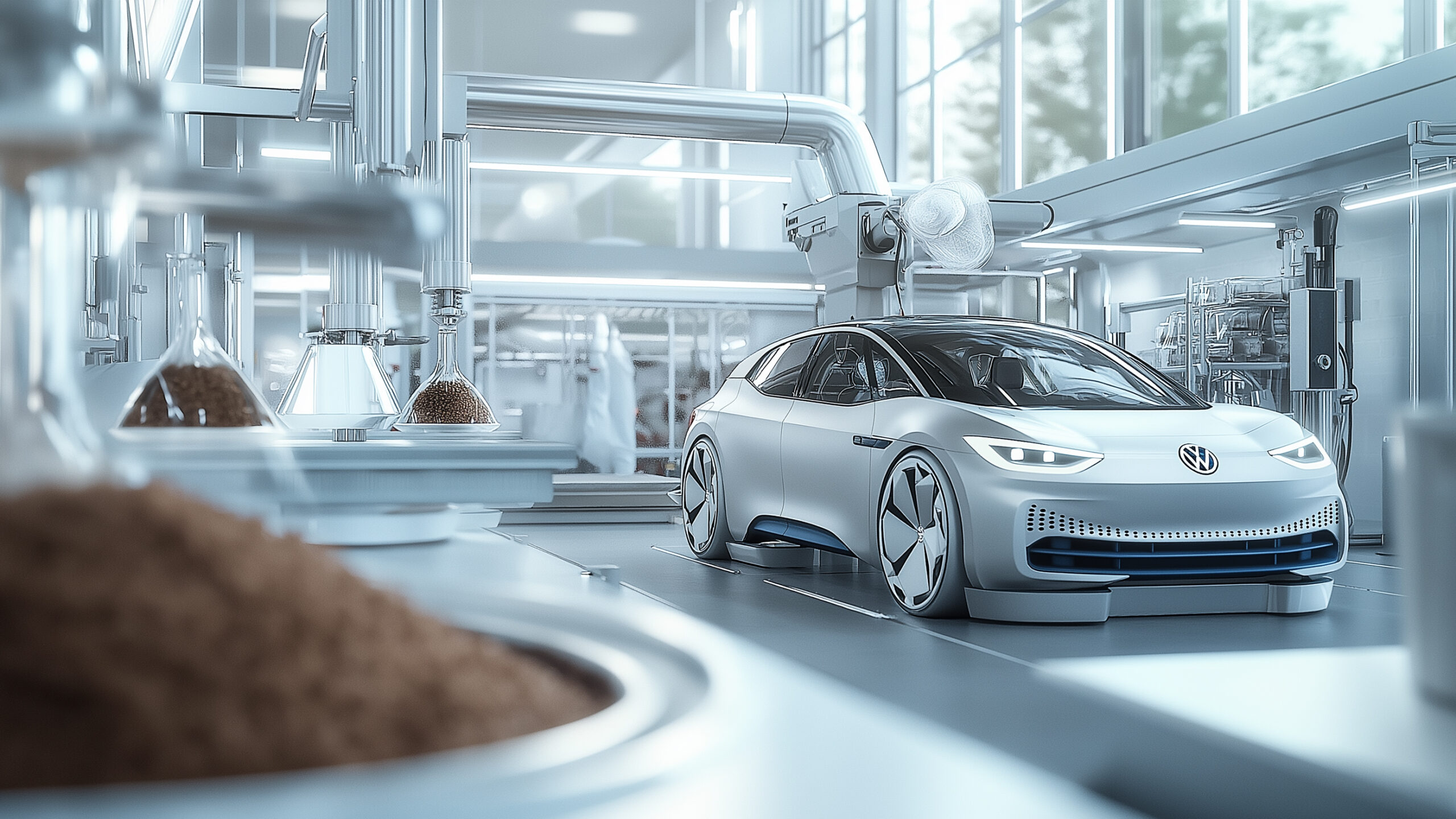
Volkswagen has filed a patent application with the European Patent Office describing a strong yet lightweight foamable composition made from biogenic raw materials like coffee grounds and lignin, combined with an epoxy resin and a blowing agent. This innovative formulation eliminates the need for petroleum products, offering an environmentally sustainable alternative.
Rethinking Foam Composites
Automakers typically make foamable compositions using petroleum-based products, but VW wants to use biogenic raw materials such lignin – the complex organic polymer found in woody plants that give them their structural integrity – and ground-coffee waste.
These products can be combined with an epoxy polymer and a blowing agent to aerate the material – which can be either a chemical or a physical process that creates the foam. When heated to the correct temperature, the result is a strong composite that’s lightweight and environmentally sustainable.
VW doesn’t go into the details, but such lightweight foamable composites are typically ideal for items such as:
- Interior door cards
- Dashboard trim panels
- Sound-deadening pads
- Other rigid interior moldings
- Exterior items such as bumpers
What Makes The Patent Unique
Lightweight foamable composites are nothing new in automotive design, but the problem has always been that these processes depend upon fossil fuels and have traditionally been based on compounds that require petroleum products. The VW patent is unique in that it does away with the petroleum component and uses biogenic raw materials instead.
The patent description doesn’t go into detail in terms of the composition of the material, or the temperature required to make it, nor does it provide details on its specific uses, but our list above should be a good starting point. VW’s sustainable foam composite should advance the automaker’s ambitions to make its production processes more environmentally friendly by using sustainable biogenic raw materials in plentiful supply. It says that automakers can adapt the manufacturing process to their needs.