
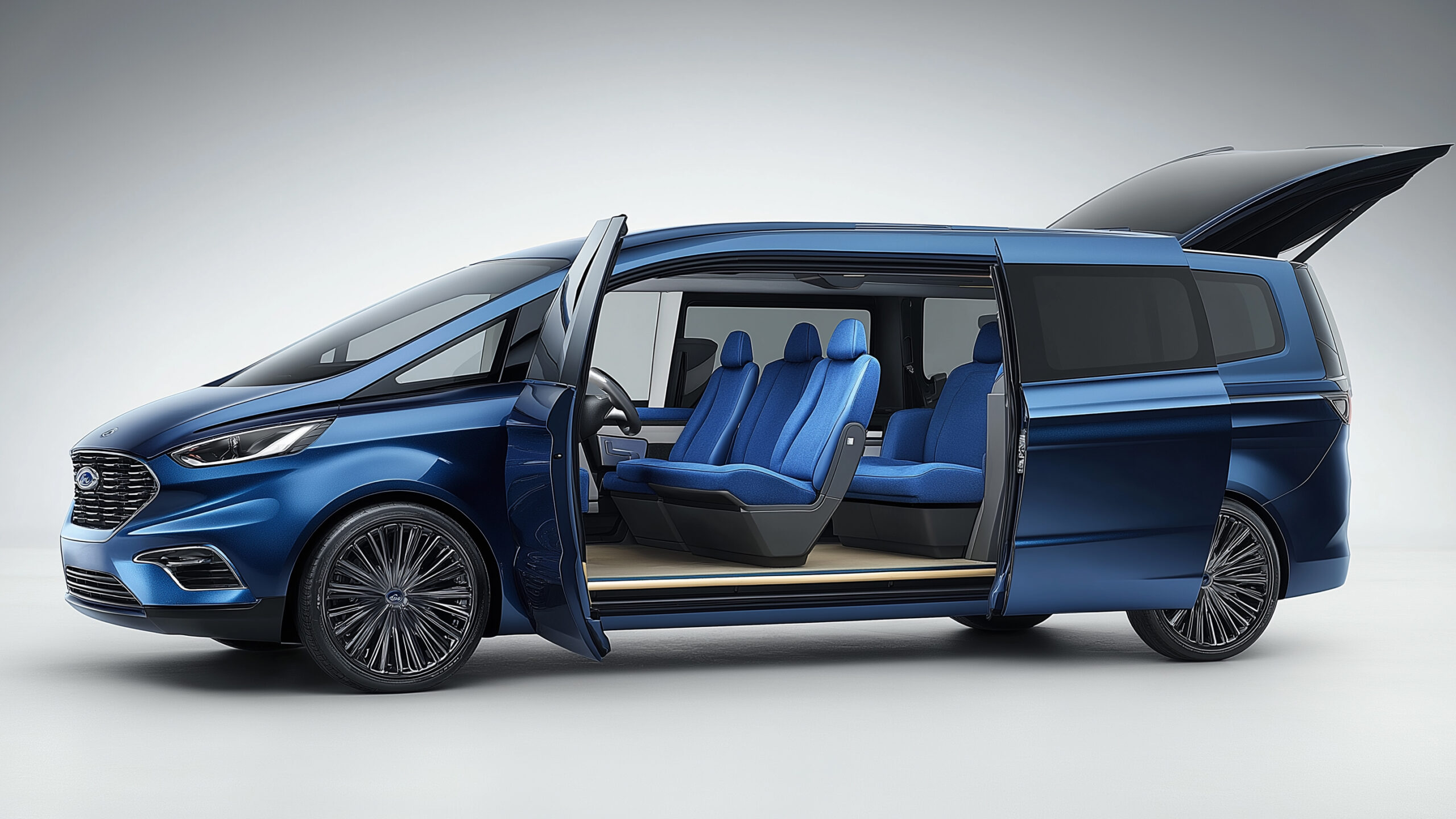
Several concept cars over the years, particularly MPVs and SUVs, have touted the idea of a single frame for both front and rear doors, thereby effectively deleting the central B-pillar. But this significantly compromises the structural rigidity and safety of the entire structure, so Ford has come up with a strengthening system that only deploys when the doors are closed.
How It Works
The idea is that the front doors would be hinged on the A-pillar and the rear doors hinged on the C-pillar, maximising the available space for occupant ingress and egress. Once the doors are closed, a pair of bars would deploy from the floor of the frame, which could be fairly deep if we’re talking about an electric vehicle. These bars would not prevent body flex over big bumps; an extremely rigid structure is still required to prevent unwanted noise, vibration, and harshness (NVH).
Instead, these bars are designed for occupant safety, minimising the risk of injury to occupants in a side-on collision. In addition, these bars would each be fitted with airbags of their own and covered with fabric, leather, or other materials. This means that the bars could be visible in the cabin, rising like the bannisters of a theme park ride once the doors are closed.
Why This Matters
In addition to such a design potentially enabling greater occupant comfort when entering or exiting the vehicle, it could also allow the doors to be made of an ultralight material, such as a fiber-reinforced composite. The doors could therefore be much thinner and could require smaller motors to operate, which could reduce waste and cost but also contribute to a feeling of increased cabin space.
Ultimately, any idea that may make the cabin of tomorrow’s cars more inviting is a technology automakers will pursue, and in a future where robotaxis may be commonplace, ideas like these will be all the more valuable.