

The idea of adjustable foot pedals is not new, but Bugatti has filed a patent with the European Patent Office that elevates it to a level to suits its very exclusive hypercars. It’s a design that allows extensive adjustability, but also with the requisite rigidity necessary for vigorous use in a very fast car, while keeping out unwanted noise and vibrations better than existing designs can.
Not New, But Better
There are various cars and trucks currently available with adjustable pedal boxes, but these systems are often used in conjunction with adjustable seats to further fine-tune the driver’s seating position. These are usually relatively straightforward systems that rely on a pedal-box assembly that can move forward and back on rails in the driver’s footwell to bring the pedals closer or move them further away.
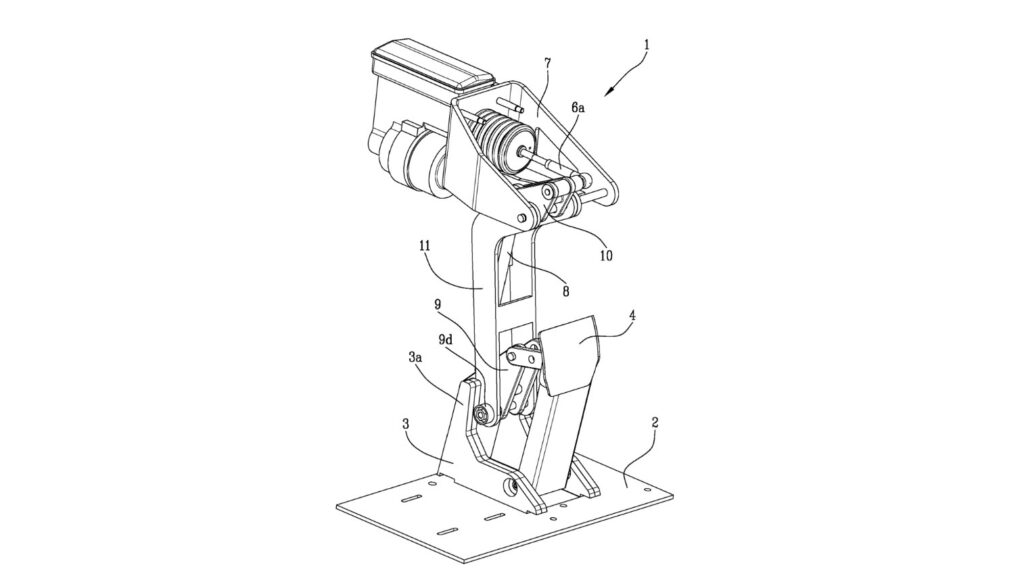
Bugatti follows a very engineering-focused approach, and comprises various parts:
- A guide, or track, fixed to the floor of the driver’s footwell
- A base member that slides on the guide
- A transfer device with:
- A reference plate
- Two rocker arms
- A transfer rod
Unique Application
Bugatti has designed this system specifically for cars with non-adjustable driver’s seats. The automaker says that a fixed driver’s seat is often preferred to ensure the perfect positioning of a driver in the car in relation to the available headroom, viewing angles, and glare protection. In tightly packaged two-door sport cars, there might also not be enough space and width to move a tailored seat, so it’s ideal to fix it in place and adjust the driving controls instead.
No Traditional Drawbacks
A very fast car sees considerable forces exerted on the pedal box in enthusiastic driving, so Bugatti’s design focuses on a very rigid and flex-free installation with excellent adjustability options, especially for the brake pedal. However, unlike traditional systems that are simply attached to the floor and can let through various vibrations from the suspension and powertrain, special attention has been paid to the design of the base member and attachments. This allows for excellent isolation and elimination of noise, vibration, and harshness, without compromising on the stability or rigidity of the installation.