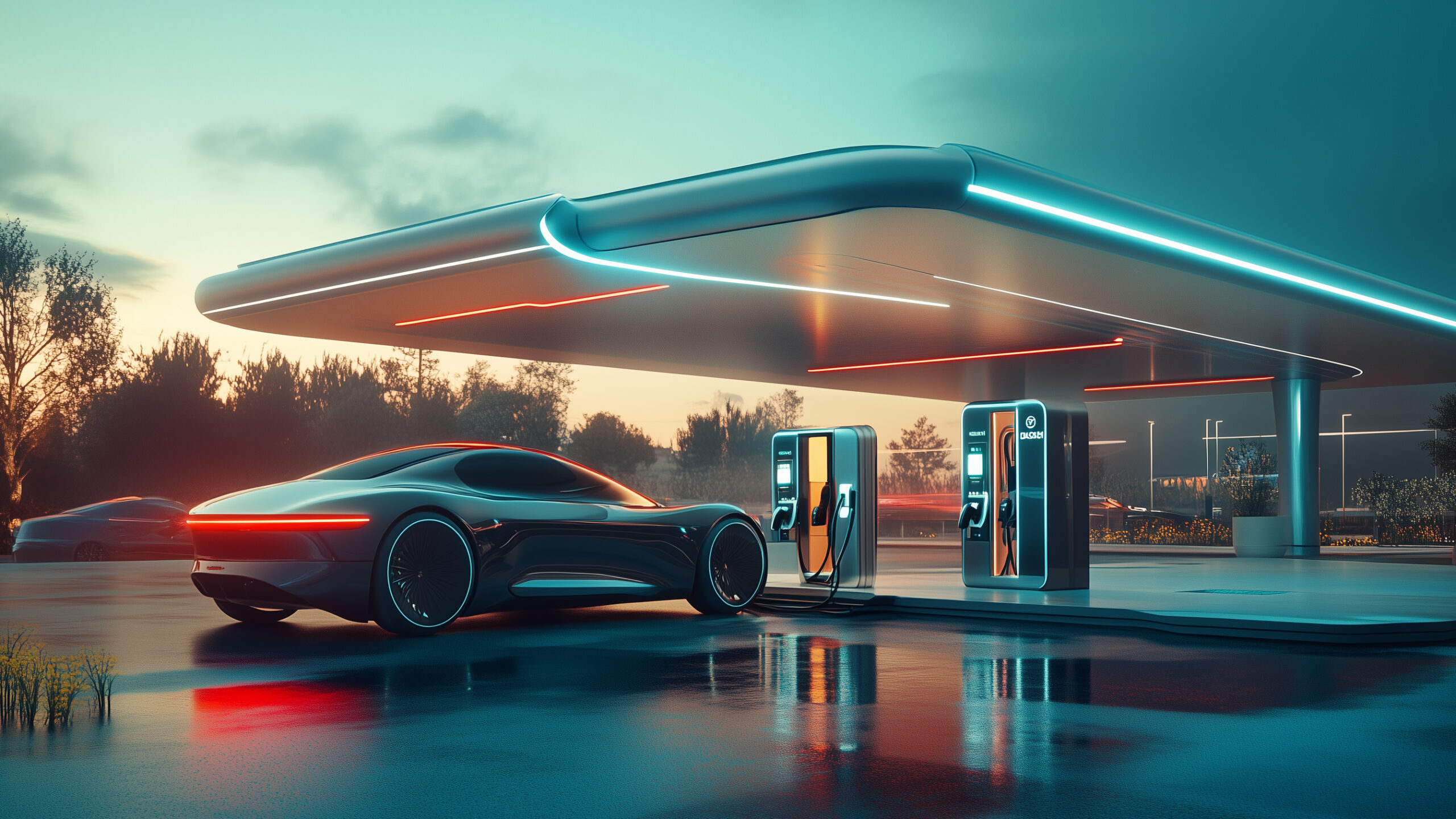

GM has filed a patent application with the European Patent Office, and other patent houses around the world, for an electric vehicle (EV) design featuring two charging ports, one of which is bidirectional. This will enable its EVs to charge via the charging port, while simultaneously charging another EV or supplying electricity back via the second bidirectional port.
GM Advances EV Charging with Dual-Port Technology
Some modern EVs, like the Chevrolet Silverado EV and certain hybrids, can power external devices or even act as a home backup during power outages. General Motors is planning on taking this even further with a dual-port system that allows an EV to simultaneously charge another vehicle or an external power storage device while itself being charged. This breakthrough adds a dedicated output port, enhancing flexibility and functionality.

Integrated Bidirectional Power-Flow System
The system forms part of a fully integrated power-management system that controls both ports and the charging/discharging functions. The second port can be used as a charging port as well – providing more flexibility at charging stations – but is also equipped with a bidirectional charger and controller, allowing another EV or power-storage device to be charged, such as another EV or, conceivably, any battery pack.
The bidirectional port will presumably still be able to power other equipment or serve as a home power backup, though this is not explicitly stated. GM says that the system enables V2V (vehicle-to-vehicle) and V2G (vehicle-to-grid) applications. V2G means that power can be fed back into the grid, potentially earning the owner credits, perhaps when supplying the grid in peak times and charging during cheaper off-peak times.
Dual-Port Innovation: Charging and Power Output Combined
GM’s system stands out as the only patent to feature a bidirectional port capable of both charging and supplying power, even while the vehicle is being charged through a separate charge-only port. It is a logical progression in the expansion of features to support V2V and V2G applications in EVs, and represents a forward-thinking approach to bidirectional power flow.