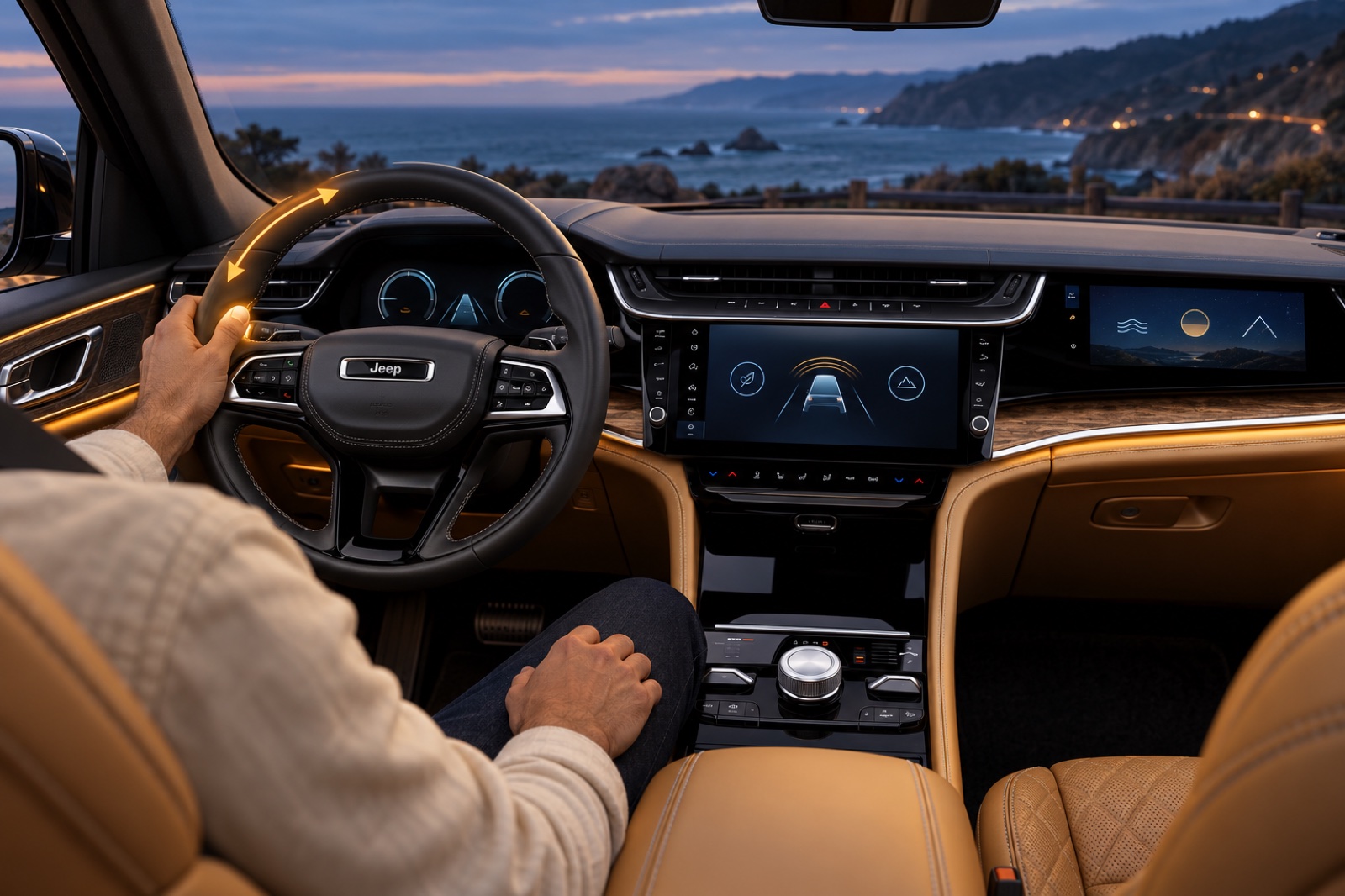

Audi has filed a new patent with the European Patent Office for a dynamic vehicle display that adapts in real time to minimize driver distraction and enhance focus on the road. The system analyzes the driver’s state of mind and other relevant factors to intelligently adjust the information and controls presented, ensuring a safer and more intuitive driving experience.
Predictive Interaction: Anticipating the Driver’s Needs
Audi’s system leverages multiple sensors to anticipate the driver’s actions and present the most relevant controls and information. The VW Group already uses proximity sensors in infotainment systems to detect when a hand or finger approaches the screen, enlarging the intended button for easier interaction. Audi expands on this concept by integrating additional sensors and AI-driven adaptability.
To enhance accuracy, the system incorporates in-car cameras that track the driver’s gaze, gestures, and voice commands to predict which control they will need next. This real-time adaptability ensures that crucial information is always within easy reach.
Beyond personal interaction, the system also factors in environmental conditions. It detects high-workload situations—such as driving in adverse weather or navigating through busy city streets—and simplifies the interface accordingly. Additionally, it considers which automated driving functions are engaged, tailoring the display to match the driver’s shifting focus and needs.
Dynamic Interface Adjustments Based on Driving Conditions
Audi’s system aims to enhance both safety and efficiency by dynamically adjusting the vehicle’s display based on real-time conditions. It analyzes the car’s current situation, the driver’s intent, and even their mental state to determine the most relevant controls and information to present. This real-time adaptability minimizes distractions and optimizes focus on the road. Additionally, the system is designed to be versatile, allowing passengers to interact with it as well.