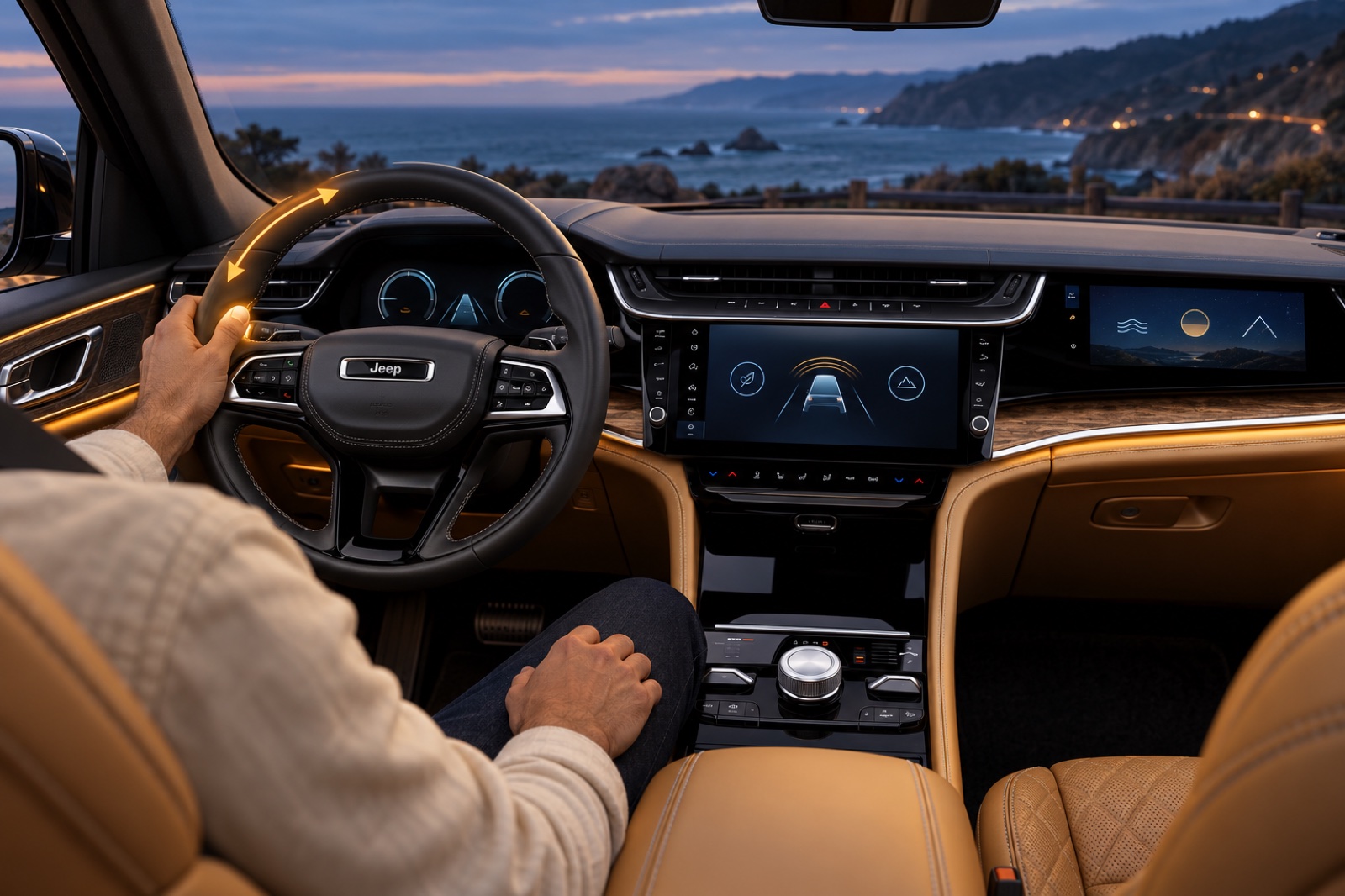
Take one hand off the steering wheel, and Jeep’s parent company proposes making the wheel harder to turn. That’s one of the more surprising possibilities in a system designed to adjust steering effort based on who’s driving. It would give the car a say over something drivers can currently set themselves.
Stellantis and FCA US describe the idea in a patent filing discovered by Carmoses. Sensors or a cabin camera would gather information about the driver, and a controller would use that to adjust how much force it takes to turn the wheel. Larger drivers, for instance, could get heavier steering.
No model is named in the filing. We used the Grand Cherokee for the renders because it already offers selectable steering effort and, on certain trims, memory settings for the seat and steering column. That makes it a useful fit for the idea, though there’s no announced link to actual production.
One Hand Changes The Setting
The basic sequence is straightforward. A sensor on the wheel or a camera inside the cabin collects information about the driver. That might include hand size, grip strength, or how many hands are holding the rim and where they are positioned. A control unit then commands the power steering to deliver the desired resistance.
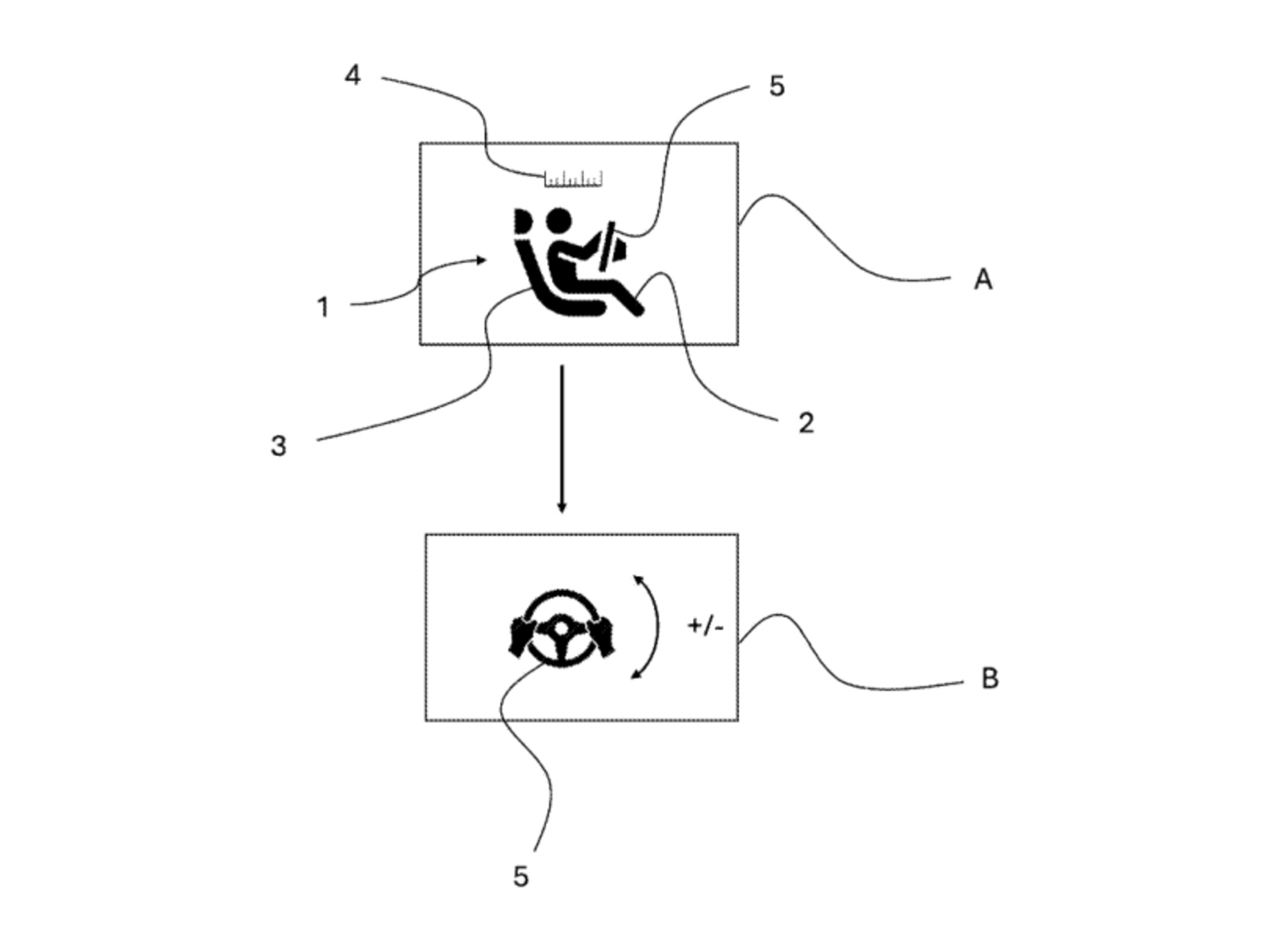
Resistance means the effort felt through the driver’s hands. Changing it does not, by itself, mean changing how far the front wheels turn for a given movement of the steering wheel. Nor does this proposal require a steer-by-wire system that replaces the mechanical connection with electronic commands.
In the one-hand example, resistance increases when only one hand is detected. There is no stated delay, no specified amount of extra effort and no explanation of how the system would distinguish a brief hand movement from sustained one-handed driving. It is an optional behavior within the broader proposal, rather than a rule every version must use.
The stated aim is to adapt the cabin to the driver’s needs and improve driving ergonomics. There is no claim that the extra weight is a punishment for taking a hand off the rim, and no test result establishes that this particular response improves control.
Steering That Reads The Driver
Body measurements offer another route to choosing effort. Suggested inputs include height, arm length, eye height above the seat cushion and palm width. One version increases resistance with the driver’s build, but supplies no formula connecting those measurements to a suitable setting.
The size-based adjustment ties steering resistance to body measurements without specifying how a driver’s preferred steering weight would factor into the setting. Physical build and steering preference are separate considerations, so a larger or smaller frame does not, on its own, establish the effort someone wants at the wheel. The balance between those measurements and individual preference remains an unresolved part of the calibration.
Grip could also be monitored throughout a trip. Changes in how firmly the same person holds the rim would help assess alertness, with steering resistance adjusted to limit unwanted wheel movements.
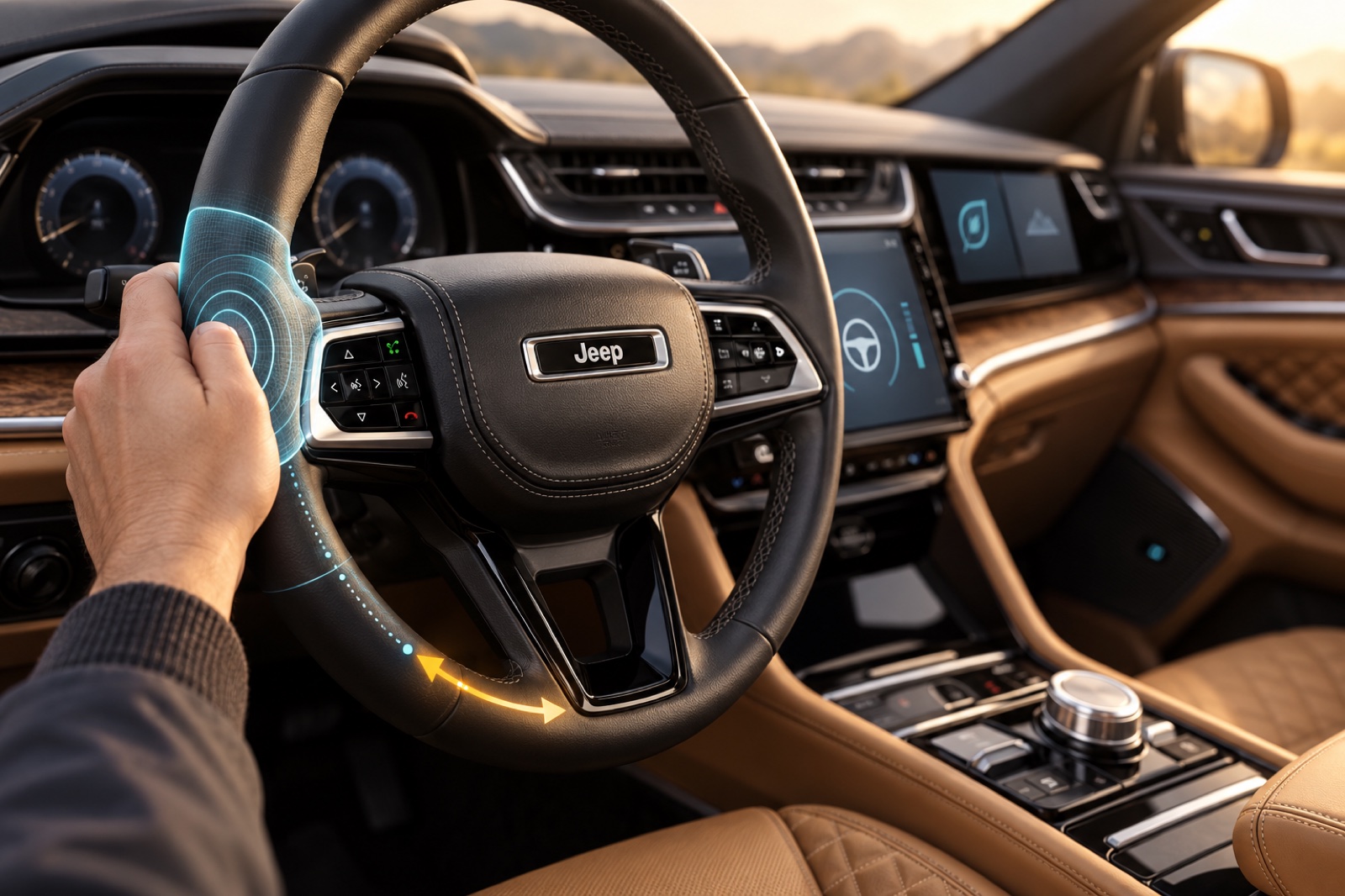
The filing does not clearly establish whether that alertness response would make the wheel lighter or heavier. Its description refers to both falling and rising vigilance within the same example. It cannot support a simple promise that sleepy drivers would automatically get heavier steering.
Jeep already offers Drowsy Driver Detection on the Grand Cherokee, using driver interaction and vehicle movement to look for signs of drowsiness and issue audible and visual warnings. Adapting steering effort would introduce a different kind of intervention, one the driver feels while controlling the vehicle.
Memory Settings Make The Stronger Case
Stellantis had already described steering that responds to driver condition and grip in an earlier proposal, including possible changes to feedback torque. The broader idea is established. The explicit rules for body size and one-handed use provide the distinction here.
There is also a more conventional application. Biometric information could identify a registered driver and recall a stored steering-resistance setting, alongside seat and wheel positions. In a shared vehicle, that would bring another personal preference into the same adjustment process.
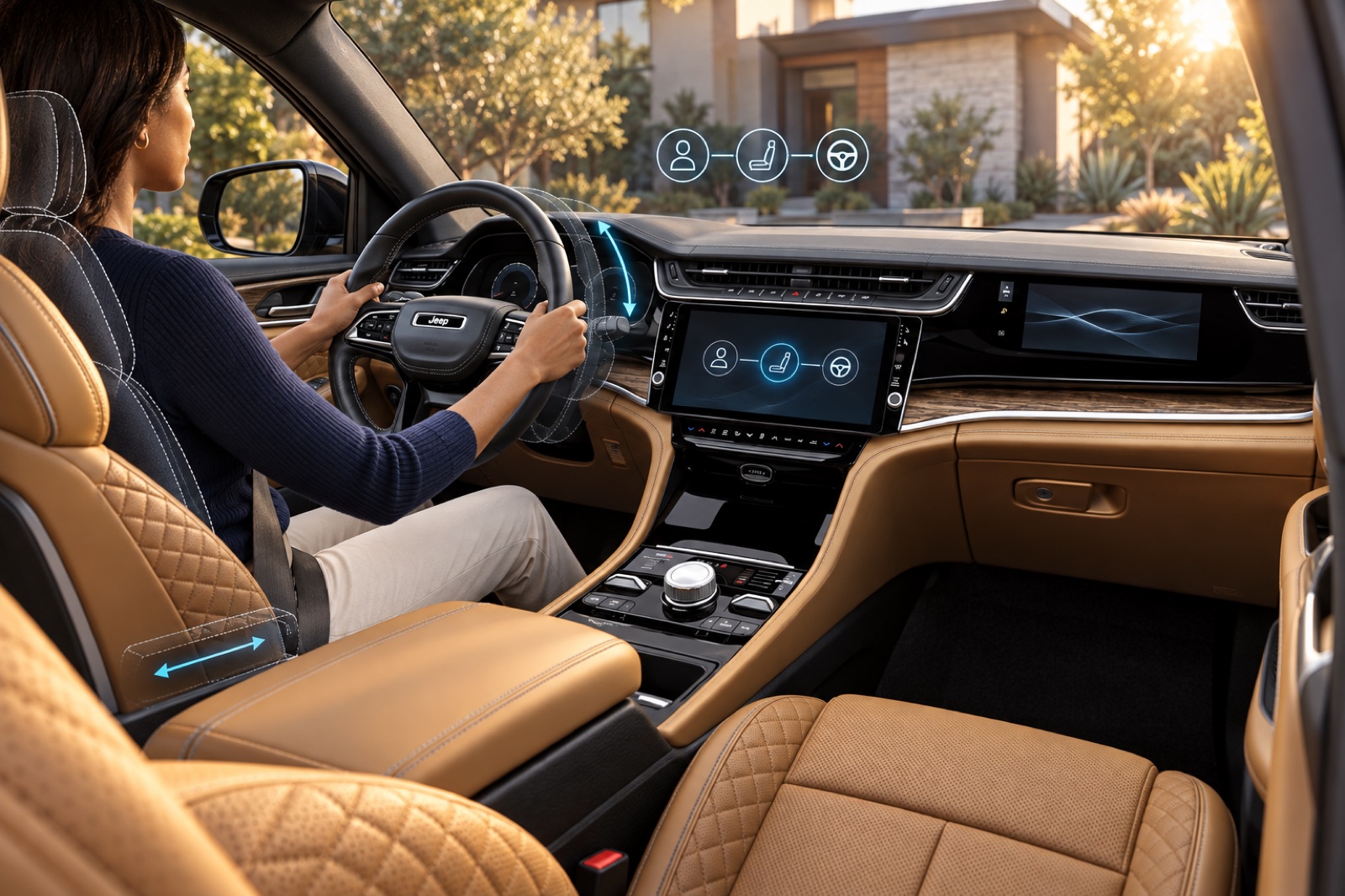
A patent does not guarantee production. The stronger case here is remembering a driver’s chosen steering feel. Automatic changes based on hand count or body size need evidence that they improve control, plus a clear way to accommodate individual preference. Until those questions are answered, restoring a known setting is the more convincing use of the technology.