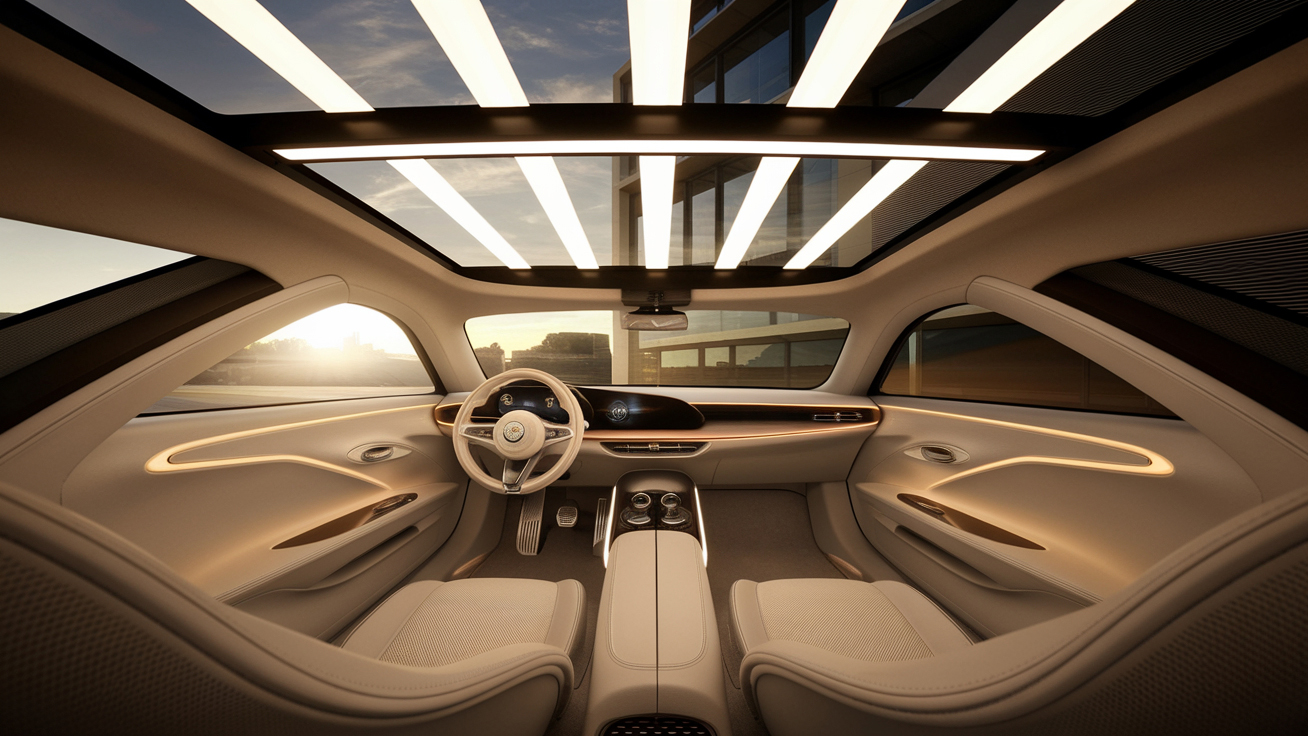
Stellantis has filed a patent with the European Patent Office for an innovative lighting system that provides “free” ambient lighting by harvesting sunlight. Instead of relying on traditional energy-consuming LEDs, the system captures natural light using a light bundler and conductor, then disperses it throughout the car’s interior, reducing energy consumption while enhancing cabin illumination.
How Stellantis’ Sunlight-Powered Lighting System Works
Stellantis’ patent outlines a system designed to capture and distribute natural light throughout the car’s interior. The key components include:
- Light Collector – Positioned in areas with maximum sunlight exposure, such as the roof.
- Light Bundler – Concentrates the captured light for efficient transfer.
- Light Conductor – Channels the bundled light to the interior.
- Light Source – Disperses the light to illuminate the cabin.
While the patent doesn’t explicitly mention fiber optics, the concept appears similar. Stellantis also notes that the system can be supplemented with LEDs for low-light conditions, ensuring consistent illumination. The company claims this method creates a softer, more natural ambiance, and that the collector itself serves as a decorative design element. We’ll reserve judgment until we see it.
A Clever Idea, But Does It Make Sense?
While the concept of harnessing natural sunlight for interior lighting sounds innovative, its real-world benefits seem limited. The system only works when the sun is shining, and there’s no clarity on how it performs in overcast conditions. Stellantis mentions supplemental LEDs for low-light scenarios, but this raises concerns:
- Constantly shifting light levels – The ambiance will fluctuate depending on the amount of natural light available.
- Limited nighttime use – At night, the system relies entirely on LEDs, making the light collector little more than an added design element.
- Questionable energy savings – Will occasionally using sunlight instead of LEDs have a meaningful impact on EV range?
Another unanswered question is how the LEDs will be installed. If they block natural light when not in use, that could compromise the system’s effectiveness. Perhaps Stellantis has a trick up its sleeve, but as it stands, we’re unconvinced.