Volkswagen has a use for interchangeable body panels that starts when a lease ends. A returned car could receive replacement exterior pieces to restore its appearance or give it a facelift, while retaining the structure underneath. For its next buyer, the change could extend beyond fresh paint to differently shaped bodywork.
Volkswagen outlines its approach to refreshing a returned car in a patent filing discovered by Carmoses. VW proposes common attachment points that accept different exterior panels, with a detachable version allowing replacements after the vehicle has already been delivered. Lease-end refurbishment is an explicit example, although no service has been announced.
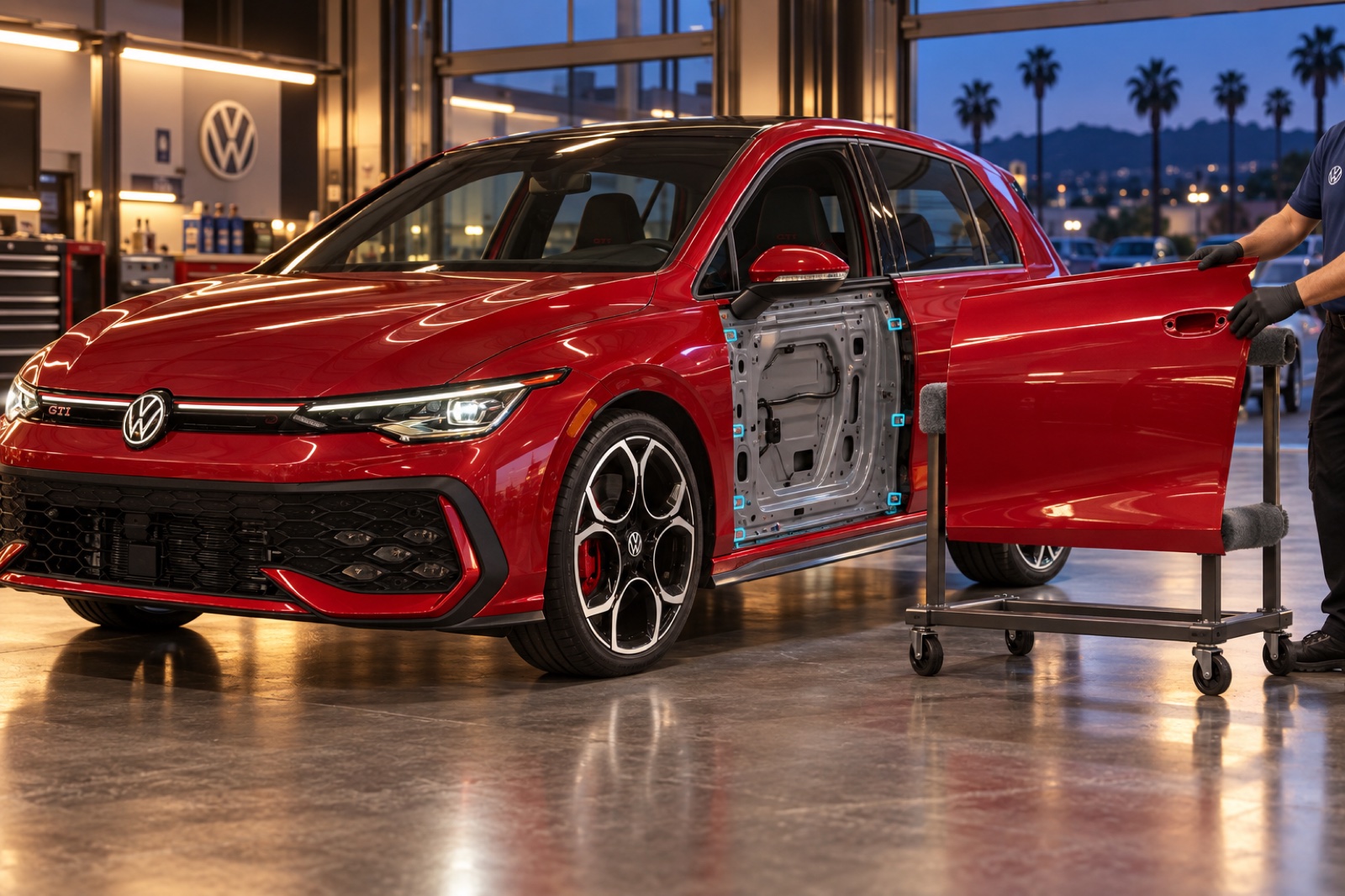
Nothing in the filing names a model but its compact hatchback proportions make the current US-market Golf GTI a useful vehicle for demonstrating the proposal.
Same Mounts, Different Shapes
The essential distinction is between a car’s supporting structure and the exterior pieces covering it. VW would give that structure mounting points in consistent positions, then design alternative skins with matching connections. A replacement can have a different contour while still attaching in the same places.
The door provides the clearest example. Its underlying assembly receives an outer skin secured with screws. Releasing those connections allows another compatible skin to take its place. The process involves physical removal and installation, with no driver-operated transformation or promised tool-free swap. Other proposed connections include clips, plug-in fittings, adhesive, and rivets, so replacement effort would depend on the joint used.
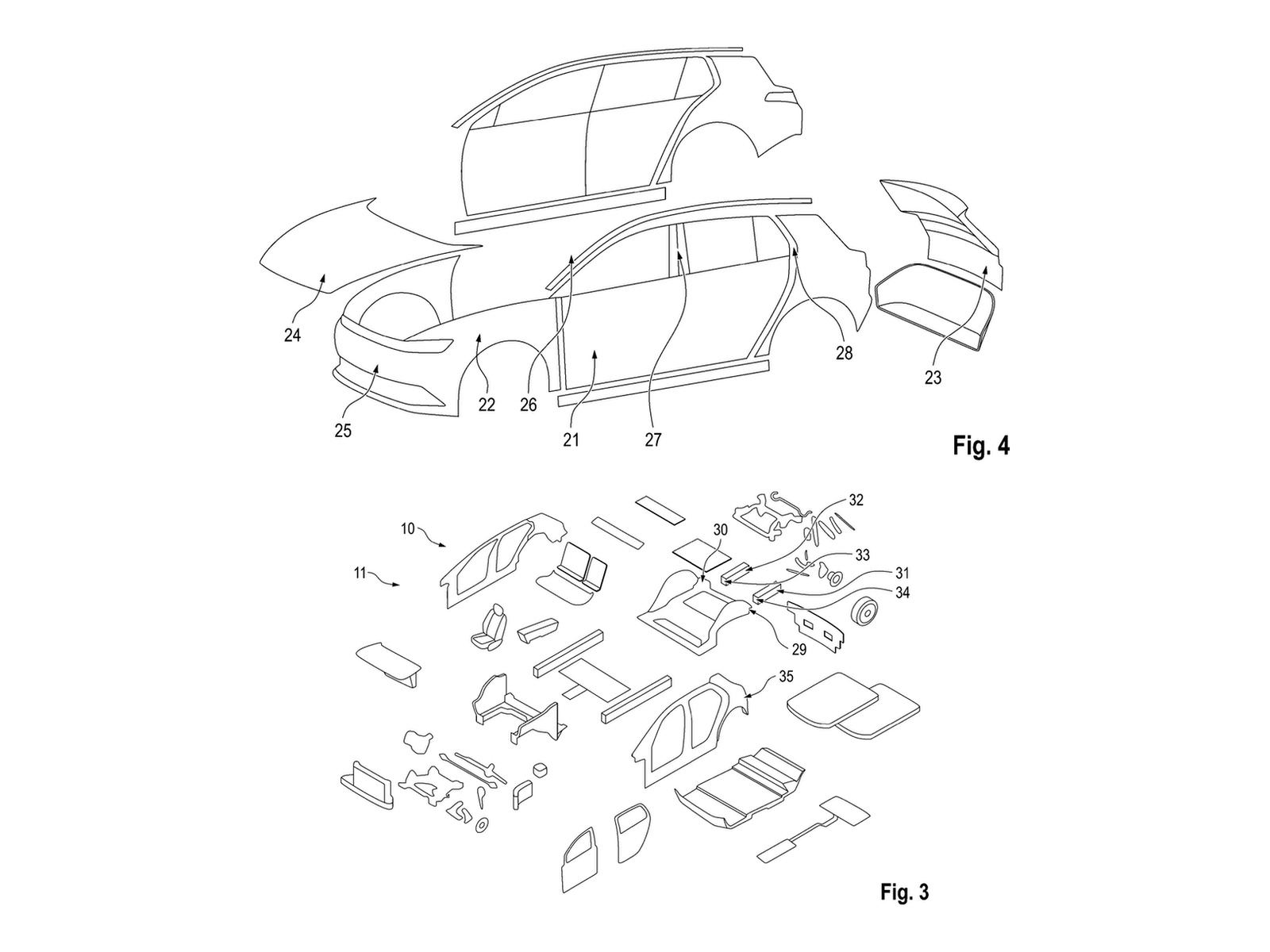
The potential changes go beyond color. VW describes different curvature and surface texture, along with less expensive plastic panels and more expensive metal or composite alternatives. Compatibility comes from where the pieces attach, rather than requiring their visible surfaces to be identical. A different crease in a door could therefore be designed around the same underlying assembly.
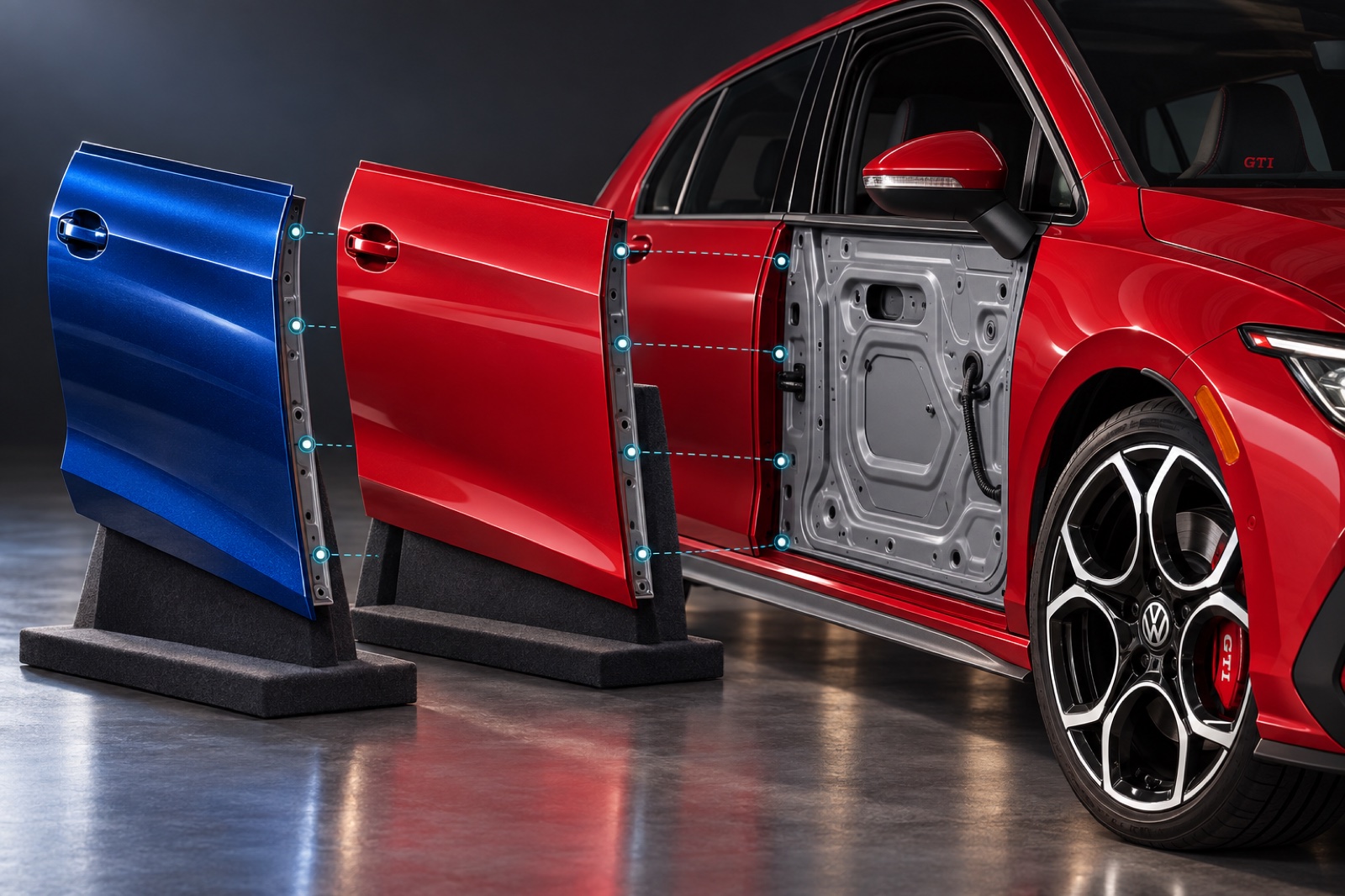
The proposed coverage is extensive. Door skins, fenders, bumpers, hood, roof, tailgate, and exterior pillar coverings are all included. VW contemplates exchanging several pieces, potentially the entire exterior skin. Replacing a pillar’s outer covering is distinct from changing the load-bearing pillar behind it.
The Factory Gets A Benefit Too
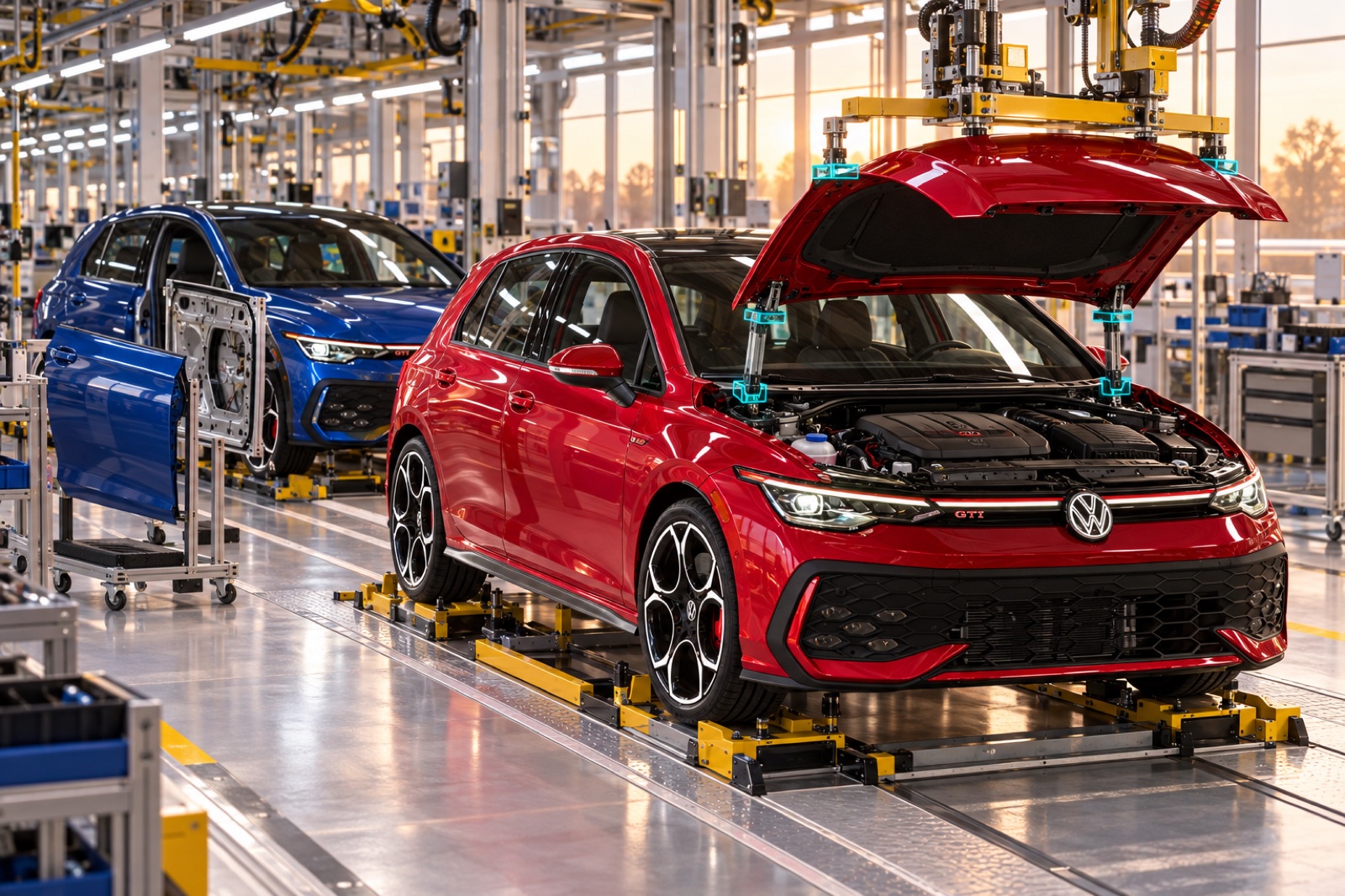
VW also identifies a manufacturing reason for separating appearance from structure. Exterior differences could be introduced late in assembly, leaving more common parts underneath. Finished panels could determine the color, and the company even suggests outsourcing their painting. Those are proposed opportunities for production and logistics savings, with no measured results supplied.
The broader principle of sharing components is familiar territory for Volkswagen. Its MQB toolkit already allows vehicles with different wheelbases and track widths, including models from different brands, to share a production line. That established flexibility does not make their exterior skins interchangeable. The proposed system adds compatibility at the point where visible bodywork meets its support.
Nor is interchangeable bodywork a new ambition across the industry. Ford has separately proposed replacing a rear door and adjacent quarter panel with one integrated panel, allowing two-door and four-door configurations. VW’s approach covers a wider selection of exterior pieces and explicitly includes renewing a car after delivery.
For a used-car buyer, the distinction matters. A changed exterior would update appearance without establishing that the powertrain, cabin, or equipment had received equivalent improvements. A facelifted lease return would still need to be evaluated as a used vehicle.
Changing The Shape Gets More Complicated
A separate part of VW’s proposal goes further by standardizing connections for load-bearing components. These could accept different rear longitudinal-member extensions and rear pillars. Combined with appropriate exterior pieces, the company describes creating a wagon from a sedan or changing a short rear body into a longer one.
That is a larger engineering undertaking than exchanging a door skin. It changes parts that carry loads and define the body’s form. The filing does not explain how alternative structures would be validated for crash performance, or provide a detailed solution for sealing and corrosion protection. There is no confirmed customer conversion program, and a patent does not guarantee production.
The lease-return application is the more convincing use. Compatible replacement skins could offer a defined refurbishment job without the structural changes required for another body style. Its commercial case still depends on panel prices and installation labor, neither of which VW supplies. The useful target is a repeatable, affordable exterior refresh. A wagon conversion can wait until the harder engineering questions have answers.