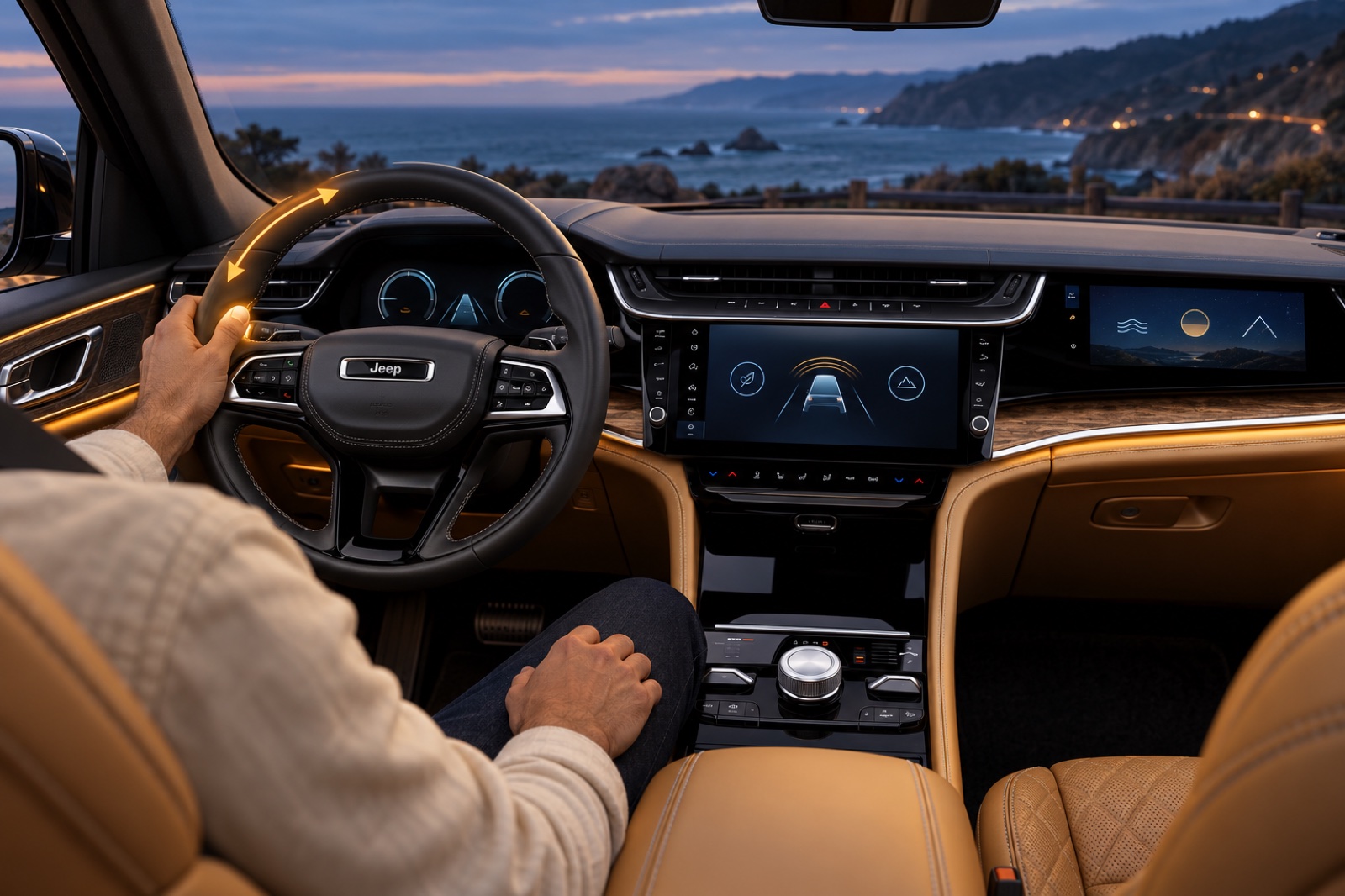
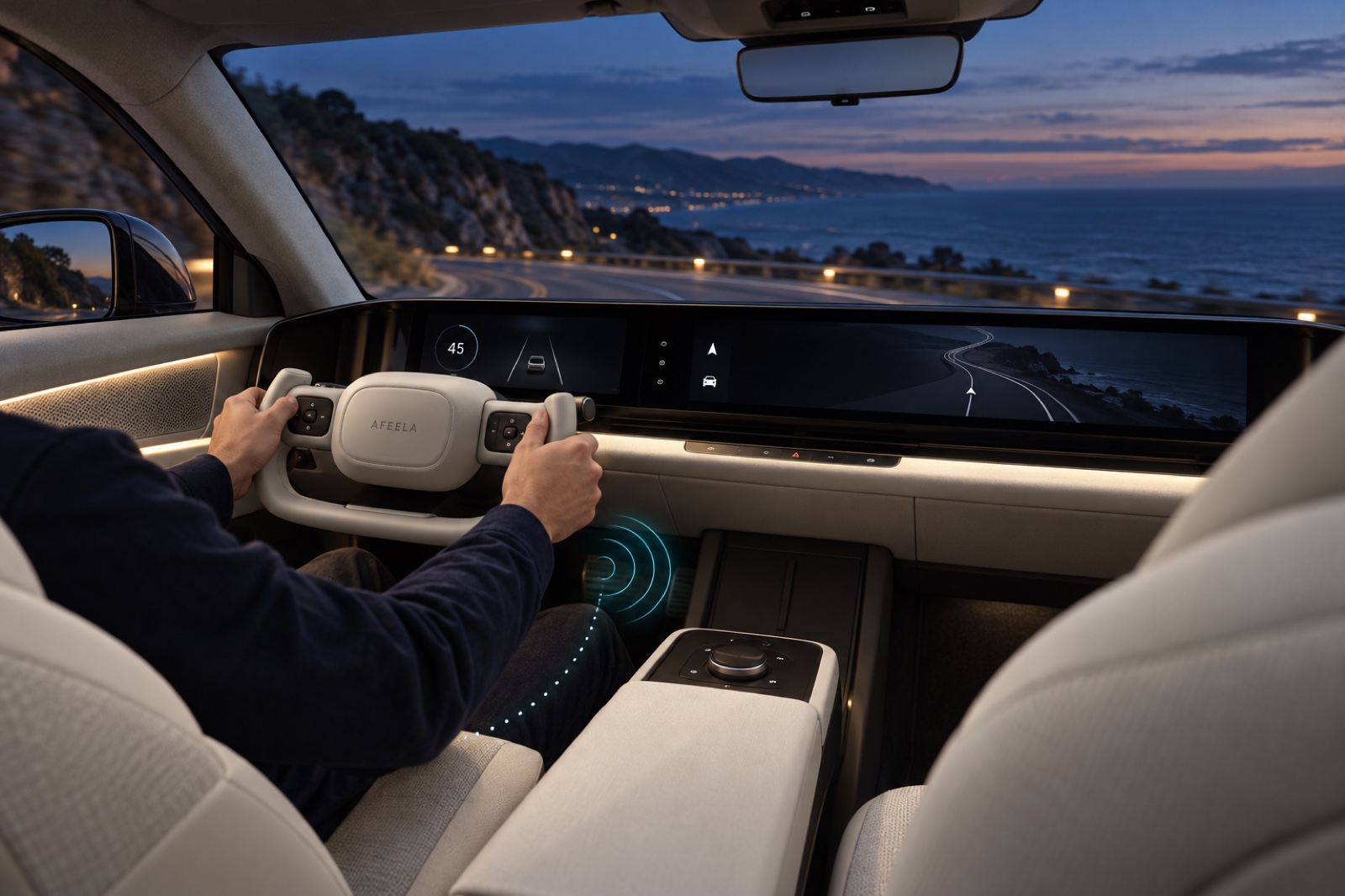
Honda and Sony have proposed an electric-car soundtrack that changes location when stability control steps in. Instead of simply rising with accelerator pressure, the artificial powertrain noise would move toward the wheels receiving brake or motor commands, according to a patent filing discovered by Carmoses. That could let a driver hear which corners the electronics are managing without looking away from the road.
There is an immediate complication. Sony Honda Mobility canceled development and launch of the Afeela 1 and its second vehicle earlier this year, then announced plans to scale down operations. This is an engineering proposal without a confirmed car to carry it. A patent does not guarantee production.
Nothing in the filing names a model. The electric passenger-car layout and emphasis on cabin audio make the canceled Afeela 1 the closest fit for these renders, while the illuminated effects represent virtual sound locations.
Listen To The Intervention
The driver would steer, accelerate and brake normally. When the stability system orders a correction, the audio controller would read the wheel-control information, identify the affected corner and reposition the perceived source of the powertrain noise toward it.
The speakers stay fixed. By adjusting their output and processing the audio for a chosen location, the system makes the same soundtrack seem to originate somewhere else. It can move left or right, forward or backward, relative to the driver.
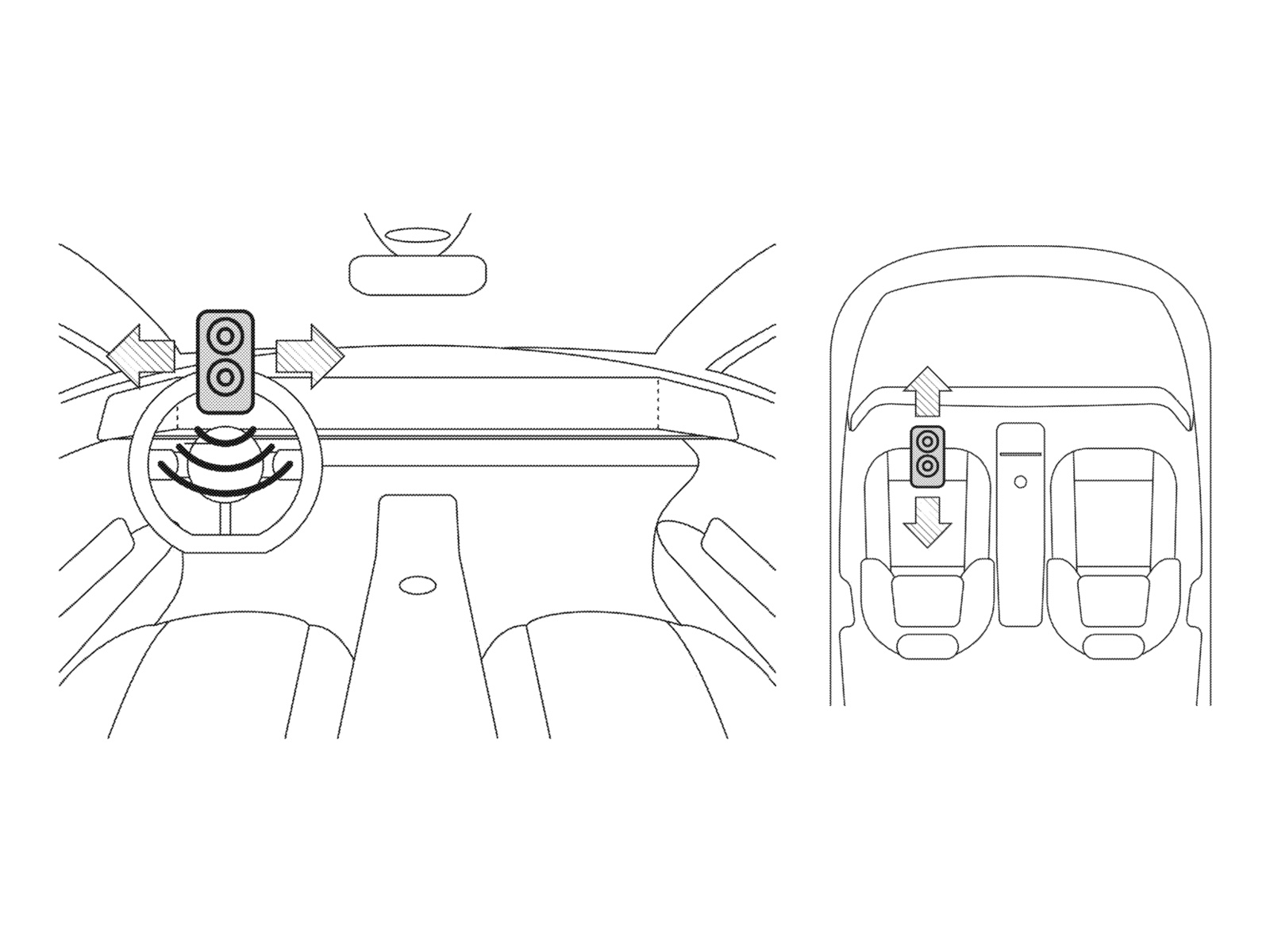
The distinction that matters is which wheel the sound identifies. It follows the wheel being controlled, which is not necessarily the tire that initially lost grip. This would communicate the car’s corrective action, rather than provide a simple directional warning of a sliding tire.
One example involves understeer during a left turn, when the car runs wider than intended. The proposed response reduces torque at both front wheels and applies the left-rear brake. The accompanying audio could then appear from all three directions. A single artificial powertrain would have several apparent locations at once.

The cue could also arrive before intervention. Sensors would assess the travel environment, including road conditions, and the system could relocate the audio when it predicts that stabilization will be needed. No prediction accuracy or warning time is specified.
A Soundtrack That Grades Your Line
A separate coaching function would compare the car’s actual path with a target generated by its driving automation system. In one arrangement, drifting left of that target moves the perceived sound to the right, toward the desired line. A larger deviation moves it farther from its reference position.
The audio can split into two components. A lower-frequency source stays fixed near the driver while a higher-frequency source moves toward the target. Their frequency relationship can change too, with the intention of making the result less harmonious as the error grows.
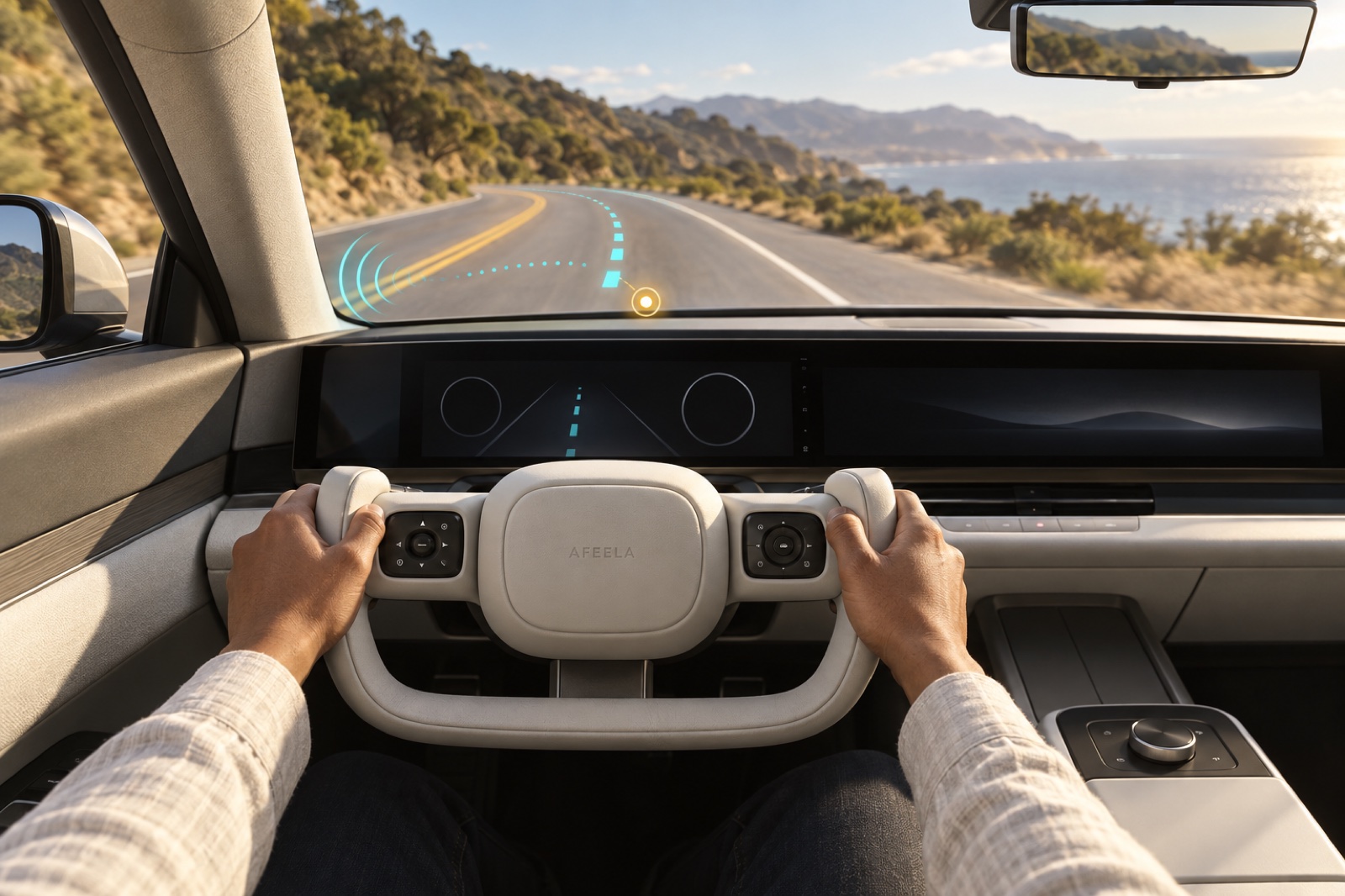
That guidance can become stricter. Driver-specific settings could narrow the acceptable path or speed error as skill improves, making smaller deviations sufficient to trigger a change. The proposal does not explain how improvement would be measured, a significant omission for a system that adjusts its expectations of the person driving.
The Test Is Whether Drivers Understand It
Synthetic driving sounds already have a place in electric cars. Hyundai’s Ioniq 5 N offers selectable powertrain notes through eight internal and two external speakers. Afeela’s artificial engine audio was already public, including a Honda racing theme announced earlier this year based on recordings of the RA272’s V12.
Sony Honda’s wheel-directed approach would give that audio another purpose, communicating control activity through location. Its stated aims include alerting drivers to unstable road conditions and making interventions perceptible during sports driving.
The proposed audio system has no reported listening-test results or demonstrated safety benefit. A driver’s ability to distinguish several virtual sources during a skid, and the clarity of those cues through music and road noise, remain unproven in real driving conditions. Knowing that the left-rear brake is active also requires a different understanding from hearing a conventional warning tone.
The strongest case is feedback during driver training, where the relationship between sound and corrective action can be learned. Routine road use needs proof that people interpret it correctly under pressure. Wheel-specific audio is a useful idea to test, but comprehension should decide whether it belongs in a car.