

Honda has proposed a system that would unlock extra engine power at a racetrack. It could also count each use and eventually refuse to unlock the boost again. That means being at the right circuit and choosing the higher-output mode might not always be enough. For anyone buying a performance car for regular track days, that limit matters as much as the extra power.
The idea appears in a patent filing discovered by Carmoses. Its main purpose is to raise the engine’s maximum output in designated locations, such as a track. Counting uses is described as an extra restriction on top of that. Either way, the added performance would come with rules about where and how you can use it.
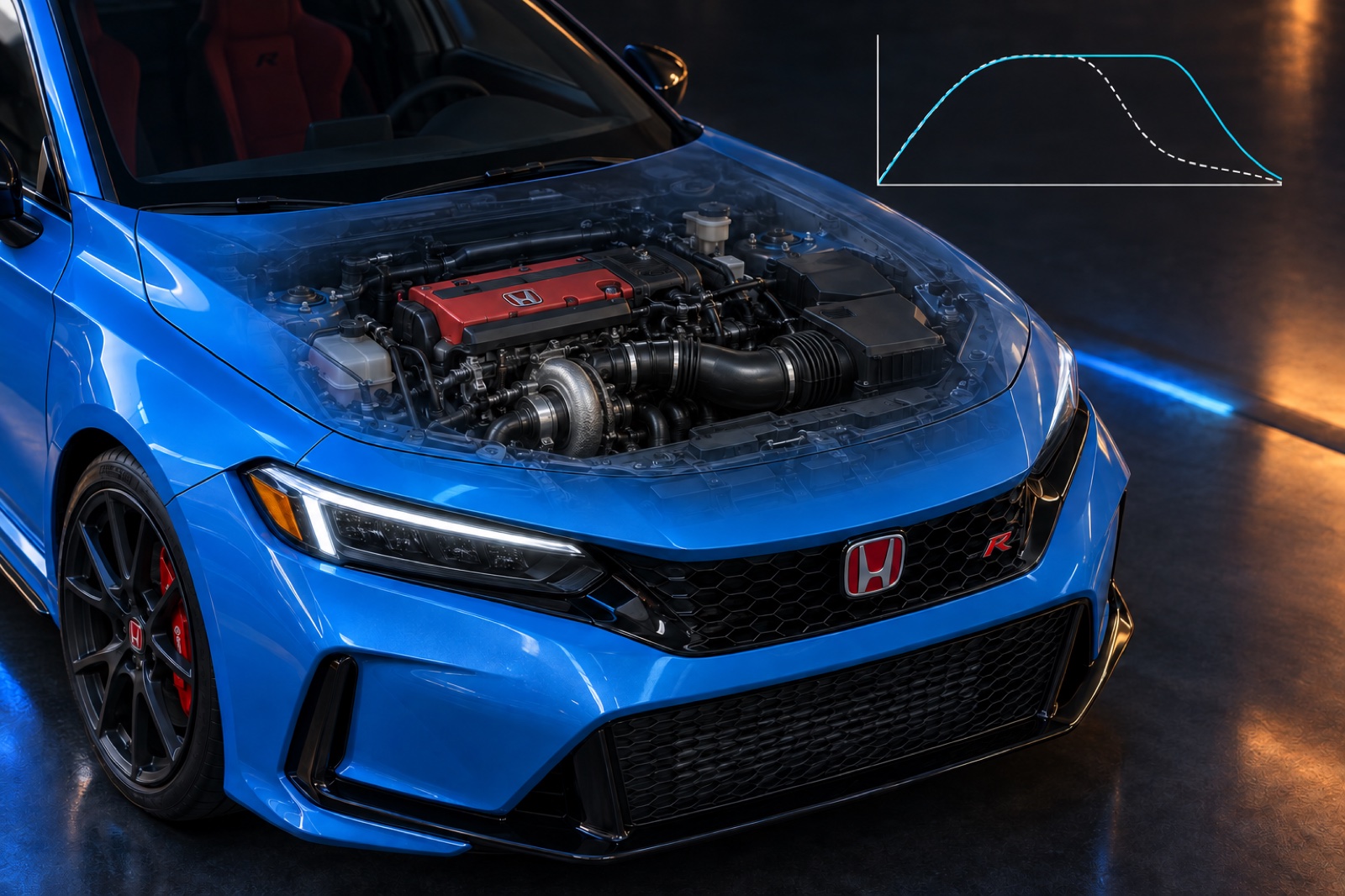
Nothing in the filing names a model. The Civic Type R supplies the setting for these renders because its 315-hp turbocharged engine and track-focused positioning fit the proposal. The interface graphics visualize the proposed functions, rather than an announced Honda menu. A patent does not guarantee production.
The Car Could Count More Than Activations
Honda describes two ways to track use. The controller can count each time the normal power restriction is released. Alternatively, it can count occasions when the engine enters a defined high-rpm range while the higher-output setting is active.
Those approaches would measure different things. One counts access to the mode, while the other counts repeated use of the engine’s upper rev range. The second could accumulate several events within one driving session, although Honda supplies no definition detailed enough to turn those events into laps or minutes.
Once the selected count exceeds a manufacturer-set threshold, the controller can refuse another release even inside an eligible area. Honda’s stated reason is engine durability, reducing further severe use after the allowance has been exceeded.
There is no specified allowance or reset procedure. Nothing establishes a permanent lockout, a paid renewal or a warranty penalty. The unresolved ownership question is whether, and under what conditions, access would return.
Where The Extra Output Appears
The proposed engine controls give this idea more substance than a sharper accelerator response. Maximum available power rises above the normal ceiling, with examples concentrating the improvement at higher rpm. Low-rpm behavior can remain unchanged.
Pedal travel provides another way to separate the settings. Below a chosen accelerator opening, both can deliver the same response. Press farther and normal-mode output levels off, while the higher-output setting keeps increasing it. That would put the additional performance near the deeper end of the pedal’s travel without requiring every small input to feel different.
For a turbocharged engine, Honda describes holding boost pressure at its existing maximum farther into the rev range. The normal setting begins reducing pressure sooner. Both can therefore share the same peak boost ceiling, even though the unlocked setting supplies more pressure at high rpm. Honda ties that ceiling to turbocharger durability.
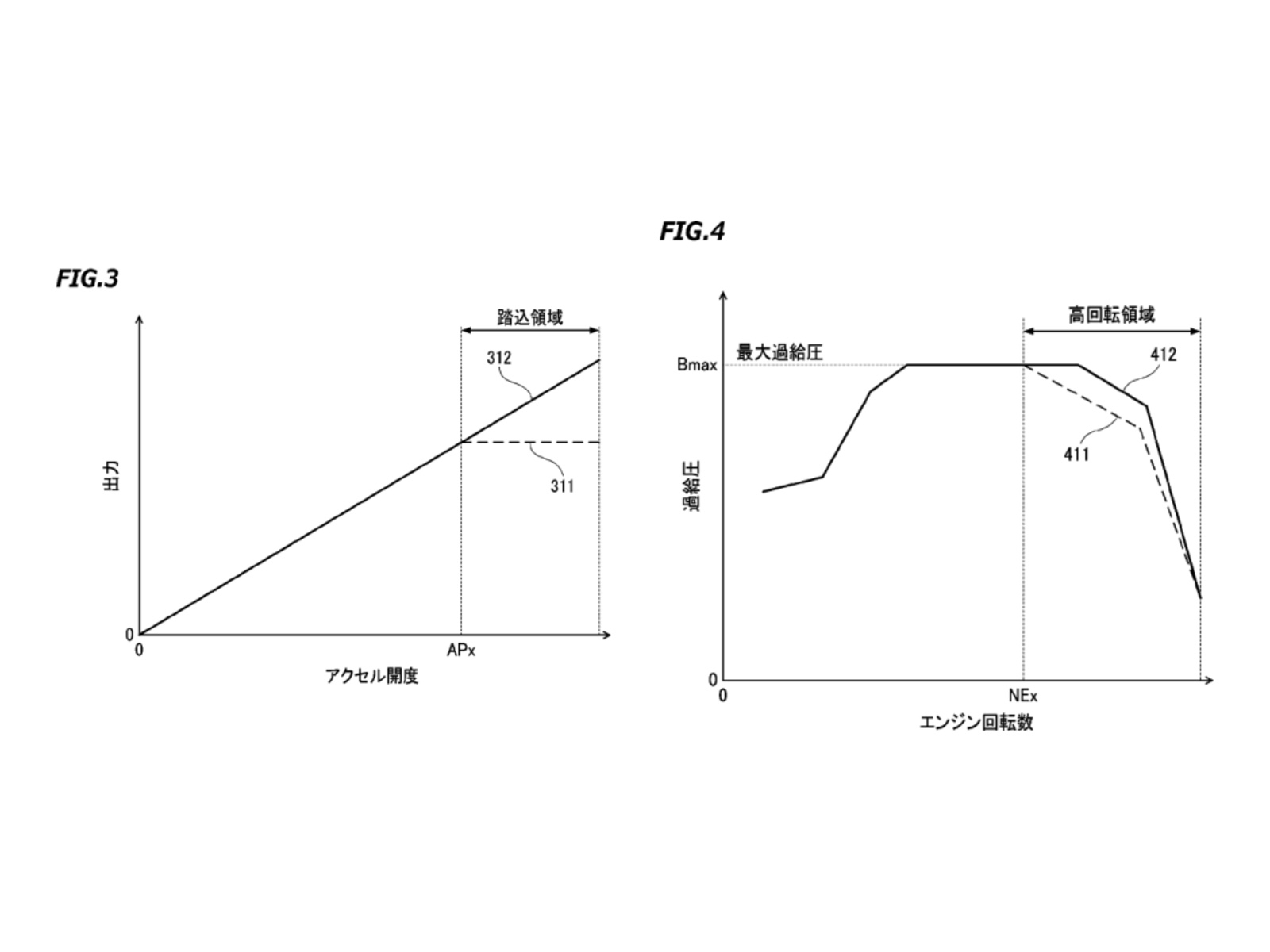
The controller can adjust boost through an electrically operated wastegate, a valve that lets exhaust bypass the turbine, and can also change fuel delivery. No horsepower increase, rpm threshold or boost-pressure figure is specified, so there is no basis for calculating what the change would add to a production car.
Arriving Does Not Have To Activate It
The location check uses navigation data to decide whether additional output is available. Eligible places can include racing circuits, designated rally courses, gymkhana venues and qualifying private land separated from public roads.
One version then asks the driver to approve releasing the limiter on the touchscreen. Declining keeps the normal setting. Outside the designated area, the system refuses release and does not display that approval screen, so tapping an agreement cannot override the location requirement.

Honda does not explain how eligible locations would be maintained, how positioning errors would be handled or how engine output would transition when leaving a permitted area.
Track Access Needs Clear Terms
Location-dependent performance has precedent. Nissan’s Japanese-market GT-R used GPS to allow its speed limiter to be released at recognized circuits. Honda’s proposal changes the engine’s available output, adding power-control details and the optional use counter to that familiar location check.
Holding boost longer and preserving familiar response at smaller pedal openings make a coherent case for a track setting. The counter is harder to judge without knowing its allowance and reset rules. Before this would deserve a place on a showroom specification sheet, Honda would need to make those terms clear. A track-power feature should give its owner a predictable amount of usable performance.