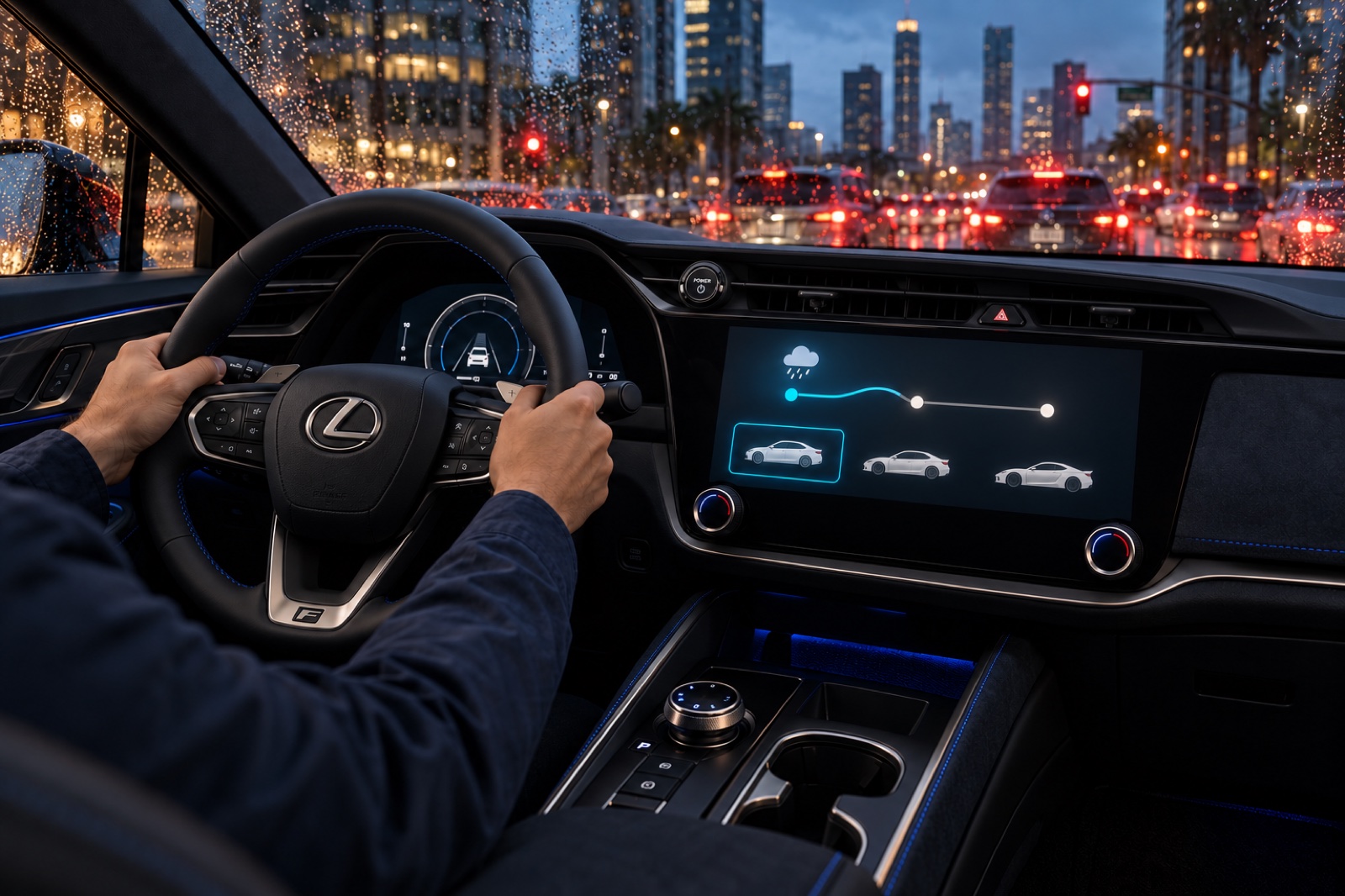
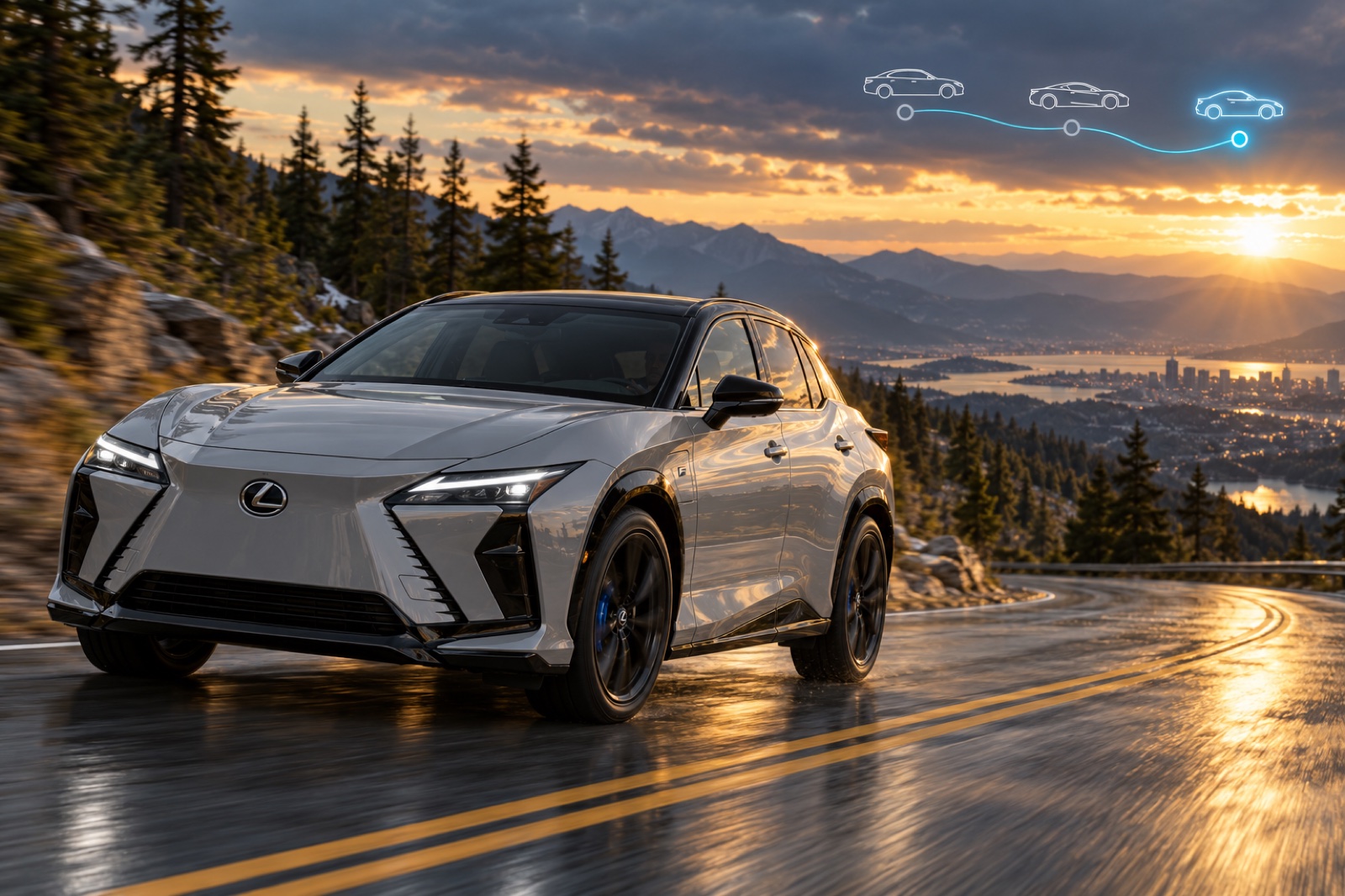
Toyota has outlined an electric car that could imitate a supercar on the highway, then favor a gentler automatic sedan for congested, rain-soaked streets. Entering a destination would help determine which virtual vehicle it adopts, with the choice affecting accelerator response and simulated shifting as well as engine sound.
The route-based system appears in a patent filing discovered by Carmoses. Toyota identifies a specific problem with offering a menu of simulated cars. If the chosen personality feels wrong for the road, a disappointed driver might stop selecting it or abandon the feature altogether.
Toyota outlined software-selectable driving feel and engine sounds in 2023. The interesting development here is giving navigation a role in choosing the experience, including when a less demanding one makes more sense.
One Destination, Several Personalities
The driver selects the simulation mode and can leave the vehicle category undecided or explicitly delegate the choice to the car. With a destination entered, the controller uses position and map information to classify the roads ahead. It then selects a stored virtual vehicle suited to that route and uses its software model to control propulsion.
Ordinary streets could get a sedan or chauffeur car profile, reflecting the attention demanded by intersections, signals and surrounding vehicles. A highway could receive a large-engine sports car or supercar simulation. Mountain roads could bring a lightweight sports car, an all-wheel-drive sports car or an SUV.
Those choices can apply to separate sections of the same trip. The same EV could imitate several cars before reaching its destination.
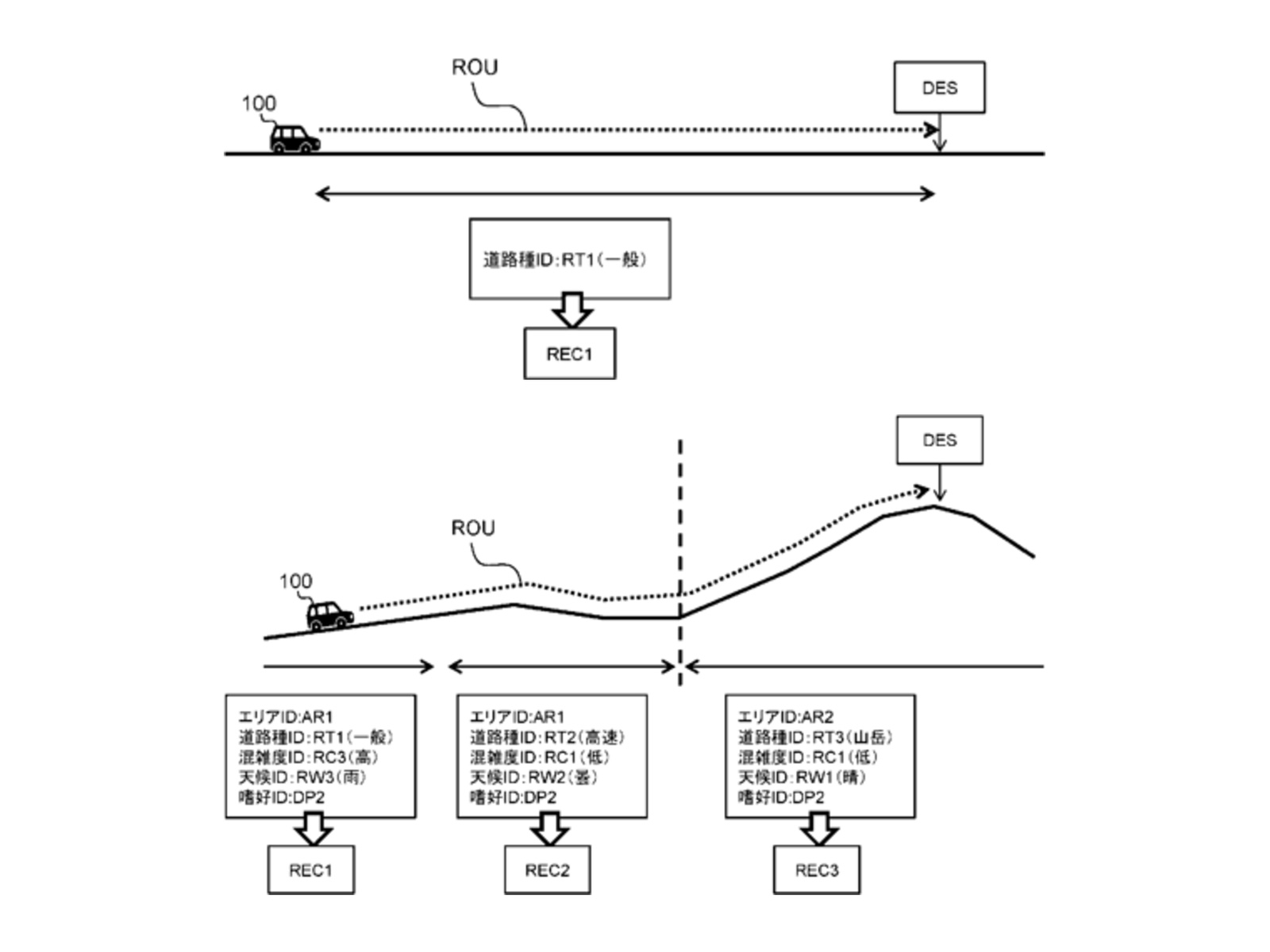
Weather and congestion make the selection more useful than a simple city-versus-highway split. For heavy traffic or poor road conditions, Toyota describes choosing an automatic sedan with smaller acceleration changes for a given accelerator input. A lightly congested highway could favor a manual sports-car simulation with a stronger response.
The driver’s preferences can also influence the choice. Someone who values ease of driving could retain an automatic transmission simulation throughout the journey, even as the selected vehicle category changes. Preferences could come from direct input or a history of previous selections.
The Motor Does The Acting
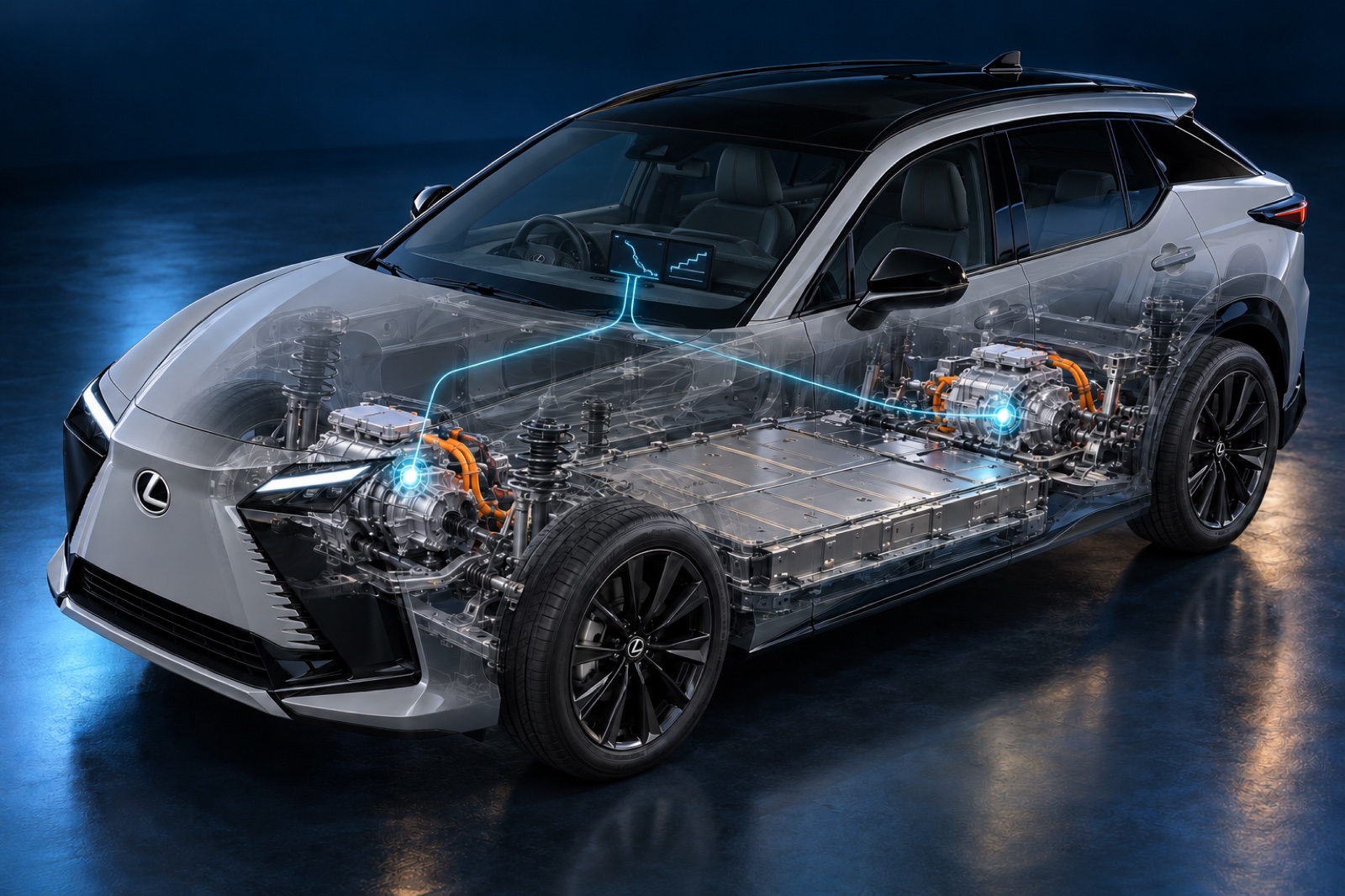
The experience relies on software models of an engine, clutch and transmission. Accelerator position helps determine simulated engine torque. The selected gear determines how that torque is multiplied, while the clutch model calculates how much passes through.
The controller translates that calculation into commands for the real electric motors. It can deliberately introduce abrupt torque changes during virtual shifts to reproduce the sensation of a stepped transmission. Cabin sound follows the same simulated engine behavior, growing louder with load and rising in pitch with engine speed.
A physical clutch pedal is optional. Toyota describes configurations using paddles alone, as well as arrangements with a dummy stick shift and clutch. Simulating an automatic transmission also does not mean the vehicle drives itself. The person at the wheel still drives.
There is a significant unanswered question about changing personalities between road sections. The filing does not explain how it would manage the handoff between profiles or communicate that change to the driver. A different accelerator response needs to feel predictable, especially when the system is supposed to reduce workload.
A Better Reason To Keep Using It
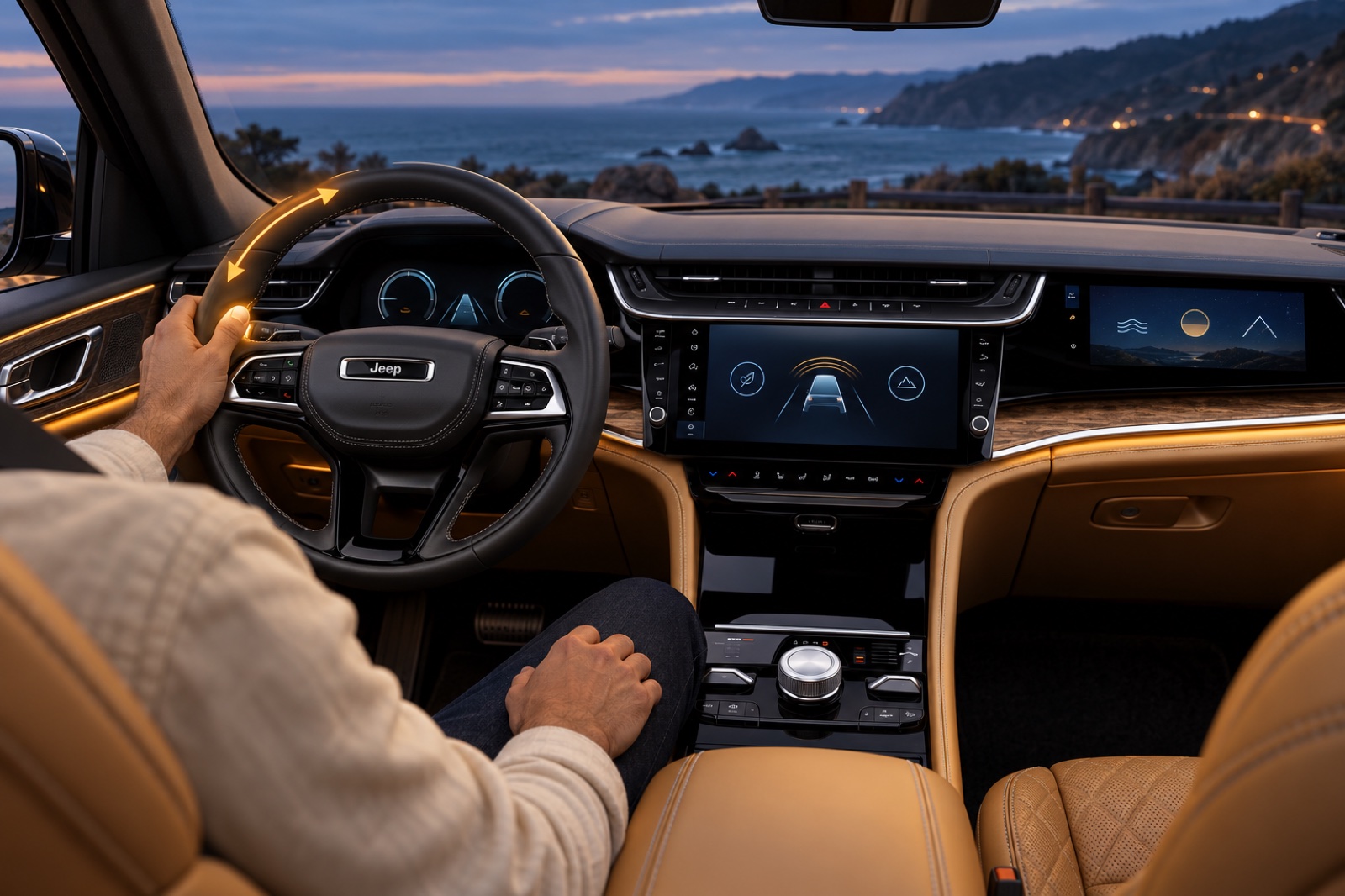
Nothing in the filing names a production model. The Lexus RZ 550e F SPORT AWD is the editorial setting for these images because its existing M Mode combines eight virtual gears, paddle control and simulated engine sounds. That makes it a relevant production comparison, without establishing that this proposal is destined for the RZ.
Hyundai’s Ioniq 5 N already pairs simulated gear changes with artificial powertrain sounds. Its European N Road Sense feature also recommends N Mode when it recognizes double-curve road signs. Toyota’s proposal goes further in a particular direction, using a destination route to select among different virtual vehicles and execute their driving models.
Toyota even suggests withholding recommendations on trips too short to leave a memorable impression, although it gives no minimum distance. A patent does not guarantee production, and no launch plan accompanies this proposal.
The useful idea is matching the effort and response of a simulated powertrain to the journey. A convincing supercar soundtrack has limited value in crawling traffic. Choosing a calmer automatic profile for that stretch gives the virtual garage a practical purpose, provided Toyota can make the transitions predictable.