Lexus supplier Denso has proposed an emergency-merge system that would move a car into a crowded lane before there’s fully enough room to complete the maneuver. The goal is to reach the shoulder when the driver can’t take over, with a way to back off if another car closes the gap.
Denso describes the system in a patent filing discovered by Carmoses. It addresses a specific problem with automated emergency stops: a car can keep following traffic while waiting for an opening, but never actually find the space it needs to pull over.
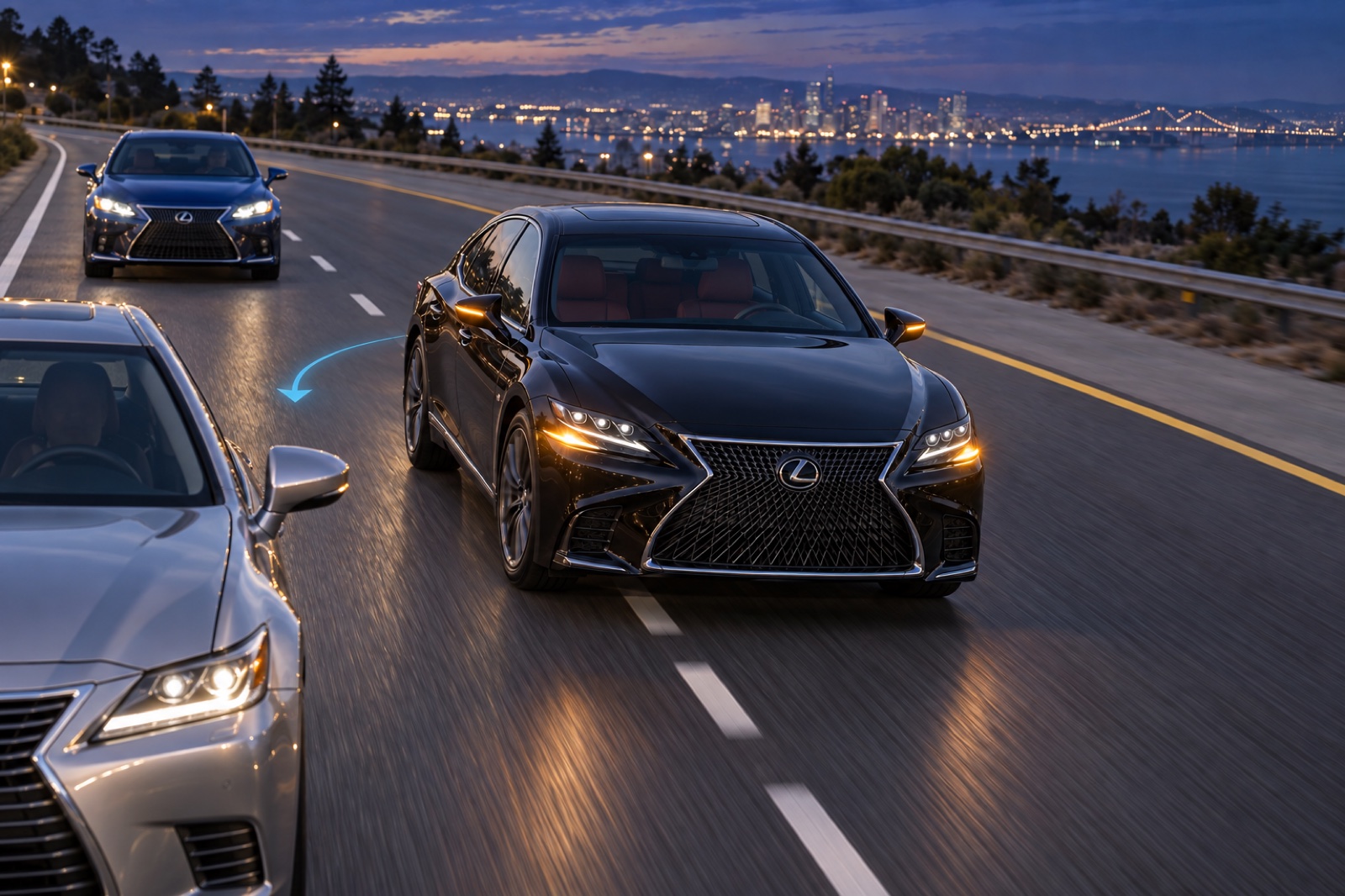
The filing doesn’t name a production model. We used the Lexus LS 500 as the visual reference because Denso supplied Advanced Drive hardware for earlier LS models, which gives it a relevant technical link. Lexus describes the current US LS Heritage Edition as a final-year tribute, so this is an editorial illustration of that connection, not an equipment announcement.
Crossing The Line To Request Space
The sequence can begin when automated driving cannot continue and the driver fails to answer a takeover request. A detected medical problem or a passenger’s emergency-stop command can also trigger it. The car switches on its hazards, starts slowing and assesses the surrounding lanes.
On a US freeway, the intended route leads toward the rightmost travel lane and its adjoining shoulder. When an adequate opening already exists, the vehicle changes lanes normally. The unusual behavior begins when that space is missing and neighboring traffic is moving slowly.
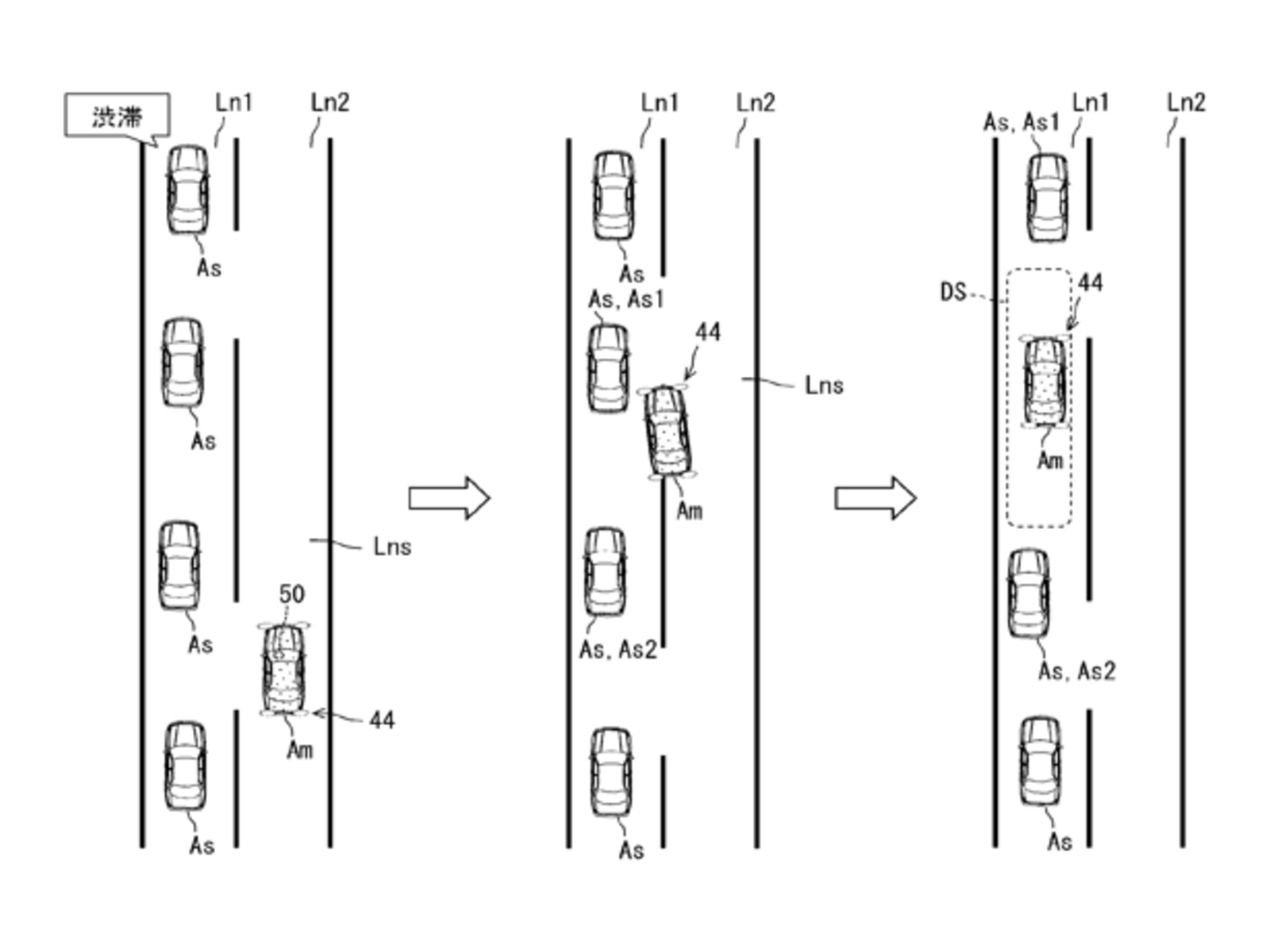
Denso’s main example uses roughly 12 mph both to identify congestion and as a permissible entry speed. The car slows to match the adjacent flow, gently crosses the divider and places part of its body between two vehicles. That movement is intended to encourage the following driver to slow down and make room.
The hazards keep flashing throughout. Denso argues that they communicate an abnormal situation more effectively than an ordinary turn signal, increasing the likelihood that another road user will yield. Once sufficient space opens, the car completes the merge, follows the vehicle ahead and subsequently heads for the shoulder.
When The Other Driver Says No
The controller monitors spacing to the vehicle behind and alongside it. In the detailed example, the clearance needed to complete the maneuver exceeds the emergency car’s own length. Until that threshold is reached, the system keeps evaluating whether entry can continue.
If the rear-side spacing instead falls to a smaller threshold, exemplified as about 3 to 7 feet, the controller interprets that as refusal. It cancels the entry and returns to its original lane. Both the speed and distance settings are examples, rather than universal requirements.
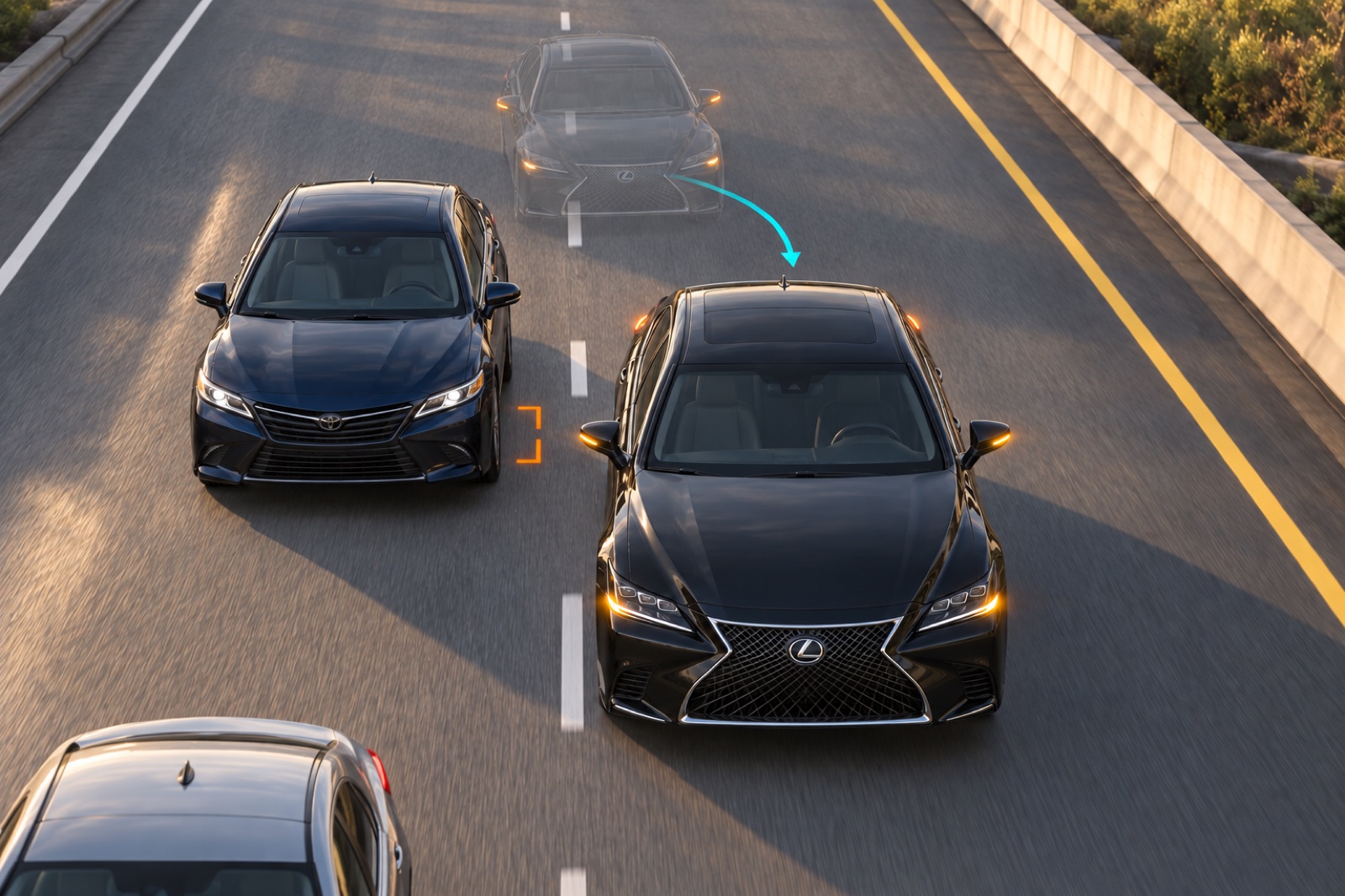
This is an inference from vehicle movement. The system does not receive a confirmed statement of the neighboring driver’s intention, and Denso supplies no test results showing how accurately it distinguishes refusal from other changes in traffic.
There are alternatives to persisting with the merge. In the main scenario, crowded traffic moving too quickly rules out the gentle entry attempt. If the car directly adjoins the median-side shoulder, it can slow and stop there instead, potentially leaving part of its body in the travel lane. Another lane between it and that shoulder can mean stopping in its existing lane.
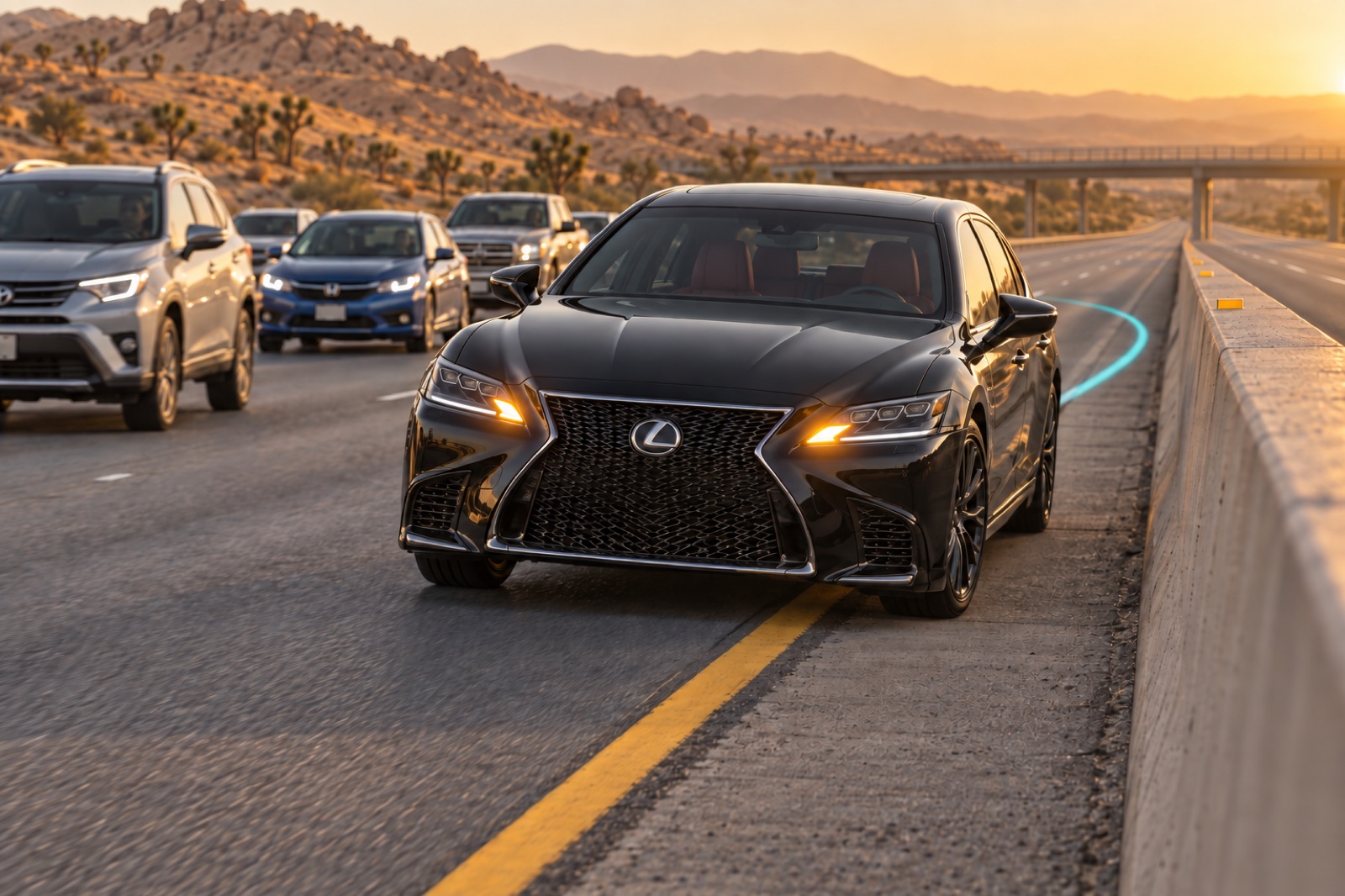
A nearby exit can also delay the escape attempt. With a branch less than about a third of a mile ahead in the example, the car continues in its lane until it passes the junction, avoiding a forced merge where exiting traffic is concentrated.
The Unproven Part Is Cooperation
Toyota described automatic emergency stopping with hazards and possible shoulder evacuation several years ago. Today’s US LS already has an Emergency Driving Stop System that Lexus says can gradually stop an unresponsive driver’s car within its lane when the required highway assistance functions are active.
Other suppliers have explored requesting room through vehicle position. HL Klemove describes moving toward a lane boundary while staying inside it, then changing lanes after sufficient space becomes available. Denso’s emergency strategy takes the additional step of crossing that boundary before the opening exists.
A patent does not guarantee production. More consequential here is the absence of evidence that motorists will reliably recognize the request and respond in time.
Denso addresses a real weakness in automated pullovers, and the explicit retreat rule makes this a credible engineering proposal. Crossing into occupied space still needs a demonstrated safety benefit over stopping in the current lane. That comparison should decide whether this maneuver ever reaches a customer’s car.