Toyota could give drivers a bit more freedom to glance away from the road after a highway lane closes. During automated driving, its proposed monitoring system would allow a longer downward glance, say, to check a phone, but only if just one lane remains and no car can merge in ahead within a set distance.
The idea appears in a patent filing discovered by Carmoses. Toyota has previously proposed adjusting attention warnings based on speed and nearby merges. This version ties the extra leeway to a specific set of road conditions, while still requiring the driver to take over if the system can’t keep going safely.
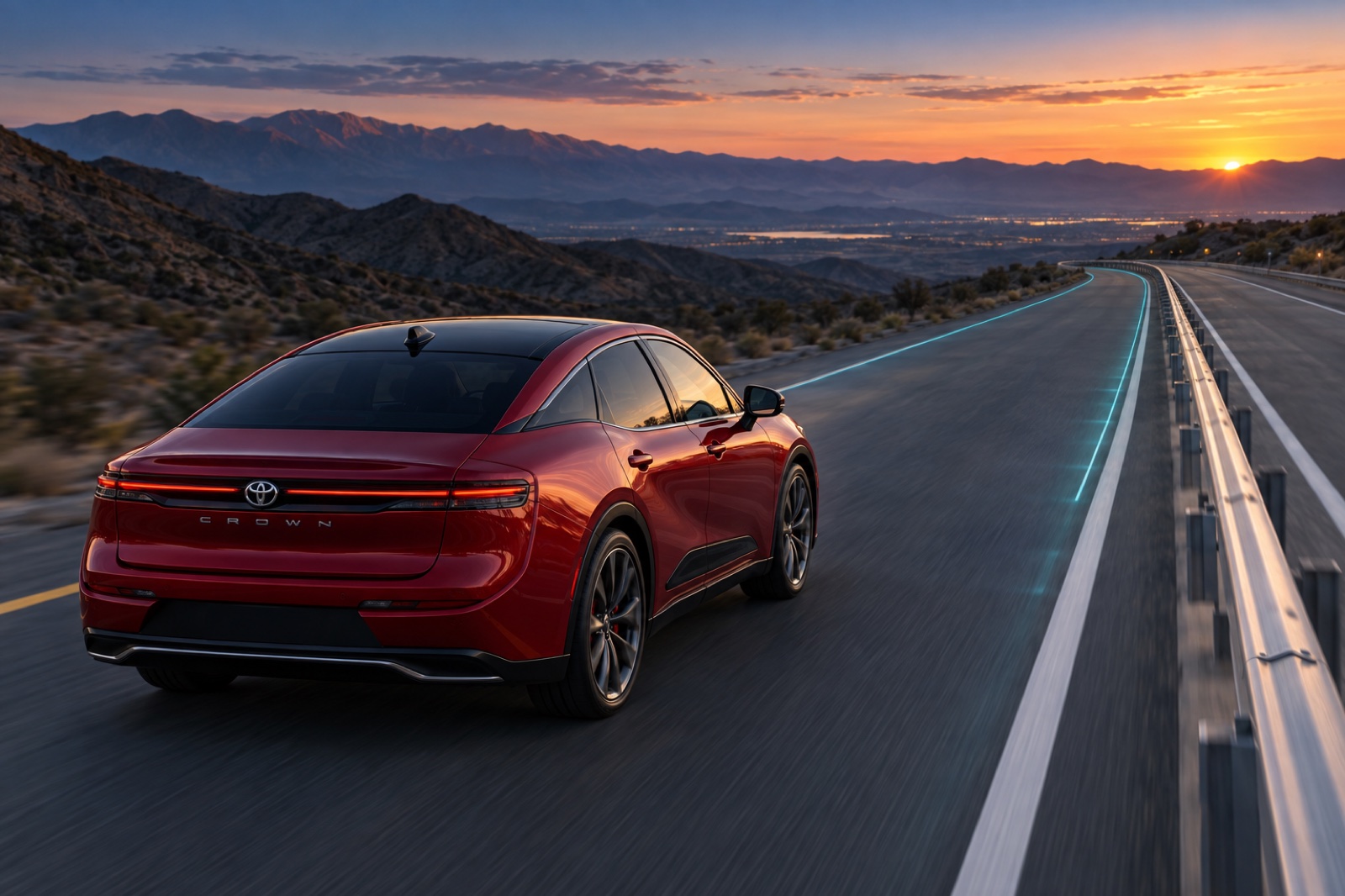
No production model is named. We used the Toyota Crown for the renders because of its passenger-car layout and highway-assist focus, especially since the US-market Platinum trim already includes Traffic Jam Assist. That existing feature still requires driver supervision, though, so it shouldn’t be confused with the relaxed rule Toyota is proposing here.
A Closed Lane Changes The Calculation
The car must already be operating automatically on an expressway. It checks for a single available lane in its direction of travel, then uses map information to look for places where another vehicle could enter. Toyota’s example forward range is roughly 1.2 to 2.5 miles, including interchange ramps and entrances from service or parking areas.
A highway built with one lane in each direction can qualify, as can a highway with two lanes in the same direction temporarily reduced to one. Driving along one lane of an otherwise open multilane freeway does not meet the rule.
Forward camera images or lidar identify road markings and lane-closure equipment. Inside, a dashboard camera evaluates the driver’s face, gaze and posture, with a steering-wheel touch sensor supplying grip information. When the road meets the conditions, the system changes the behavior that triggers an attention warning. Ordinary criteria return when those conditions no longer hold.
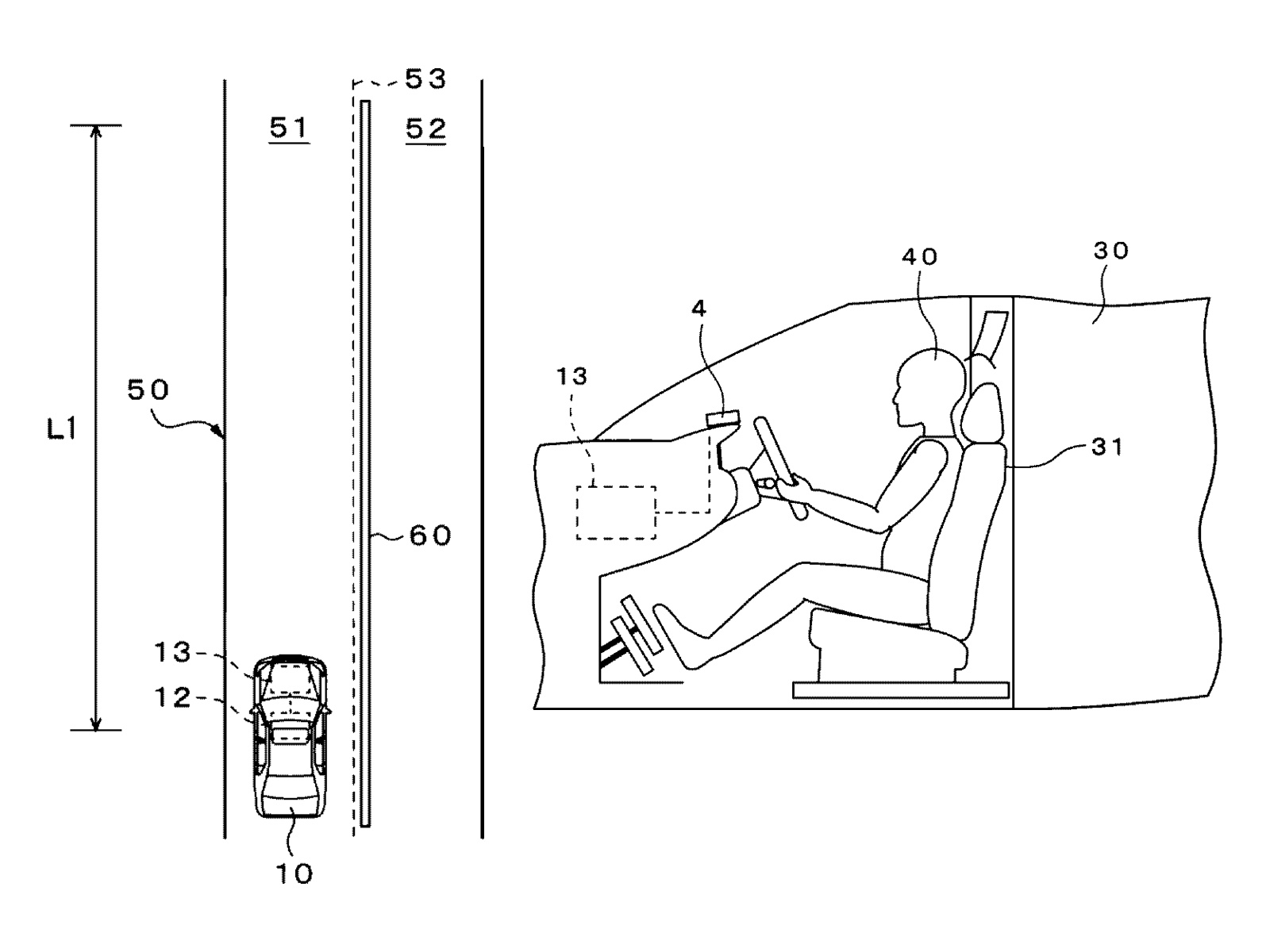
One version also distinguishes between types of barriers. A guardrail, rigid protective fence or wire rope can satisfy an additional requirement for a substantial closure structure. Cones and rubber poles cannot. Toyota’s stated reasoning is that stronger separation reduces the likelihood of something entering from an adjacent or opposing lane.
More Latitude, More Following Distance
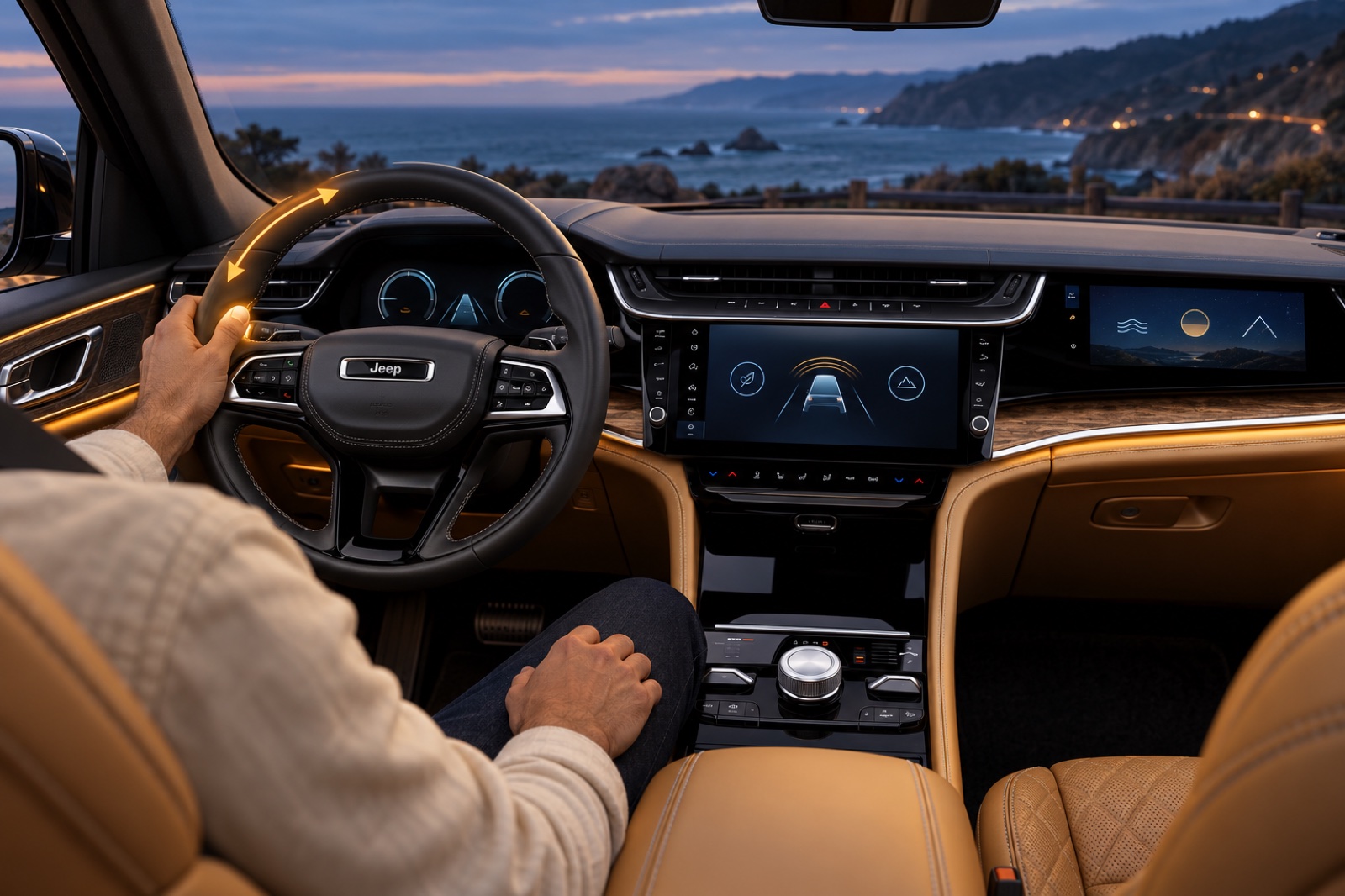
The change can allow a wider sideways or downward glance before an alert. Toyota explicitly describes operating a portable electronic device, alongside reading, watching the scenery and talking with an occupant.
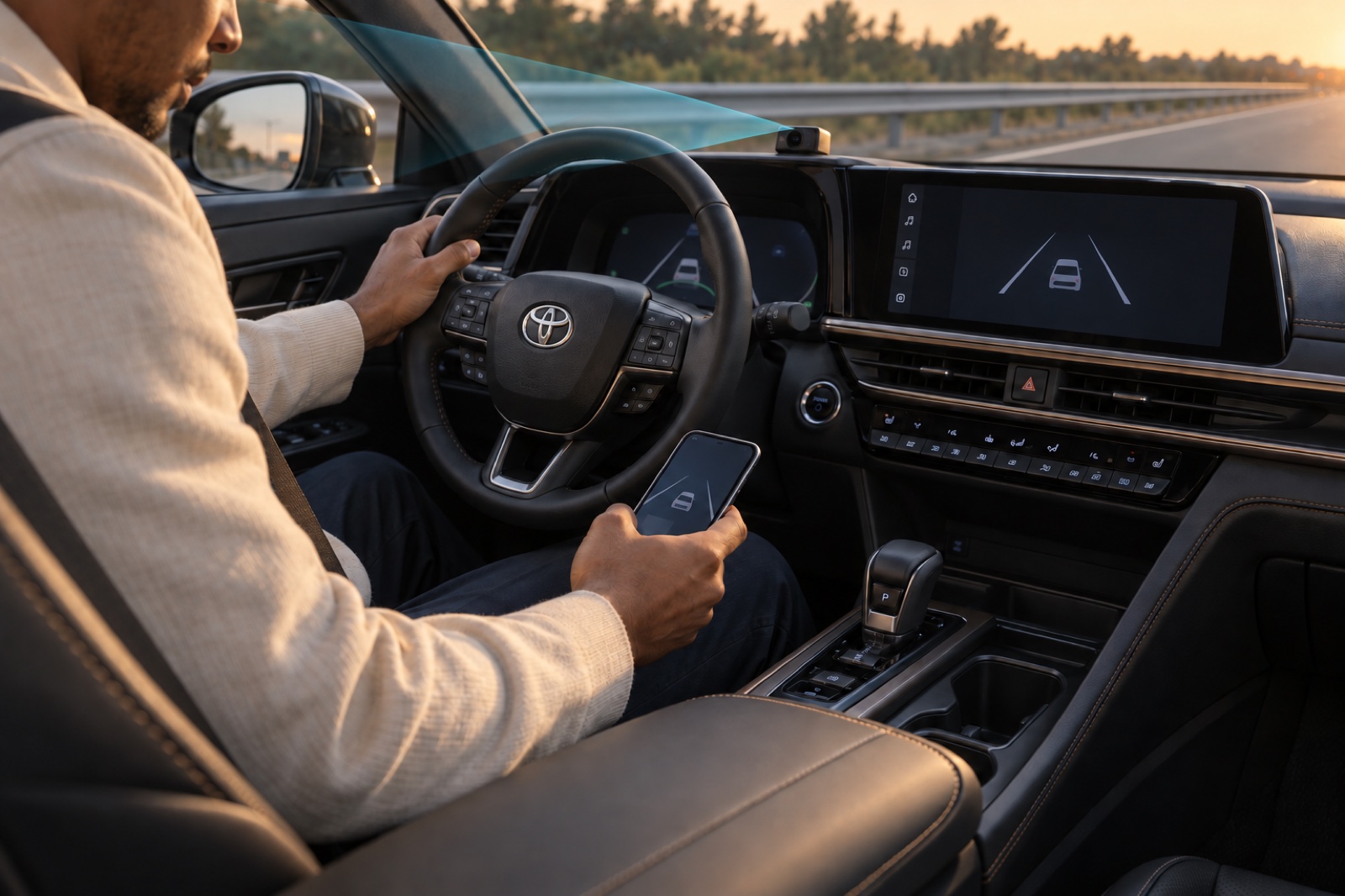
Some alternatives go beyond wider tolerances and stop individual checks, including gaze direction or steering-wheel grip. They do not require every monitor to switch off together. Toyota argues that repeated unnecessary warnings can make drivers accustomed to alerts, reducing their effectiveness when attention is needed.
Another option changes how the car follows traffic when monitoring relaxes. It commands a larger distance to the vehicle ahead, with an example increase of 10% to 30%. That adds physical space between the cars alongside the more permissive monitoring settings.
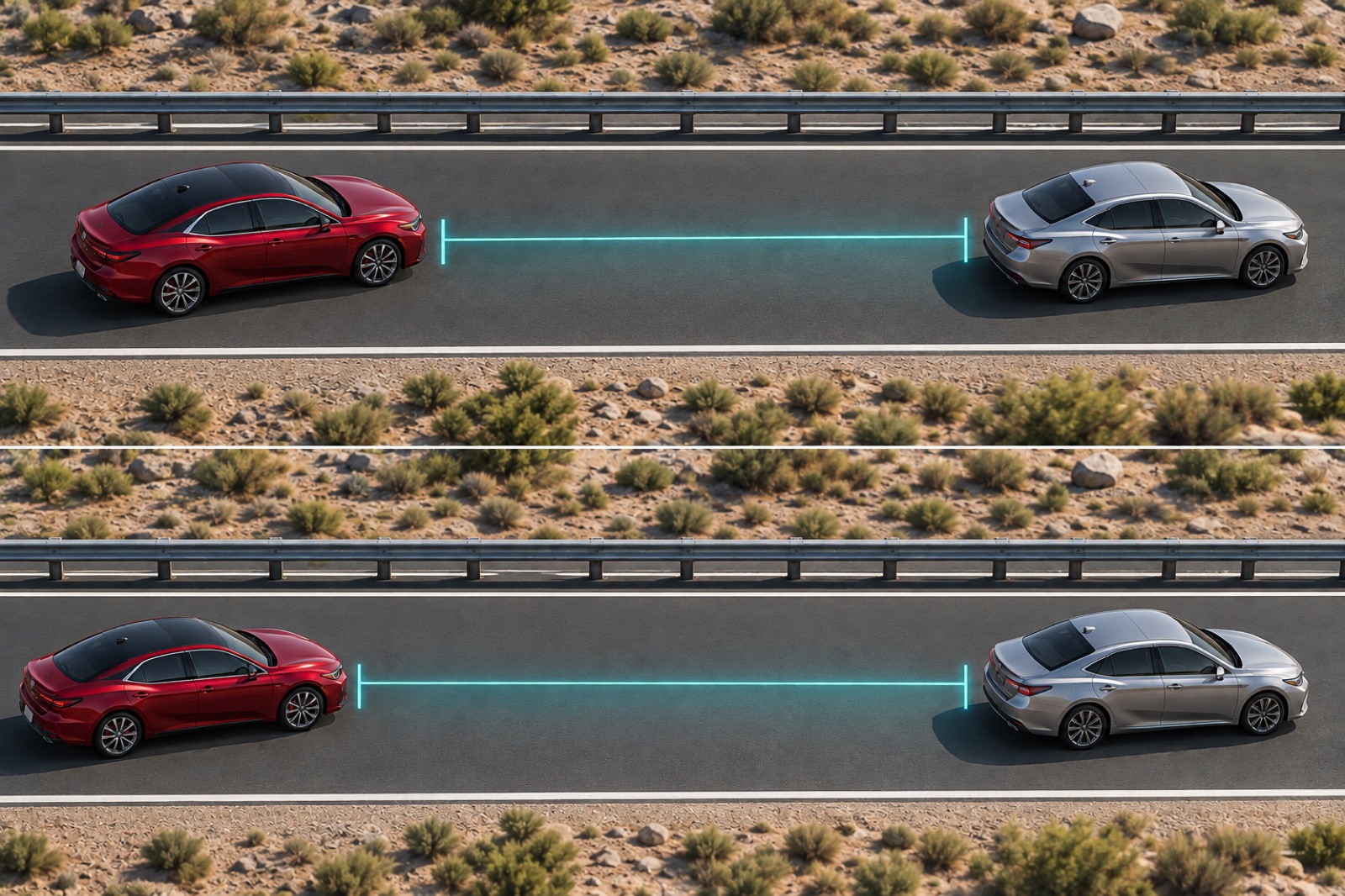
Other versions require a preceding vehicle or impose a speed ceiling. The example limit is about 62 mph, extending the proposal well beyond crawling traffic. These are optional additions, and the figures are examples rather than validated operating limits.
The Driver Still Has To Come Back
The proposal would change a familiar expectation for American drivers using hands-free assistance. Chevrolet’s Super Cruise monitors head and eye position, requires attention to the road and tells users not to operate handheld devices. Toyota’s existing Crown Traffic Jam Assist likewise requires supervision and is designed for controlled-access freeways at 25 mph or less.
The unresolved issue is what happens when this more permissive arrangement ends. The driver still has to take primary control if the automatic system cannot operate safely. The filing supplies no measured takeover times or safety results showing that someone looking down can respond quickly enough. A road without a merge still leaves questions about debris, workers and incorrect map information.
A patent does not guarantee production. Matching warnings to road conditions is a reasonable objective, and increasing the following gap gives Toyota’s proposal a concrete precaution. Suspending gaze checks is harder to justify while the driver remains the fallback. Reliable takeovers need to be demonstrated before a favorable lane layout becomes a reason to stop checking where that driver is looking.