Ford is proposing quieter everyday stops by letting one axle’s brakes rest when the other axle can handle the job alone. But hook up a trailer, and that permission can disappear right away, before the truck even knows how much weight it’s towing. Just sensing the connection can be enough to bring both front and rear brakes back into play.
Ford’s approach to quieter everyday stops is detailed in a patent filing reviewed by Carmoses. The stated goal is to cut unnecessary brake noise by using only as much braking as a given stop actually needs. But the proposed controller puts stopping distance first, ahead of that comfort benefit.
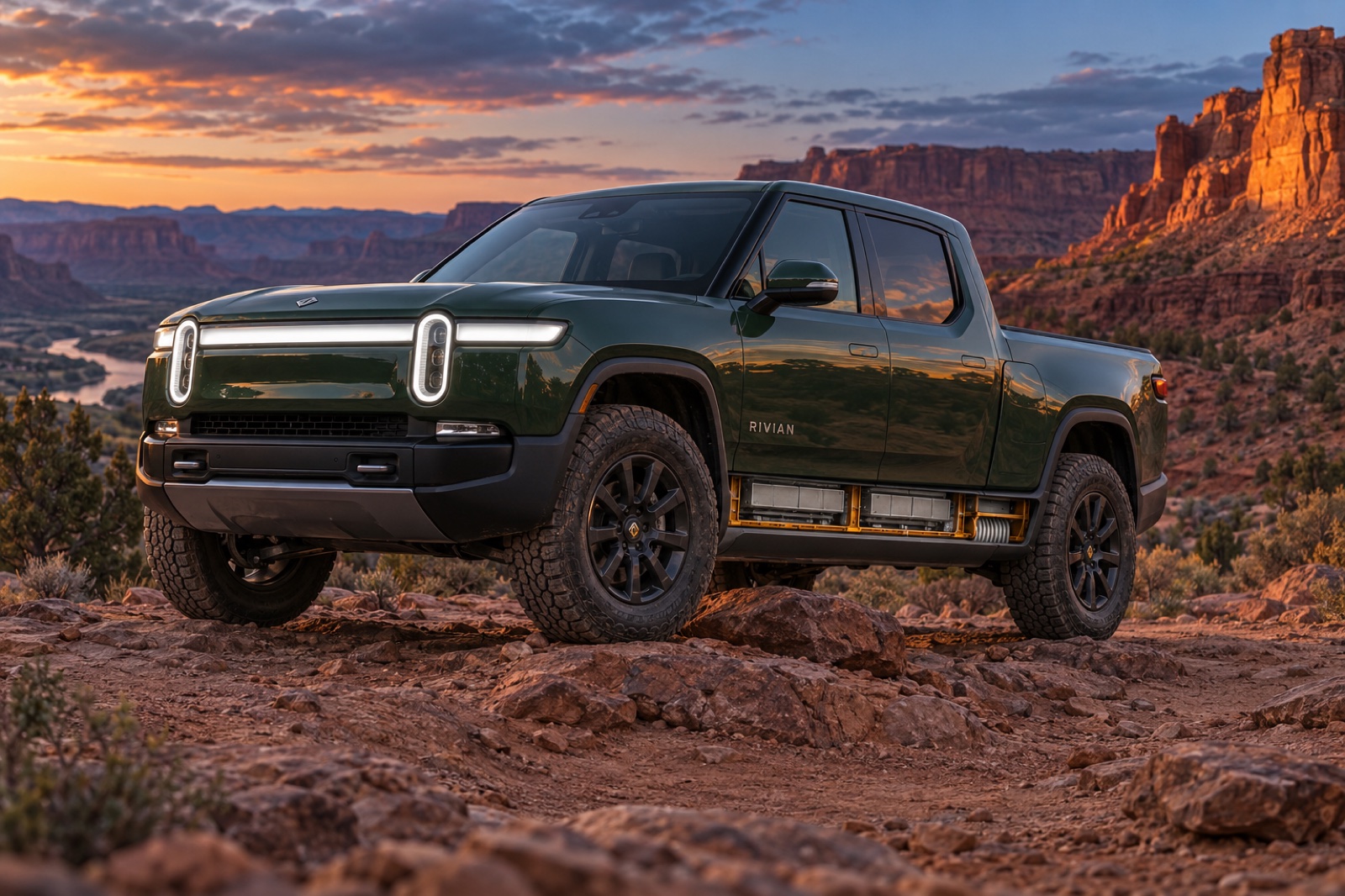
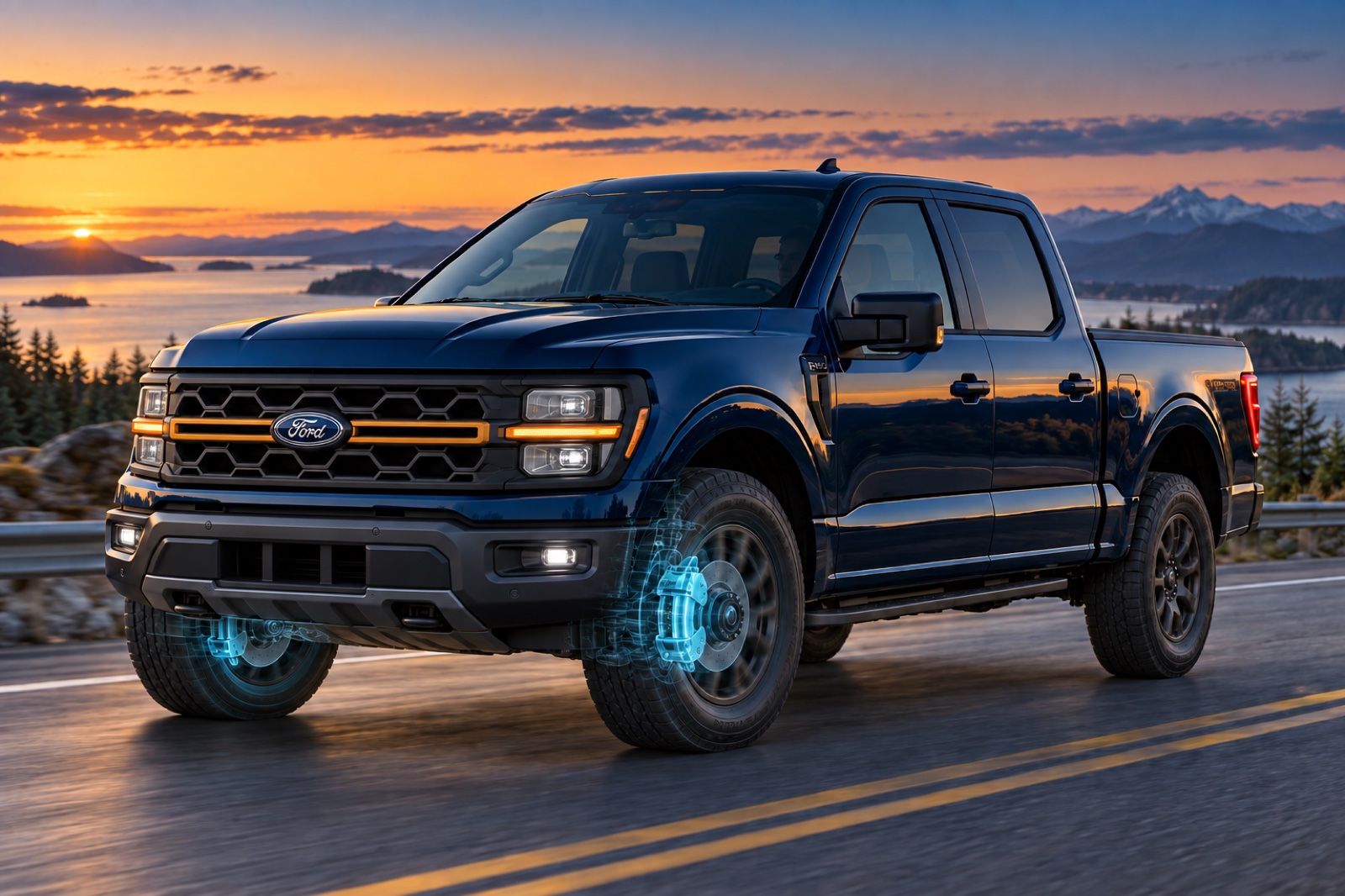
No model is named in the filing. We used the F-150 Tremor for the renders because Ford’s filing talks specifically about trucks and trailer detection, and the Tremor already comes with Tow/Haul and Slippery modes. It just makes sense as a setting for the idea, not a hint at a real feature. And as always, a patent is no guarantee the idea ever reaches production.
The Hitch Has A Veto
The driver presses the brake pedal normally. Sensors report how far it moves, while a controller checks vehicle speed, weight, road conditions and slope. Those inputs are ranked according to their effect on stopping distance, using settings that can vary by vehicle type or model.
In one sequence, speed comes first. Exceed its threshold and both axles are enabled, making the remaining checks unnecessary for that decision. Otherwise, the controller works through weight, a wet or icy surface, road grade and finally pedal travel. Any triggered condition calls for front and rear brakes. Only when every check permits it does one axle handle braking alone.
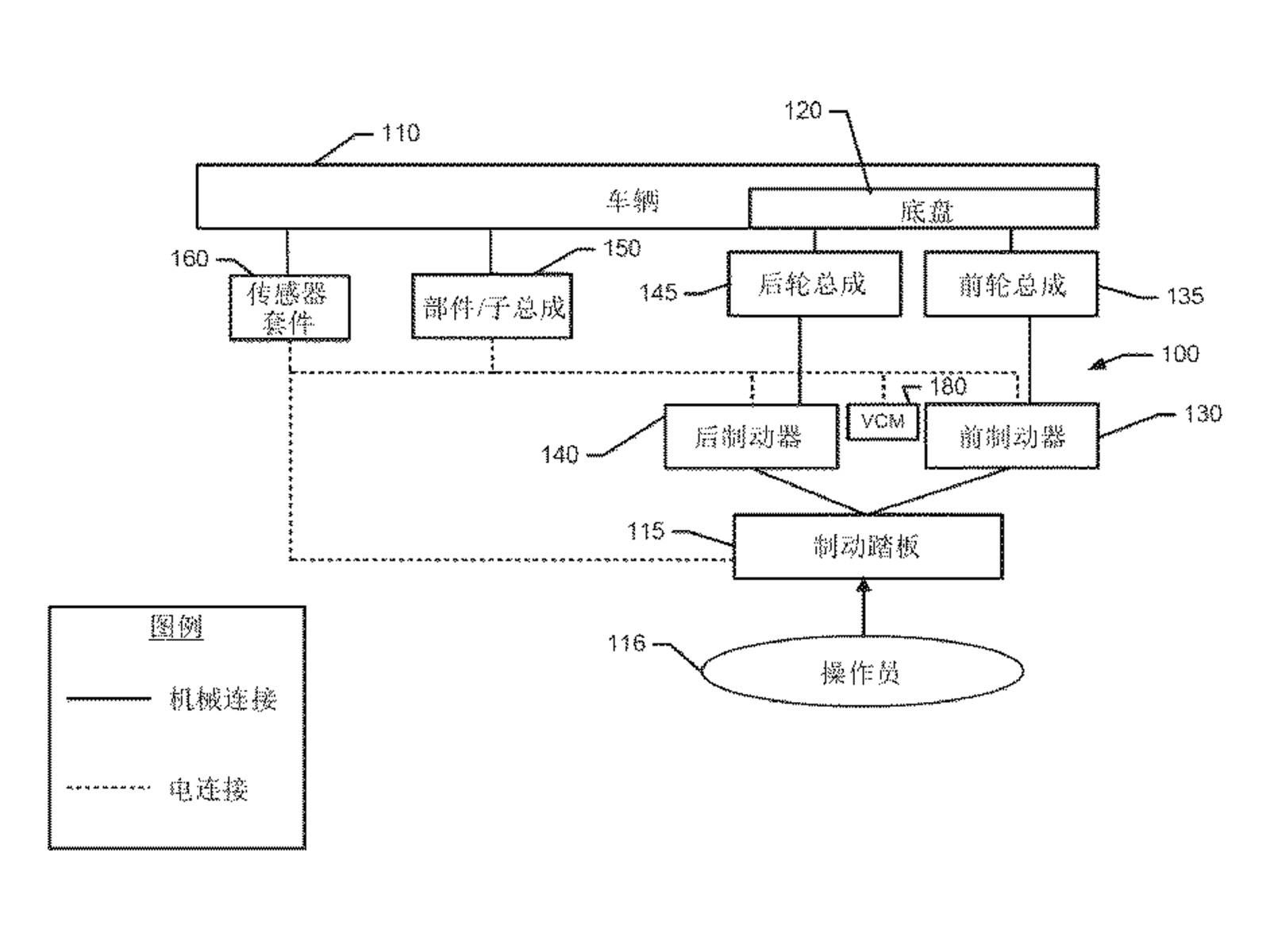
Enabling both axles does not mean applying maximum braking force. The pedal still communicates the driver’s requested braking. Nor does the proposal remove any hardware. It changes which brake assemblies participate under suitable conditions.
The towing detail makes that distinction tangible. A connected trailer can automatically satisfy the weight trigger, without a measurement showing that a mass limit has been exceeded. Even a relatively light trailer could therefore rule out single-axle operation under this version of the strategy.
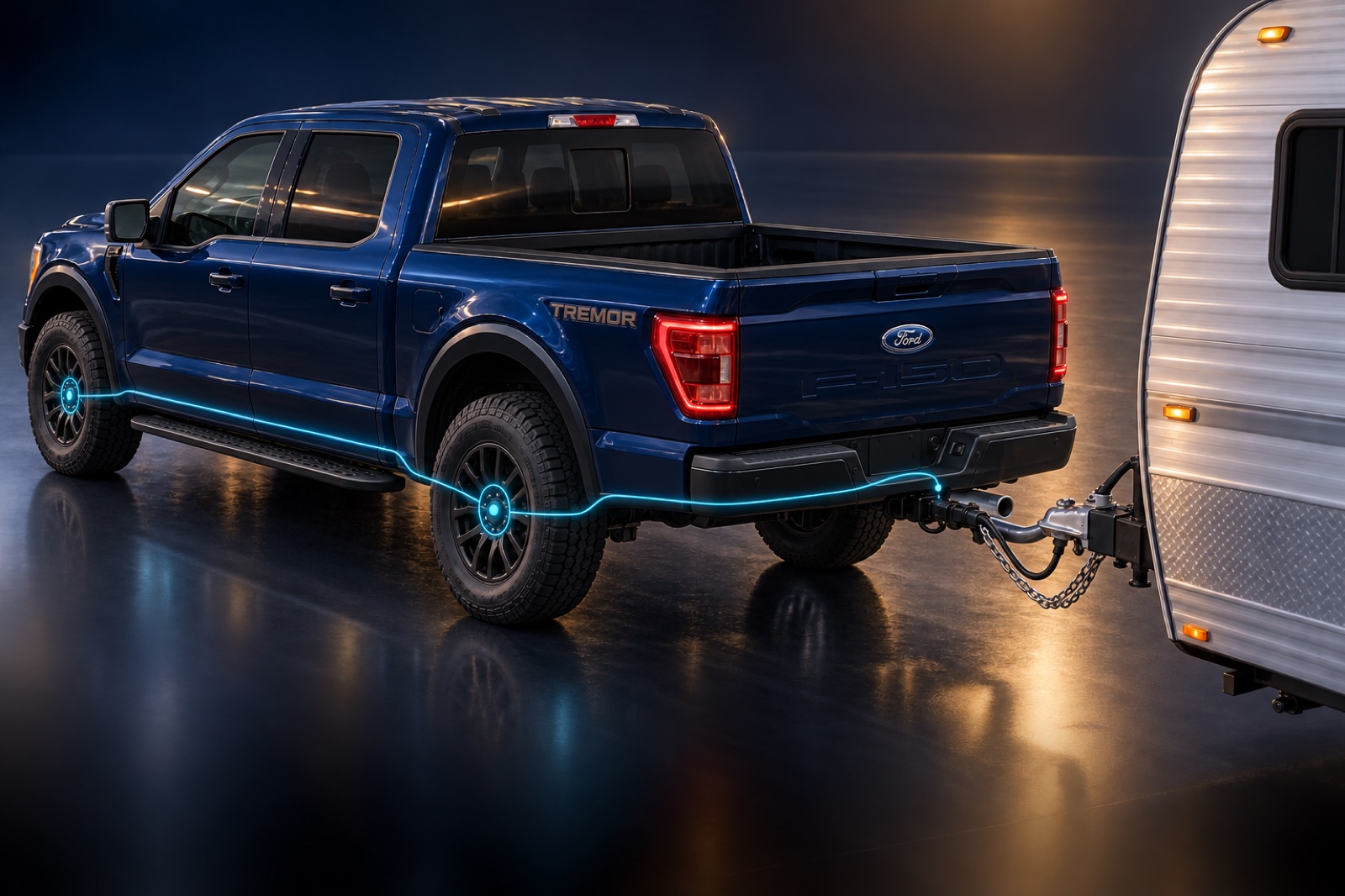
There is an unresolved choice beneath all this logic. Ford does not explain how the system decides between front-only and rear-only operation. Both are allowed, so the front-brake emphasis in the hero image is one possible example, not a specified default.
A Hill Changes The Threshold
Wet-road detection can be similarly direct. Selecting a driving mode intended for wet or icy conditions can be enough to require both axles. Other possible inputs include temperature, precipitation and an estimate of the road’s friction. The controller need not rely on the driver selecting a mode.
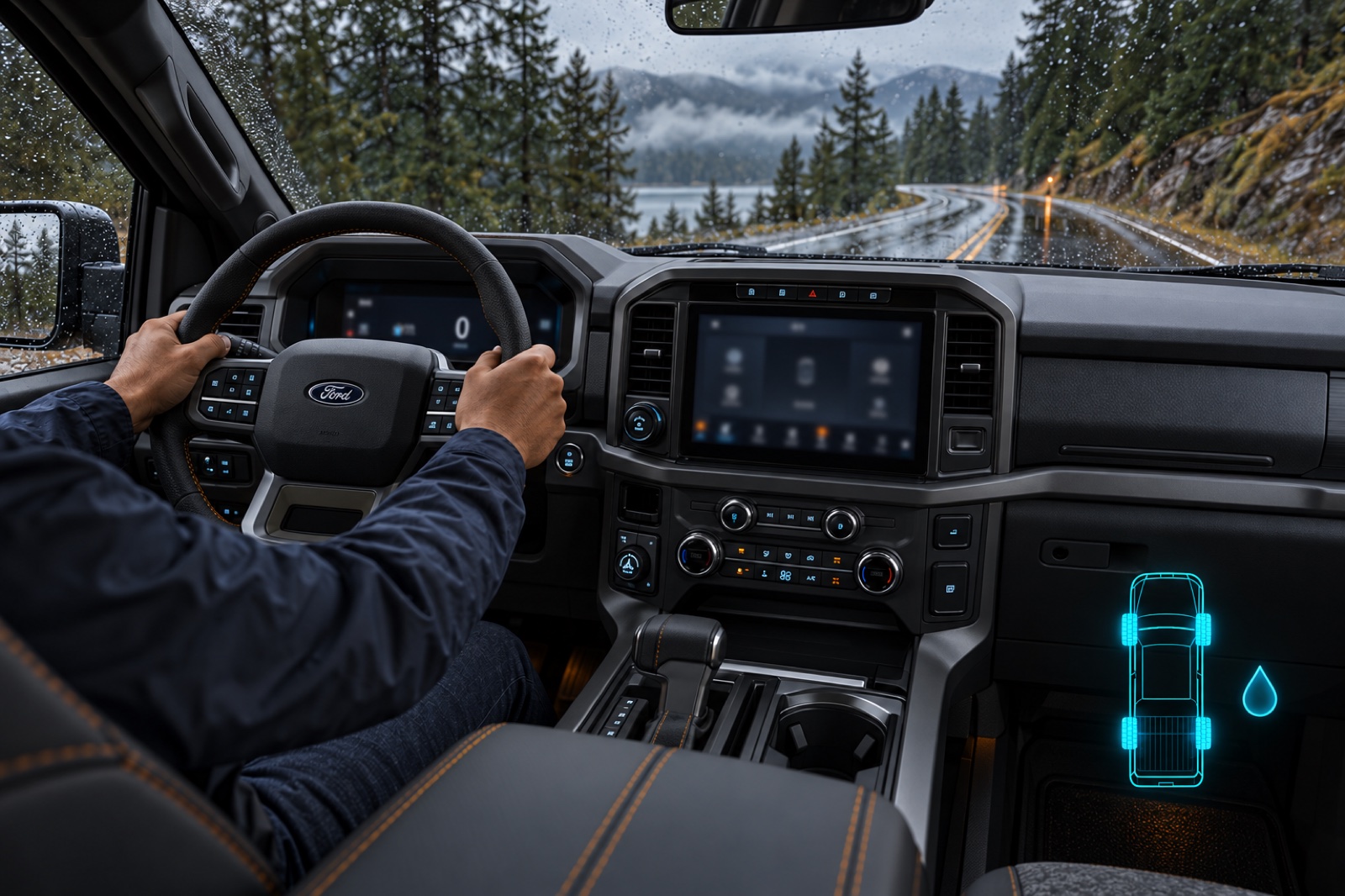
Hills introduce a more subtle adjustment. In an expanded version, the pedal travel needed to bring in both axles decreases as the grade increases. A pedal input that leaves one axle idle on a gentler slope could therefore engage front and rear brakes on a steeper one.
Ford gives 5% and 10% grades as example dividing points, with different pedal thresholds between them. Those are illustrative settings, not announced calibrations. The stated purpose is to preserve stopping distance as the slope changes.
Brake-pad wear can also move up the priority order. If wear exceeds a threshold, an optional check enables both axles, and Ford says pad condition could rank first or second because of its influence on stopping distance. The sequence is adaptable to the vehicle and its condition.
Quiet Needs Evidence
Using axle distribution to manage noise has a history. Ford previously proposed adjusting front-to-rear braking in response to detected or predicted brake vibration, while BMW described single-axle braking to suppress noise during creeping after a stop. This proposal’s distinction is its ranked set of stopping-distance checks governing when one axle may work alone.
The potential benefit remains unmeasured. Ford supplies no noise-reduction results or comparative stopping-distance tests, and the filing leaves the axle-selection rule unresolved. There is no demonstrated pad-life or fuel-economy benefit to add to the case.
The conservative overrides are the strongest part of this proposal. Trailer connection, slippery conditions, steeper grades and worn pads all give the controller reasons to use both axles. That is a credible foundation for a comfort feature. The case for quieter stops still needs measurements showing that the difference is audible and the transitions preserve braking performance.