Rivian proposes using a small auxiliary battery to get an EV ready to charge when its depleted main pack cannot supply the necessary startup energy. The approach, described in a patent filing discovered by Carmoses, lets the onboard electronics prepare themselves before connecting the traction battery. It could also remove some dedicated precharging hardware.
Rivian previously disclosed converter-based precharging for an [external vehicle-to-load charger][earlier-charger]. This proposal applies that broader principle to a sequence inside the vehicle, preparing several electrical circuits while the main pack stays isolated.
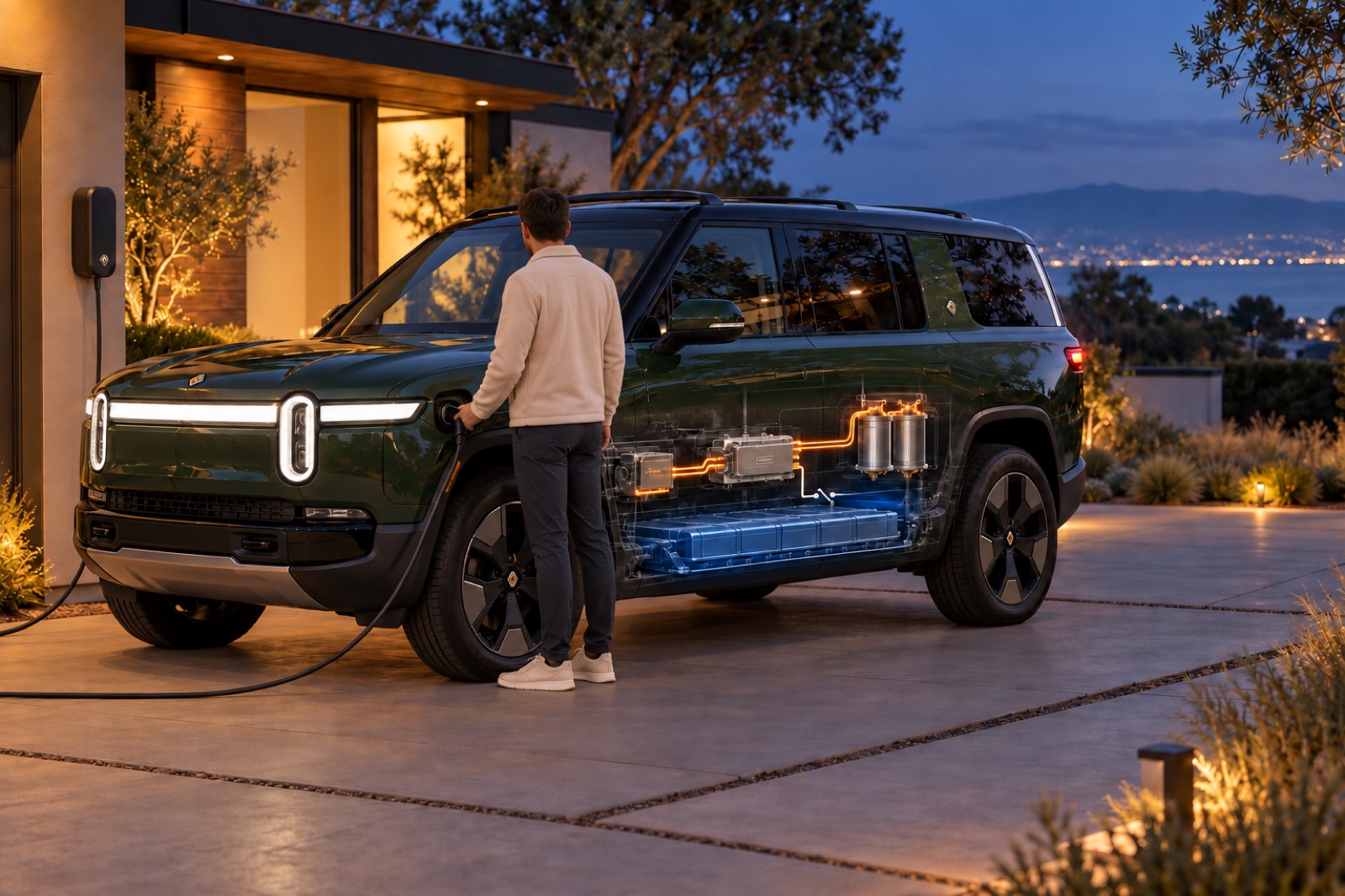
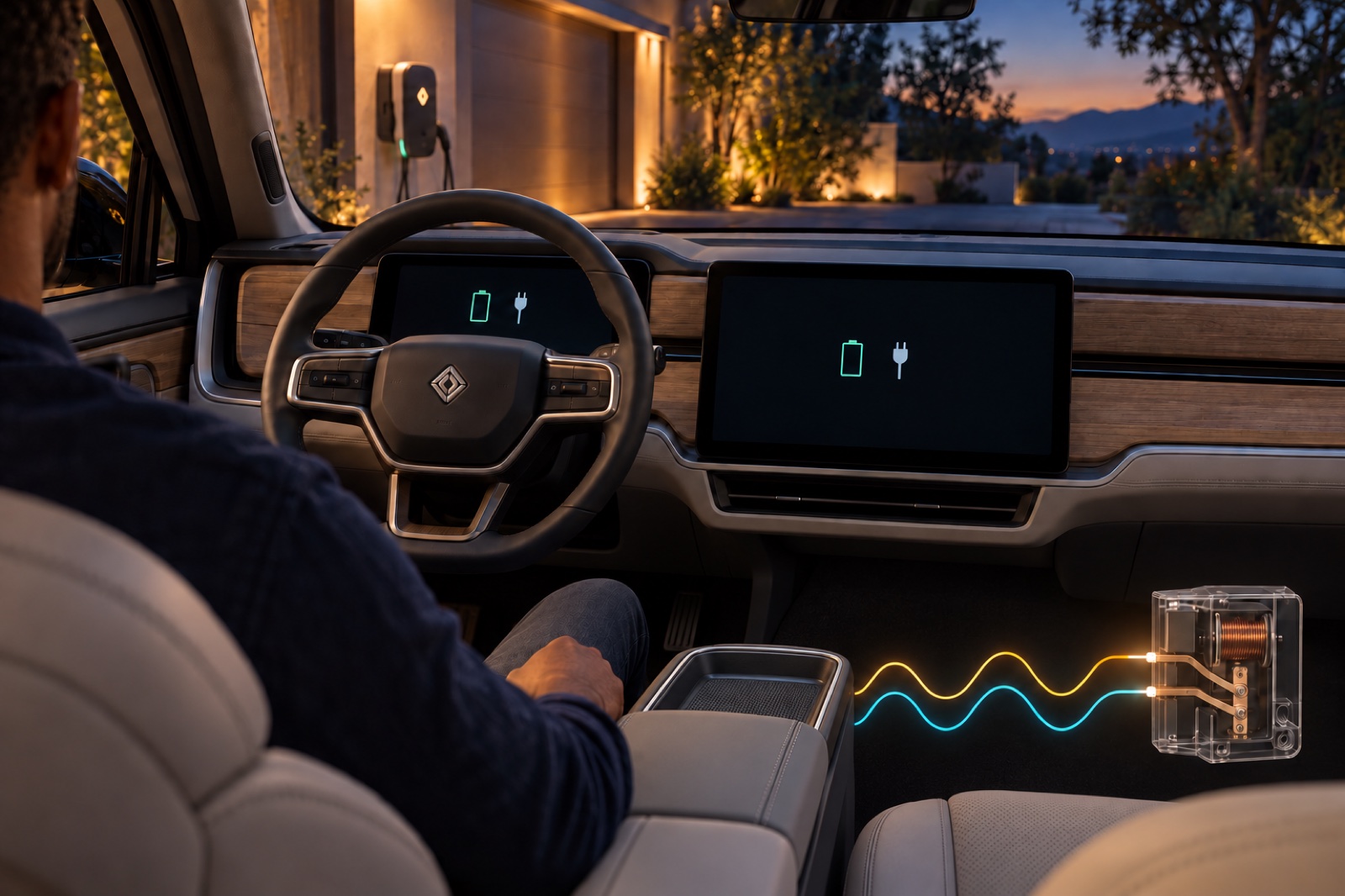
Nothing in the filing names a model. Its boxy SUV and onboard charging arrangement make the R1S a reasonable setting for the renders here, an editorial placement rather than a confirmed application.
Before The Main Pack Connects
Plugging in starts more than the transfer of energy into a battery. The charging electronics contain capacitors, components that store electrical energy. Connecting them abruptly to a source at a substantially different voltage can cause a large surge of current. Precharging raises their voltage first, reducing the difference before the main electrical switches close.
For the driver, the process can begin with an ordinary charging request. The car can receive its instruction through communication with the charging equipment, a phone command or its own interface. The controller then handles the electrical preparation.
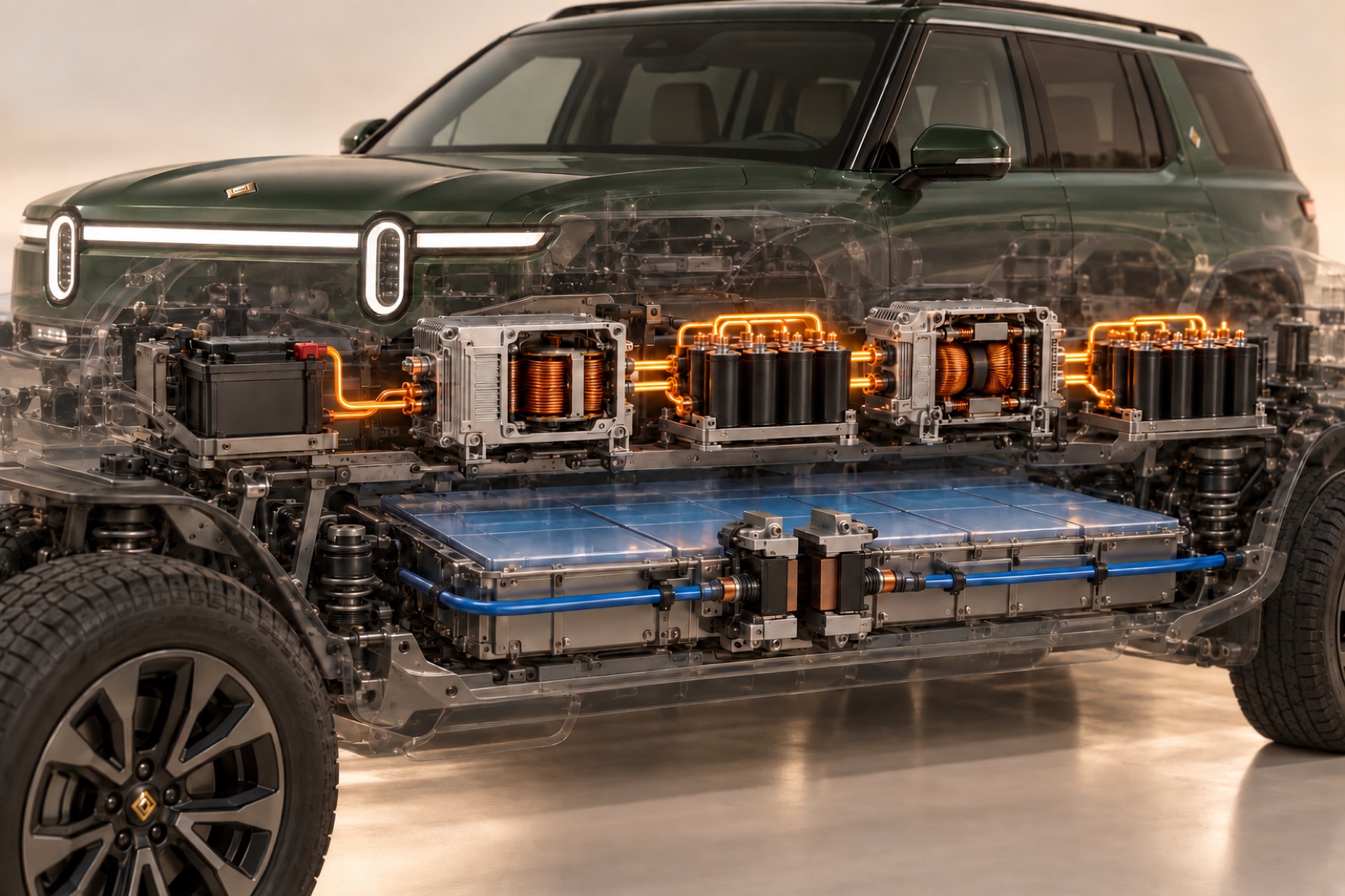
A DC-to-DC converter takes energy from the auxiliary supply, illustrated as 12 volts, and raises the voltage on the high-voltage bus, the conductors linking major electrical components. That charges the capacitor bank connected across it. A contactor, an electrically controlled switch, keeps the traction pack disconnected throughout this first stage.
When the main battery has enough energy, it can connect after that preparation and supply the next stage. When it does not, the auxiliary source keeps working. A second converter prepares another capacitor bank on the onboard charger’s intermediate DC bus. Both banks can charge simultaneously without drawing energy from the traction pack.
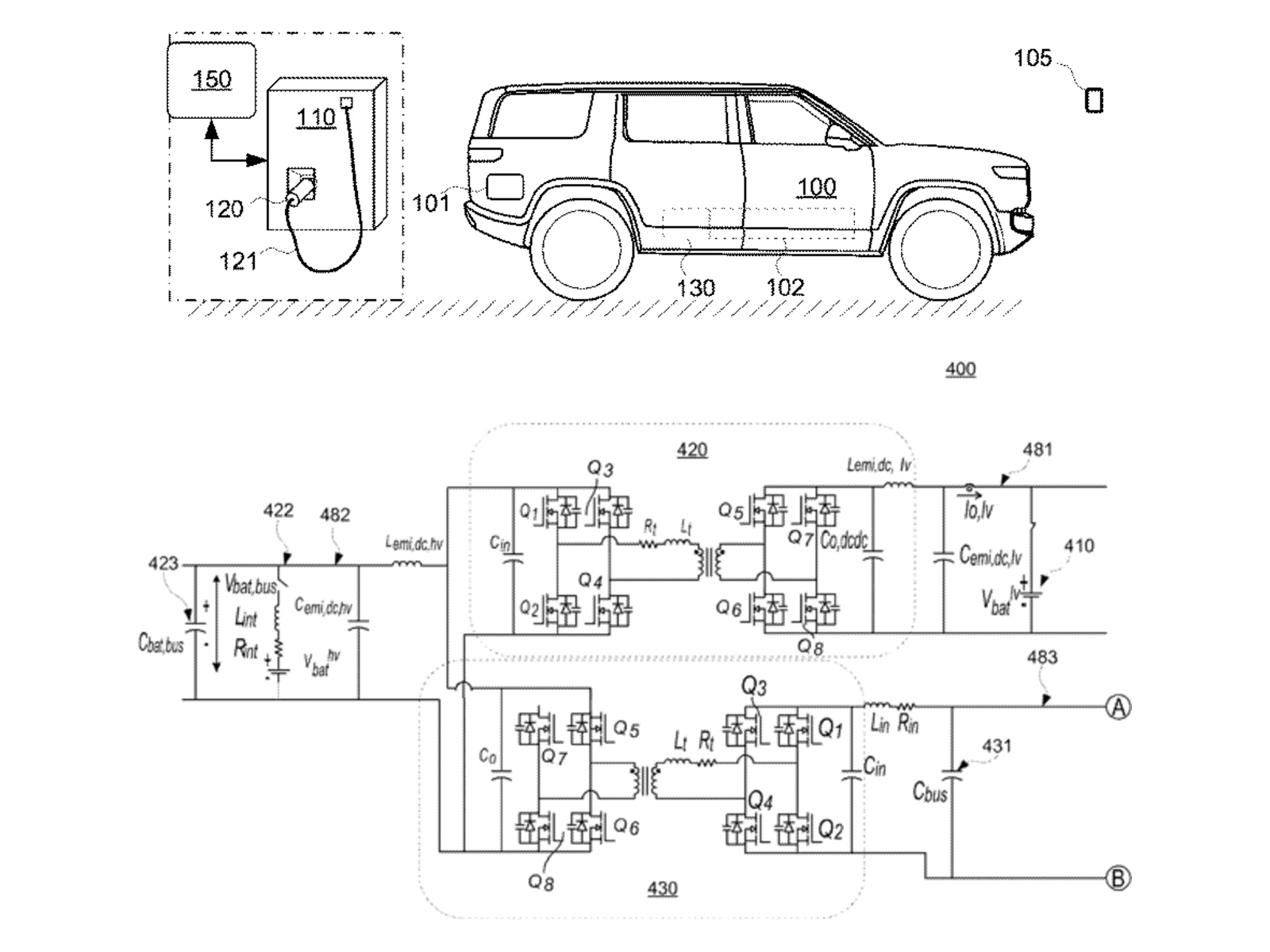
One example raises the high-voltage circuit to 450 volts in approximately half a second, with peak auxiliary power of 1 kilowatt. Preparing both DC buses together raises that example’s peak demand to 1.68 kilowatts. These are electrical preparation figures, not measured production specifications or the time needed to recharge the vehicle.
Matching The Power At The Plug
The AC side requires another step. Household electricity changes direction repeatedly, so matching a single voltage value is insufficient. The charger can measure the grid supply and reproduce its voltage waveform, matching amplitude, frequency and phase before connecting. In practical terms, its voltage rises and falls in step with the source on the other side of the switch.
In the depleted-pack sequence, the auxiliary supply supports that preparation too. Once the AC side is synchronized, the grid contactor closes. The traction-pack contactor follows, and charging power can begin flowing into the main battery.
The increased workload on the small battery is a limitation. Rivian describes monitoring its voltage and slowing precharging if the supply sags toward an undervoltage threshold. One example uses a 10.5-volt limit. Once the high-voltage circuit reaches its target, the controller changes to holding that voltage steady.
That protection does not make a dead auxiliary battery useful. Nor does preparing the electronics establish that a damaged traction pack can safely accept a charge. The proposal addresses the energy needed to start the charging process, with no demonstrated improvement in DC fast-charging speed.
A Useful Job For Existing Electronics
Active precharging already has a place in EV engineering. Texas Instruments offers a reference design that uses a converter to charge high-voltage capacitors. Rivian’s interesting contribution here is coordinating the vehicle’s conversion stages and choosing the auxiliary supply when traction-pack energy is unavailable.
Controlling those stages could also allow certain precharge resistors and bypass relays to be omitted. Those components ordinarily limit the initial current, then provide a less restrictive path once the capacitors are charged. Rivian provides no dollar saving or demonstrated durability gain for removing them.
The company has already simplified other electrical hardware in production. Its second-generation R1 architecture reduced the number of electronic control units from 17 to seven and removed 1.6 miles of wiring per vehicle. That is separate work, with no evidence that this charging proposal is installed in those vehicles. A patent does not guarantee production.
Preparing the electronics without drawing on a depleted traction pack is a useful improvement to pursue. The operating examples do not establish how consistently the auxiliary supply can carry the extra load across battery conditions. Proving that capability matters more than shortening an already brief capacitor-precharge sequence.
[carmoses-record]:
[earlier-charger]: