Getting a stuck SUV moving creates another problem if raising its body would push the roof into an overhead obstacle. Land Rover’s proposed recovery assistant accounts for that possibility by letting the driver refuse a suspension lift, even while the vehicle takes charge of working itself free.
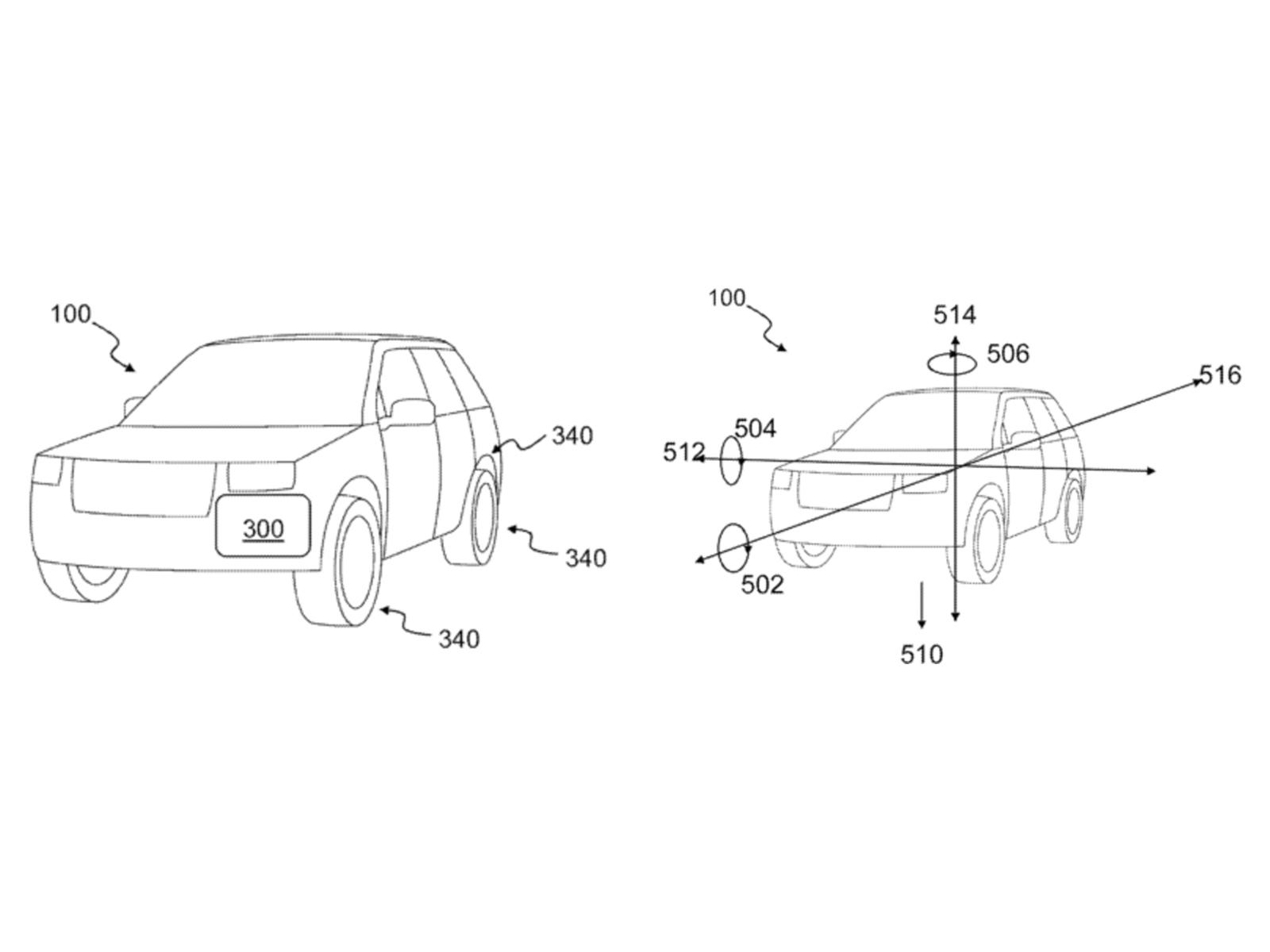
The system, described in a patent filing discovered by Carmoses, would select steering, wheel rotation and suspension movements according to the terrain. It could ask occupants for missing information, recommend an exit direction and change tactics as traction improves. The aim is to give inexperienced drivers access to the techniques an off-road expert might use.
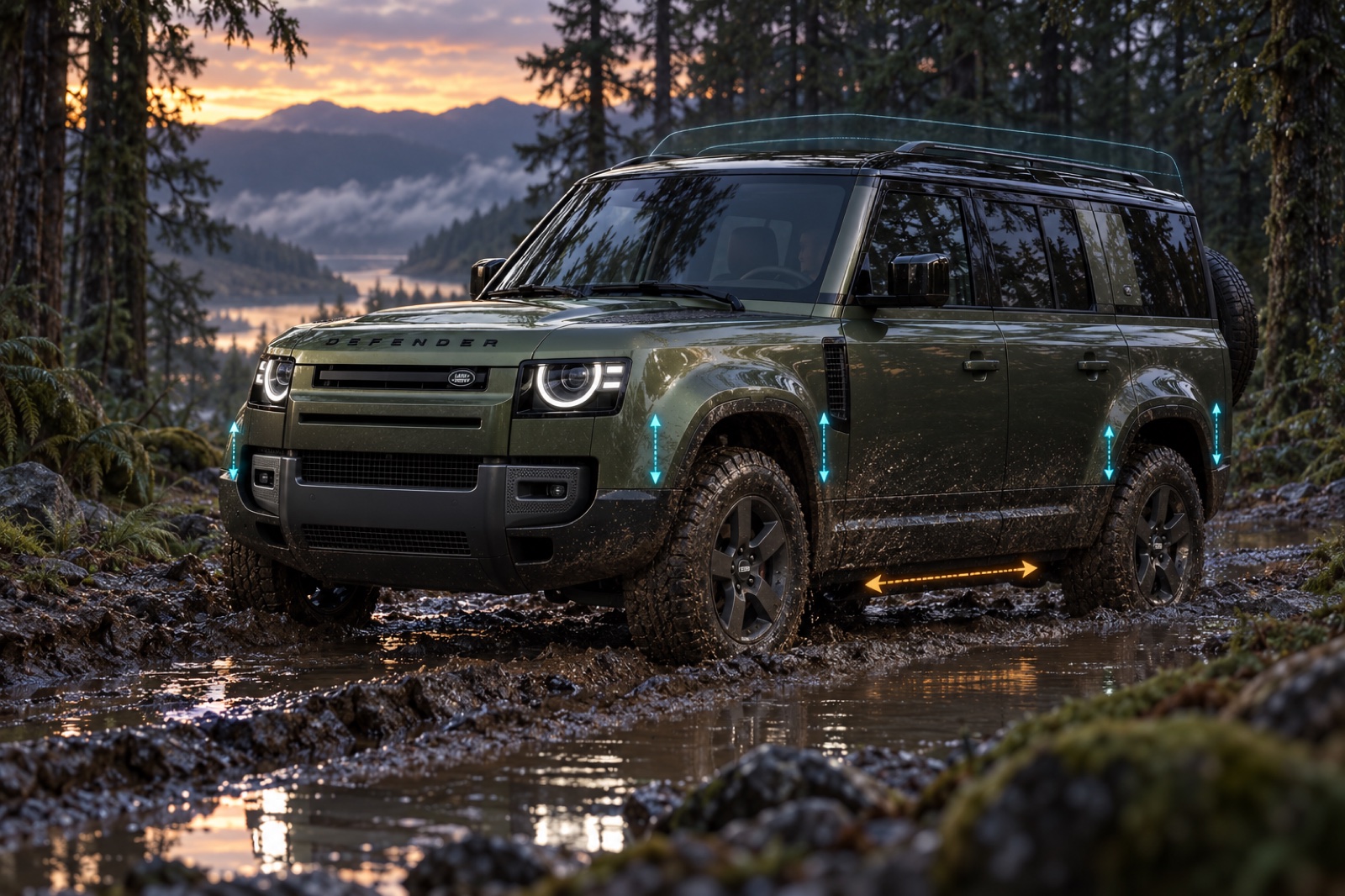
Nothing in the filing names a production model. Its upright SUV and sand, mud and snow recovery scenarios make an air-suspension-equipped Defender 110 a sensible setting for these renders. The US Defender range already offers electronic air suspension and Terrain Response, although compatibility with this proposal is unconfirmed.
Sand And Mud Get Different Moves
A recovery request could start with a button or spoken command, or with sensors recognizing that the wheels are turning without the expected movement across the ground. The controller would assess conditions using sensor data, answers from the driver, or both, then select the operating settings for an escape attempt.
Those settings could come from a stored library built through testing, expert-driver input or computer modeling. Keeping that information onboard would allow the assistant to work without a wireless connection, a practical provision for trails beyond cell coverage.
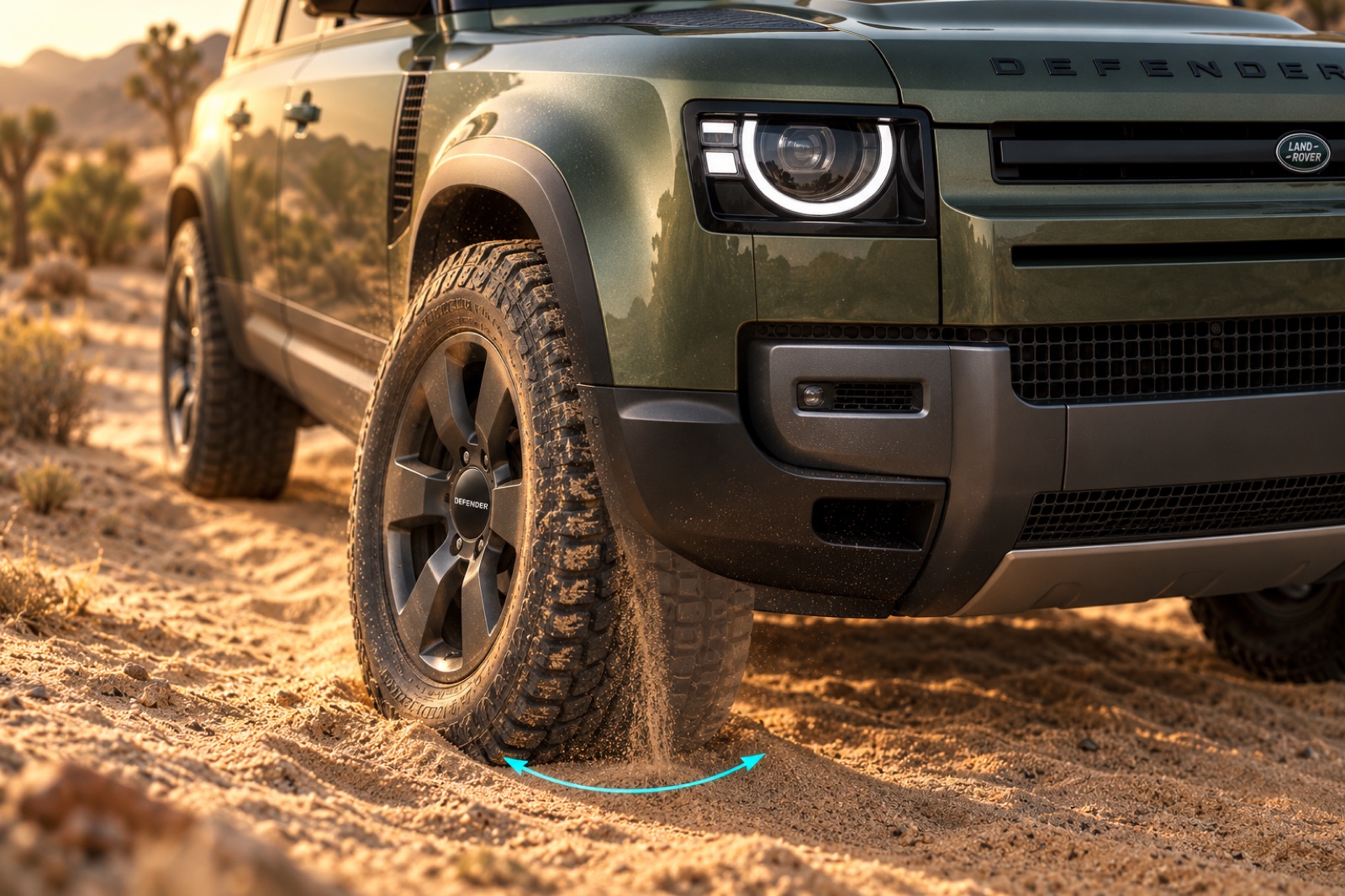
In dry sand, the proposed technique is to steer the tires repeatedly from side to side. Loose grains would fall into the space vacated by the moving rubber, potentially building support beneath the wheels and helping lift the vehicle out. This is controlled steering movement rather than a command to spin the tires faster.
Mud calls for a different example. The wheels would slowly alternate between forward and reverse rotation while the suspension raises and lowers the body. Together, those movements could help work the SUV free. The system can select individual actions or combine them according to conditions.
The exit direction also matters. Vehicle tilt and orientation could inform a recommendation that uses gravity to help extraction. The driver could confirm that route or specify another, such as moving forward toward firm ground instead of reversing into more mud.
The Driver Can Set Limits
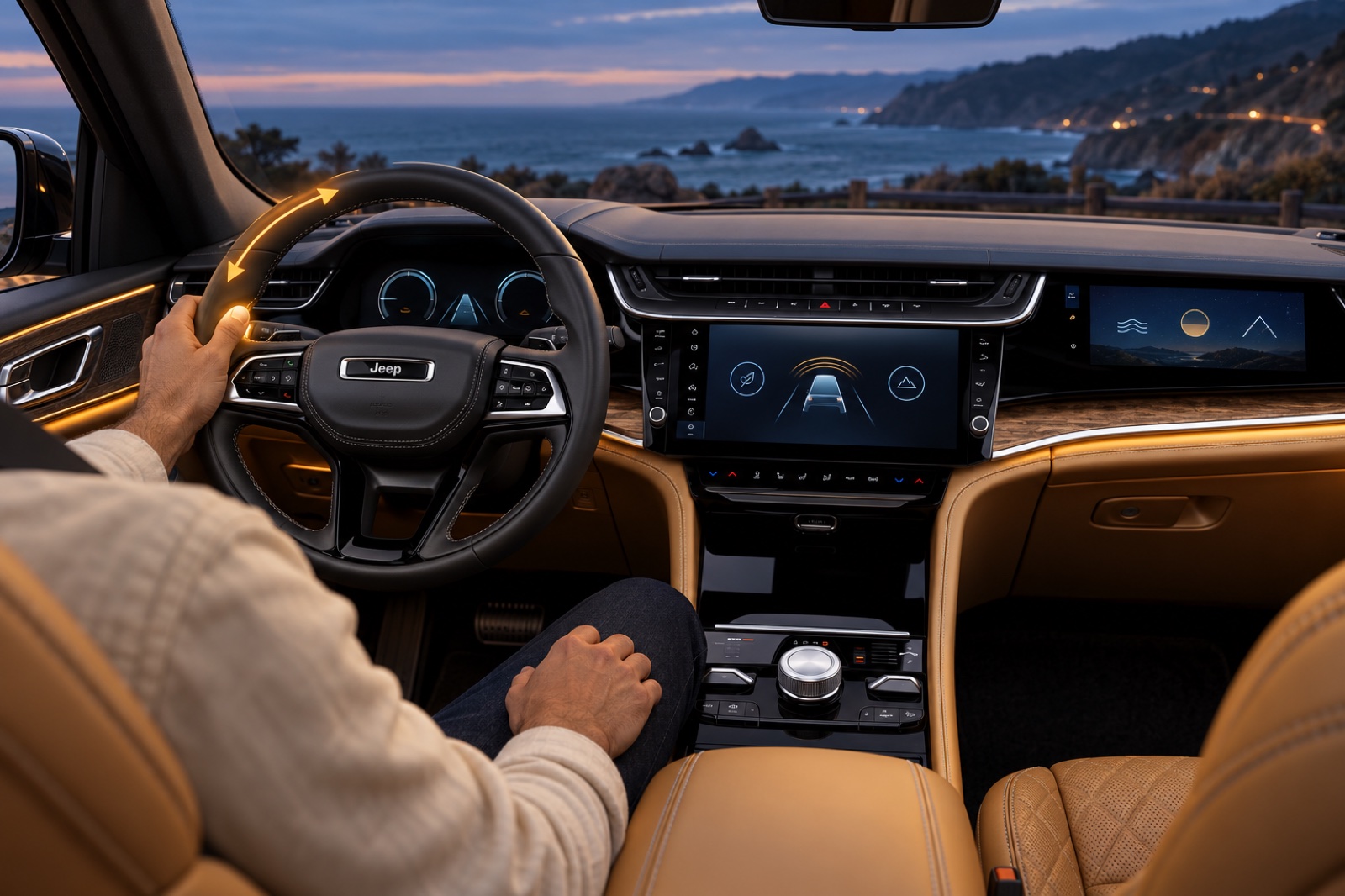
The overhead-obstacle example exposes a useful distinction between requesting help and agreeing to every movement the car might make. Before raising the suspension, the assistant could seek permission. Refusing that adjustment gives the controller a constraint to work with.
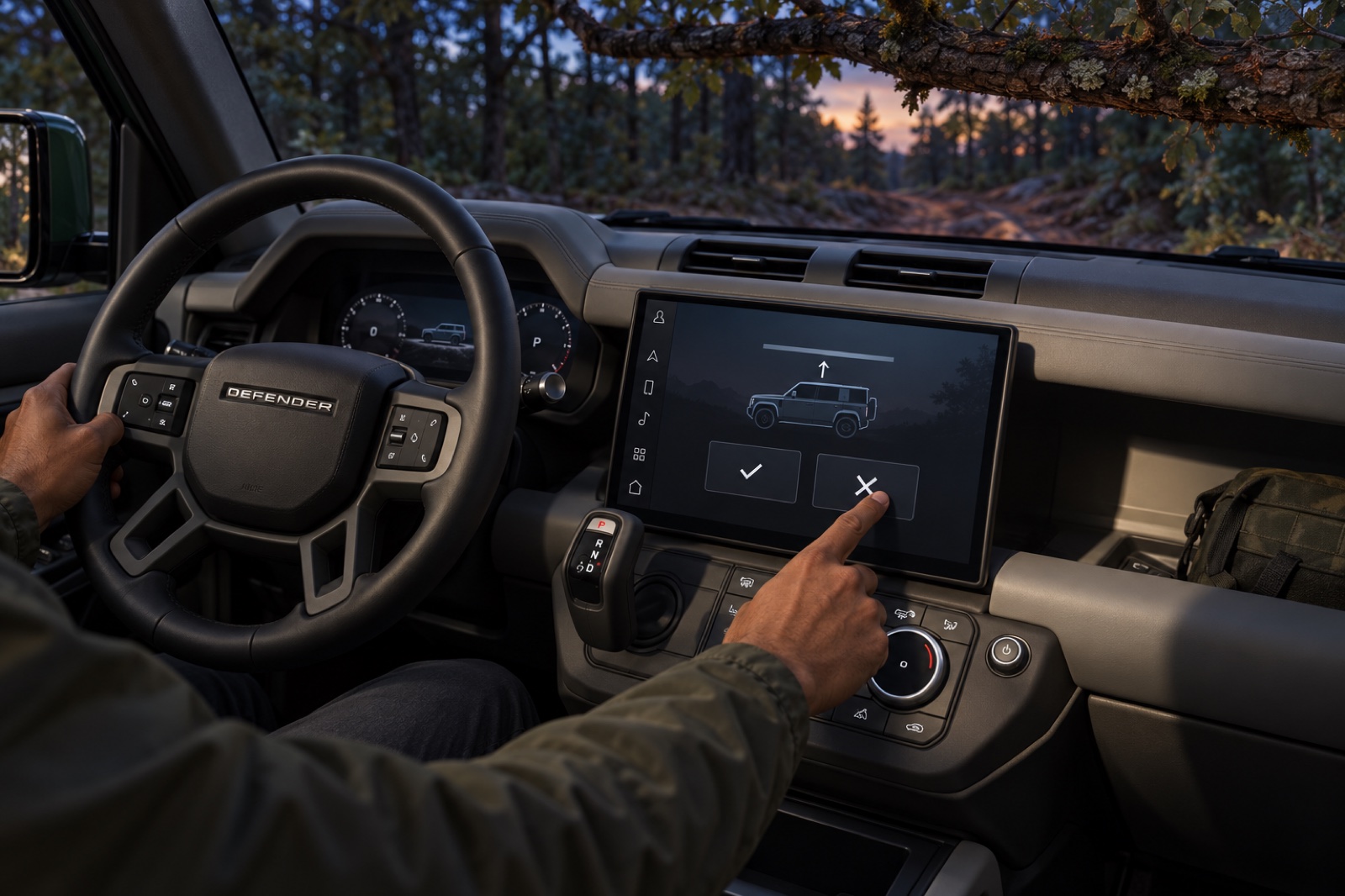
Other checks concern the situation underneath and behind the SUV. If the underbody is resting on an obstruction, the assistant could explain why automatic recovery is unavailable. With a trailer attached, it could request uncoupling or choose maneuvers that avoid sideways movement.
During an attempt, wheel speed, ground speed and clearance measurements could help determine whether the vehicle is making progress. The controller could revise its settings as it moves from deeper material into shallower ground, while a display explains the action or shows progress. The driver could stop automatic recovery and request manual control at any time.
More Than Another Bounce Mode
Suspension-assisted recovery already has precedent. Mercedes-Benz describes a GLS free-wheel mode that repeatedly raises and lowers the vehicle to help escape sand, while Ford previously explored coordinating suspension forces with forward-and-reverse rocking.
Land Rover’s interesting contribution is the proposed management of the attempt, from choosing a technique to incorporating driver constraints and adapting as conditions change. That addresses more of the recovery task than executing one repeated motion.
The engineering gaps remain substantial. The filing provides no measured success rate, validated slope limits or proof that a current Defender’s hardware can perform every proposed movement. A patent does not guarantee production.
The driver interaction is the strongest part of this proposal. Asking for terrain information and permission to move gives the person inside a defined role when conditions are uncertain. Its value would depend on how reliably it recognizes those limits, because choosing an unsuitable escape maneuver can leave an SUV in a worse position than where it started.