A steering-wheel warning light should catch the driver’s eye without leaving an edge under their fingertips. Lexus supplier Toyoda Gosei proposes a light that can shine through leather, supported by a smooth lens that also houses its electronics, according to a patent filing discovered by Carmoses.
Steering-wheel alerts are already familiar from Cadillac’s Super Cruise, whose upper light bar turns green during hands-free operation and flashes red when the driver must take control. Toyoda Gosei’s construction was also public in the US earlier this month. It addresses a different concern, making the illuminated section feel like part of the grip.
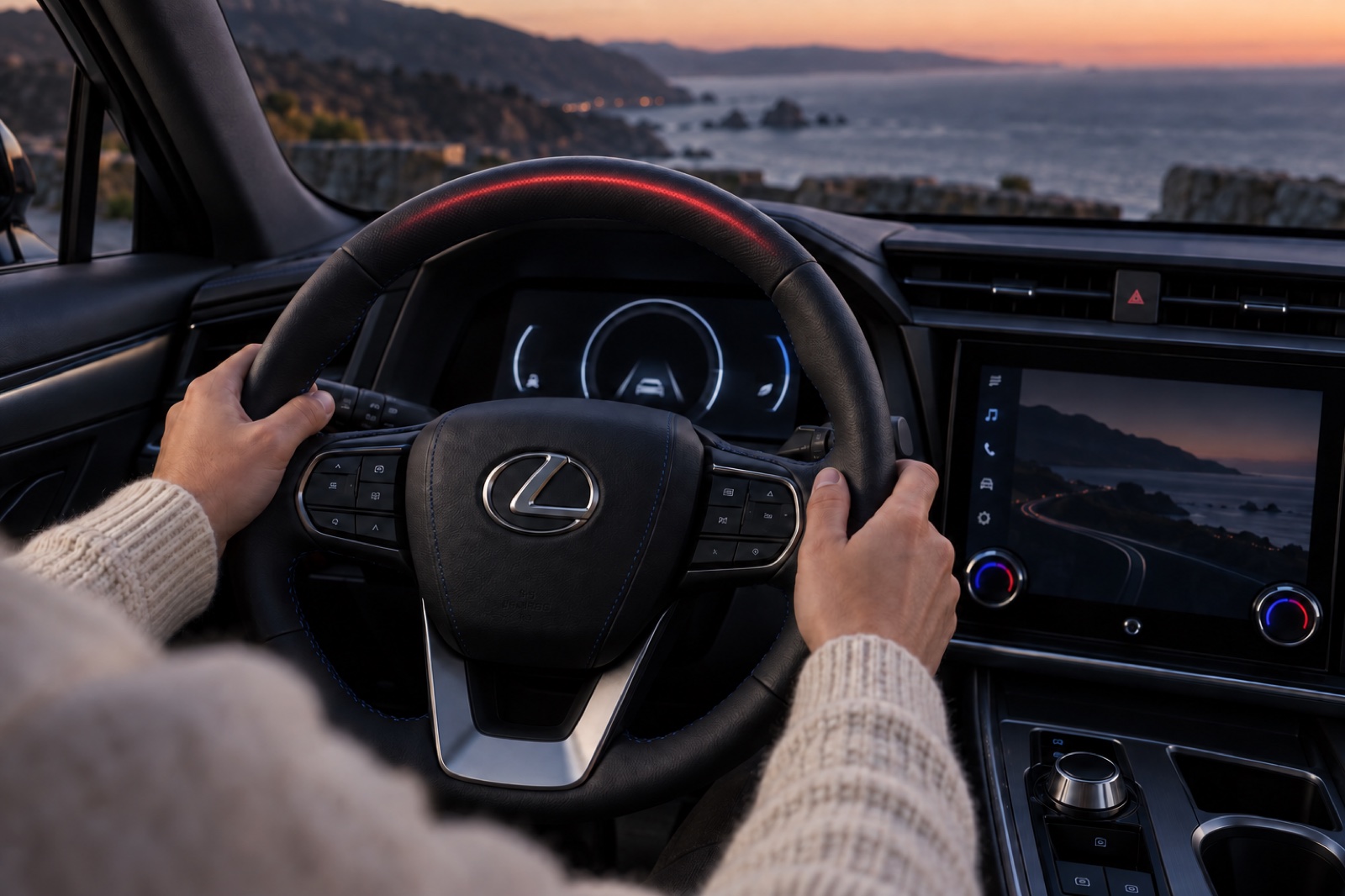
Nothing in the filing names a production model. We chose the Lexus RZ for these renders because Toyoda Gosei has announced a steering wheel for that electric SUV, and its emphasis on grip comfort fits a luxury cabin. That announced product is a steer-by-wire yoke, separate from the round-wheel lighting arrangement illustrated here.
The Lens Becomes The Housing
The problem starts where a separate light window meets its holder. A gap or slight height mismatch can leave an uneven surface under the hand, including through an outer covering. Wrapping an assembly in leather does not automatically remove the shape underneath.
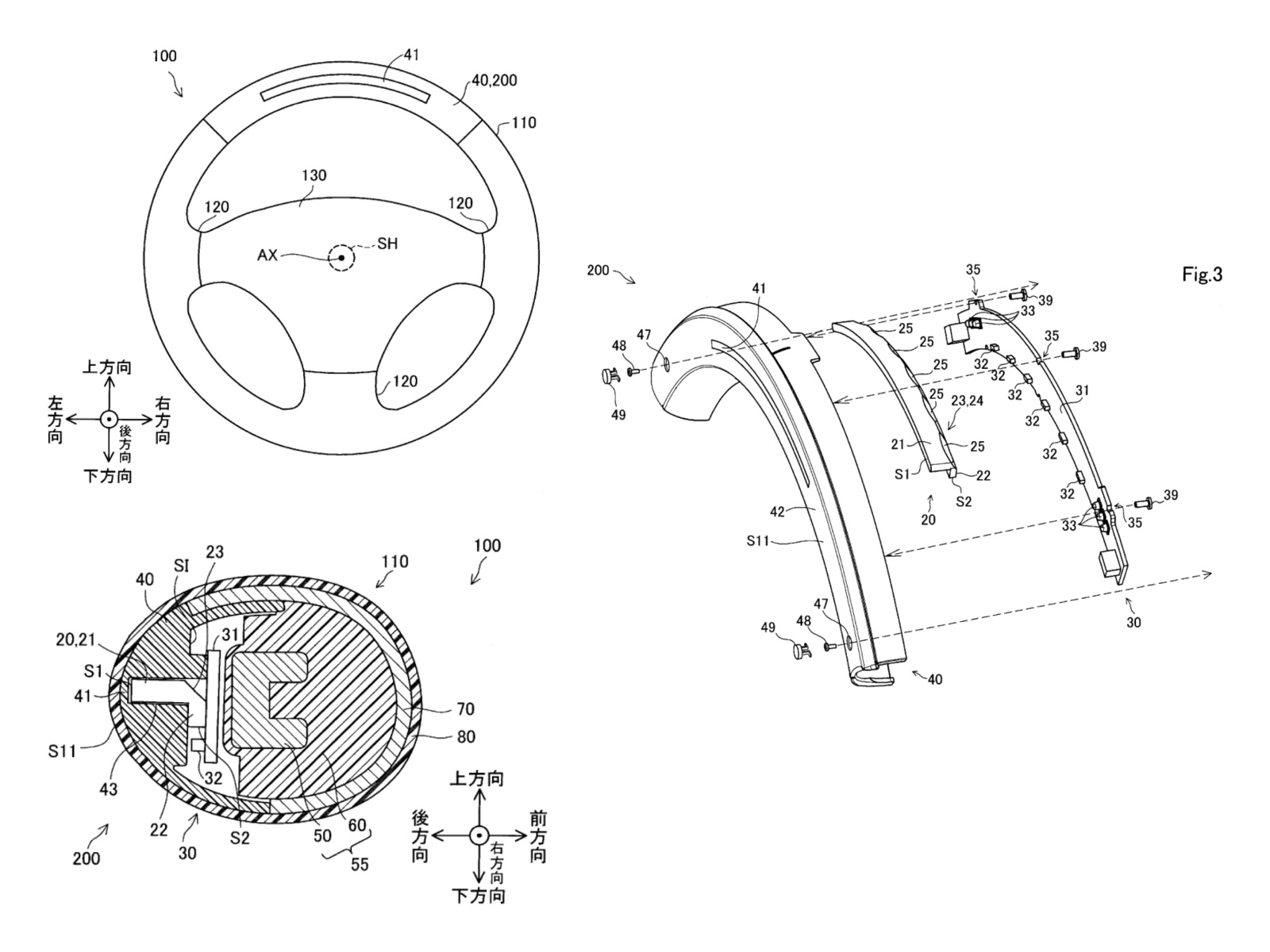
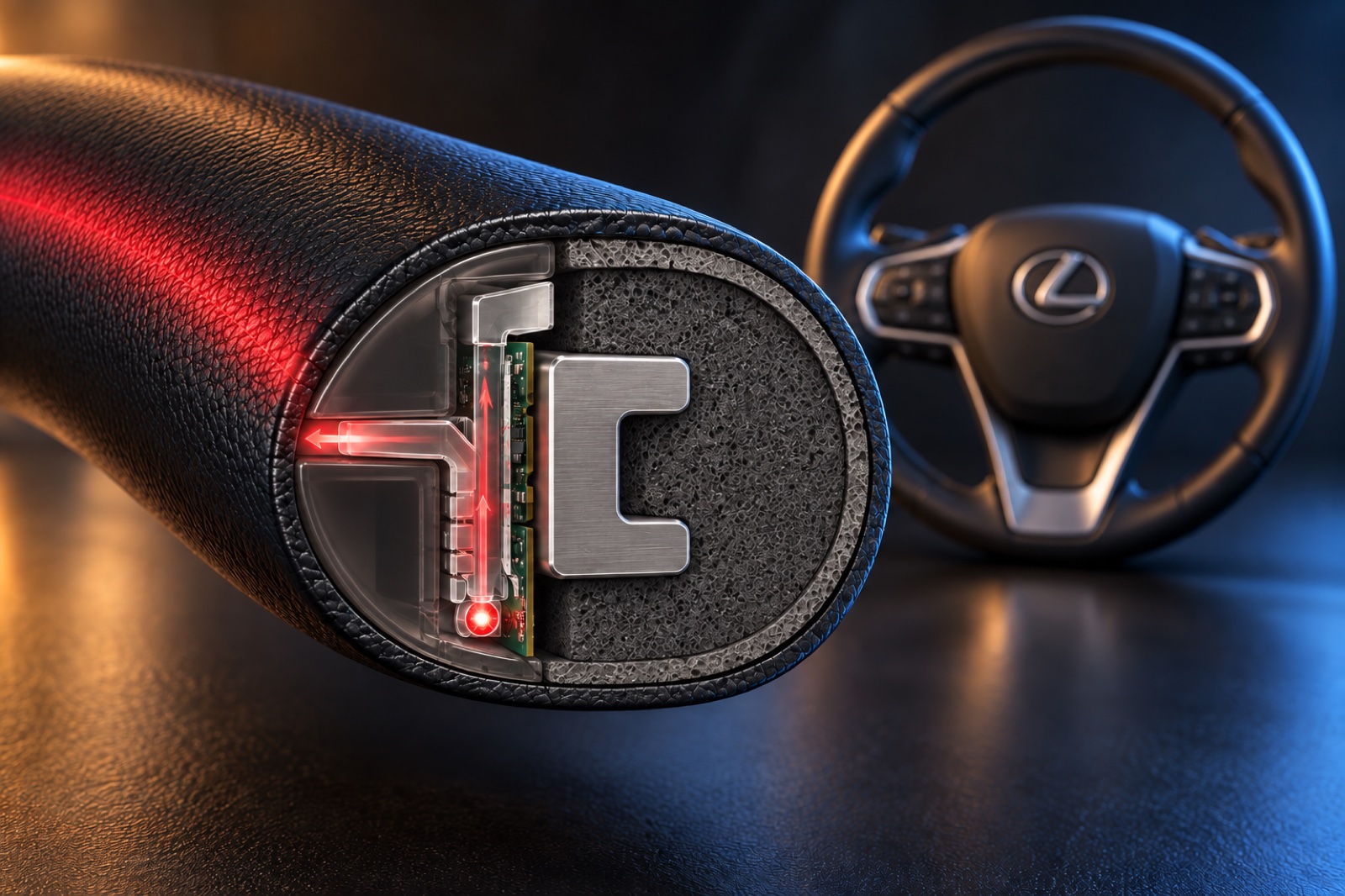
Toyoda Gosei brings those surfaces together. A curved lens follows the upper rim and accommodates a circuit board inside it. Its driver-facing exterior includes both the light outlet and the surrounding area, with no groove or step at their boundary. In one version, the same component also supports the board, reducing the need for separate parts.
Visible LEDs send light into a shaped guide that redirects it toward the driver and spreads it along the strip. The output passes through the lens and then the outer skin. Natural and synthetic leather are among the proposed coverings, provided they transmit the emitted light.
The rim can illuminate red to request a grip, and the driver responds by taking hold of the wheel. Different colors or flashing can convey other information. The proposal does not specify the conditions that trigger each warning or when the reminder would switch off.
Grip sensing remains a separate function from the light that communicates the reminder.
The Dark Section Has Another Job
A second set of emitters gives the assembly another purpose. Infrared LEDs sit in two groups flanking the visible-light array, illuminating part of the driver’s body so an infrared camera can capture images in a dark cabin. Their output is invisible to the human eye.
The surrounding trim need not look transparent to do that job. Example lens regions transmit about 25% and 5% of visible light, respectively, while both transmit approximately 90% of infrared. A darker area can therefore suppress visible glow while still allowing infrared illumination through.
Those figures describe the lens, not the finished leather-covered wheel. The distinction matters because the outer material is another layer the light must cross. There is no complete-assembly transmission result, leather thickness specification, or explanation of how the covering is prepared to pass sufficient light.
Nor is there a specified camera location or a new monitoring algorithm. The hardware provides illumination, without establishing how accurately a vehicle could assess the person behind the wheel.
Smoothness Depends On The Fasteners Too
Other construction choices address less obvious sources of unevenness. The lens can clip onto an intermediate bracket attached to the metal core, or engage directly with the impact-absorbing material around it. Those arrangements avoid mounting holes and caps through the optical housing and keep that hardware away from the light path.
Another version molds the guide and lens together, removing an interface between separate optical parts. These changes pursue the same practical goal of fitting illumination into a surface that remains comfortable to hold.
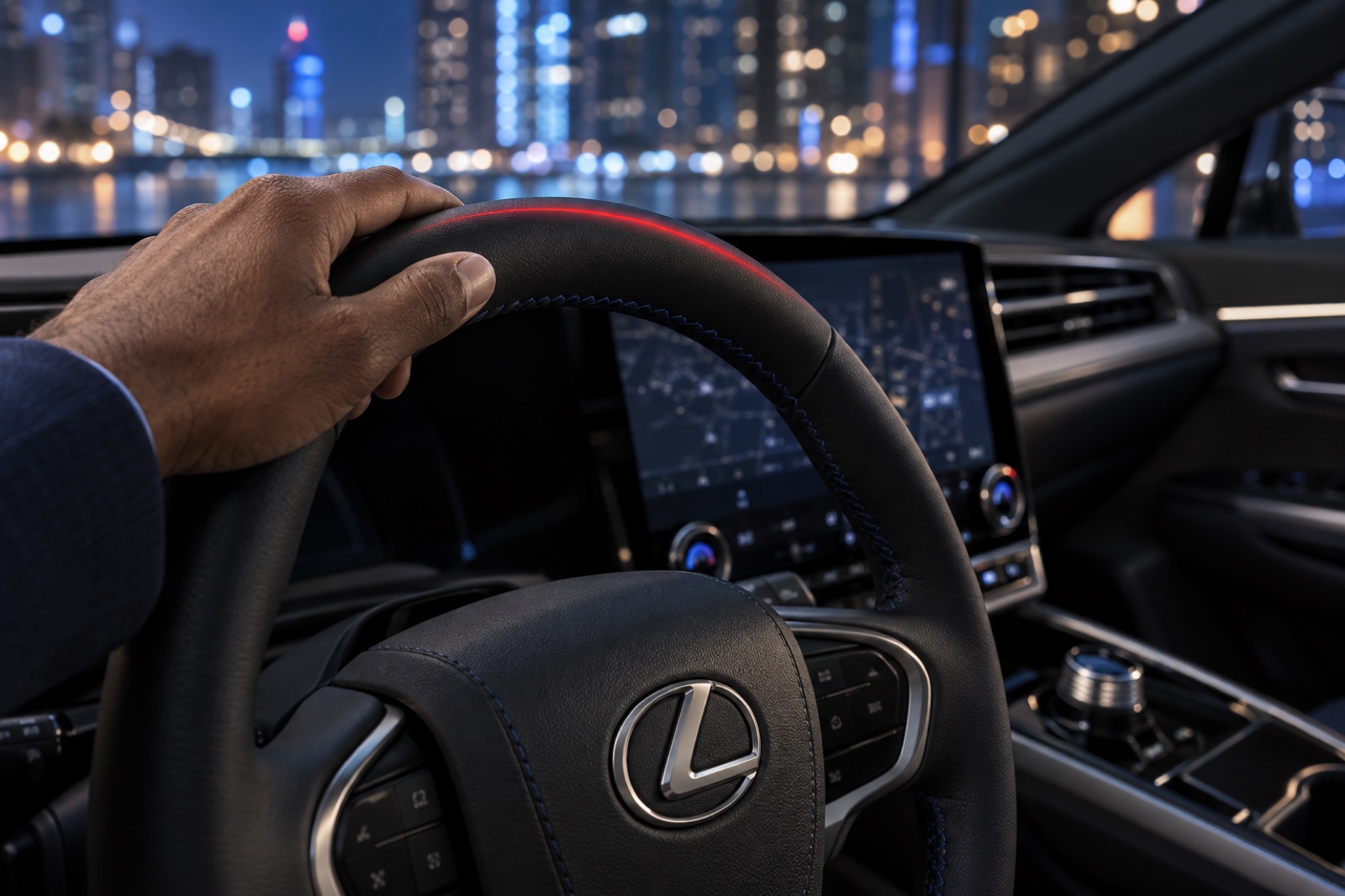
The unresolved test is whether the finished assembly delivers that feel while remaining bright enough through its covering. The filing supplies no measured comfort improvement or durability results, and a patent does not guarantee production.
Toyoda Gosei has picked a worthwhile problem to solve. A warning strip occupies a part of the cabin the driver repeatedly touches, making its fit as relevant as its brightness. A luxury steering wheel should feel properly finished wherever the driver takes hold of it.