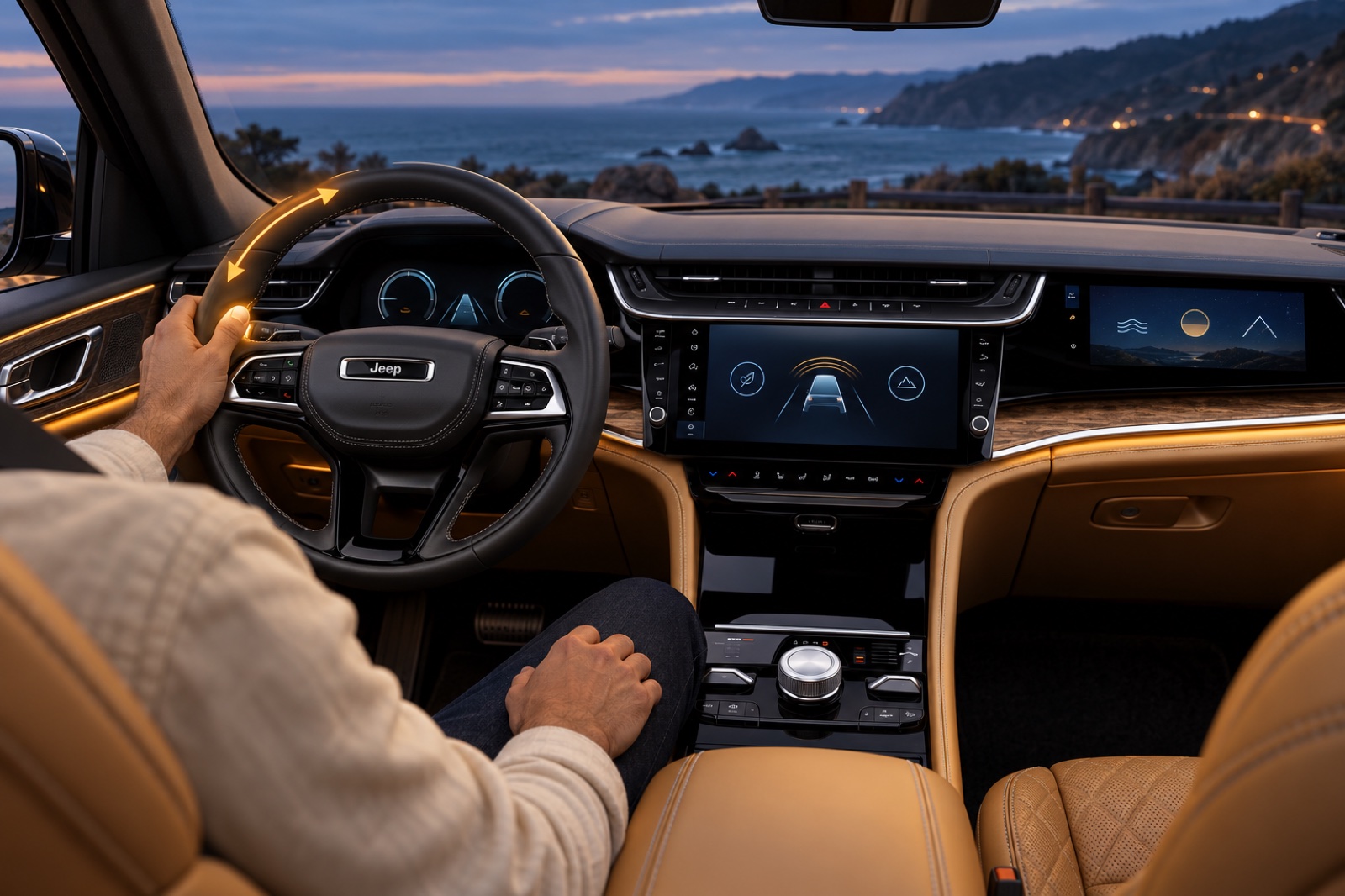
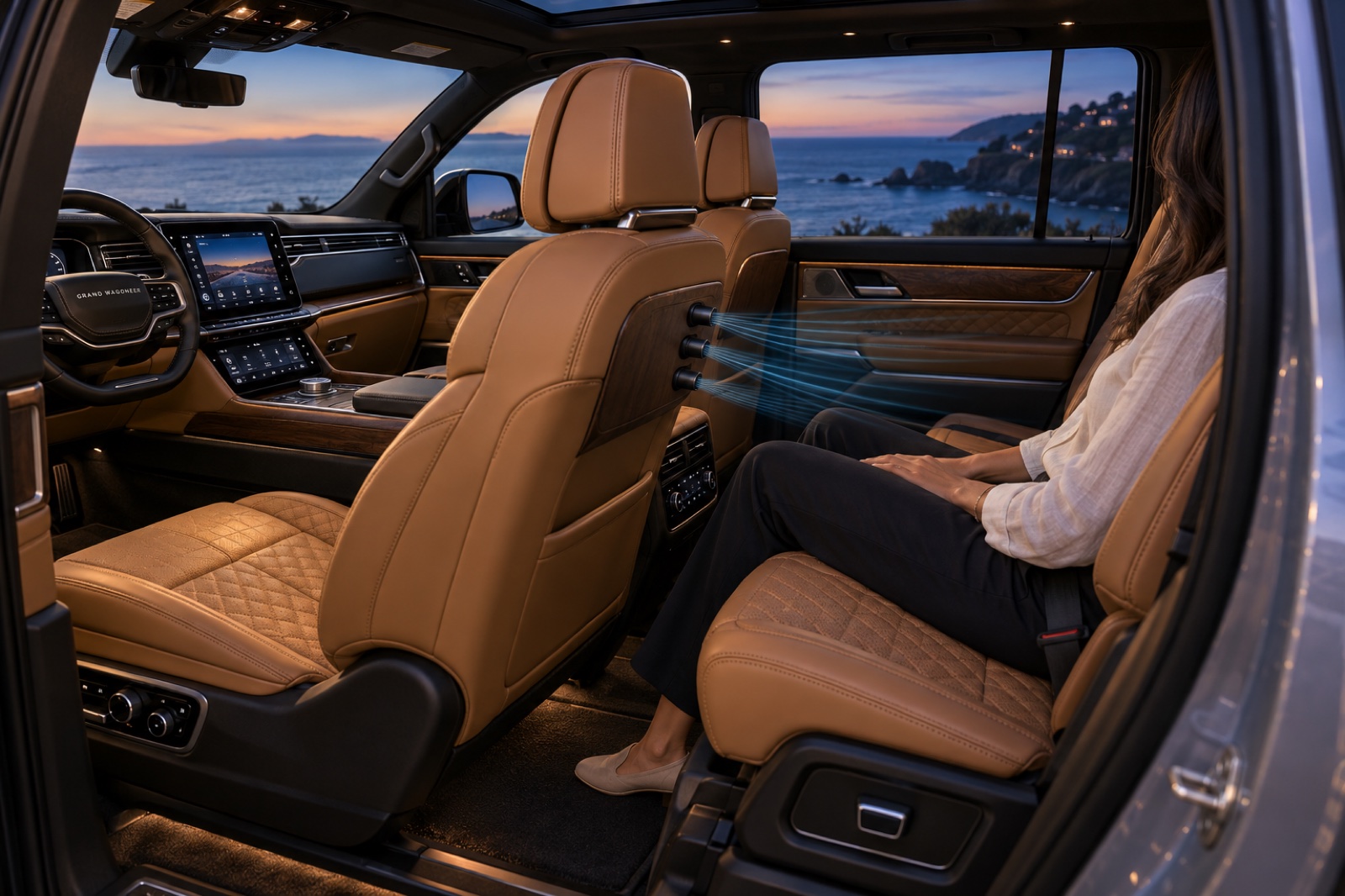
Jeep parent Stellantis has a proposal for cooling a rear passenger through the empty seat in front of them. Telescoping nozzles would extend from the backrest and blow toward the next row, according to a patent filing discovered by Carmoses. Only those rearward outlets would need to operate when nobody occupies the equipped chair, leaving its other vents retracted.
That is one useful detail in a broader attempt to bring heated or cooled air closer to people. Outlets along the cushion and backrest would extend beside an occupant, with deployment adjustable to body size. In the proposed pressure-operated version, the air that eventually reaches your body also pushes the tubes into position.
The filing doesn’t name a model. We used the Grand Wagoneer for these images because it has several rows of seats and already offers heated and ventilated seats, so it suits the idea of personalized climate control. The proposed rear-facing vents would let the front seats help keep second-row passengers comfortable.
Air Pressure Does The Extending
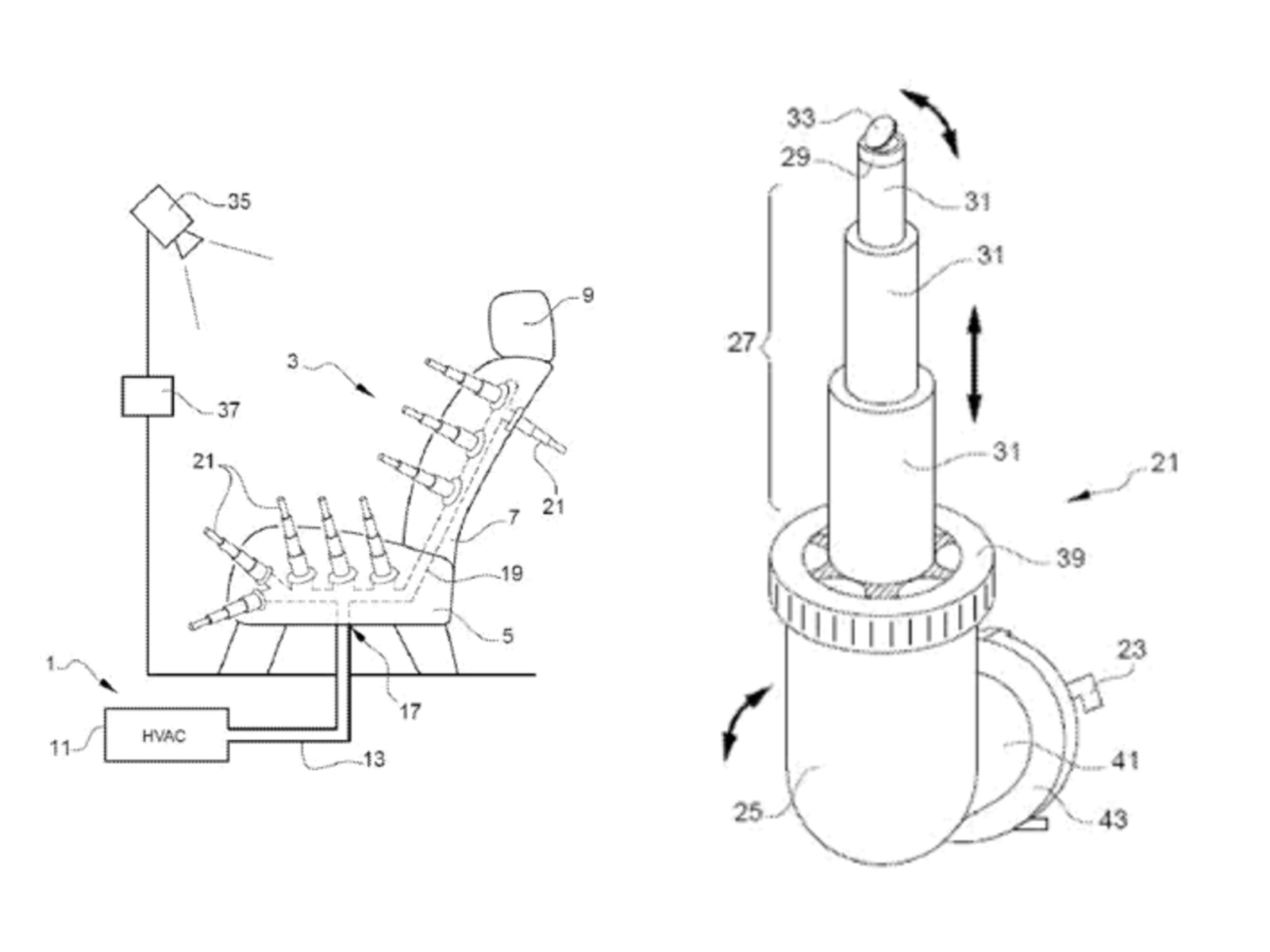
The system starts with the vehicle’s heating and air-conditioning unit. A duct feeds an inlet beneath the seat, and internal passages carry air to the outlets. The preferred layout puts the telescoping hardware along the sides, away from the surfaces supporting the occupant’s back and thighs. When retracted, the tubes would not project above the seating surface.
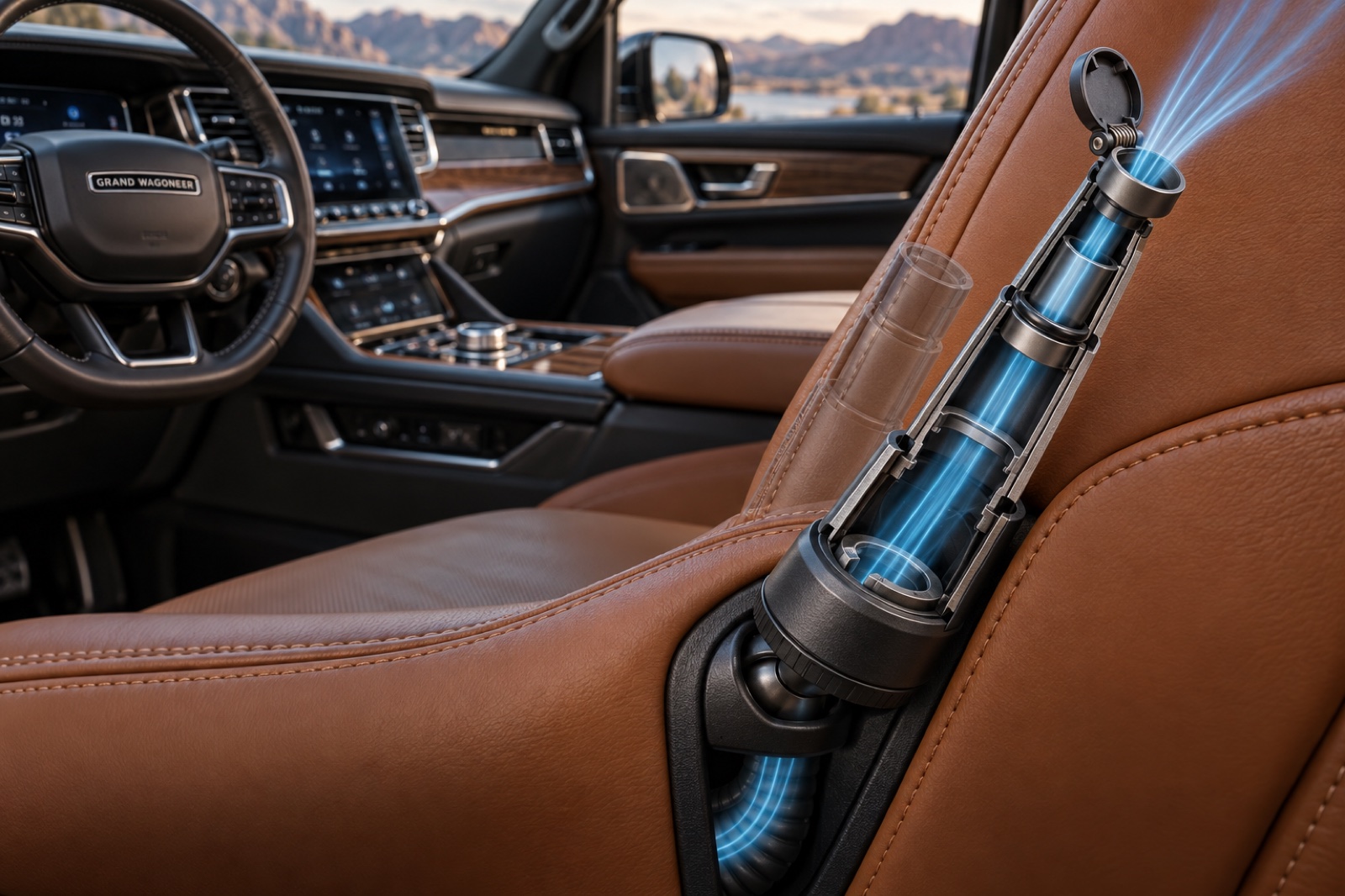
Switching on the airflow starts a mechanical sequence. Pressure pushes nested sections out of a fixed housing while a flap at the tip stays closed. Once sufficient pressure builds after extension, that flap opens and lets air escape. When the blower stops, the flap closes and gravity or an elastic return mechanism draws the tube back in. Motorized deployment is another possibility.
The occupant could adjust deployment manually, or let the system handle it. A specific button layout or touchscreen sequence is not described. The useful distinction is that changing the vent’s reach changes where the air leaves the chair, rather than merely adjusting the direction of a fixed outlet.
Rear-facing outlets add another use for that movable hardware. They could serve a bench behind the equipped seat when there is insufficient room to install telescoping nozzles in the bench itself. If that rear seating position is empty, the corresponding jets could stay inactive.
A Better Fit For Different Bodies
A camera could supply information about an occupant’s size to a controller, which would choose how far the nozzles extend. The pressure-operated version has a particularly mechanical way to limit travel. An adjustable opening inside the housing catches different-diameter sections of the nested tube, stopping extension at the selected length.
The camera’s job here is to inform positioning. There is no specified skin-temperature measurement or detailed explanation of how the image becomes a deployment setting. Manual adjustment could be centralized or handled at individual outlets.
The system could also vary the number of active jets. For a child in a booster or an infant in a baby seat, the footwell-directed outlets could remain retracted. Separate, conventional openings through the cushion and backrest could provide airflow against the rear of the body while the extending vents address the front.

Seat-mounted air curtains already appear in supplier Gentherm’s earlier work, including outlets around the shoulders and legs. The distinctive proposal here is adjustable physical reach from telescoping nozzles, combined with selective deployment. Personalized airflow itself has an established engineering history.
The Tubes Have To Survive The Cabin
Stellantis explicitly accounts for an elbow knocking an extended nozzle. A ball-joint mount would allow it to move under a blow, and flexible rubber is proposed for the sliding portion. Detachable fittings would make a damaged unit replaceable. These provisions acknowledge the practical consequence of putting moving hardware beside a person.
They do not establish durability. No deployment force, noise level, contamination test or service-life result is supplied. Those gaps matter for components that repeatedly slide out of a seat and sit within reach of passengers.
The stated aim is quicker personal comfort with less demand to heat or cool the entire cabin, particularly in hybrids and EVs. The system still uses the vehicle’s climate equipment, and there are no measured energy savings or comfort results. A patent does not guarantee production.
The adjustable reach is a credible improvement to pursue, especially when one seat can serve a passenger in another row. But the hardware has to justify its intrusion into the cabin. Quiet operation, reliable retraction and straightforward replacement would matter more to an owner than the novelty of watching an air vent extend.