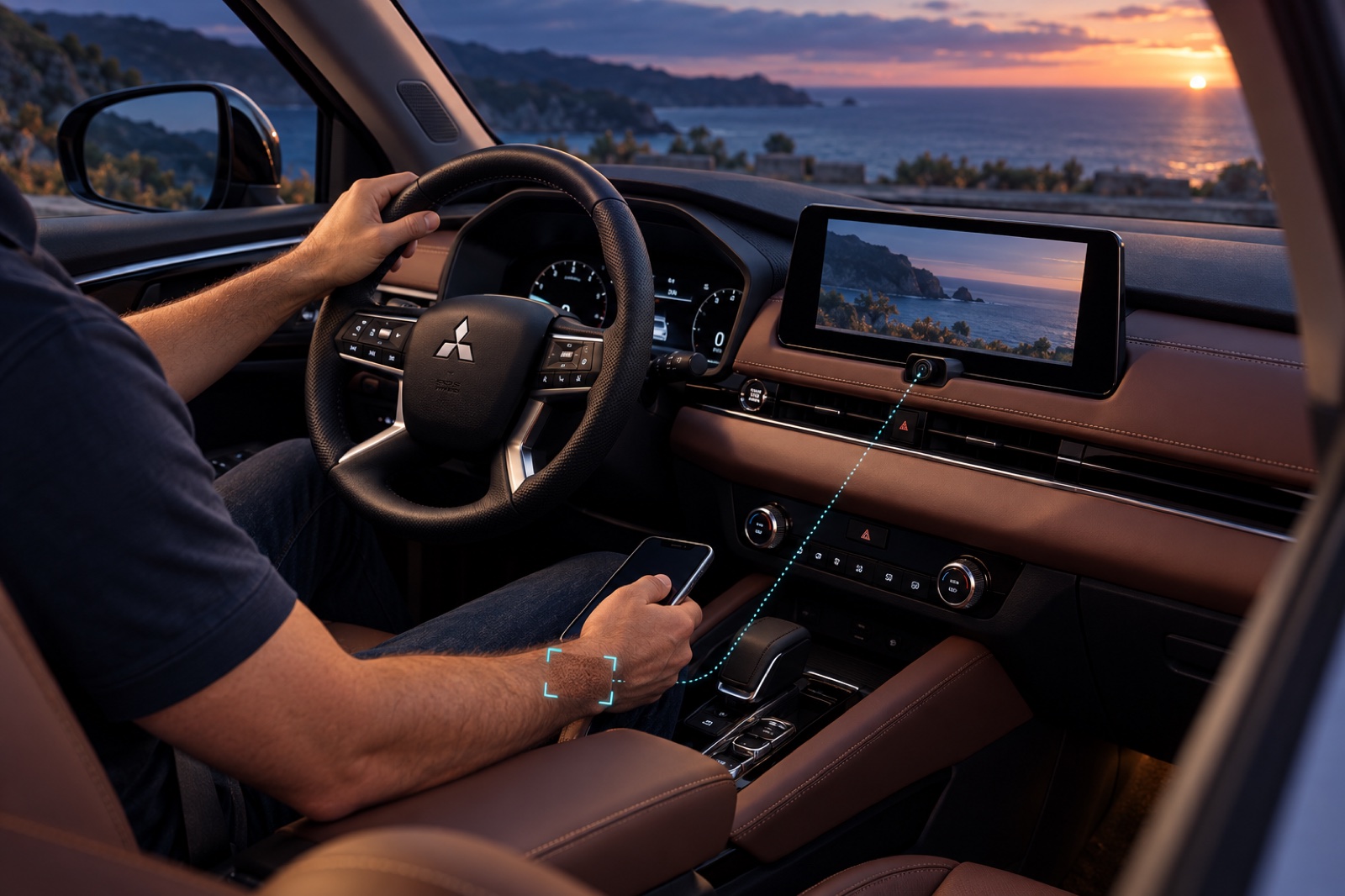
Lowering a phone below the steering wheel might hide the handset, but not the behavior. Mitsubishi Electric Mobility has proposed a cabin camera that would detect phone use by watching how the brightness of a driver’s forearm skin changes. The advantage is that the camera wouldn’t need a direct line of sight to the phone, giving it more freedom in where it’s placed.
The idea appears in a patent filing discovered by Carmoses focused on detecting phone use while driving. It comes from an automotive supplier owned by Mitsubishi Electric, which is separate from Mitsubishi Motors. Mitsubishi Electric already offers phone-use detection in its FLEXConnect driver-monitoring system, but what’s new here is the physical signal it would rely on.
The filing doesn’t name a vehicle. We used the Mitsubishi Outlander for the renders because its available MI-PILOT Assist makes driver attention relevant to a familiar US-market SUV. No Outlander installation or customer program is identified, and a patent doesn’t guarantee production.
The Signal Comes From Your Skin
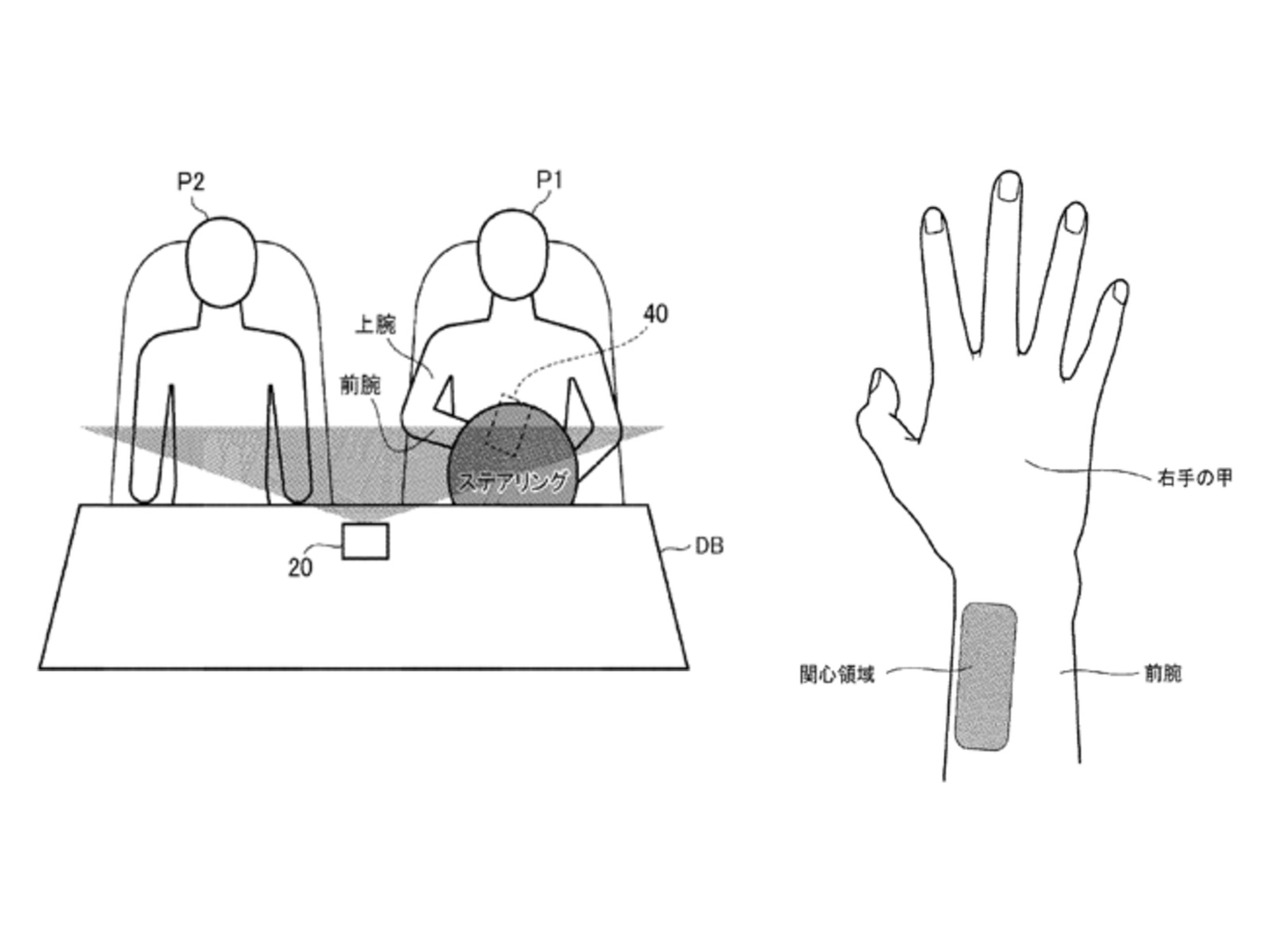
The process starts with a camera that can see the driver’s forearms. One proposed setup uses infrared illumination and records at 30 frames per second. Software finds the shoulders, elbows and wrists, then uses those positions to locate the stretch of arm between each elbow and wrist.
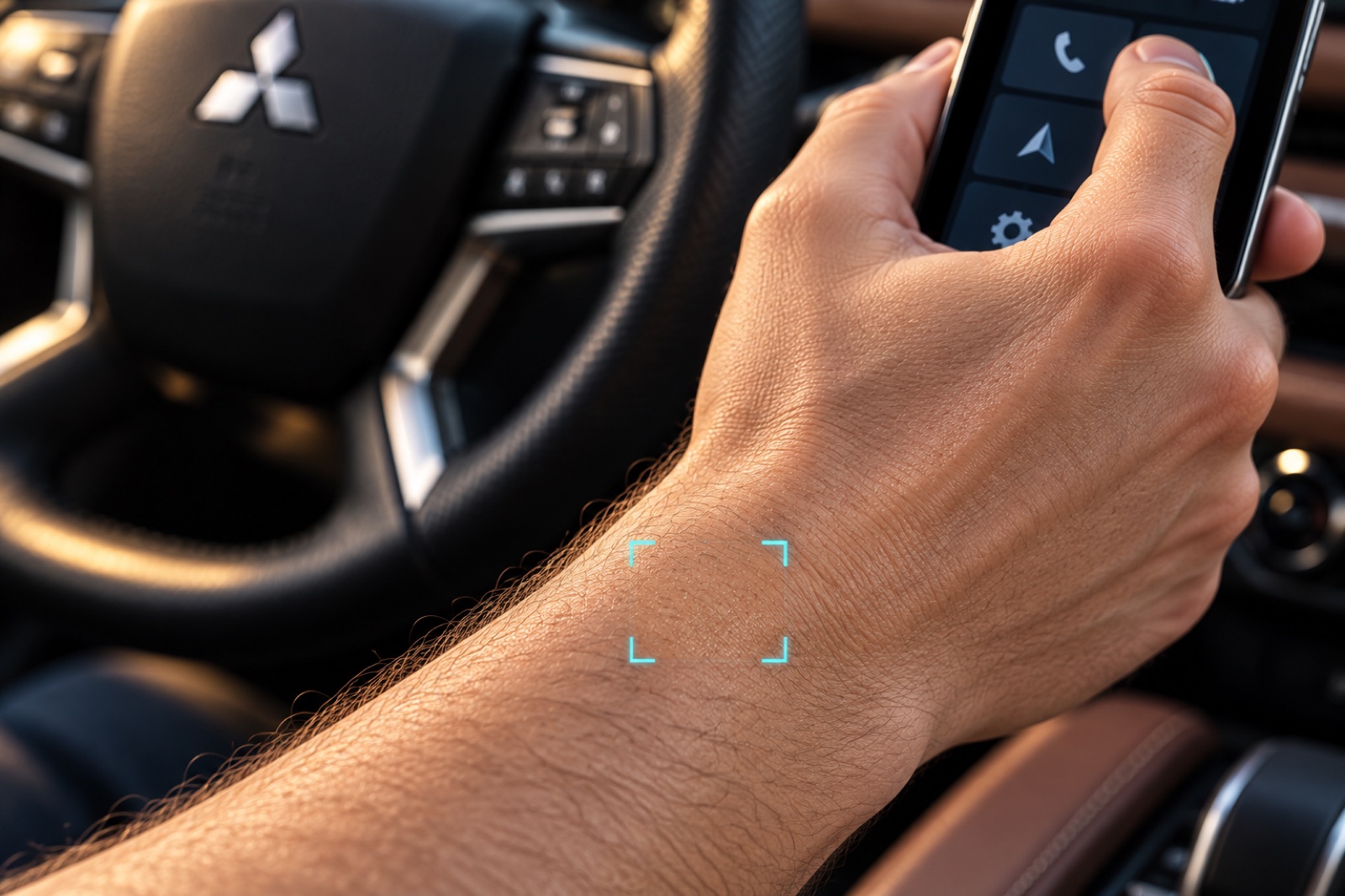
It can monitor that entire area or concentrate on a smaller patch near the wrist. Instead of tracking every visible detail, the system can calculate the average or median brightness of the selected skin region across successive video frames.
The proposed explanation is that moving a thumb or index finger to operate a phone activates underlying forearm extensor muscles, changing the skin’s appearance to the camera. The measurement concerns those muscle-related changes, rather than light spilling from the screen. No sensor needs to be attached to the driver’s arm.
One detection rule would count how often brightness crosses a threshold within a set period. Enough crossings would produce a phone-use determination, which could be passed to the vehicle’s electronics to trigger an audible or displayed warning. The actual threshold, required count and time window are unspecified.
A Different Place To Put The Camera
The engineering problem is straightforward. A camera looking for a handset must see the places where someone might hold it, including below the wheel. That requirement limits its mounting position and the lens’s field of view. Watching the arm instead could relax both constraints, with the supplier also proposing a possible reduction in camera cost.
This would add another kind of observation to an established category. Ford’s BlueCruise, for example, uses a driver-facing camera to track eye gaze and head position. Mitsubishi Electric Mobility’s existing driver-monitoring product also watches the face and eyes for signs of looking away or falling asleep.
The forearm check could work alongside those more familiar observations. One version would assess phone use only when the driver looks toward an area unrelated to driving, such as downward beyond a defined angle. Another would use a steering-wheel grip sensor to establish that only one hand is on the wheel. Both conditions could be required together.
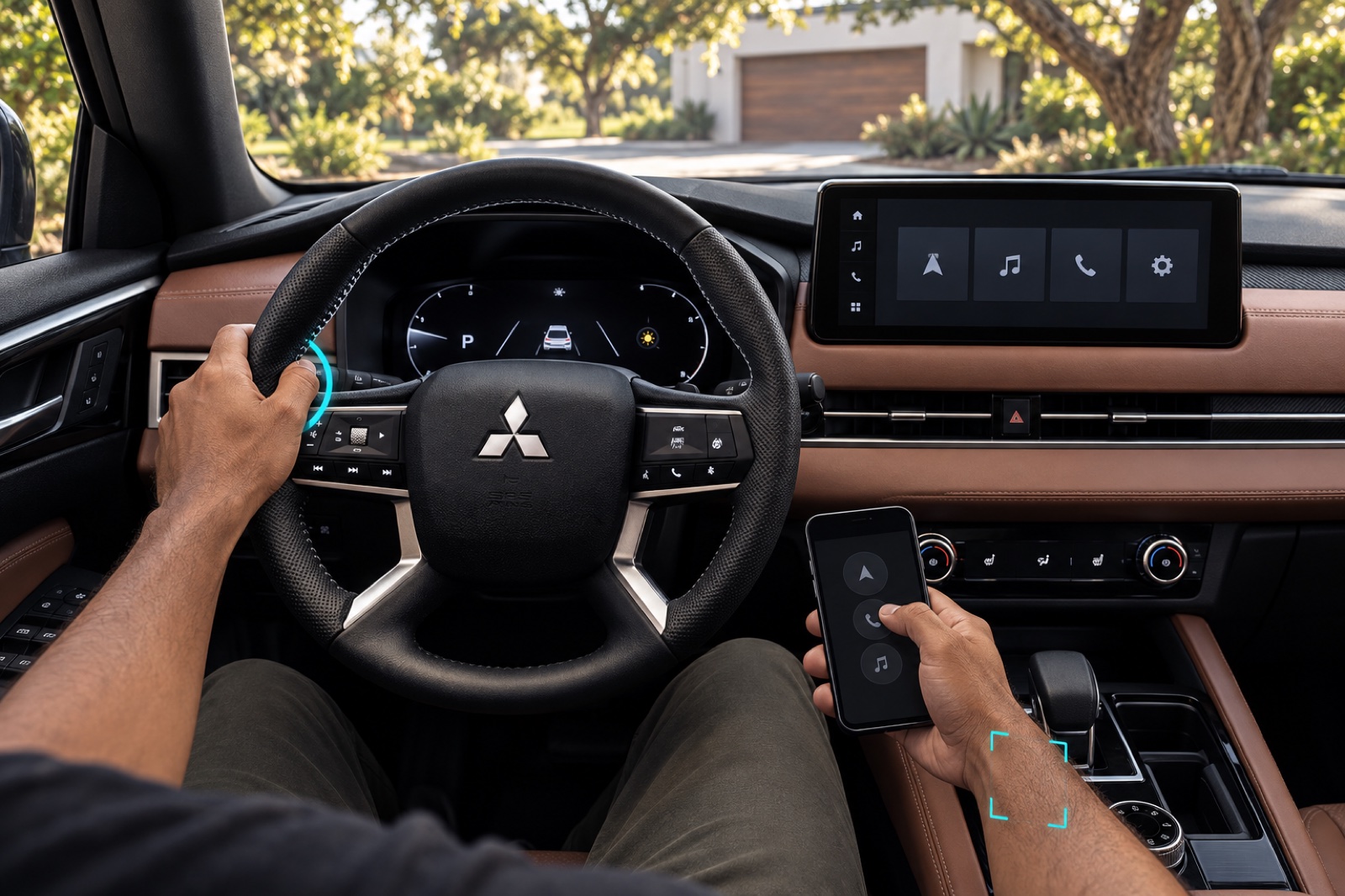
The supplier says these conditions could reduce processing demands and improve accuracy. Neither a downward glance nor a single hand on the wheel would, by itself, constitute the proposed phone-use verdict. The brightness pattern remains necessary.
Long Sleeves Leave A Basic Question
Changing sunlight is an obvious complication for any measurement based on brightness. The proposed answer is a neural network trained on paired cabin videos with and without illumination noise, so it can remove external-light changes before the arm is analyzed.
Clothing is less resolved. The system can identify whether a sleeve covers the forearm, but the description does not explain how it would then recover a skin-based signal or what alternative check would take over.
The filing also supplies no detection accuracy, false-positive rate or test results showing how reliably the method separates phone operation from other finger movements. Without those results, identifying a repeating brightness pattern cannot be treated as proof that a handset is being used.
The camera-placement benefit makes this a useful direction to investigate. For a production warning system, though, distinguishing ordinary hand activity from phone use is the essential test. Until that distinction is demonstrated, this is a promising sensing proposal with an unproven basis for alerting the driver.