
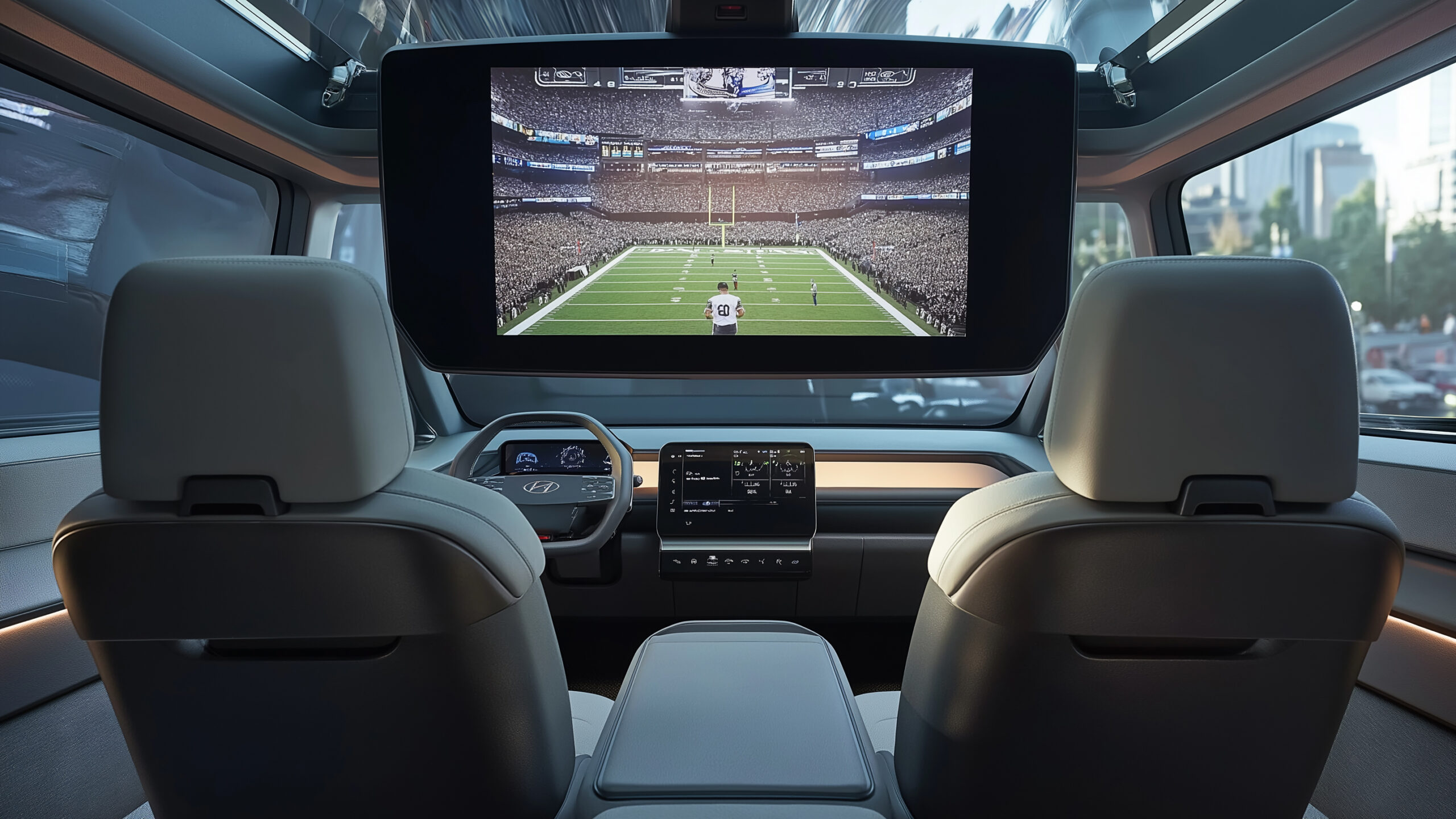
A retractable ceiling display is nothing new, but Hyundai’s recent patent filing with the European Patent Office describes a panel with a larger viewing area than a traditional display, but that stows in a smaller space. It’s not a traditional screen, but a flexible panel with a stiffening structure, so it’s thinner. The patent drawings suggest that the system is designed for rear-seat entertainment systems.
Current Display Tech
Current display screens for rear-seat entertainment systems are usually inset in the back of the front headrests or mounted to the backs of the front seats. In taller cars, such as minivans and SUVs, you can also find two smaller separate screens or one big screen that sits flush with the roof and swivel out for passengers to view. These displays are, for the most part, LCD monitors that are stiff in structure like a tablet or computer screen.
Thin, Flexible Display Panel
Hyundai’s display panel is said to be one of the very thin and flexible types, similar in concept to Audi’s recent patent filing for a thin display that can bend around corners, so both need a stiff supporting structure. According to the patent illustrations, Hyundai’s display housing contains several swiveling arms that fan out when deployed, essentially drawing the thin display from the housing and pulling it taut while supporting it, very much like the electric rear-window sunshades on some cars.
Our Take
Hyundai says the space that the housing takes up in the vehicle roof is less than in traditional displays due to the thin panel, though it would also require the arms and rollers – that traditional screens don’t need – to be particularly compact so as to not defeat the purpose. Hyundai says that a bigger display area is possible, yet the display is more compact when stowed. We would like to see the extent of these purported benefits, as this patent seems to be quite a bit more complex than a traditional screen, and the space benefit and larger possible screen size would have to be significant to make it economically and practically feasible.