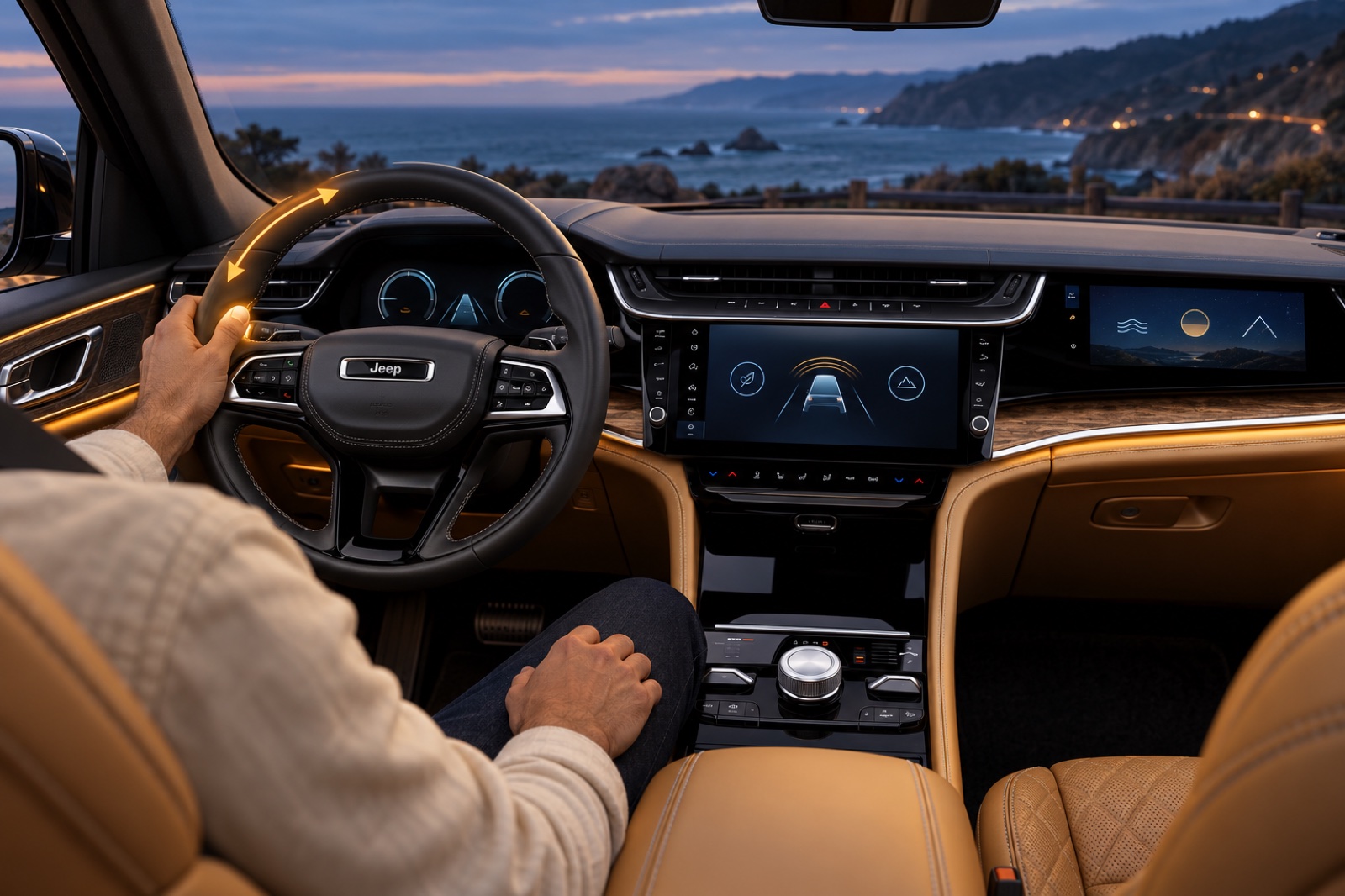

Chinese automaker Geely, the parent company of Volvo Cars, has filed a patent with the European Patent Office for a system that uses body movements to activate specific vehicle functions, such as unlocking the car or opening the trunk. Geely says that predefined motions can be programmed to activate the relevant vehicle functions remotely, even when the user’s hands are full.
A Smarter Gesture System
Gesture controls in cars aren’t new. Many vehicles already feature a “kick sensor” under the rear bumper that opens the trunk when you wave your foot—a handy feature for those carrying groceries in both hands. However, Geely’s system takes this concept a step further, eliminating the need for awkward foot movements and balancing on one leg while carrying shopping.
How It Works: Combining Precision and Simplicity
Geely’s system uses a portable device, such as a smartphone, which tracks body movements with built-in accelerometers. Here’s how it works:
- Predefined Movements: Users program specific motions—like walking in a figure-eight pattern.
- Ultra-wideband (UWB) Receiver: The car detects the motion pattern using UWB signals.
- Activation: Once the system confirms the movement matches the preset gesture, it activates the desired function, such as opening the trunk or unlocking the car.
By leveraging existing smartphone technology, this system avoids the need for expensive additional hardware (like an expensive keyob), making it accessible and cost-effective.
Challenges Ahead: Will It Be Worth the Effort?
We hope that Geely has designed the system in a way that will ensure it isn’t more trouble than it’s worth. Kick sensors are already quite hit-and-miss in operation, and gesture controls for infotainment systems (e.g., in BMW’s iDrive system) have had mixed reviews. The new technology will have to be very slickly presented to constitute a tangible advance on current solutions.