Volkswagen has filed a new patent with the German Trademark and Patent Office for a smart parking system that requires vehicle-to-vehicle (V2V) intercommunication among cars of various brands to work. The patent describes a networked parking space lighting system that provides several benefits to the user and any pedestrians around them, both while the vehicle is in motion and once parked. This innovative system demonstrates the importance of moving to a world of interconnected cars where automotive safety would be greatly enhanced.
How It Works
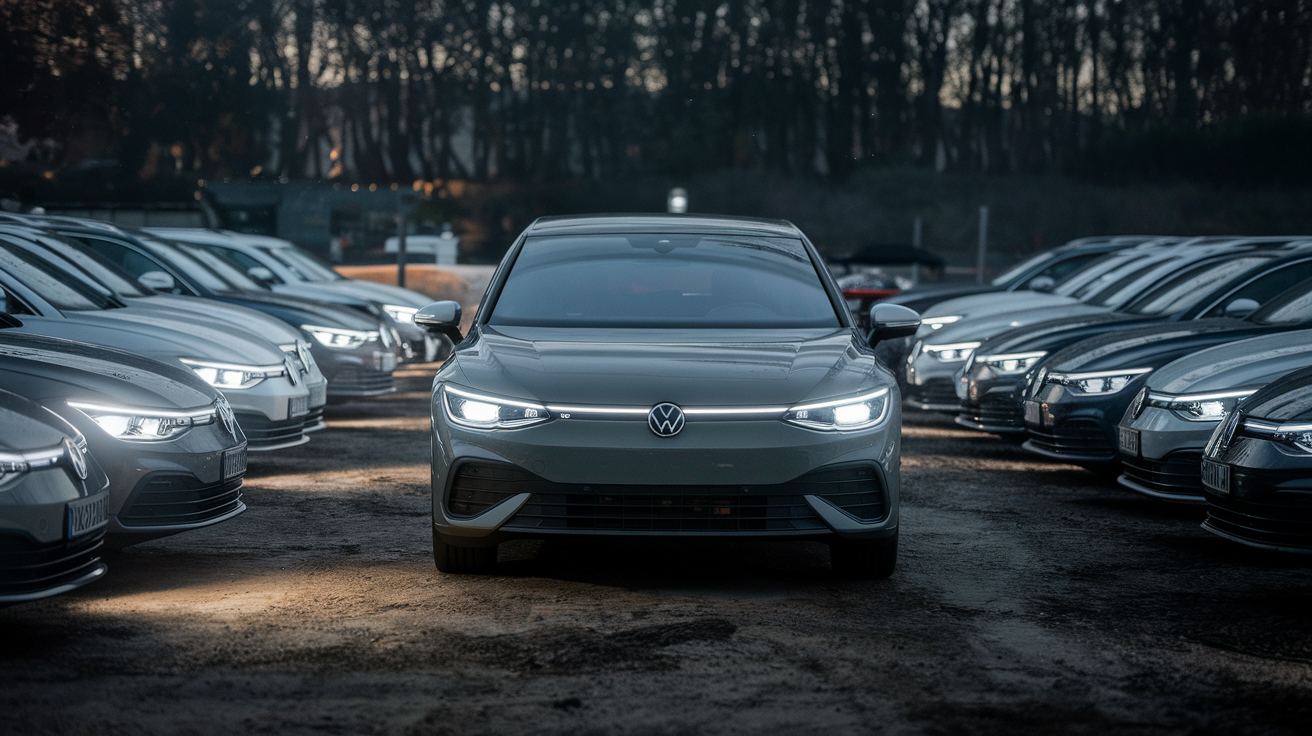
VW envisions that when a driver enters a dimly lit parking area, as they approach other parked vehicles, those vehicles would activate their headlights to illuminate the path ahead. This would thereby prevent a collision with other vehicles, pedestrians, and other potential hazards.
Another feature is that when the moving car, described as the “ego vehicle,” finally parks, the cars in its vicinity could direct their lighting systems to illuminate the area around the ego vehicle. This would make ingress and egress easier and safer, in more ways than one.
Why It Matters
VW notes that once something like this is broadly adopted, which could happen overnight with a software update, parking garages and other similar spaces could reduce the need for dedicated lighting infrastructure. This could be replaced by wireless charging pavement, for example. While there have been other patents focused on parking lighting systems, this one is noteworthy for using existing vehicle hardware. Adaptive headlight technology is progressing at a remarkable rate, and this patent could easily take advantage of it to shine light in very focused, specific areas.
We can see many other potential benefits. Cars could illuminate a specific path for the driver, perhaps directing a driver to an open parking bay. If they’re in an SUV, or an occupant is disabled, it could send them to a more convenient bay. Once there, the vehicle occupants could also have their way illuminated as they head towards a building entrance, street, or other light source. Neural networking is still in its relative infancy, so expect more ideas like this in the future.