Toyota has proposed making sidewalk trash disappear from a car occupant’s view while making pedestrians and traffic more prominent. A patent filing discovered by Carmoses describes a continuously updated digital recreation of the surroundings that can change according to someone’s mood or preferences. Its success would depend on recognizing the difference between an unpleasant sight and something the driver needs to see.
The stated targets include monotonous highways, repetitive commutes and locations that trigger uncomfortable memories. Toyota proposes improving mood and alertness by changing the scenery presented on a display. Those are intended benefits, with no test results establishing that a prettier view makes someone a better driver.
Toyota previously patented digitally hiding objects around an autonomous vehicle. This proposal combines a three-dimensional, 360-degree recreation with changes tailored to the occupant, and it extends to manually driven cars as well as automated ones.
A Cleaner View, With Traffic Intact
The process starts with sensors gathering information about the surroundings. Cameras, radar and lidar are among the possible inputs, with maps or connected devices providing additional data. Software builds a recreation around the vehicle and updates it as conditions change. A windshield, window, conventional screen or wearable display then presents the chosen view.
An occupant can select preferences for features such as clean sidewalks, sunshine or more interesting landscapes. The car does not have to estimate anyone’s emotions to act on those choices. Toyota calls the process “gamification,” although it need not involve scores, races or rewards.
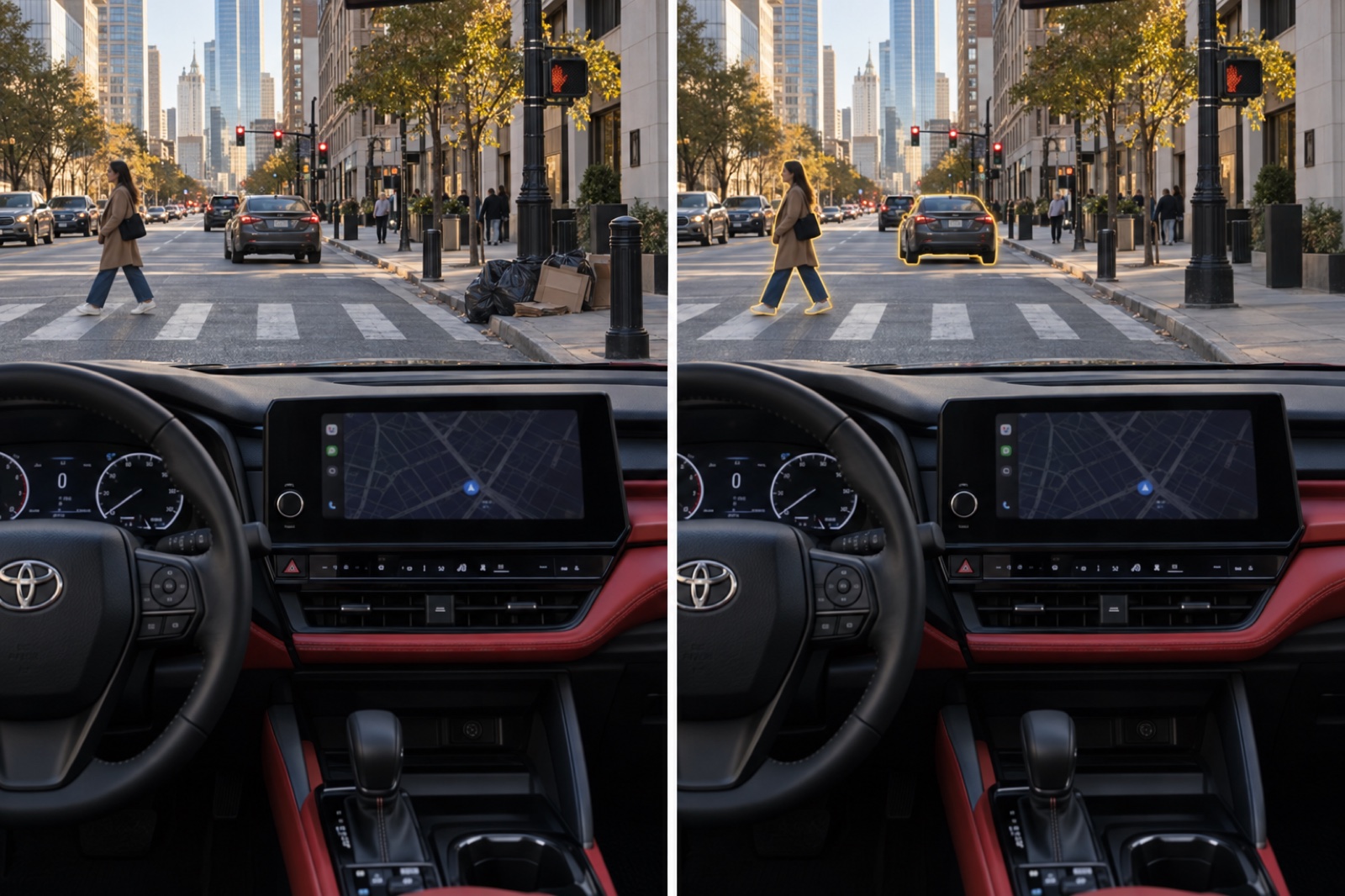
One example starts with trash piled on a sidewalk near a street. The system can blur it, remove it from the recreation or replace it with something more appealing. Separately, it can highlight nearby vehicles and pedestrians, and the two treatments can be combined. The example concerns sidewalk litter, rather than an obstacle being erased from the driving lane.
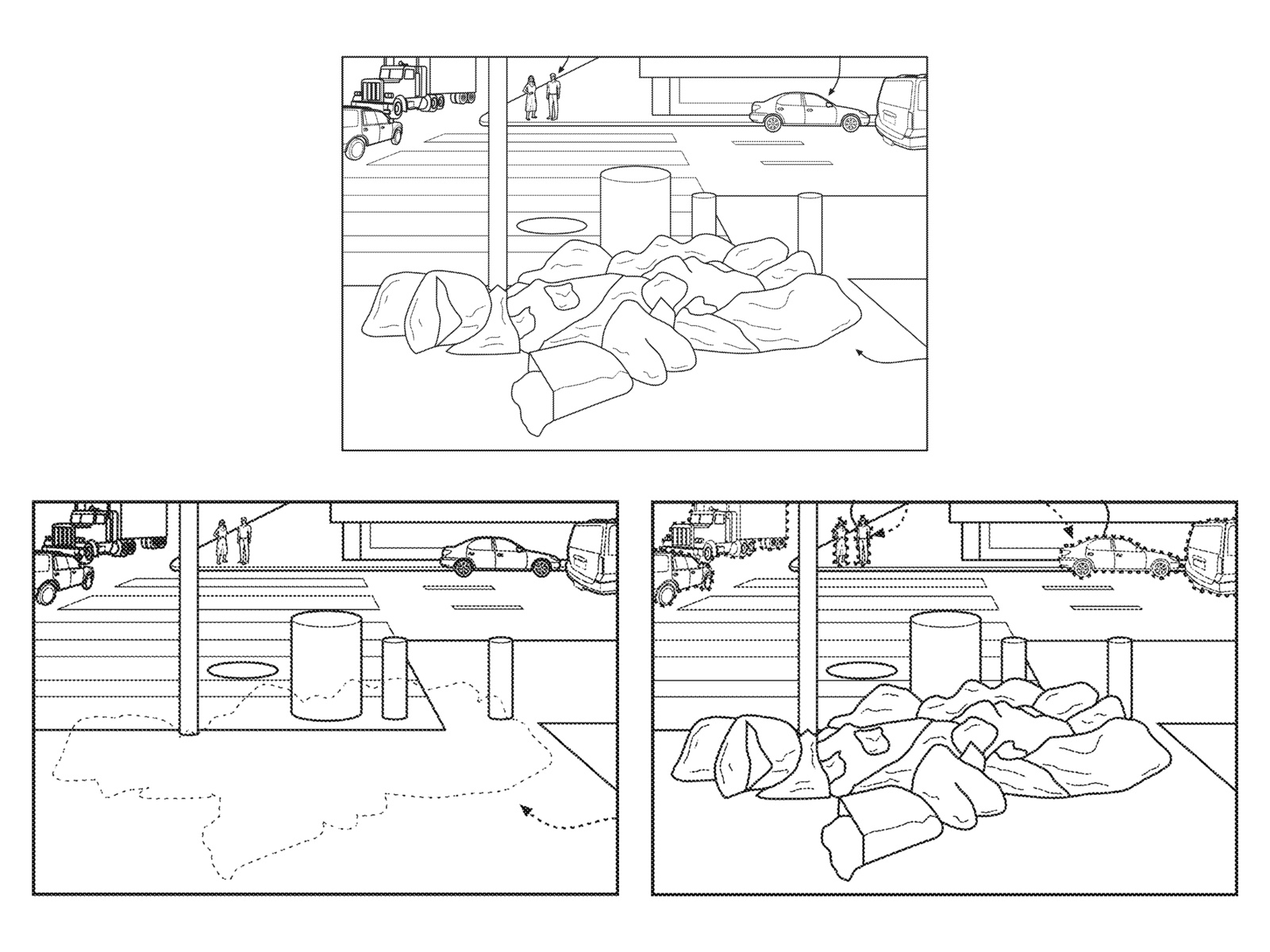
That distinction depends on classification. Toyota describes sorting objects according to their importance to safe driving, including their nature and location. Vehicles, pedestrians, animals and objects on the road can fall into the critical category. In the safety-preserving version, relevant features remain unchanged or become more conspicuous.
Your Reaction Could Change The Scene
The more ambitious version adds physiological measurements, including heart rate, breathing and skin responses. Software uses those signals to estimate an emotional state, while gaze tracking can associate a reaction with whatever the occupant is looking at.
If an object appears to provoke stress, the system can reduce its prominence. Something associated with a positive reaction can receive more emphasis. Toyota also describes highlighting pedestrians or red lights when the driver appears insufficiently attentive. The response to an altered scene can feed back into subsequent adjustments.
A flat, overcast landscape can acquire a sunset, vegetation and changes in elevation. Another example uses sensed surroundings to make a nighttime journey appear to take place in daylight. Neither changes the actual weather, terrain or visibility outside the car.
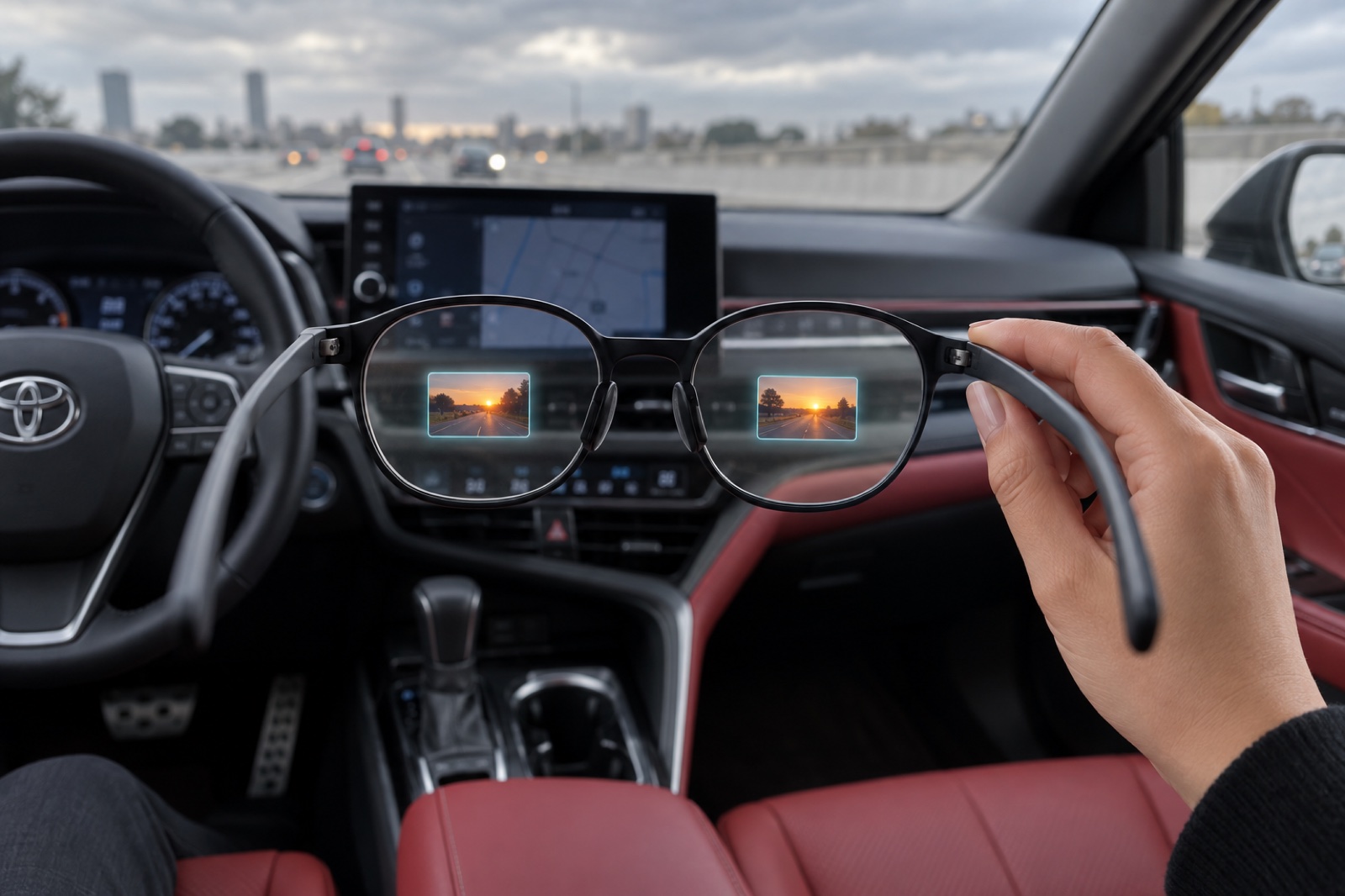
Glasses offer a more contained display option. Small areas within the lenses can carry the recreation while the surrounding glass stays transparent. Tracking where someone looks can also limit rendering to the relevant view, reducing the processing required.
The Passenger Seat Makes More Sense
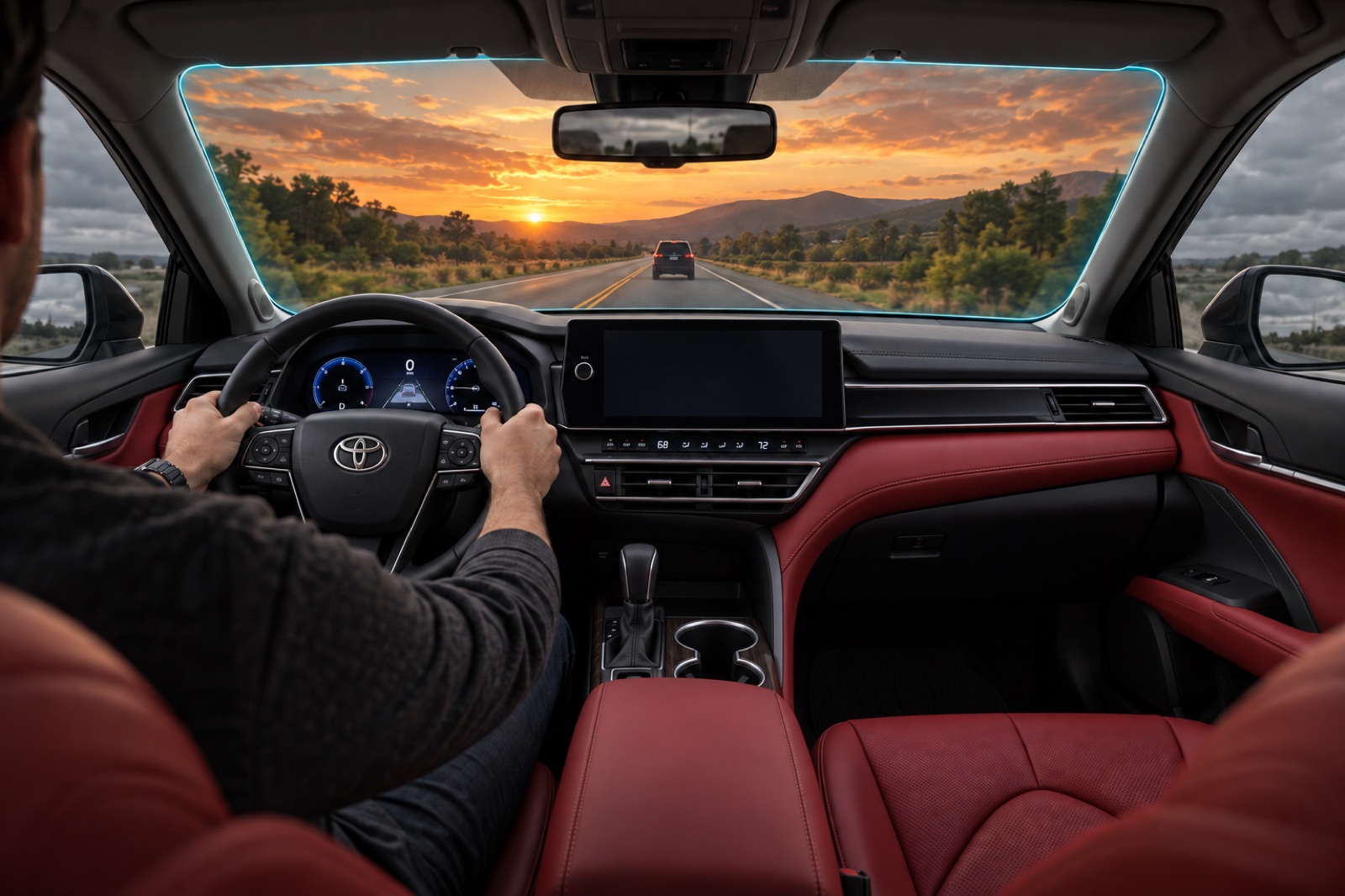
Nothing in the filing assigns this technology to a model. The generic sedan layout and commuting problem make the Camry a reasonable editorial setting for these renders. The current US Camry already offers a conventional 10-inch head-up display on XLE and XSE trims. Whether that display could support scenery replacement depends on capabilities beyond simply presenting information in the driver’s line of sight.
For a passenger, the entertainment case is stronger. Toyota describes independent or shared experiences, including sharing the recreated journey with someone outside the car and recording it for playback. That gives the personalized landscape a purpose without requiring it to improve driving performance.
A patent does not guarantee production. Toyota supplies no measured display latency, object-classification accuracy or demonstrated safety benefit. Keeping a newly emerging hazard visible while modifying the scene around it is a crucial safety requirement, and the system’s reliability on that front remains unproven.
Passenger scenery customization is a credible entertainment idea. For the person steering, this needs evidence that altered scenery preserves attention and reveals hazards reliably. Toyota has not provided it, making information removal too large a trade for a more pleasant commute.