

Porsche is rethinking a core engine component many assumed had reached peak evolution: the piston. A new patent filing with the European Patent Office reveals a two-piece piston design featuring integrated oil channels for improved cooling and a smarter connection with the piston rod to reduce weight. While most modern engines already use lightweight, short-skirt pistons, Porsche’s innovation shows there’s still untapped potential in refining internal combustion efficiency.

The Two-Piece Piston: Smart Oil Flow for Smarter Cooling
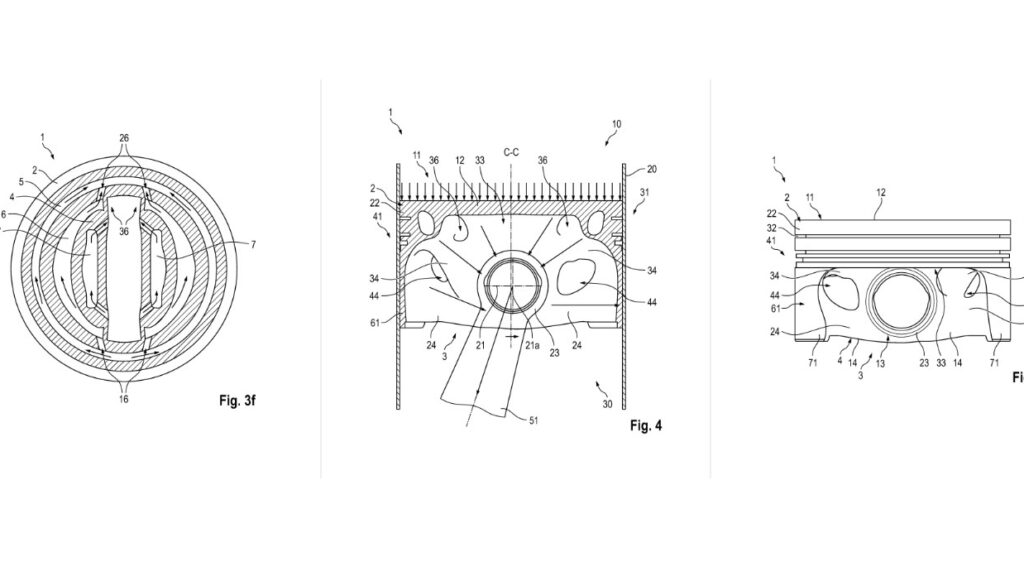
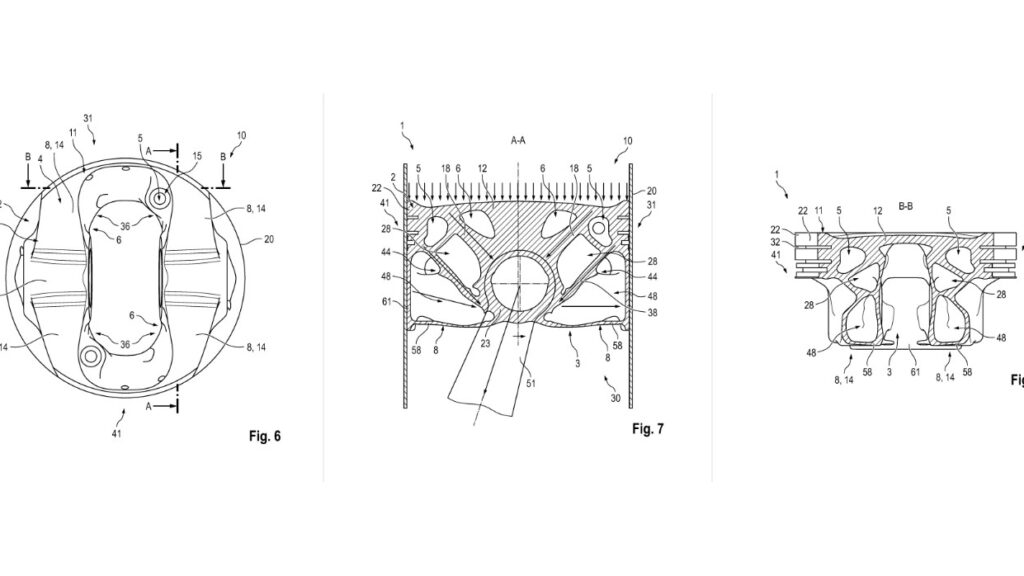
According to the patent, Porsche’s design uses an additively manufactured piston crown paired with a separately produced lower piston hub, joined using expansion screws. This two-part construction creates enclosed internal oil channels designed to enhance cooling. The piston features two oil grooves and both inner and outer cooling chambers, which are connected via precision transfer bores.
Notably, the inner chamber is located between the two piston halves and includes upper and lower radially enclosed annular channels, directed toward the piston crown and hub respectively, ensuring efficient thermal management across the piston structure.
How It Works: Active and Passive Cooling in Perfect Sync
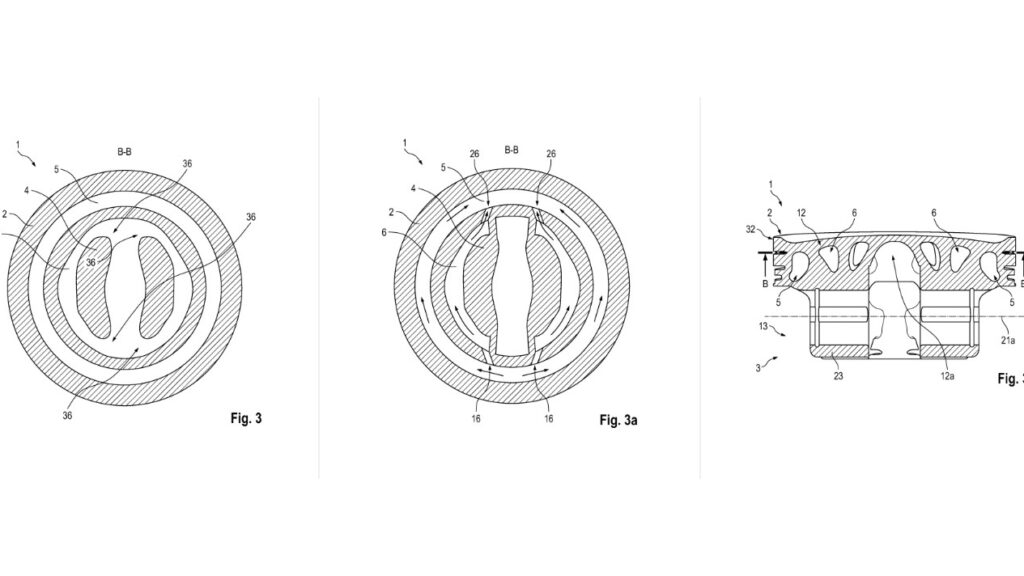
To manage the extreme heat at the piston crown—the area that endures the highest thermal stress during combustion—engine oil is actively injected into the primary cooling channels. As the oil circulates, it absorbs heat and exits through specially designed outlet funnels, efficiently dissipating thermal energy.
The secondary oil channels function differently. These do not receive a direct oil feed, instead relying on passive lubrication and oil mist that forms during engine operation. However, Porsche’s patent notes that additional oil jets can be integrated to boost cooling performance if required.
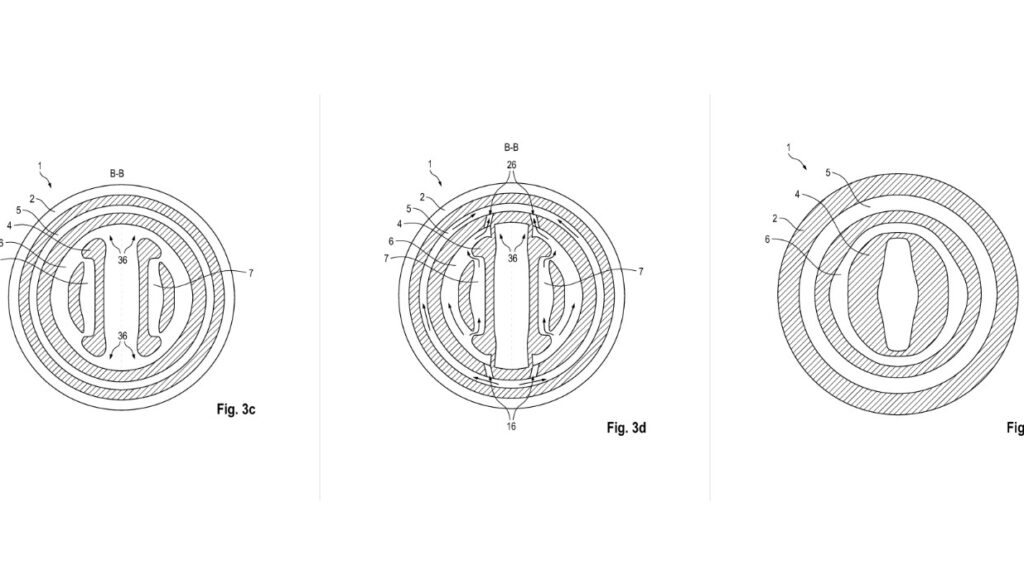
The design is modular and adaptable: the piston and its box wall sections can be arranged in various configurations to suit different thermal demands. A custom-designed connecting rod interfaces with the piston’s tapered cross-section, further improving heat transfer between the piston and rod. This ensures durability and thermal stability even under extreme operating conditions.
Why It’s Different
What sets Porsche’s patent apart is a combination of structural innovation and advanced thermal management:
- A two-piece piston design
- Actively cooled primary and passively cooled secondary oil channels
- A lightweight construction focused on reducing mass in the rotating assembly
- A uniquely tapered piston cross-section for improved connection with the rod
By improving piston cooling while reducing weight, this design advances the state of the art in high-performance engine engineering. The patent stands out particularly for its sophisticated approach to thermal efficiency within the piston itself.