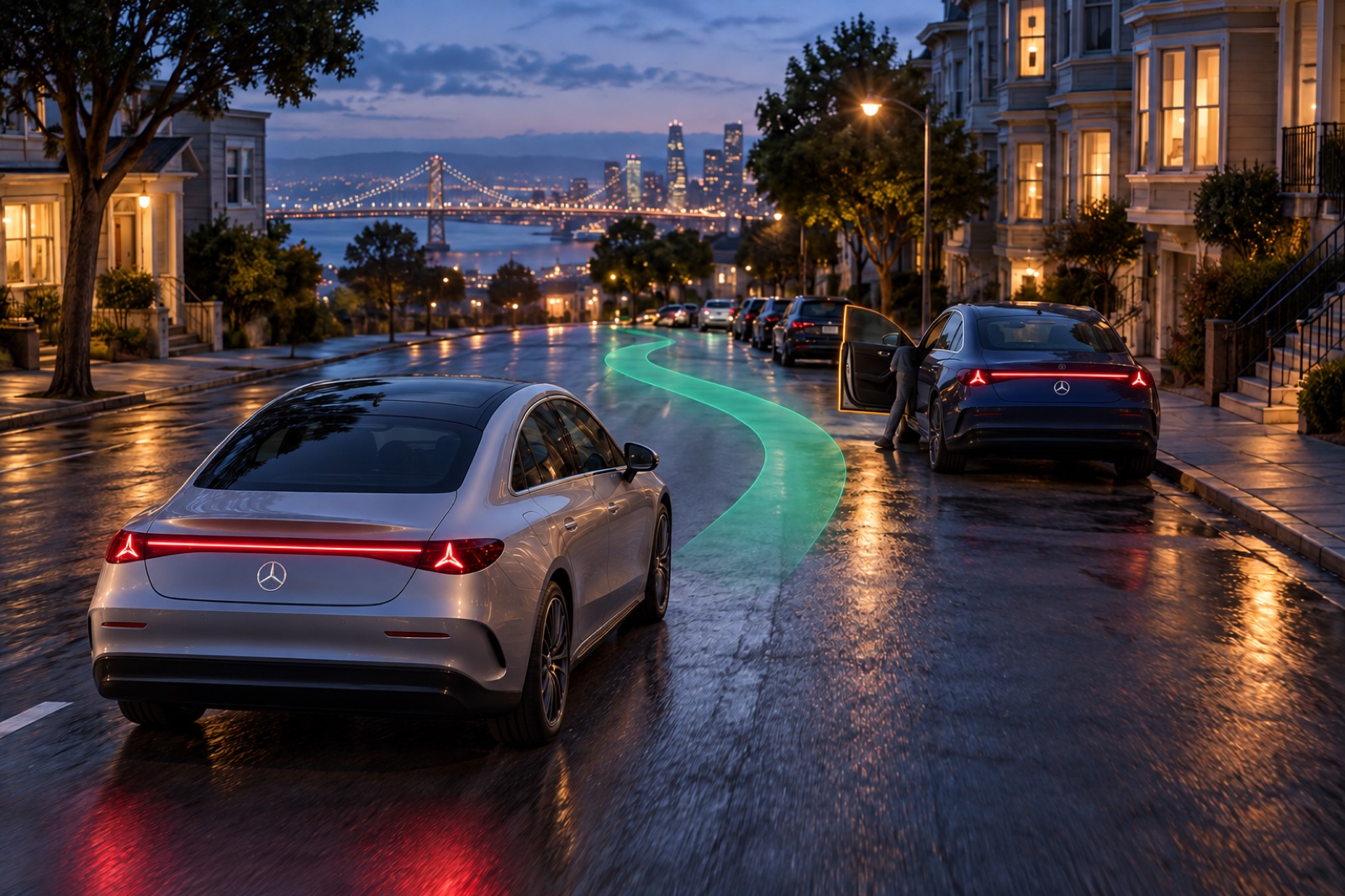
An automated car could clear a parked vehicle’s open door and still leave too little room for the person behind it. Nvidia, Mercedes-Benz’s driving-software partner, proposes treating that opening as a warning of someone who may step into traffic, according to a patent filing reviewed by Carmoses.
The proposal became public earlier this month. Its useful distinction is between detecting the panel and allowing for activity around it. An approaching car could slow, stop or leave a wider gap before an occupant becomes fully visible. Recognizing an open cargo door could also help it decide whether to wait behind a delivery vehicle or look for a route past.
Nothing in the filing names a production model. The electric Mercedes-Benz CLA appears in these renders because Nvidia and Mercedes have announced city-driving assistance for it, making it a relevant editorial setting for the idea. That relationship does not confirm this detector for the sedan.
Why A Bigger Obstacle Is Not Enough
One way to account for an open door is to enlarge the rectangle that software places around a vehicle in a camera image. This rectangle, called a bounding box, then includes the protruding panel. The approaching car knows there is more occupied space to avoid, but the enlarged outline alone does not tell it why.
Nvidia’s proposed sequence separates the recognition into two tasks. A first machine-learning model, trained on examples with doors open and closed, assesses the boxed vehicle to identify its state. A second examines part of the image to classify the opening, distinguishing a left side door from a rear cargo hatch, for example.
The second stage can concentrate on a narrow strip beside the rectangle’s edge, where a panel projects beyond the body. It can also use a region extending beyond the original boundary. An optional additional model identifies the edge used to select that crop.
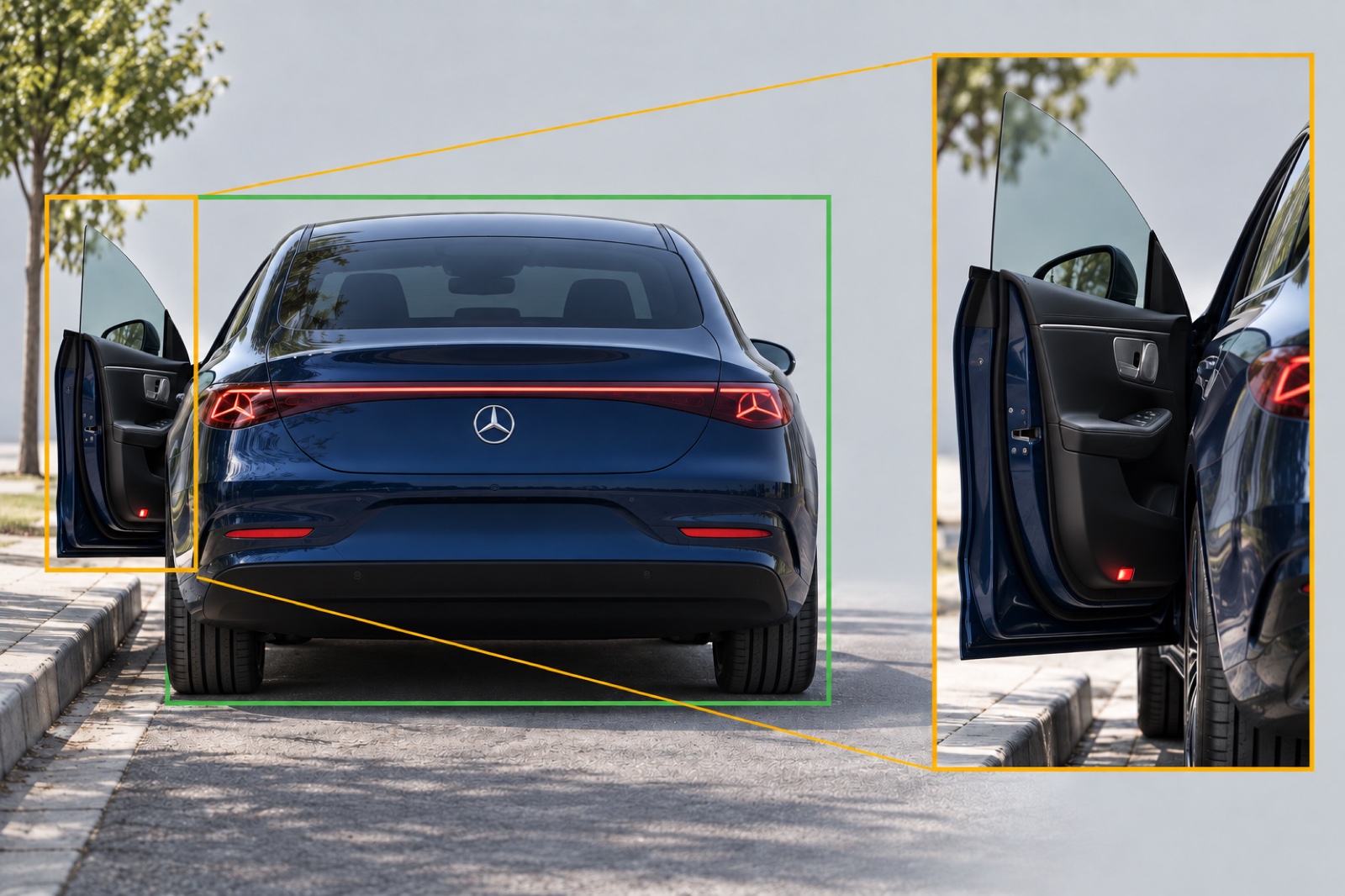
A side door suggests someone may already be standing beside the vehicle or may soon emerge, supporting a slower approach or more clearance. This is recognition of an already-open panel, without an established ability to predict when a closed one will start moving.
The categories extend to trunks, hoods and even sunroofs. Nvidia does not explain a distinct driving response for each of those less obvious cases.
An Open Cargo Door Changes The Decision
A delivery truck stopped in the lane presents a different problem. Waiting makes sense if it is about to move with traffic. Open rear doors suggest loading or unloading, which can mean a longer stop.
Recognizing the rear opening could help the approaching vehicle classify the truck as parked and consider going around it. An open cargo bay is evidence about the likely duration of the stop, not proof that the passing route is clear.
Camera views can supply their classifications to an overhead representation of the road, with each detected opening assigned to the correct vehicle. That information can feed both the driving planner and a dashboard display. Depending on the implementation, the system could recommend a response to the driver or carry it out through the vehicle’s controls.
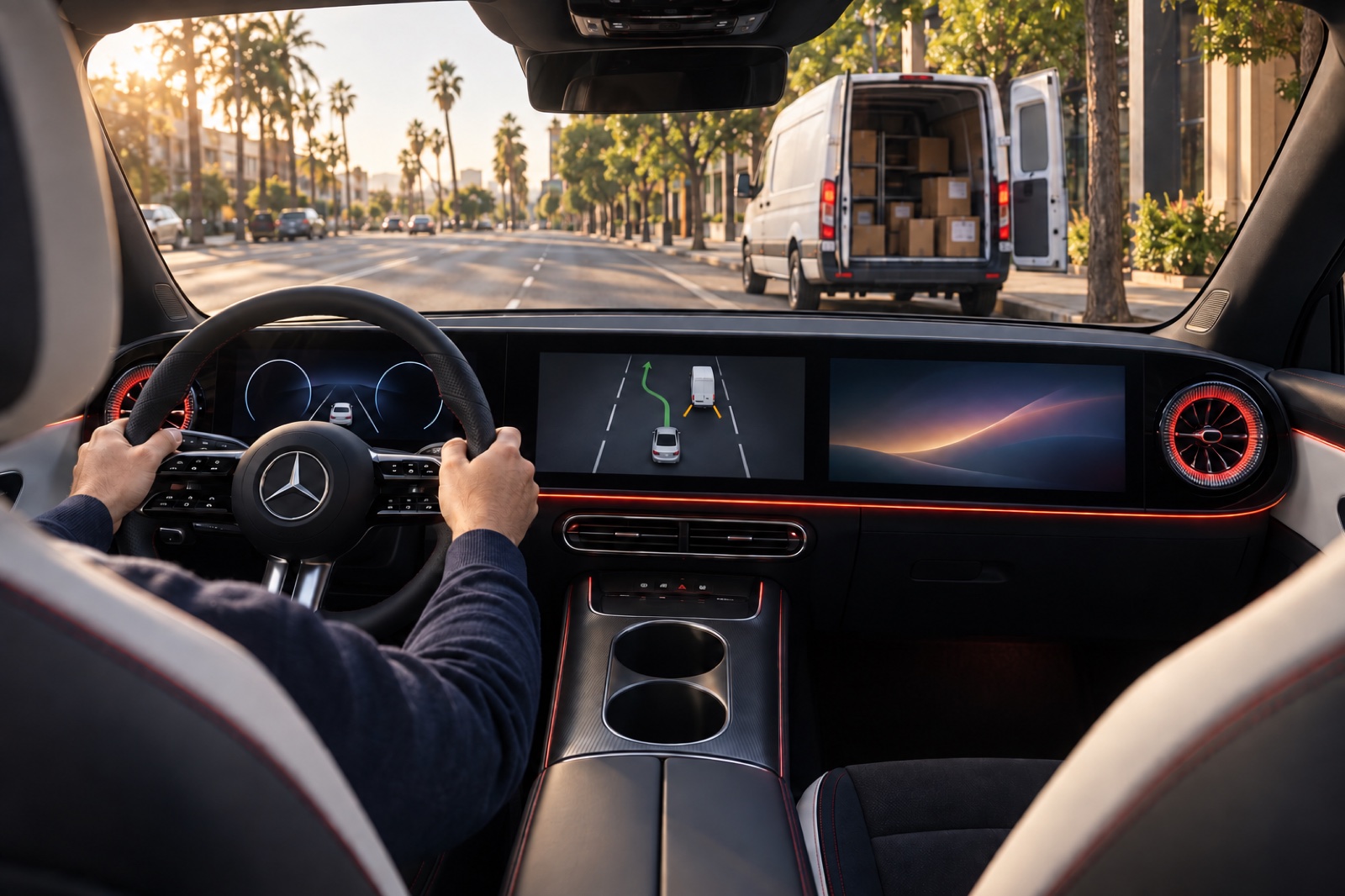
The proposal does not specify the decision thresholds that would settle when to wait, stop or pass. It also supplies no measured detection accuracy or response time.
Useful Judgment Still Needs Evidence
Door hazards have attracted attention well before this proposal. Audi’s A4 exit warning alerts occupants to traffic approaching from behind as they open their doors. Nvidia addresses the situation from the approaching vehicle. Waymo has also previously described training a classifier to recognize open vehicle doors for automated driving.
The relevance to Mercedes is its move into more extensive city assistance. MB.DRIVE ASSIST PRO combines navigation with Level 2 driving support, developed with Nvidia. Mercedes’ U.S. website still describes it as coming soon, with driver supervision required. This proposed recognition method has no confirmed production deployment, and a patent does not guarantee one.
Explicitly identifying an opening is a sensible improvement over treating every protrusion as extra vehicle width. The strongest case for Nvidia’s approach is the ability to reserve space for a person before their presence is certain. Any eventual demonstration should establish how reliably the system makes that precautionary decision when the view beside a parked car is incomplete.