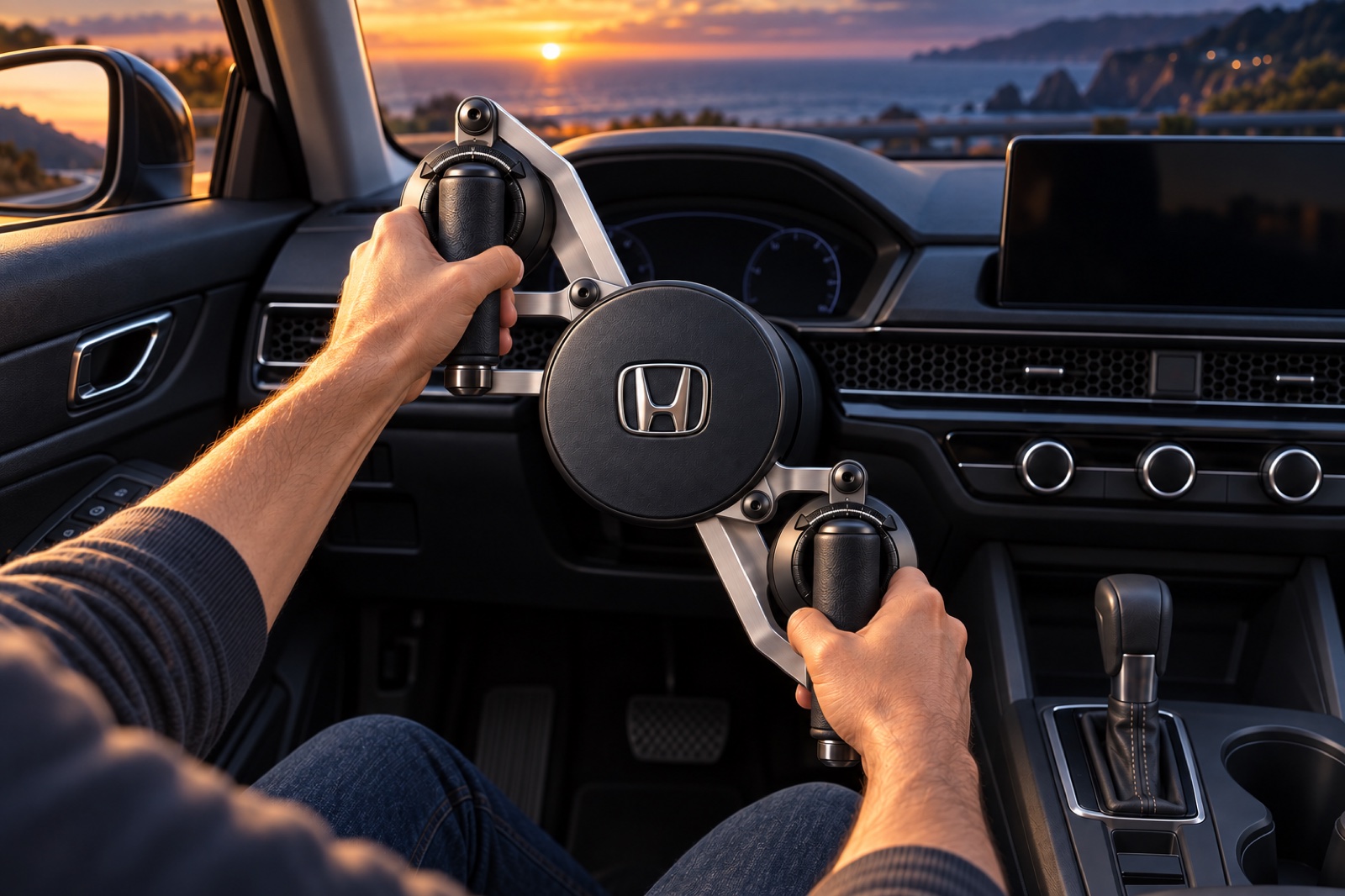
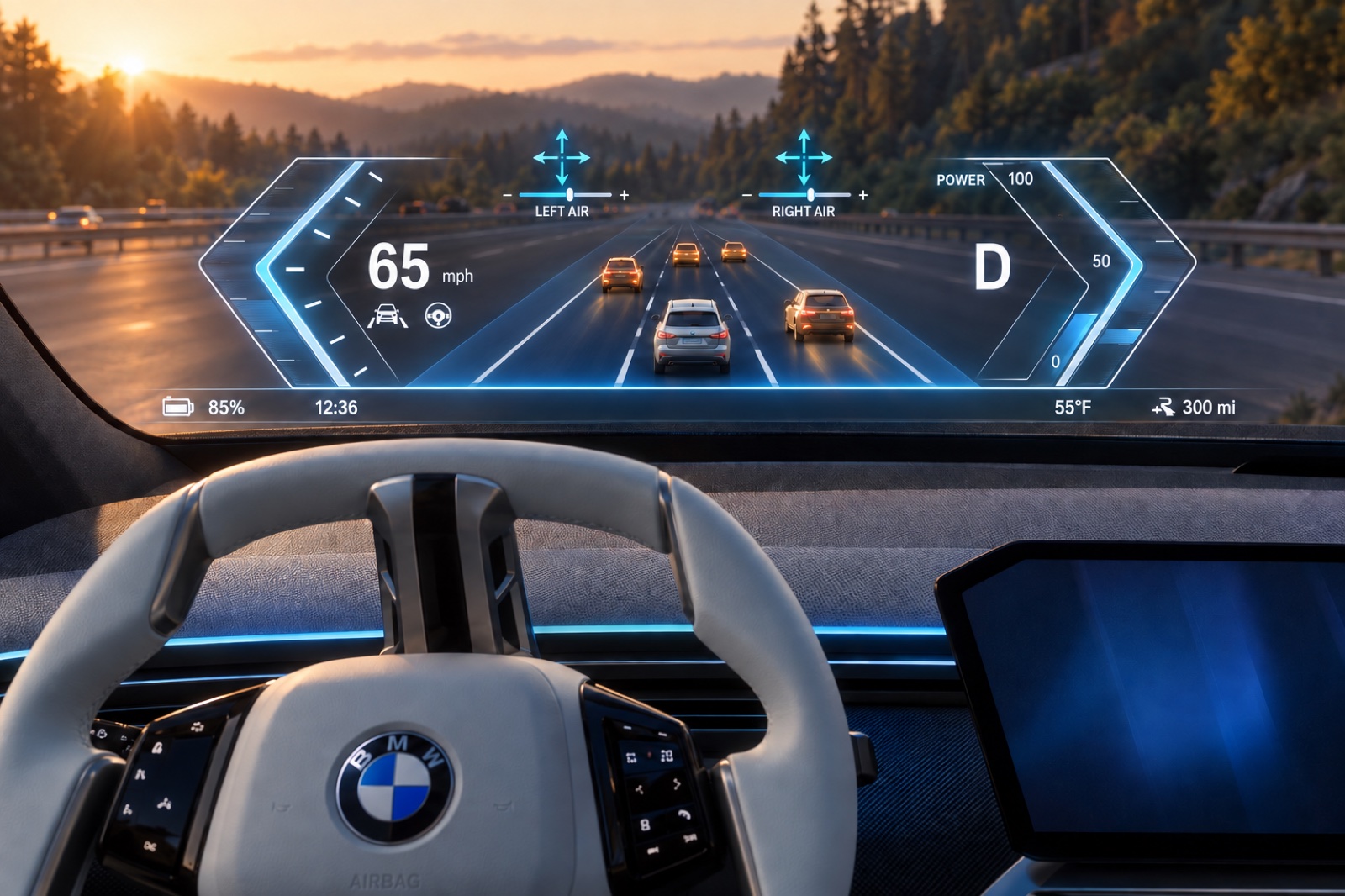
BMW’s proposed hologram cockpit would let a driver aim the air vents by dragging a control suspended in space, with an optional pulse felt at the fingertip. Those adjustments would sit within a larger projected scene, according to a patent filing reviewed by Carmoses.
BMW first announced floating controls with tactile confirmation through HoloActive Touch in 2016. This month’s proposal combines a detailed, prerecorded environment with smaller projections that can respond to the driver and changing traffic.
A stored road scene can stay in place while miniature cars move through it, instrument readings change and a fingertip slides a ventilation control. The scenery and the things that react have separate optical hardware.
The projected dashboard brings a speedometer, power gauge, gear indicator, battery level, range, clock and outside temperature together around the road view. Separate controls above the road adjust airflow direction and strength for the left and right outlets.
Aim The Vent, Feel The Input
The climate example starts with separate controls for air outlets to the user’s left and right. Each has a direction adjustment that moves vertically and horizontally, plus a horizontal slider beneath it for airflow strength.
Move the projected target upward or sideways and the controller determines how to operate the actual outlets to deliver the requested breeze. Drag the lower slider to change its intensity. BMW’s stated aim here is to spare occupants the search for the vents and their physical adjustments.
Tesla already offers a version of that separation between the outlet and its control. In the Model Y, occupants touch and drag airflow graphics on a touchscreen to redirect ventilation. BMW proposes putting the adjustment in the air, within the occupant’s field of view.
Finger-position sensors would detect taps and drags. Optional feedback hardware would respond in sync, using air or ultrasonic nozzles around the display region to create a sensation at the fingertip.
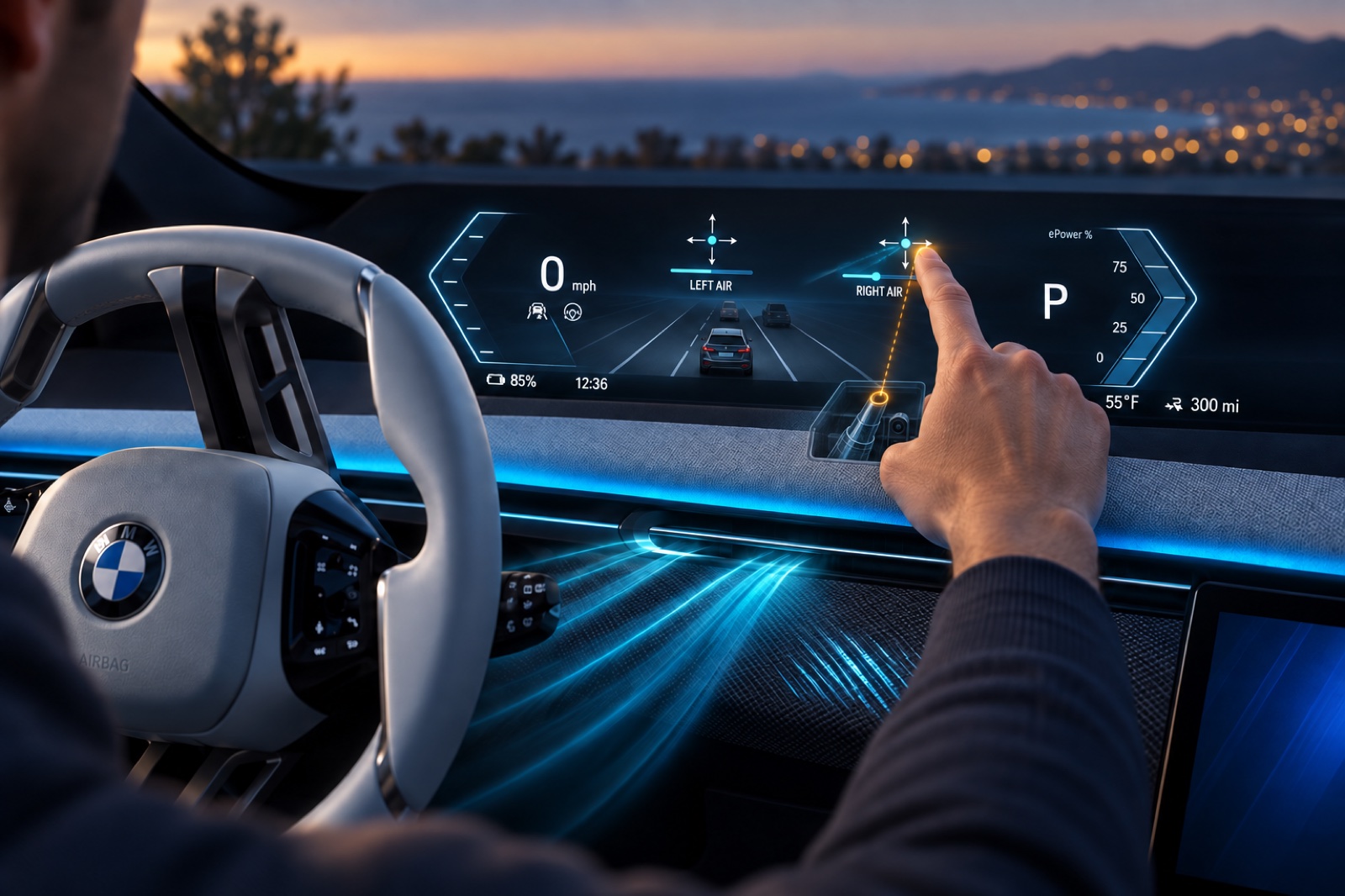
That feedback has a different job from the ventilation. The cabin outlets direct the breeze toward an occupant, while the smaller pulse provides a response to an input. There is still no solid button or slider under the finger.
BMW supplies no tested feedback strength, response time or operating distance. The proposed sensation is clear enough, but how consistently a driver would feel it remains unanswered.
Stored Streets, Moving Traffic
The larger display uses a first holographic projector to reconstruct a scene selected from a library. Additional units can insert movable controls, changing vehicle information or both. BMW describes these supplementary projectors as potentially smaller and simpler because their images cover less of the scene.
In the combined arrangement, one set handles interactive objects and another supplies live data, including vehicle positions and numerical readings. This division allows the detailed background and continuously changing elements to be handled separately.
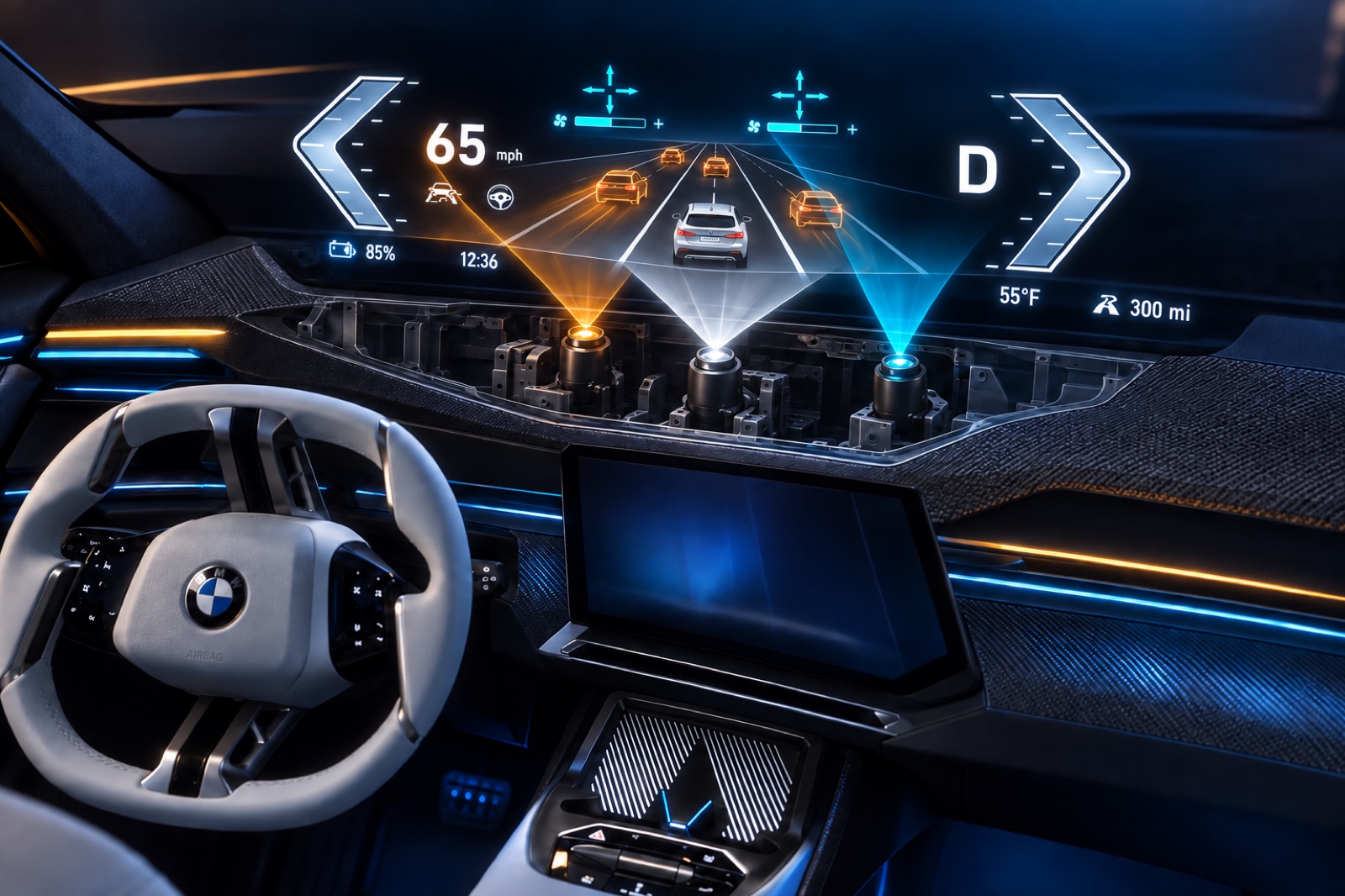
Navigation makes the approach concrete. BMW describes a collection of 100 or more holographic maps covering Munich or another city. Cameras observe the surroundings ahead, and the system selects the stored view with the closest match.
Detected vehicles and obstacles would then appear within that environment, together with a model of the host car. Construction, road closures and alternative routes could be added, while tapping an object would expand or collapse further information.
The proposal does not explain how the stored city library would be kept current as streets and buildings change. Adding live obstacles addresses part of that problem, but maintaining the underlying scenery is a separate task.
Other versions apply the same structure to music and games. Stored imagery could match the track playing, while floating controls handle volume or skipping songs. Passengers could manipulate game pieces against prerecorded backgrounds.
The Test Is Everyday Use
Nothing in the filing names a model. The Neue Klasse iX3 provides the setting for these renders because its production Panoramic iDrive already combines windshield projection with a 17.9-inch central touchscreen and an optional 3D head-up display.
Its cabin also retains physical controls for functions including gear selection, volume, hazards and defrosting. That mix provides a useful benchmark for any additional interface. A patent does not guarantee production.
For navigation and passenger entertainment, the separate projections give BMW a defined way to combine detailed surroundings with objects that respond. Everyday climate adjustment faces a tougher test. BMW describes easier operation and reduced distraction without supplying user-study results.
The tactile pulse is intended to confirm an input, while finding the floating target remains a separate part of the interaction. BMW has yet to establish an ease-of-use advantage over physical vent controls for this everyday cabin adjustment.