
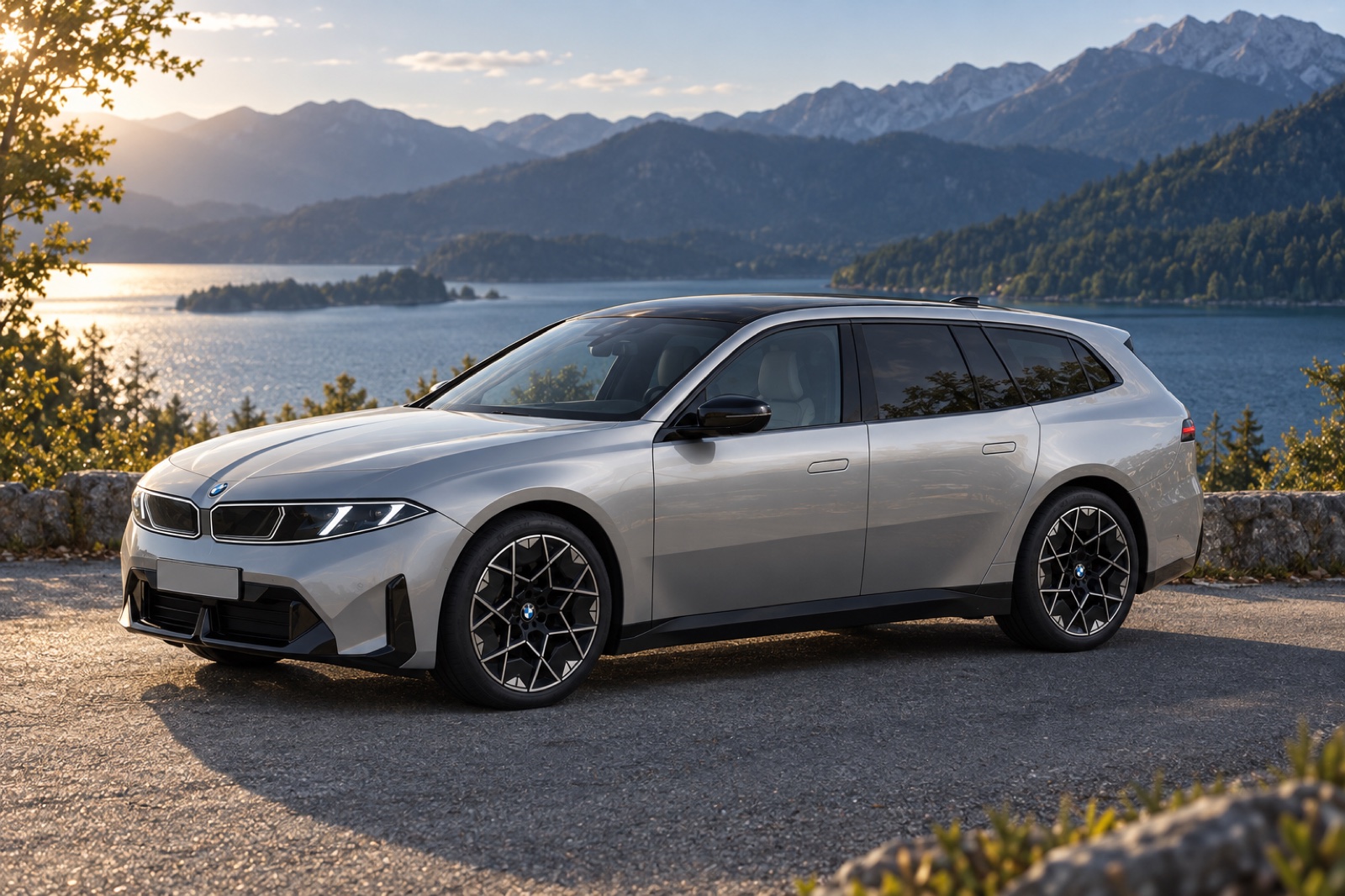
Render: Our front view combines the prototype’s long roof with the revealed sedan’s nose.
BMW’s i3 Touring already has the shape it needs. The latest test car exposes enough silver bodywork to show a substantial, clean-sided wagon with an extended roof and tightly drawn rear quarters. Removing the remaining camouflage in our renders brings that combination into focus. The longer cabin suits this design.
There is a confirmed car behind the illustration, too. BMW has named the i3 Touring among the Neue Klasse models destined for its Munich factory. That gives this prototype a firmer foundation than a promising body shape caught on a test drive. BMW is preparing to carry its electric sedan architecture into a wagon, and the visible details suggest a straightforward approach to the job. BMW’s own statements on Neue Klasse battery technology add engineering context to that move.
The Shape Is Already There
The exposed doors do much of the explaining. Flush handles sit in broad, largely uninterrupted surfaces, with a dark sill drawing the body’s lower edge. The windshield, roof and side glass form a continuous cabin outline. Behind the rear doors, that outline stretches toward the tailgate while the body keeps its relatively short rear overhang.
Our front view retains the prototype’s silver finish, black mirrors and intricate wheels, whose machined faces trace an angular pattern over dark recesses. These are unusually busy wheels against such restrained bodywork. Keeping them matters because replacing them with a conventional set of twin spokes would change the character of the car.
The revealed i3 sedan supplies the clearest guide to the nose. Its headlights and horizontal kidneys share a dark surround, with a narrow division at the center. We have carried that arrangement into the render, along with the sedan’s lower bumper treatment. The result connects the wagon to a production BMW design rather than asking the roof extension to carry an entirely new front end.
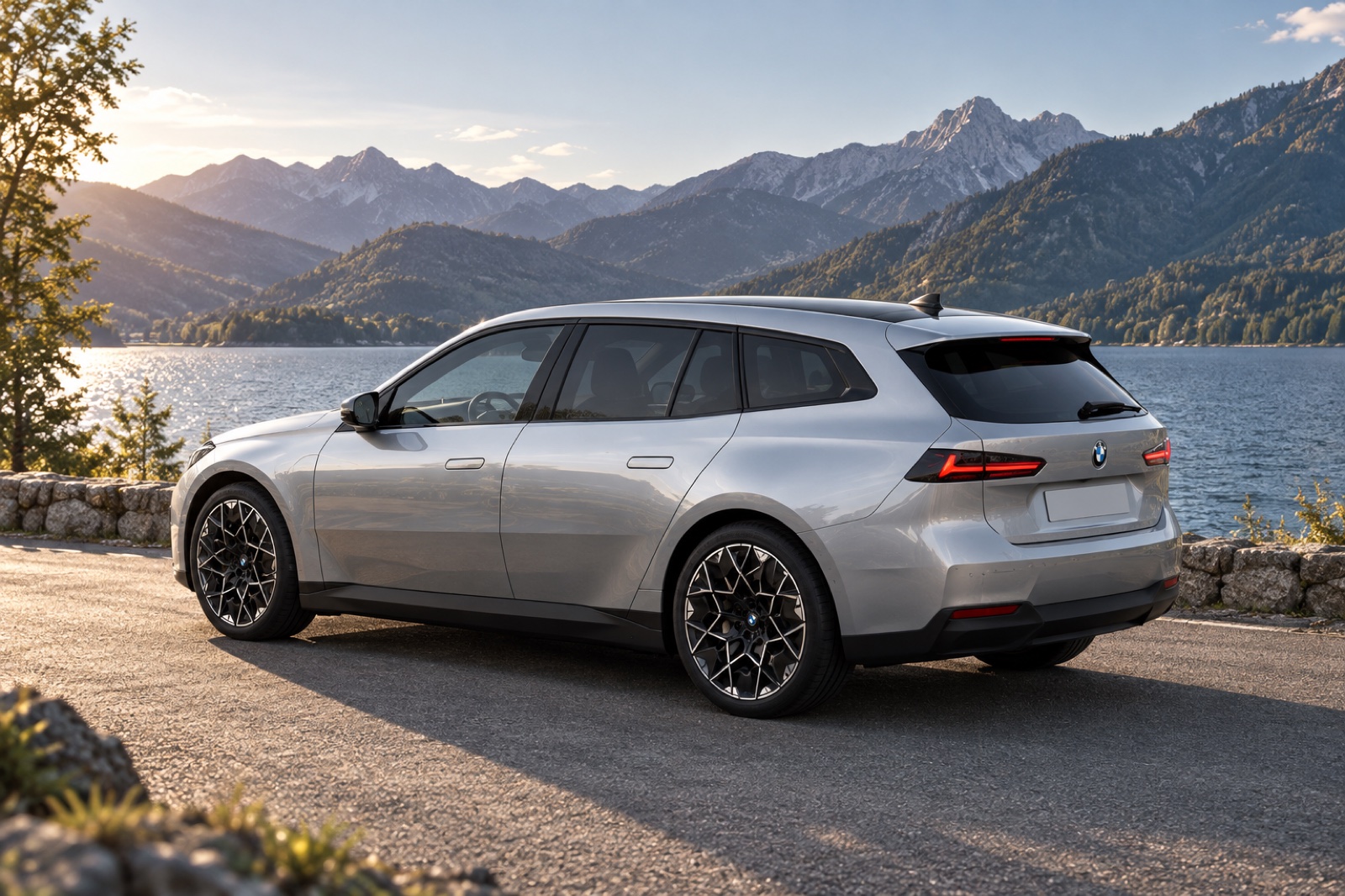
Render: The rear view interprets the concealed lamps and tailgate around the prototype’s visible outline.
At the back, the photographs show a roof spoiler, a rear wiper and narrow illuminated strips through the disguise. The rear glass slopes, but the roof continues far enough back to give the car a recognizable load-carrying shape. Our finished tail uses separate lamps and a simple lower bumper to keep attention on that outline.
The Battery Matters to This Body
The engineering context makes the Touring more interesting than a styling exercise. BMW’s sixth-generation battery system places cylindrical cells directly inside the pack, removing the intermediate module stage. The pack also serves as part of the vehicle structure, closing the body from below. BMW describes this approach as enabling a flatter battery installation across different vehicle heights.
That is relevant to a wagon. Space beneath the passengers has to accommodate the battery while leaving room above it for people and luggage. Integrating the pack into the structure gives the designers a useful starting point for a lower passenger car. The Touring’s cargo capacity remains unconfirmed, a key specification for a wagon with room for both passengers and luggage.
The i3 50 xDrive sedan provides a performance reference: BMW lists two motors, 463 horsepower and an 800-volt electrical architecture with DC charging at up to 400 kW. Those are sedan specifications. For this wagon, the more useful question is how BMW balances usable space, efficiency and charging capability in the finished package.
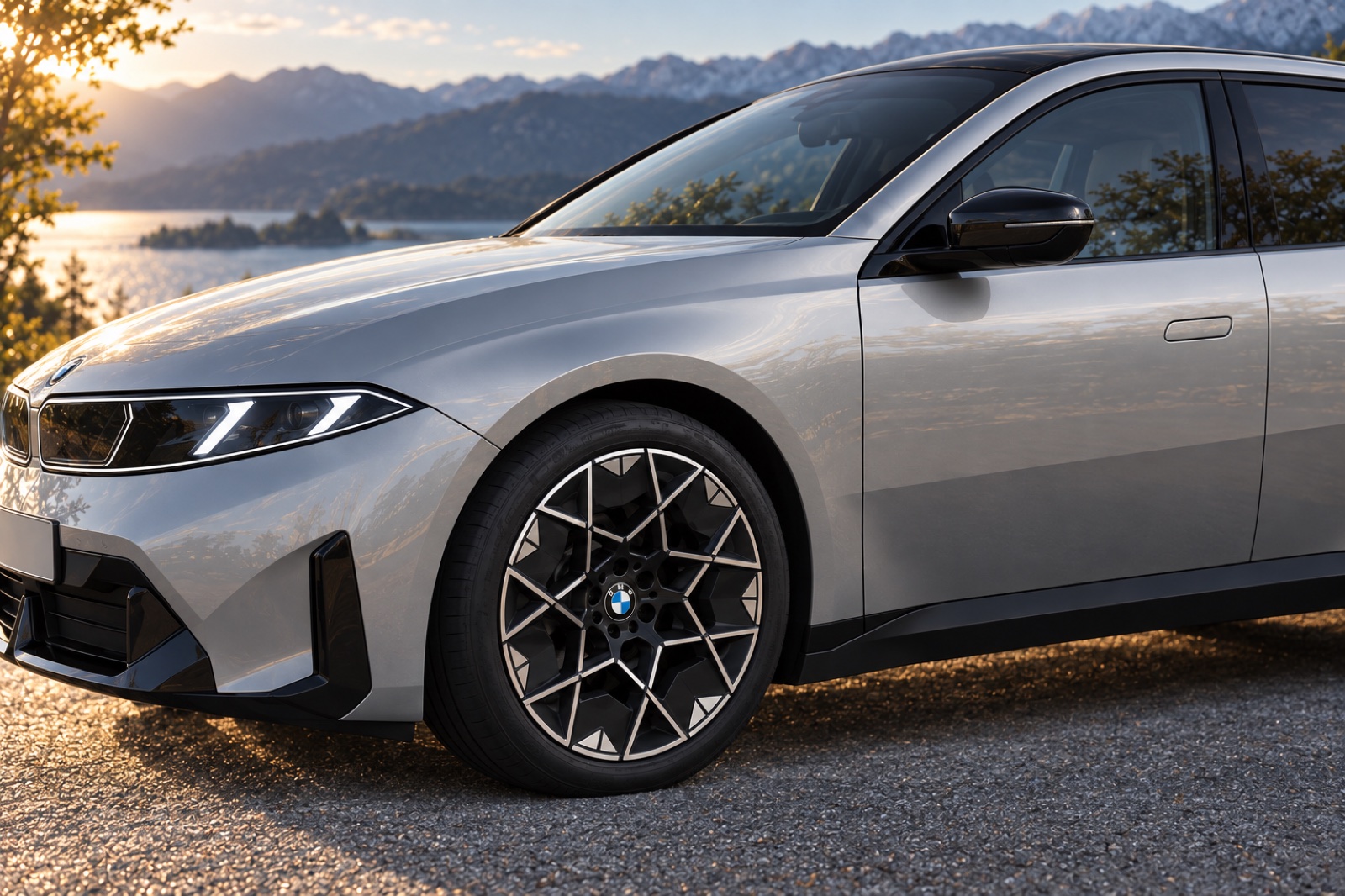
Render: Angular machined spokes stand out against the silver fender and dark sill.
A Familiar Job for a New Platform
BMW has been working through that practical brief for decades. The first 3 Series Touring joined the range in 1987 after BMW employee Max Reisböck built a wagon prototype to address his family’s luggage needs. The essential appeal remains easy to understand: keep the passenger-car proportions and make the space behind the rear seats easier to use.
Electric power has already reached BMW’s wagon range through the larger i5 Touring, introduced in 2024. The i3 Touring will extend that idea into the Neue Klasse family. Its significance is the combination of a familiar body style and a dedicated electric architecture, with the opportunity to develop the two together.
BMW still has to reveal the Touring’s final specifications and concealed details, so our lamps, bumper surfaces and hatch finishing remain an interpretation. Even allowing for those finishing decisions, the visible proportions make a convincing case. The i3’s broad sides and extended cabin work well together, and the wagon is the version whose design I would choose.