Honda has proposed an automated merging system that accounts for the driver who refuses to let another car in. It can ask for space through its position on the road, then change strategy when the remaining ramp leaves too little time to wait for cooperation.
Honda’s proposed system, detailed in a patent filing discovered by Carmoses, would choose between different ways of planning a merge as available space and traffic conditions change. The important calculation goes beyond whether an opening looks promising. The controller can also consider whether that space will become large enough before the car reaches a point where it needs to slow or stop.
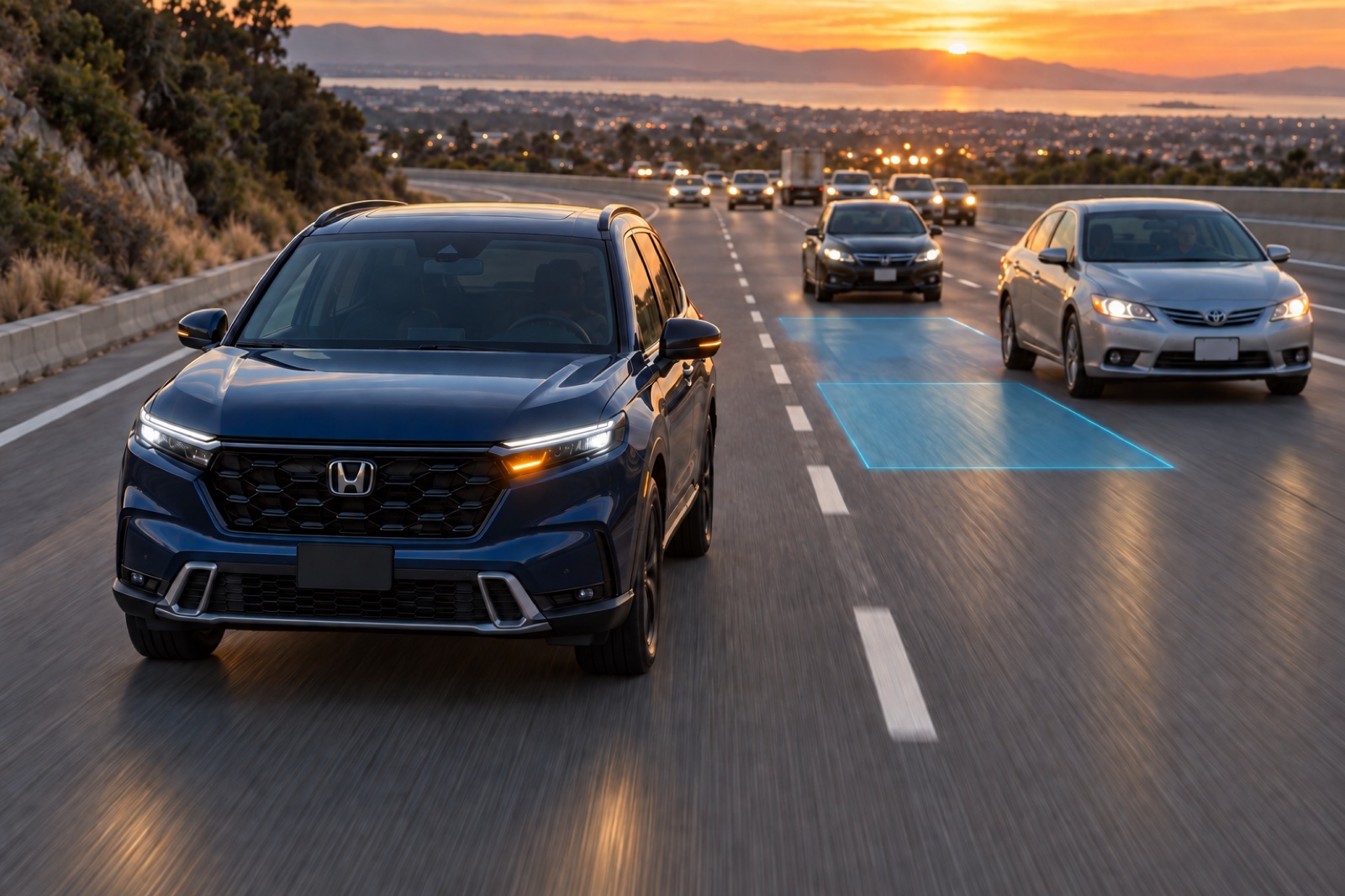
Nothing in the filing names a production model. The generic upright vehicle and everyday freeway problem make the Honda CR-V a sensible choice for the images here. Its existing Honda Sensing features include adaptive cruise control and lane keeping assistance, which do not establish that it has this proposed merging capability.
A Request Made With Position
The process starts with sensors tracking surrounding vehicles and the road. A relatively simple planner looks for an opening the car can physically reach and enter, considering its position and motion. When a suitable gap exists, the controller selects it and works out the path, speed, and acceleration or braking needed to merge.
When the opening is too small, the car can adjust its speed to line up alongside it and signal its intention to enter. It can also move laterally toward the neighboring lane. One version keeps the vehicle entirely inside its own lane markings while traveling close to the dividing line.
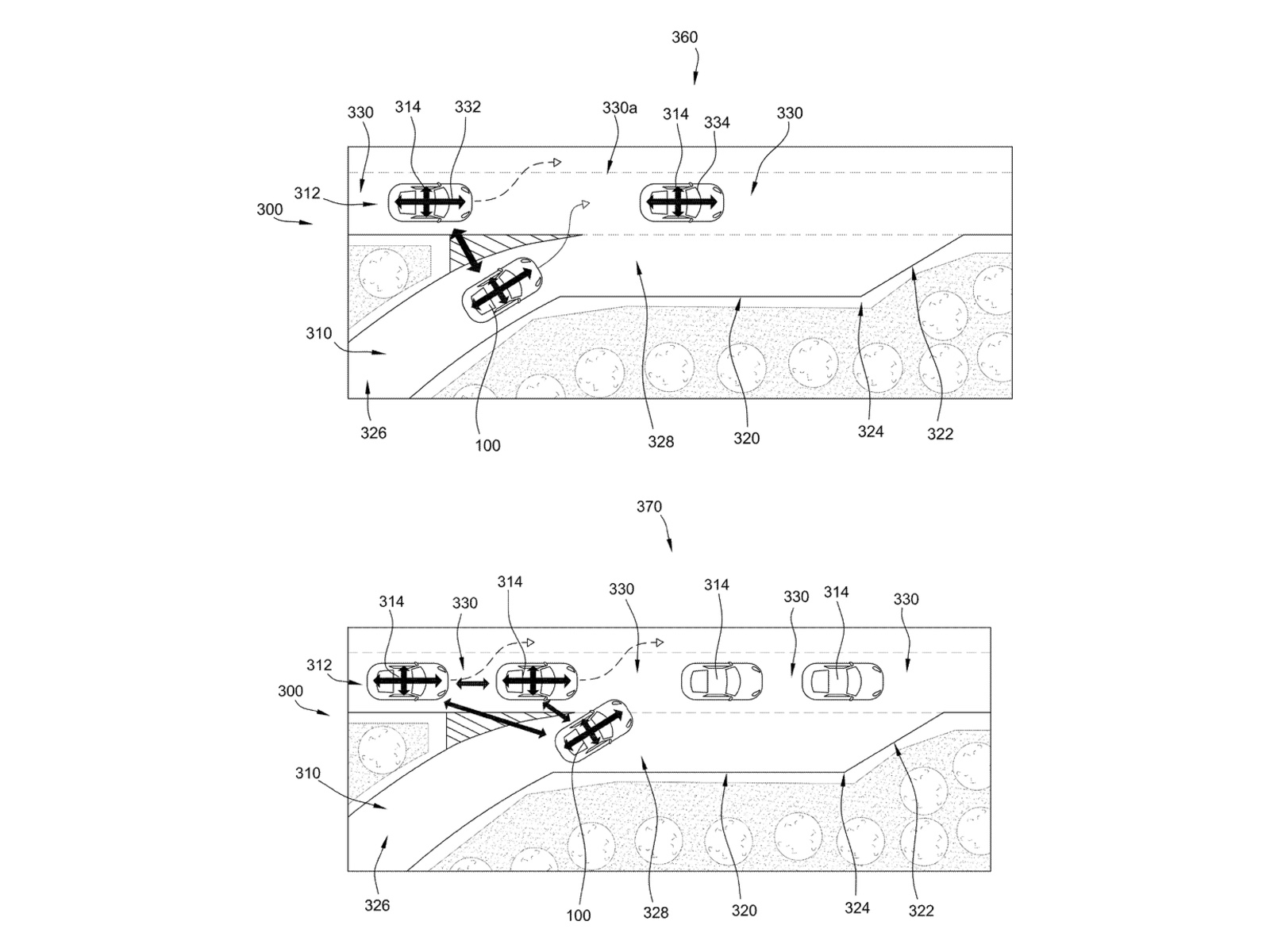
The following driver might slow down or move over, allowing the opening to grow. Honda also explicitly accounts for someone ignoring the request or reacting adversarially. The system can reassess its approach after an unsuccessful negotiation, and it can consider other gaps rather than remain committed to one driver.
Once an opening becomes usable, the controller can operate the steering, accelerator, and brakes to execute the plan. Honda does not specify a production activation sequence or a driver handover procedure.
The Ramp Sets The Deadline
If no usable opening exists, the controller checks whether conditions justify another planning method. Relevant factors include remaining lane length, road geometry, traffic density, vehicle speeds, and the spaces between cars. With sufficient room and favorable conditions, it can keep using the simpler method and continue negotiating.
A more demanding approach becomes available when those conditions change. Honda describes a lattice planner, which lays out a grid of possible positions and evaluates paths through them. Candidate plans can incorporate predicted reactions from surrounding traffic and be scored using acceleration, changes in acceleration, following distance, and time to collision. Passenger comfort therefore enters the calculation alongside clearance.
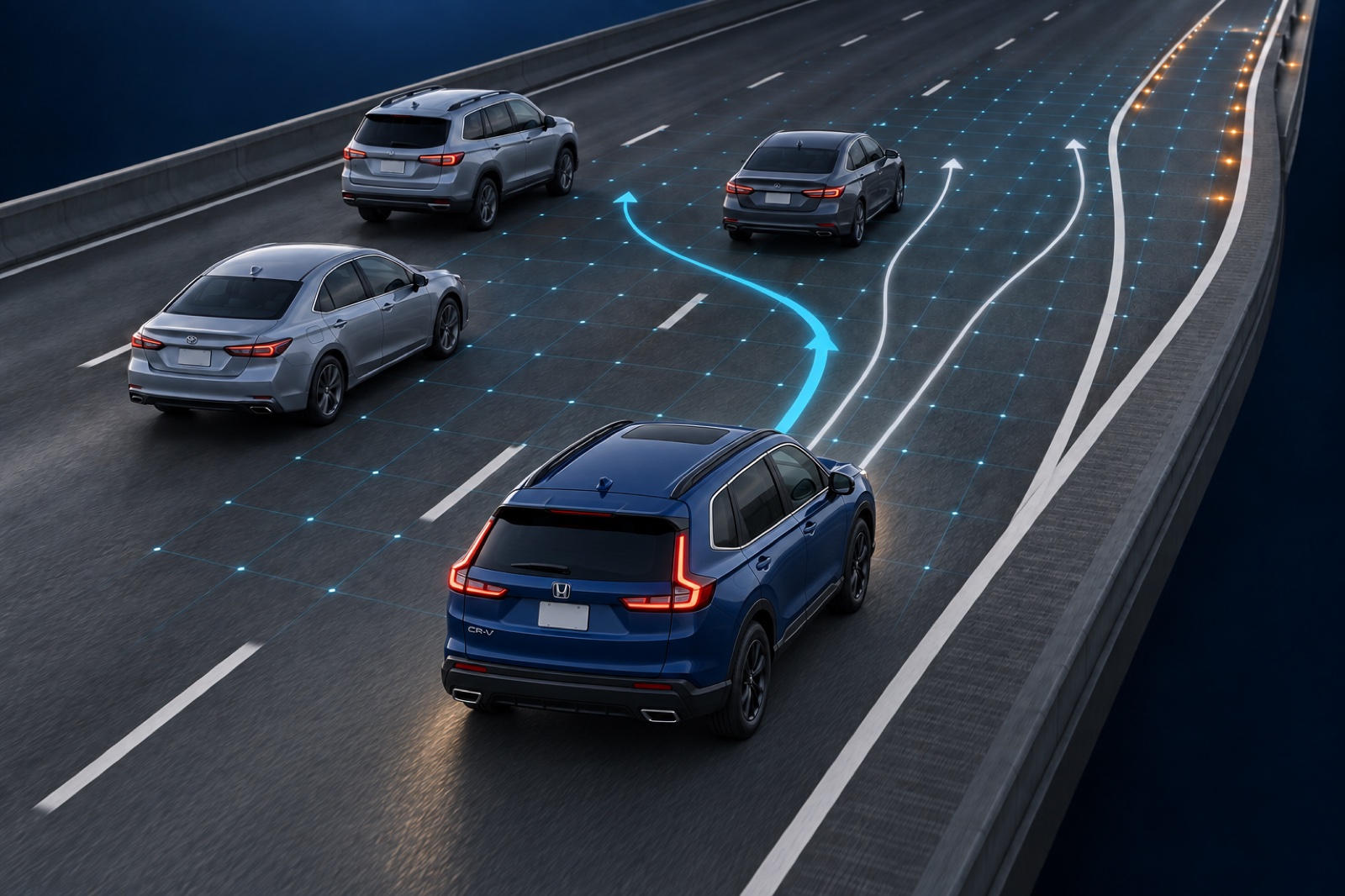
The reason for switching is computational economy. Honda wants to avoid continuously running several demanding planning methods and comparing their results when an easier calculation can handle the situation. There are no measured processing savings supplied to establish how much this would help.
The timing allowance is especially useful. Reaching the side of an opening does not mean the maneuver is ready. Another driver still needs time to make room, so the controller can budget an additional buffer for the gap to grow. A cooperative response that arrives too late still leaves the car without a viable merge.
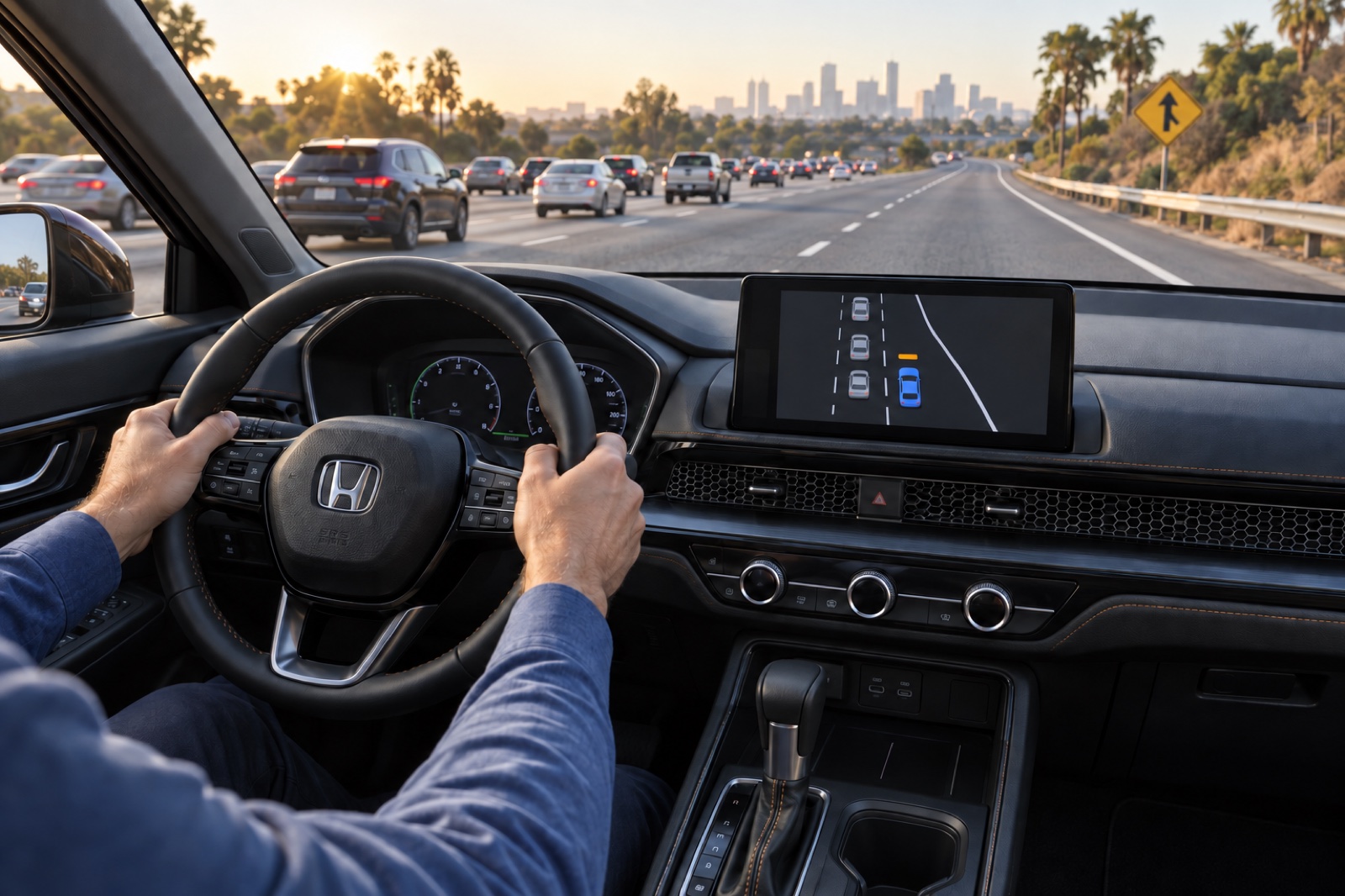
If no suitable opening appears, decelerating or stopping remains an option. The controller can establish a critical location before the taper, with its position dependent on speed, traffic, and lane geometry. It can continue searching for a usable gap while waiting, and the merge plan can be displayed to the driver.
Cooperation Has Limits
Honda introduced cooperative merging through its Safe Swarm concept nearly a decade ago, using connected vehicles to coordinate speed and timing. This proposal’s positioning maneuvers do not depend on every surrounding car exchanging wireless messages, which makes the behavior relevant to mixed traffic.
Automated lane changes are already available elsewhere. On properly equipped Chevrolet and Cadillac vehicles, Super Cruise can change lanes to pass slower traffic or leave an ending lane, with an attentive driver required. Honda’s proposal addresses the more specific problem of choosing a planning strategy when a usable opening has not been found.
A patent does not guarantee production, and Honda supplies no road-test results here. The strongest part of this approach is its allowance for failed cooperation. A controller that budgets time for a response and preserves room to stop is a more convincing proposition than one that treats a predicted yielding driver as a guaranteed opening.