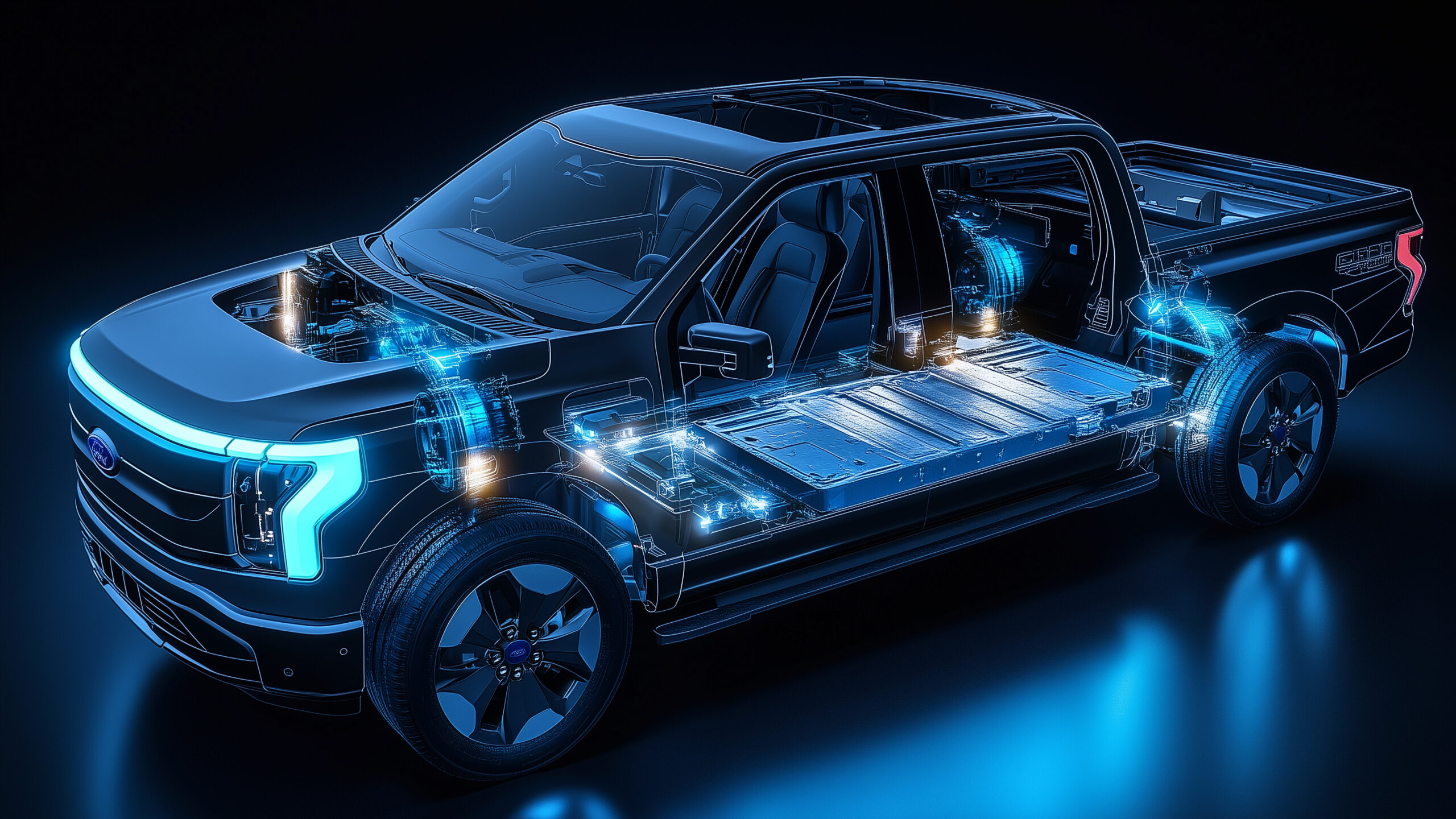
Electric vehicle batteries endure constant shocks and vibrations, which can gradually shorten their lifespan. While they are securely bolted to the vehicle’s structure, the inevitable movement and impact take a toll over time. To address this, Ford has filed a patent with the European Patent Office for a system of vibration isolators that cushion the battery, reducing wear and extending its durability.
A Smarter Way to Protect EV Batteries
Ford’s patent drawings illustrate vibration isolators positioned between the battery pack and its housing. These isolators absorb shocks and vibrations in both vertical and horizontal planes, mitigating impacts from acceleration, braking, and rough terrain. The system combines elastomeric polymers with strategically placed springs to provide optimal cushioning and extend battery longevity.
How Shocks and Vibrations Kill EV Batteries
While chemical and thermal processes are the main culprits behind battery degradation, shock and vibration also play a major role. They can:
- Cause fatigue damage
- Lead to vibration-induced degradation of battery chemistry
- Gradually reduce energy density
- Degrade electrodes, separators, and current collectors
- Damage circuit boards and electrical connections
Ford Takes on a Hidden Battery Killer
If these vibration-related risks can be mitigated, EV batteries will last longer, perform better, and degrade more slowly, improving overall reliability and efficiency. While automakers focus on advancing battery chemistry and thermal management, vibration control has been largely overlooked. Ford aims to change that with its newly patented vibration-isolating system, making it one of the few automakers actively working to protect EV batteries from shocks and vibrations.