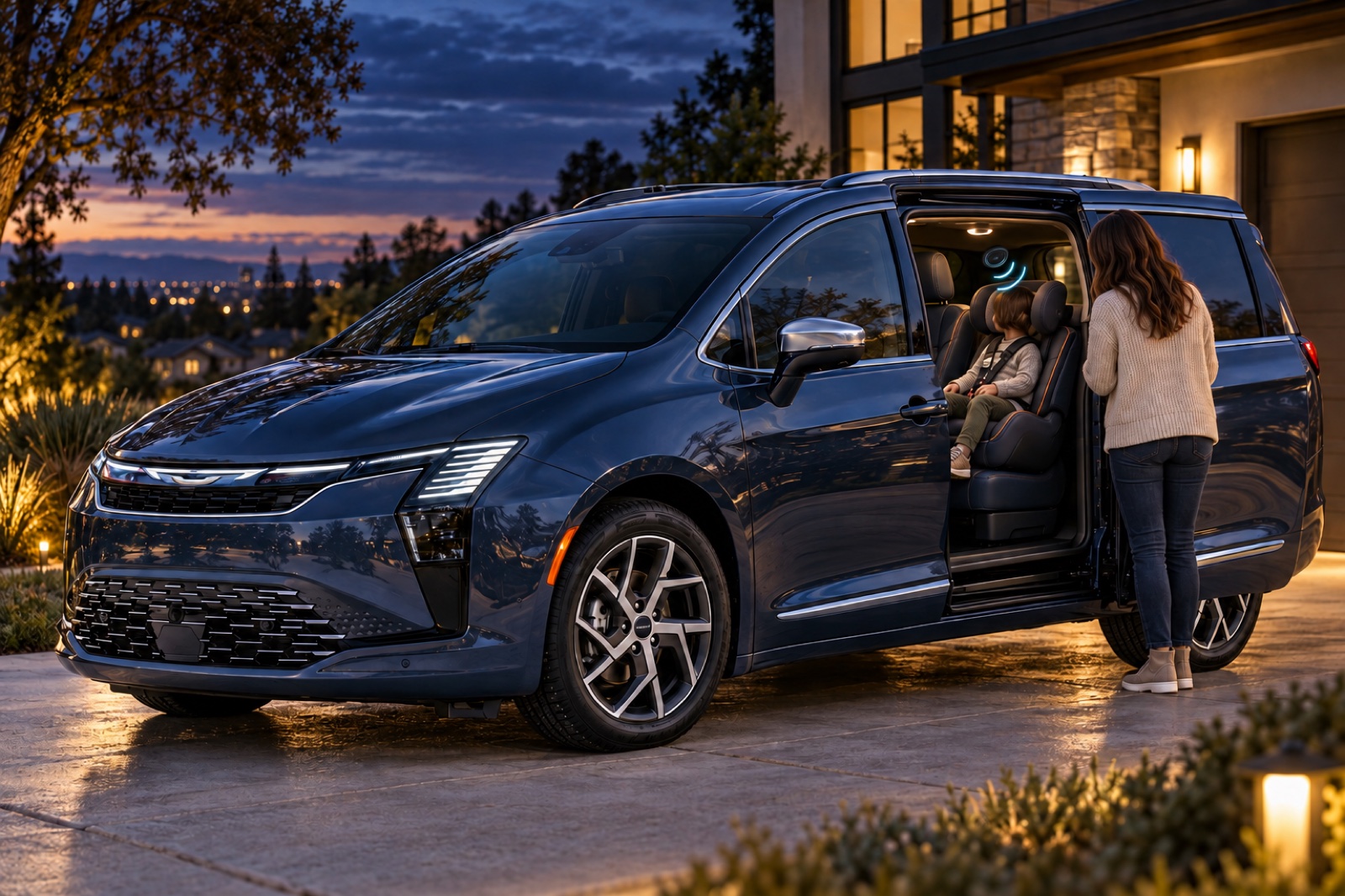
A crying child could prompt a car to play a lullaby and gently rock the seat beneath the child restraint. Chrysler’s parent company, Stellantis, proposes that response according to a patent filing discovered by Carmoses. The aim is to reduce the distraction of a distressed passenger, with an optional companion system that checks whether the restraint stays properly secured throughout the drive.
Nothing in the filing names a model. The family-hauling role and available FamCAM rear-seat camera make the refreshed Chrysler Pacifica a useful US showcase, which is why it appears in these renders. That is an editorial placement, not a confirmed Pacifica feature. Its existing camera lets parents see the back rows, including inside rear-facing child seats.
Choosing A Response To Crying
The driver could enable monitoring through an onscreen control and leave the system to listen. Microphones in the roof or nearby pillars would capture rear-cabin sound, with filtering intended to separate cries from the engine, ventilation and other passengers. A trained classification model would then select a soothing strategy.
One example uses three categories. Neutral calls for no action, agitated triggers a lullaby, and tired adds vibration to the music. Those labels describe the proposed responses. There are no published accuracy figures here establishing that a microphone can reliably distinguish an exhausted child from an irritated one.
Parents would retain some control. Sound selection could come from the model, a user setting or a default, and vibration strength could be chosen the same ways. The interface could also accept downloaded sounds and adjustments to playback volume and direction.
The audio choices extend beyond music to birds, waves, running water, wind and heartbeats. Existing rear speakers could aim playback toward the child. Sound and vibration would not have to operate together every time.
The Rocking Hardware Stays In The Car
The unusual packaging choice puts vibrating motors in the vehicle chassis. They would produce a slight rocking motion in the supporting passenger seat, which in turn moves the child restraint secured to it. The removable safety seat would not need its own rocking motor.
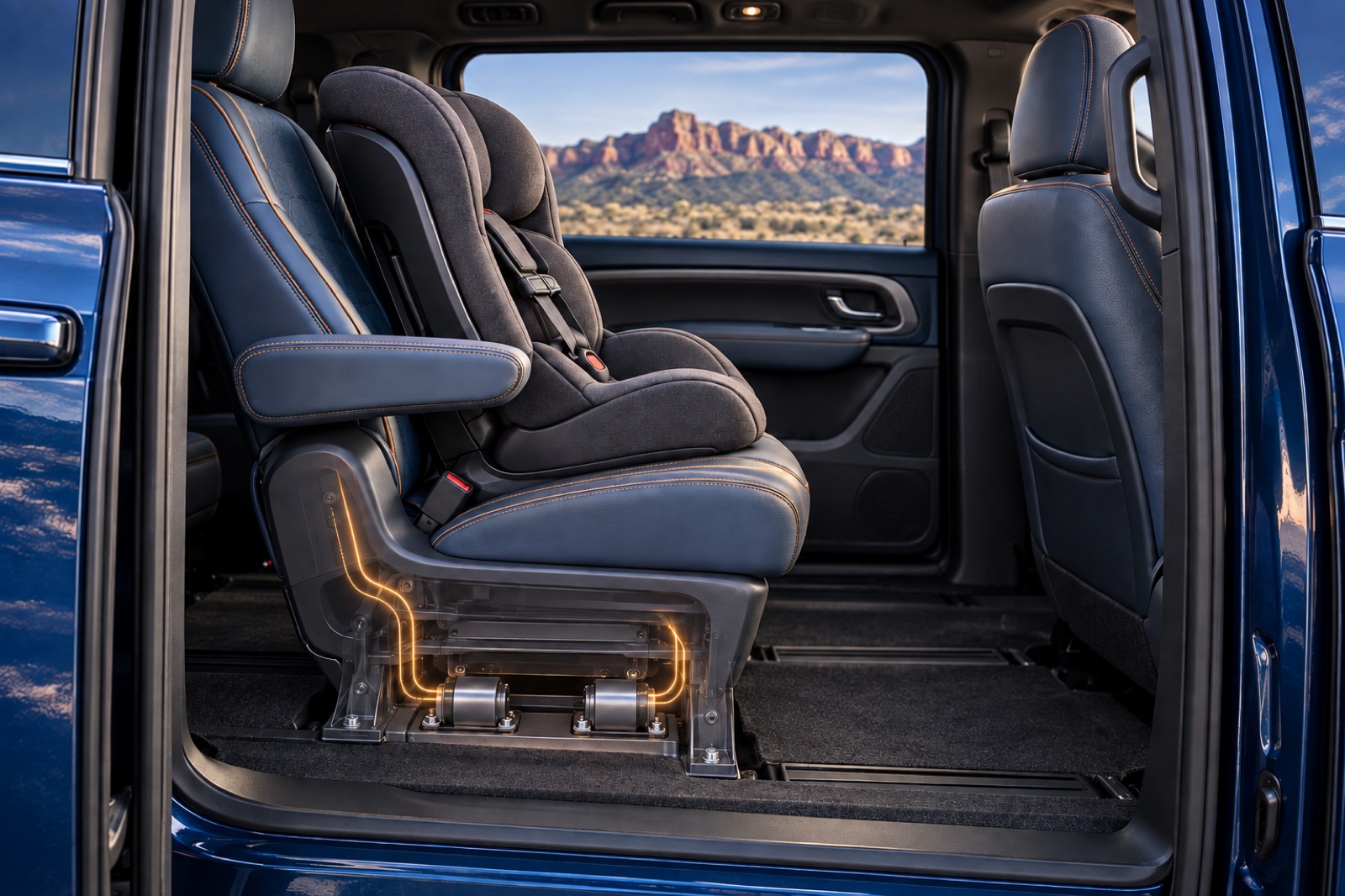
Stellantis presents that arrangement as a way to accommodate different child-seat types. It is an appealing premise for families changing restraints as children grow, but broad compatibility remains an assertion. No mechanical layout, vibration frequency, detailed amplitude limits or crash-validation results establish how the arrangement would work across those products.
That missing detail also affects the installation checks. The proposal does not explain how the stability monitor would distinguish the system’s intended vibration from unwanted movement.
The Useful Part Before The Drive
The optional installation assistance starts with lighting. LEDs built into the vehicle would illuminate attachment points, belt buckles and adjustment areas. They could switch on when the vehicle is stopped and movement is detected in the rear cabin, putting light where a parent is reaching to install the restraint.
Chrysler’s Pacifica owner’s manual locates the lower anchors at the rear of the cushion, where it meets the seatback. The proposed lights would illuminate those existing attachment points, helping parents find the recessed bars and guide the connectors into place.
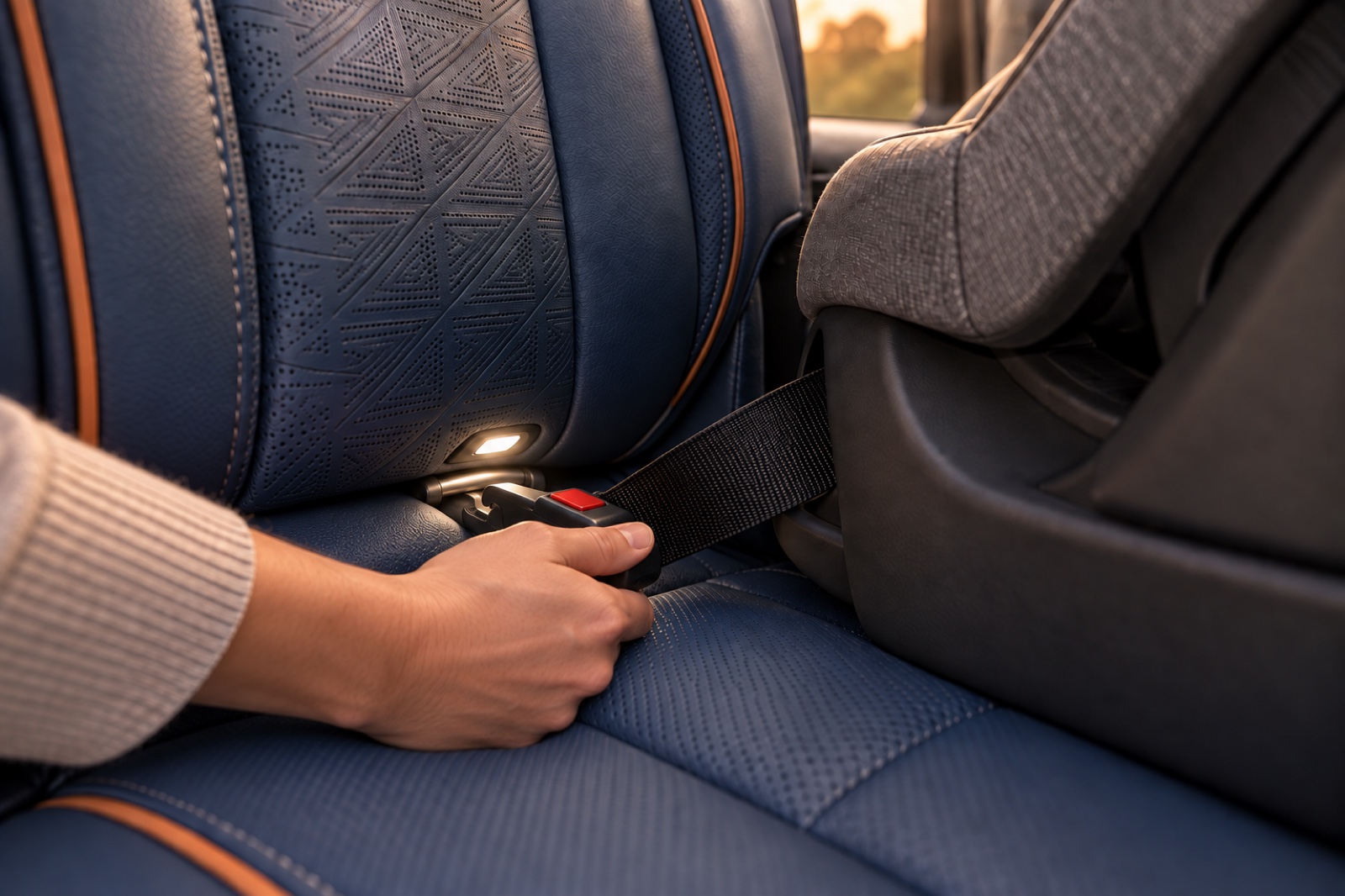
Sensors would then check the connections. Contact or position sensing could detect whether anchor hooks are engaged, while other sensors would assess the tension of a seat belt used to secure the restraint. Both insufficient and excessive tension could trigger a warning. Accelerometers or gyroscopes would monitor stability during the journey.
An example control panel has six functions covering child monitoring, installation lighting, anchor status, belt tension, stability and installation instructions. Warnings could appear visually, sound through the speakers or use both channels. The checks are optional additions to the soothing system.
A More Demanding Kind Of Cabin Comfort
Aptiv previously proposed detecting occupant distress and offering the driver calming options through media, lighting or seat movement. Chrysler also previously introduced Calm Cabin accessories for autistic passengers, including a portable light-and-sound device. That package addressed a different need and did not establish cry-triggered rocking.
The distinction here is the proposed combination of sound-based response selection, vehicle-supplied motion and continuing installation checks. A patent does not guarantee production, and no results establish that this system soothes children or reduces driver distraction.
The installation aids deserve development priority. Illuminating a recessed anchor and detecting a poor connection address specific tasks parents already perform, with a purpose that does not depend on interpreting why a child is crying. Automatic rocking still needs evidence that it can deliver comfort while preserving the restraint’s primary job.