
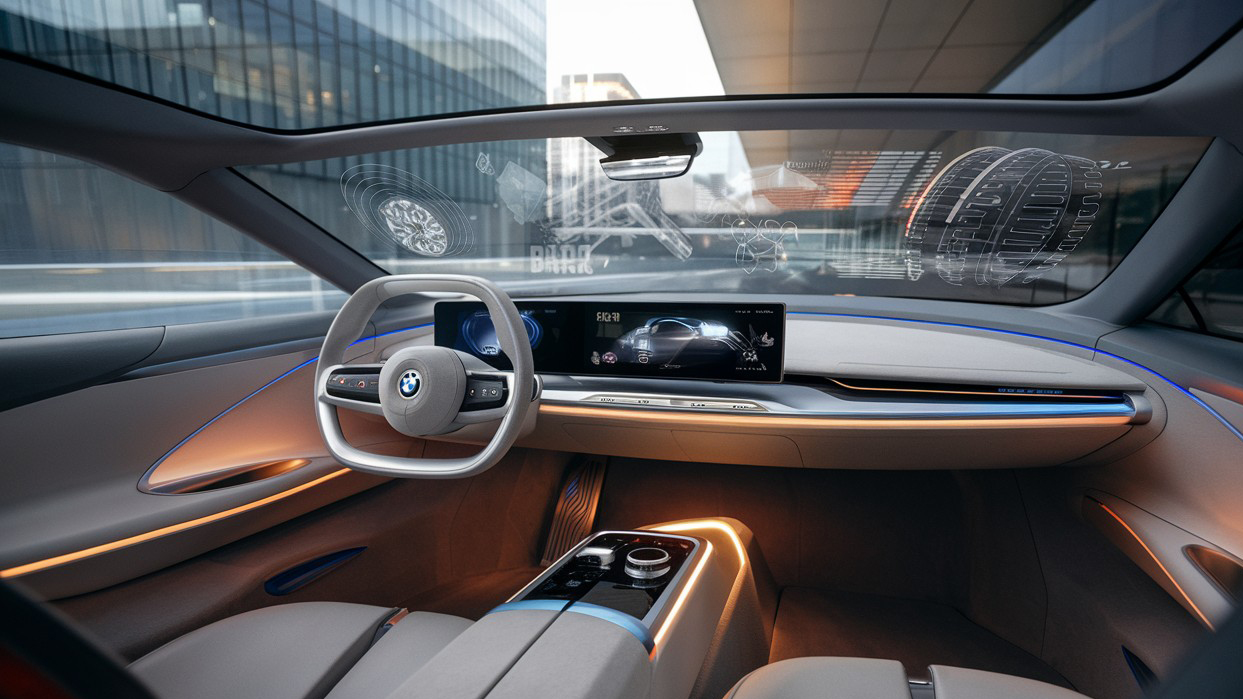
BMW is trying to kill three birds with one stone with its latest patent filing with the European patent office for a new kind of head-up display (HUD). If it gets its way, the future of head-up displays will mean more compact installations and a bigger viewable area at a lower manufacturing cost. This is ultimately achieved with a new type of display surface.
More Compact Display
BMW’s new display surface is made up of multiple rectangular elements that are arranged in rows. The elements of each row are placed at a 90-degree angle to the elements in the previous row, and can be arranged either vertically or horizontally. In this way, the display area can be expanded in either direction as needed like a jigsaw puzzle to increase the display area of the HUD, while a larger display area is possible using fewer display elements. It’s also less complicated than traditional displays with their intricate optics and mirrors. This has the direct advantage of a more compact installation that makes better use of the limited dashboard area available for the HUD components in modern cars.
No Extra Cost
BMW states that the new design has no drawbacks, and the smaller installation will not lead to a smaller display; in fact, the automaker will be taking advantage of the new technology to design larger viewing areas and display more information to the driver, despite the more compact dimensions of the tiled display surfaces. The display area can be expanded at will either horizontally or vertically. The cherry on top is that BMW claims that this design is also cheaper to make.
Multiple Advantages
BMW’s new HUD design has the following advantages over traditional designs:
- It’s scalable horizontally or vertically
- The installation is more space-efficient than that of a regular HUD
- Larger viewable areas are possible thanks to the new design
- The HUD patent should result in lower manufacturing cost