
Audi’s latest patent filing with the European Patent Office is aimed at the autonomous driving market in the form of a VR headset for passengers riding in an autonomous vehicle. The headset reduces or eliminates motion sickness by creating an artificial horizon, allowing wearers of the headset to focus on other tasks and use their time in transit productively.
Innovative Motion Sickness Solution
Motion sickness is more of a problem for vehicle passengers than for drivers. The driver can orient themselves by holding onto the steering wheel, and they are looking ahead and can see the horizon at all times while driving. This prevents most instances of motion sickness. However, passengers are often otherwise occupied and would like to work or read while on the road, which greatly increases the occurrence of motion sickness. In the case of an autonomous vehicle or driverless car, this is a problem for all the passengers in the car.
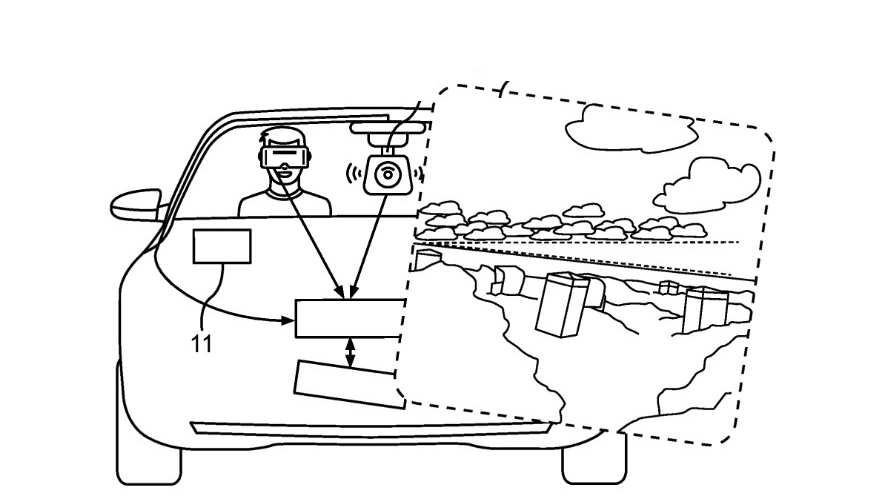
Audi’s patent filing describes a set of VR glasses that can be worn by the occupants, and which can be integrated with vehicle systems, so the glasses knows the vehicle’s orientation and movements. It receives data about the wearer’s head orientation and movements as well, and with both of these inputs, it can generate an adaptive artificial horizon that matches the user’s head orientation. This constant reference point greatly alleviates motion sickness and allows the user to perform other tasks while commuting without getting car sick.
Audi’s VR Glasses Improve In-Vehicle Productivity
While there is similar technology currently available to curb motion sickness in a moving vehicle, Audi’s patent is unique in its ability to process inputs from both vehicle systems and user movements to present the best possible solution. The system fine-tunes the artificial horizon by processing real-time inputs from both the vehicle and the wearer. This dynamic adjustment effectively eliminates motion sickness, enabling the passenger to remain engaged in other activities, enhancing productivity during the journey.