
Porsche has filed a pair of patents with the European Patent Office, introducing cutting-edge display innovations. One patent envisions a holographic charging indicator that projects interactive images over the charge port, providing real-time status updates in a visually striking way. The second patent takes in-car entertainment to the next level, expanding on BMW’s Theater Screen concept with an even more immersive and dynamic display system.
Holographic Lighting Technology
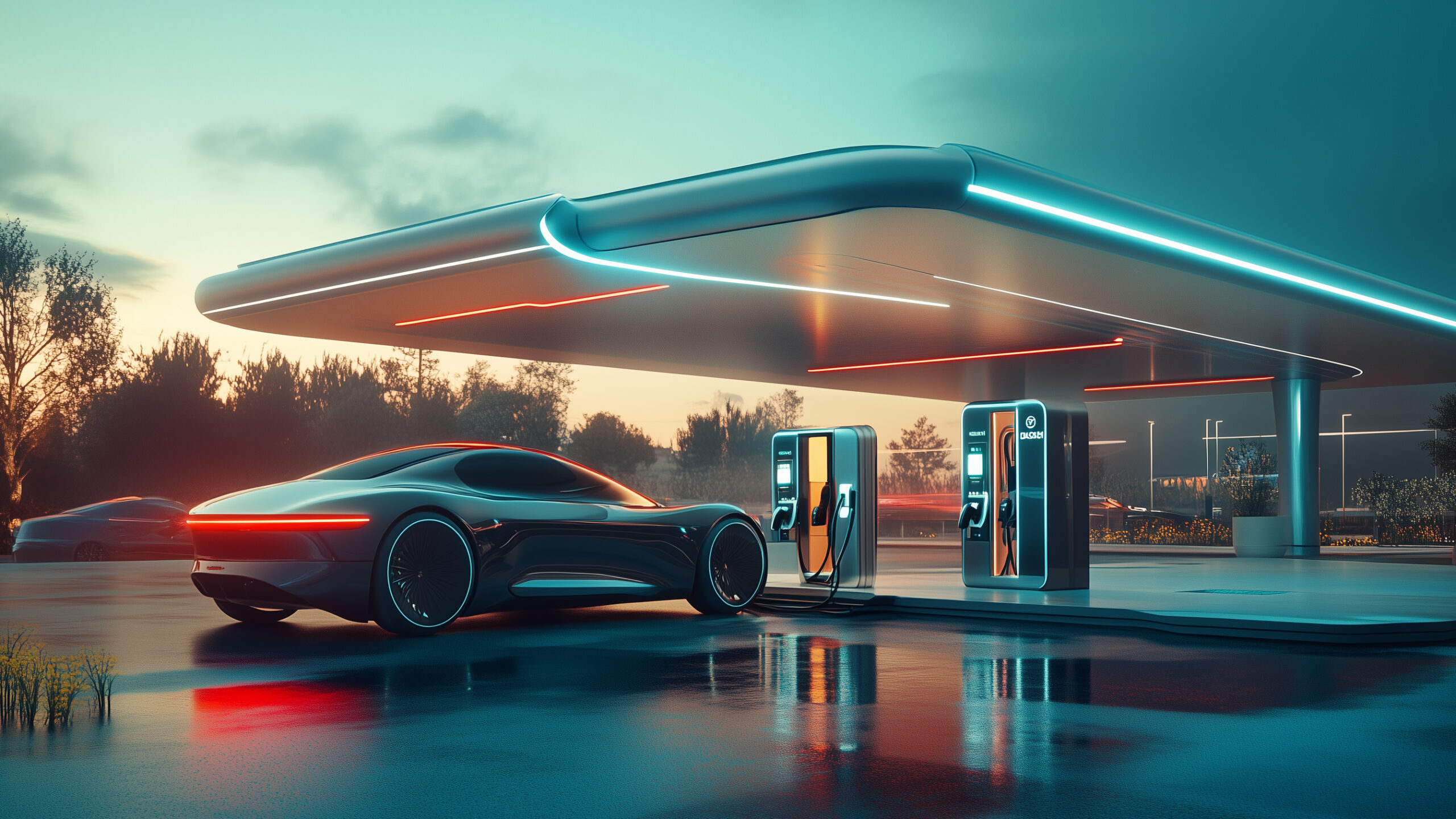
Porsche envisions a future where high-resolution light projections enhance both convenience and aesthetics in electric vehicles. These integrated lighting sources made up of numerous pinpricks of high-intensity light would project 3D vehicle information onto surfaces like the charging port cover, displaying charge status, battery levels, error messages, and even carpets of light to assist with cargo loading or act as puddle lamps.

What sets it apart is gesture control, allowing users to interact with the holographic interface—whether to check charging progress, adjust settings, or even activate specific functions with a simple hand motion.
For example, one could set the time that they intend to depart after charging, and the car could adapt how it recharges its battery for the best conditioning thereof. A wave of the foot could open the tailgate and beam that band of light onto the ground. Or another specific gesture could have the car self-park – anything is possible. However, this holographic technology may not yet be powerful enough for use in the daytime. The second patent doesn’t have that problem.
Taking In-Car Entertainment And Displays To A New Level
Lately, automakers have developed a tendency for screens, particularly with a view to a self-driving future. Should this be achieved, the biggest interior surface of a car – and therefore the best place to have a display – would be on a panoramic glass roof.
In Porsche’s invention, the roof would have the ability to change opacity, but in addition, color films would allow for fine control of image generation through electrical impulses that could acutely block or activate certain color wavelengths.
This means the roof could be nearly transparent when light is desired and a light-blocking but image-generating display, potentially creating a holographic effect.
Again, the potential applications for such a large screen are immense for all occupants, and this patent proves that even the premiere purveyor of piston-powered performance is exploring the possibility of a world where the car becomes more of a living space between destinations than a single-minded tool for transportation.