
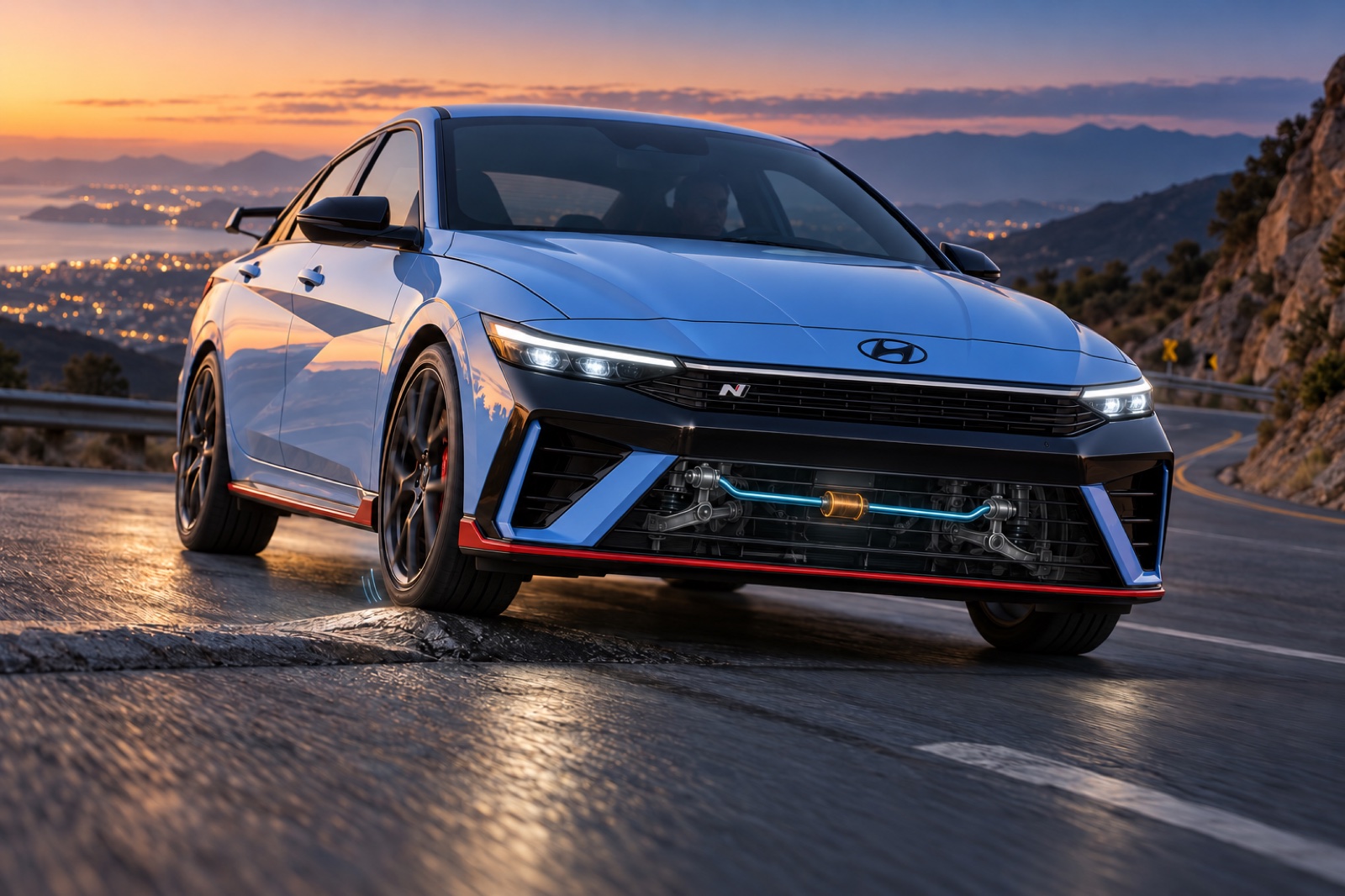
Hyundai and Kia have proposed a sway bar that gives more over small bumps before stiffening up for bigger suspension movements. The change in stiffness happens without a motor or a driver-selected mode. Inside the bar’s central joint, a thin spring flexes until a gap closes and the metal ends on either side meet.
The design appears in a patent filing discovered by Carmoses. Hyundai and Kia had already disclosed a different spring-assisted sway bar earlier this year. This version uses a plate trapped between overlapping ends, with a groove that controls where it bends.
No model or vehicle type is named in the filing. We used the Elantra N for the renders because its role as an everyday performance car makes the comfort-versus-control trade-off relevant, and it already has electronically controlled dampers. Those adjust damping, which is a different job from changing how stiff an anti-roll bar is.
The Gap Sets The Response
A sway bar, also called an anti-roll bar, connects the suspension on opposite sides of a car. When those wheels move by different amounts, it twists and resists that difference. This helps control body lean in a turn, but also couples the two sides when just one tire encounters a road irregularity.
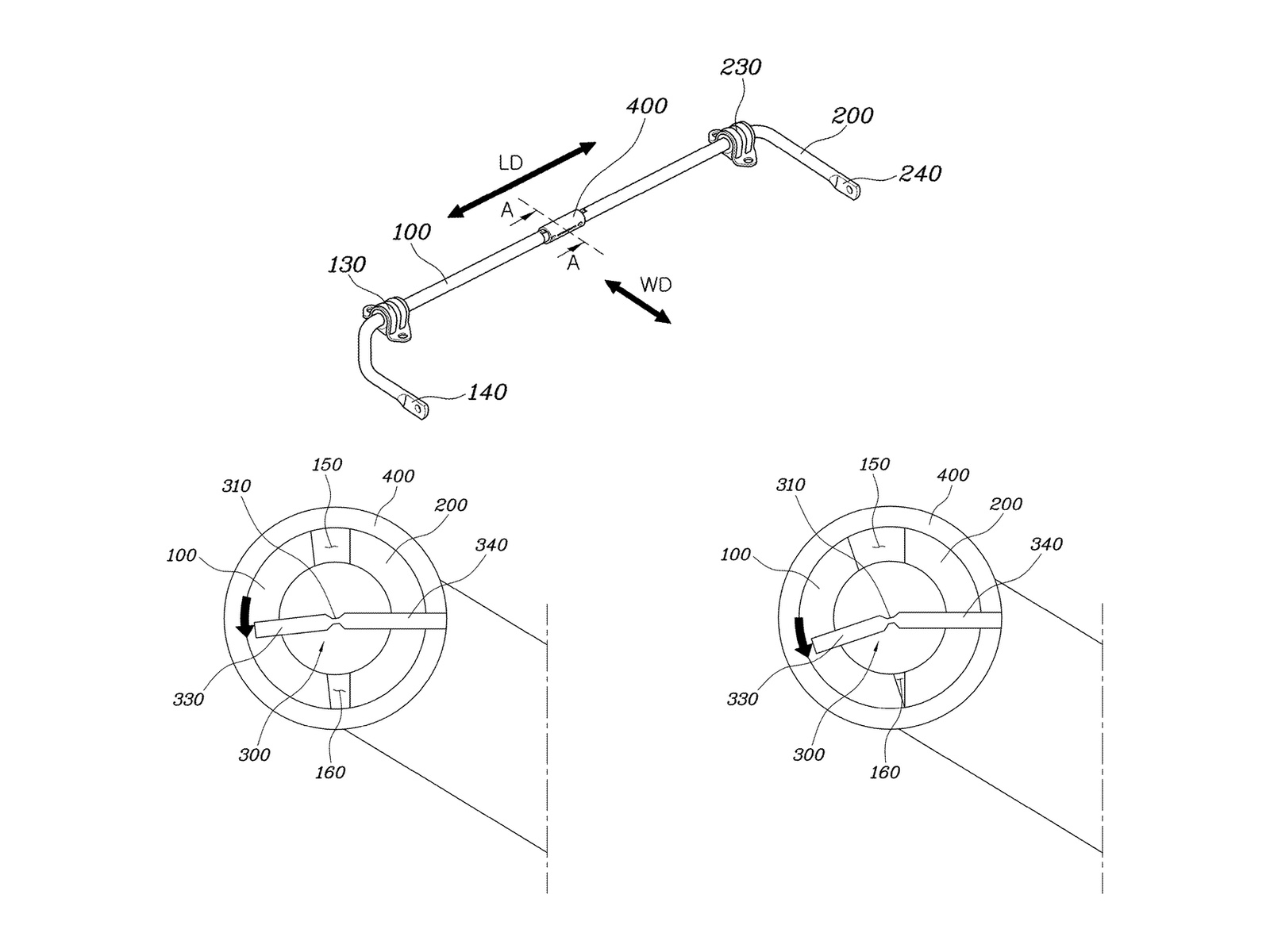
Hyundai’s proposal divides the bar into two halves. Their inner ends overlap inside a sleeve, leaving room for limited rotation relative to each other. A flat spring bridges the joint, with each side held by one of the opposing pieces.
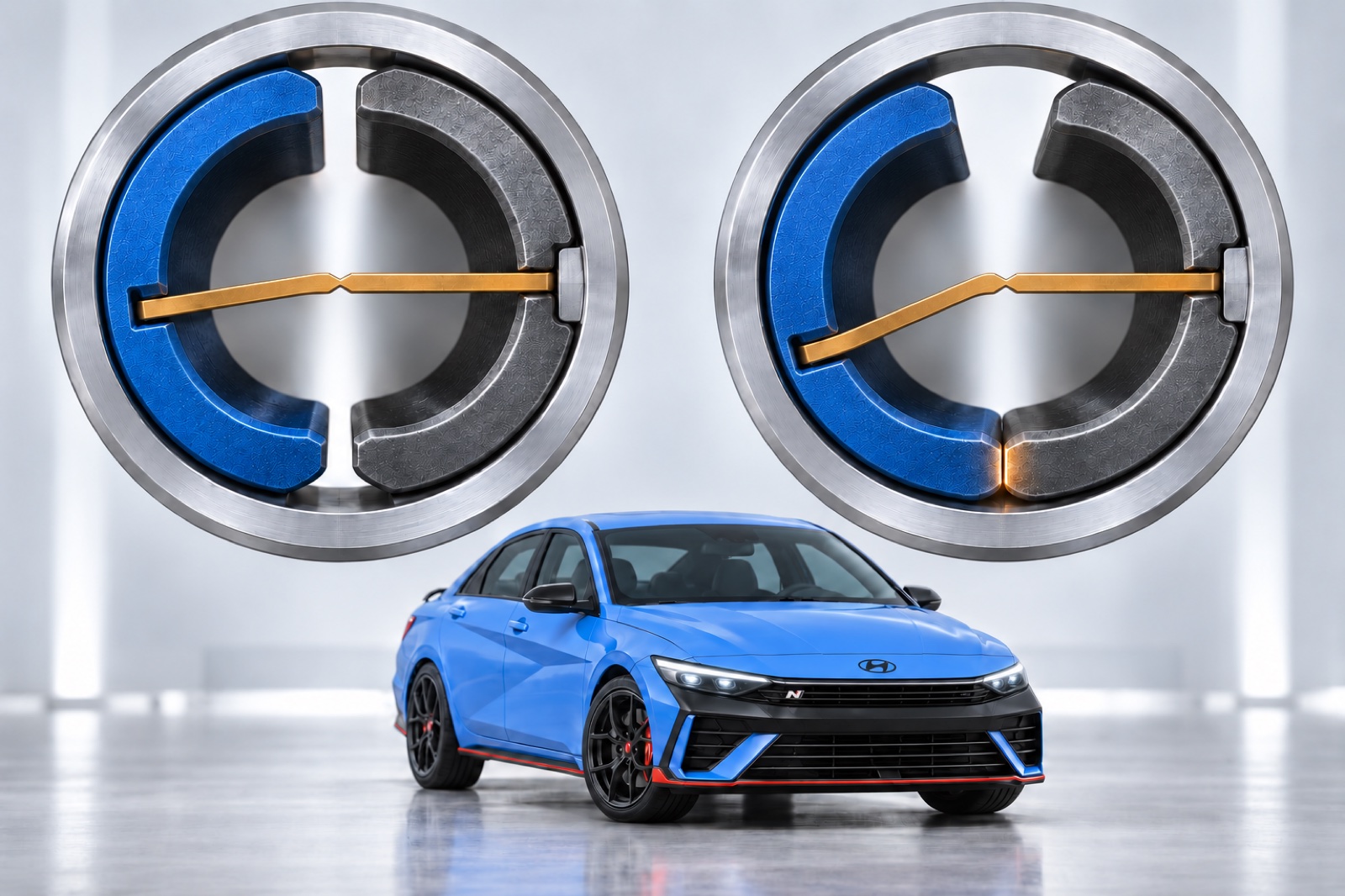
Without any extra driver input, small differences in wheel movement rotate the halves through that clearance and bend the plate, which supplies the initial resistance. The proposed tuning makes this stage softer than twisting the main bars, allowing more compliance over small disturbances.
With greater relative movement, the overlapping ends make contact. Further suspension travel then twists the bars, adding their torsional resistance to the spring’s existing restoring force. The geometry determines when that happens, without waiting for an electronic command.
A Groove Does The Bending
The small spring has a deliberate weak section. A lengthwise groove makes part of the plate thinner, concentrating bending along the bar’s rotation axis. There is no separate hinge pin. The metal itself flexes, and Hyundai describes this arrangement as a way to make its restoring force more predictable.
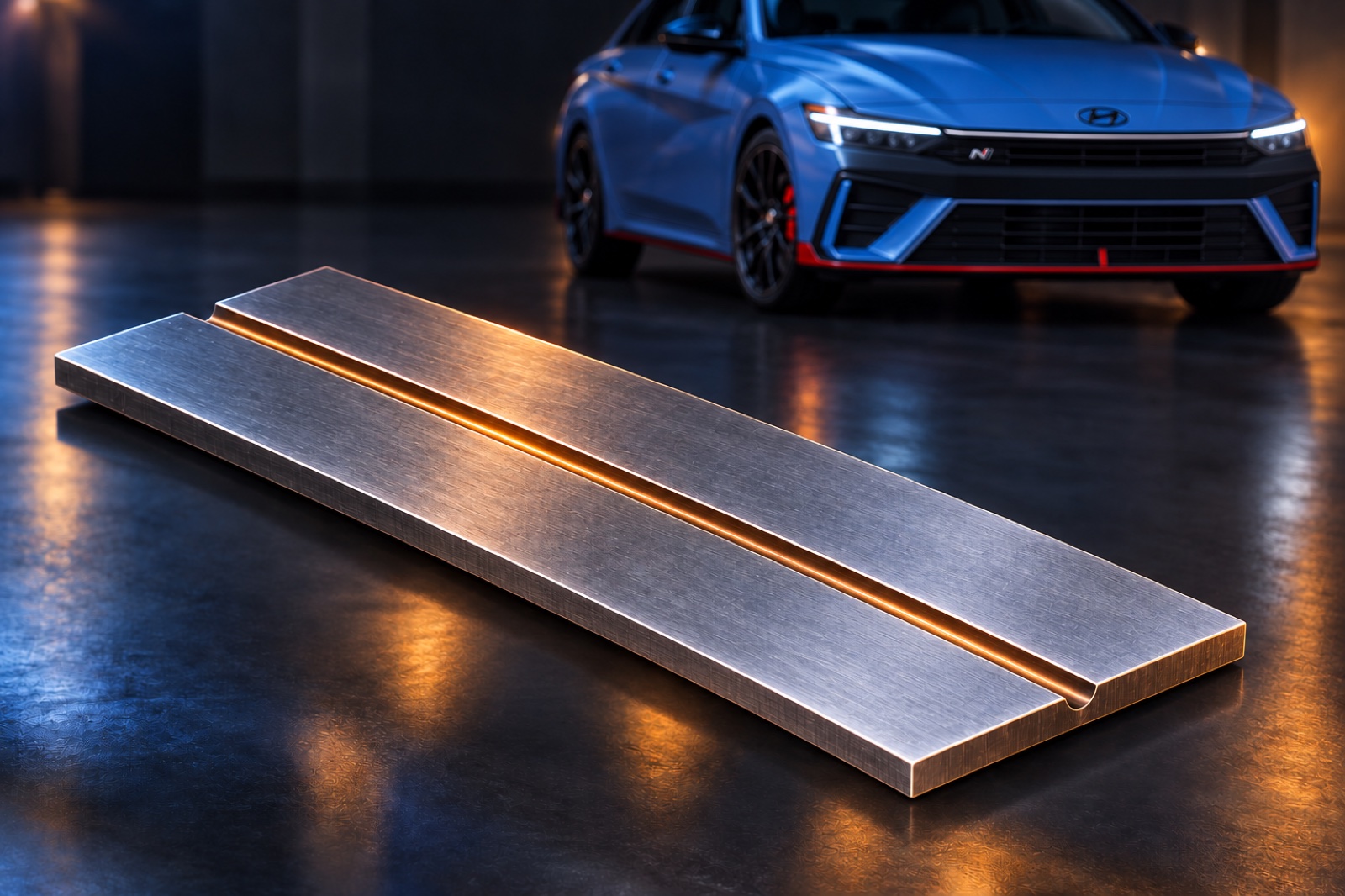
The two sides have unequal widths for a reason. The shorter portion seats inside one bar end. The longer portion passes through the other and reaches the surrounding sleeve, allowing those different mounting points to share the same bending axis.
That sleeve keeps the overlapping ends aligned. It attaches to one half while permitting relative rotation of the other, and the spring can fit entirely within its length and outside diameter. Keeping the shorter portion away from the sleeve’s inner wall is intended to avoid rubbing and wear.
The Compromise Moves To The Engagement Point
The mechanism responds to movement, so a large road disturbance can engage the firmer stage just as cornering can. It has no independent means of identifying what caused the difference in wheel movement. The softer response therefore applies within a mechanical range, rather than being available whenever the road is rough.
Powered roll control has a different set of tools. Porsche has used electric motors between divided anti-roll bars in the Cayenne, with a 48-volt system adjusting their torsional rigidity. Hyundai’s stated aim is to avoid the extra weight and complexity of adding an actuator. No measured weight or cost advantage is supplied.
This also explains why adaptive dampers do not make the idea redundant. Hyundai describes the Elantra N’s existing system as varying damping force with speed, driver input, road conditions and driving modes. The proposed coupling changes the elastic resistance between the two sides of the suspension. Both address ride and handling, through different components.
The unanswered question is how smoothly that coupling reaches its harder stage. The filing supplies no clearance dimension, stiffness curve, ride test or fatigue result. A patent does not guarantee production.
The design earns attention for putting a useful mechanical response into a compact joint. Its value would depend on getting that engagement point right and keeping it consistent through repeated use. A smoother response to small bumps is a worthwhile target, but the transition into firmer resistance is where this idea would have to prove itself.