Pull a downshift paddle and the car brakes harder, but the engine’s revs stay put. Honda has proposed this behavior for a hybrid that’s warming up its exhaust catalyst, keeping the braking feel of a simulated gear change without letting engine speed jump around. It solves a real conflict inside simulated shifting: the rev changes that make the experience fun can get in the way of emissions control.
The idea appears in a patent filing discovered by Carmoses. Honda first introduced S+ Shift in 2024, so simulated gears aren’t new. What’s interesting here is how the electric motor can keep responding to paddle shifts while the gasoline engine runs its own separate warm-up routine.
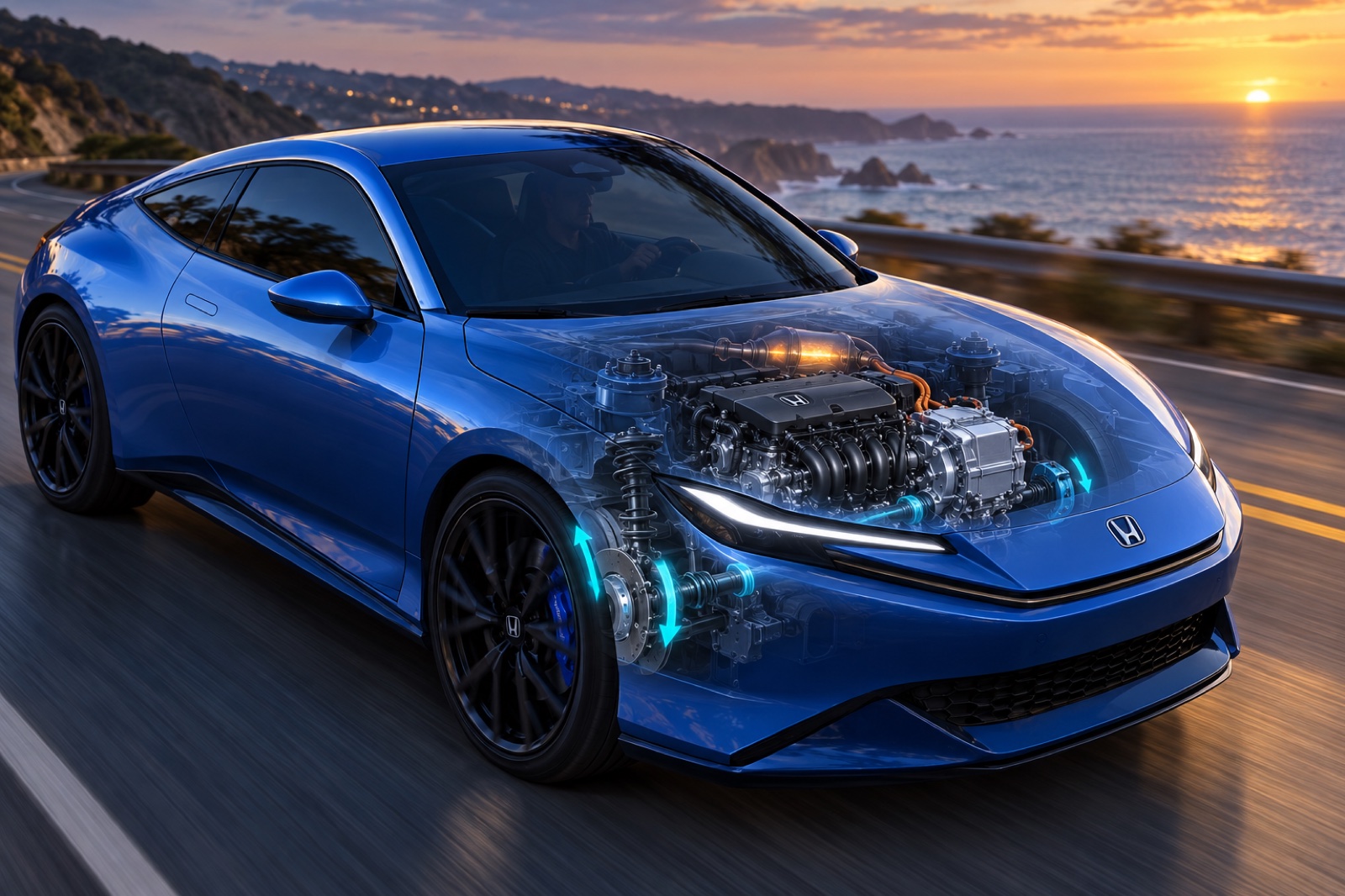
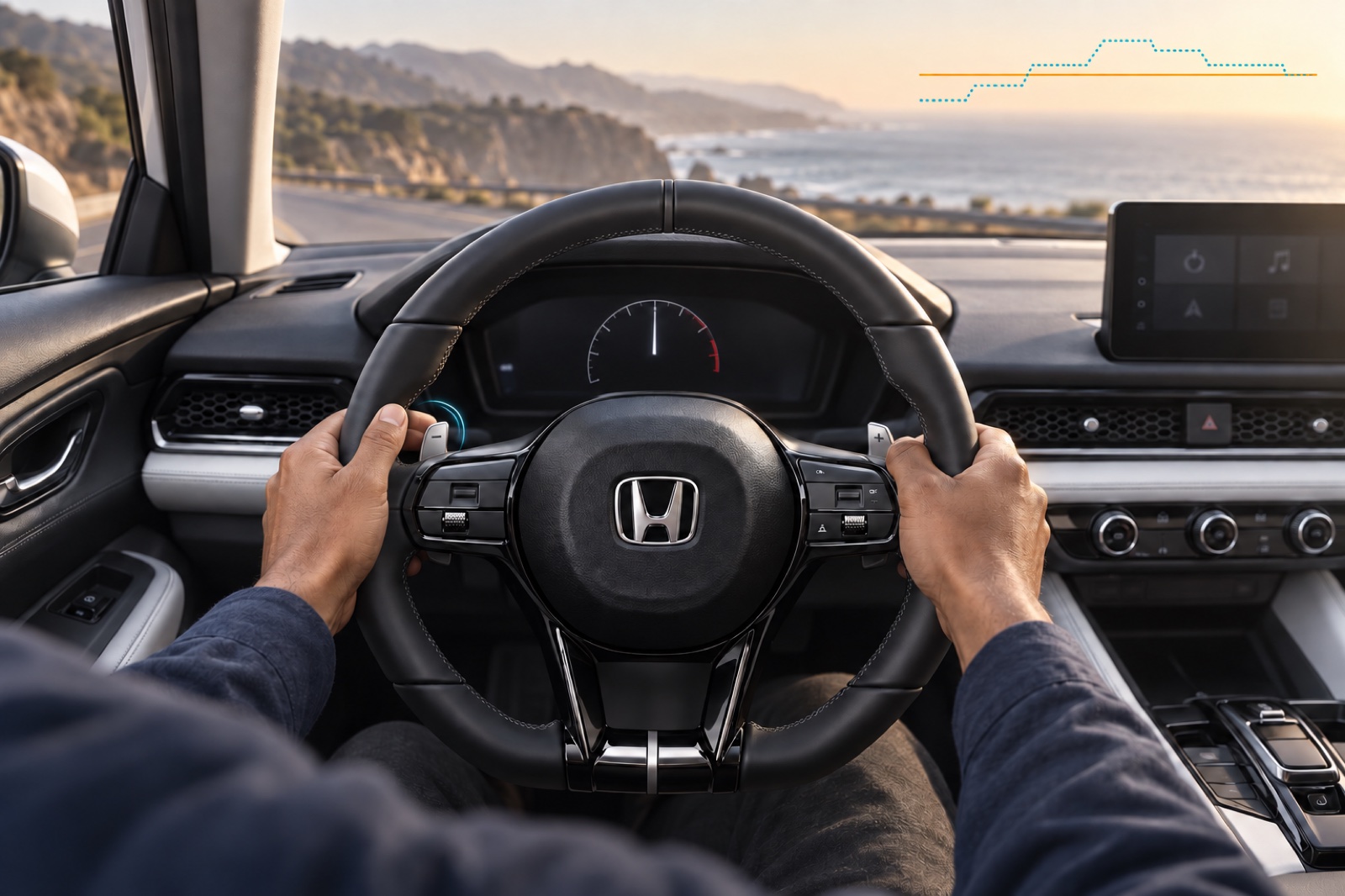
The filing doesn’t name the Prelude or S+ Shift. We used the Prelude for the renders because its two-motor hybrid system and paddle-operated simulated shifting make it a relevant setting for the idea, not confirmation that it’s getting this feature.
When A Paddle Pull Starts The Engine
Honda’s example begins with the car traveling on battery power in virtual fifth gear. The driver pulls the downshift paddle, selecting fourth. If the exhaust catalyst is at or below a specified temperature, that request also triggers an engine start.
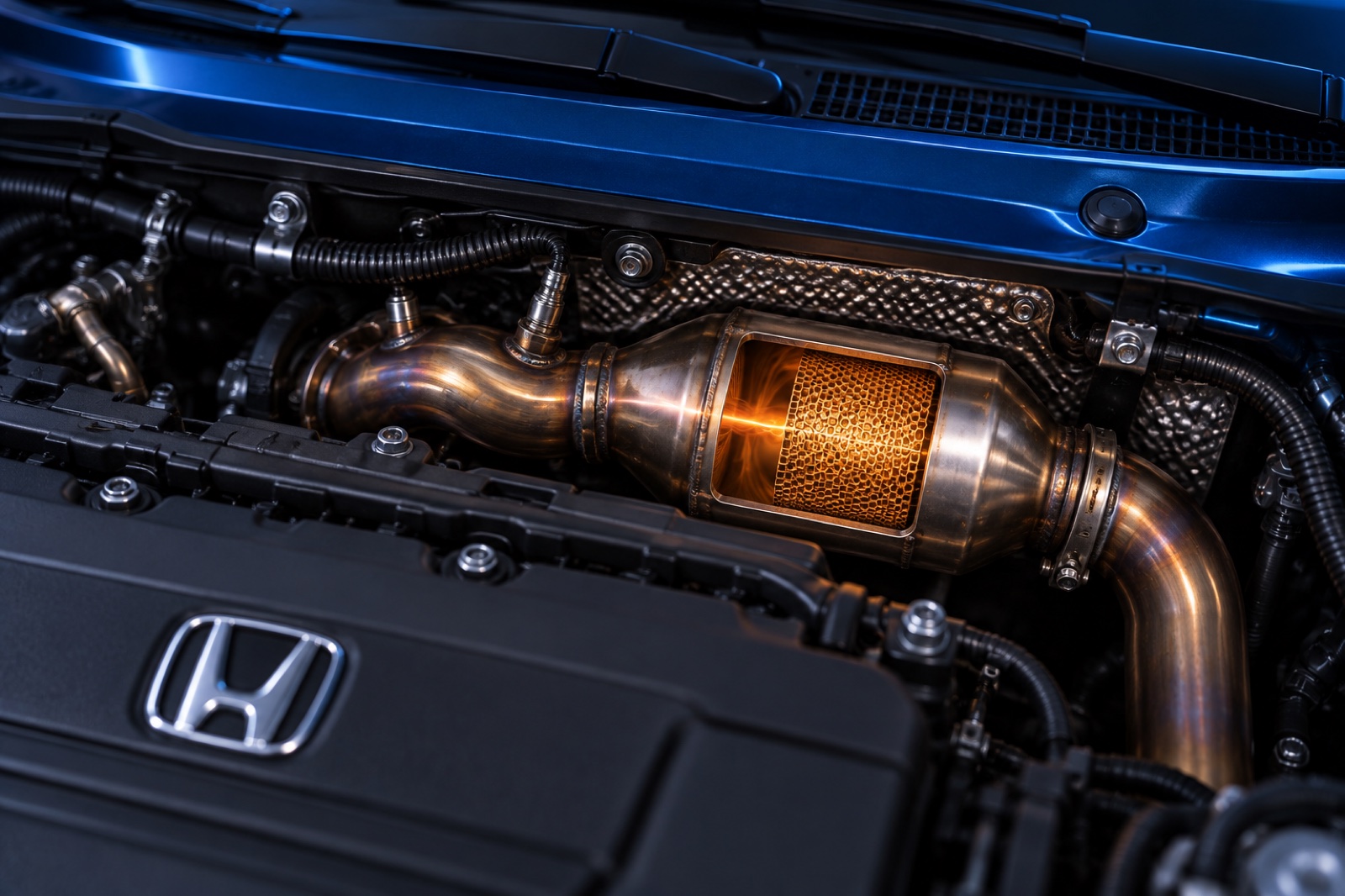
Honda says linking the start to a shift request can make the intervention feel more natural to the driver. The catalyst needs heat to clean the exhaust effectively, and this gives the controller a moment to begin supplying it.
The engine then settles at a prescribed speed. Honda gives 1,500 rpm as one example, with the actual setting left to the manufacturer according to the engine and catalyst. It is not a production calibration.
Ordinary virtual shifting would make revs rise on a downshift and fall on an upshift. Honda identifies two problems when catalyst heating enters that sequence. Repeated speed changes can disrupt warm-up, while an unexpected heating intervention can produce rev changes the driver did not request.
The Motor Still Honors The Downshift
The hardware allows those duties to be separated. A gasoline engine drives a generator, and a distinct traction motor controls force at the driven wheels. With the clutch connecting the engine to the wheels open, road speed does not mechanically dictate engine rpm.
So the controller can hold the combustion engine steady while commanding braking torque from the traction motor. In Honda’s example, successive paddle pulls select fourth, third and second, each producing the corresponding motor braking response. The driver gets the slowing effect associated with a lower gear without requiring an engine rev blip.
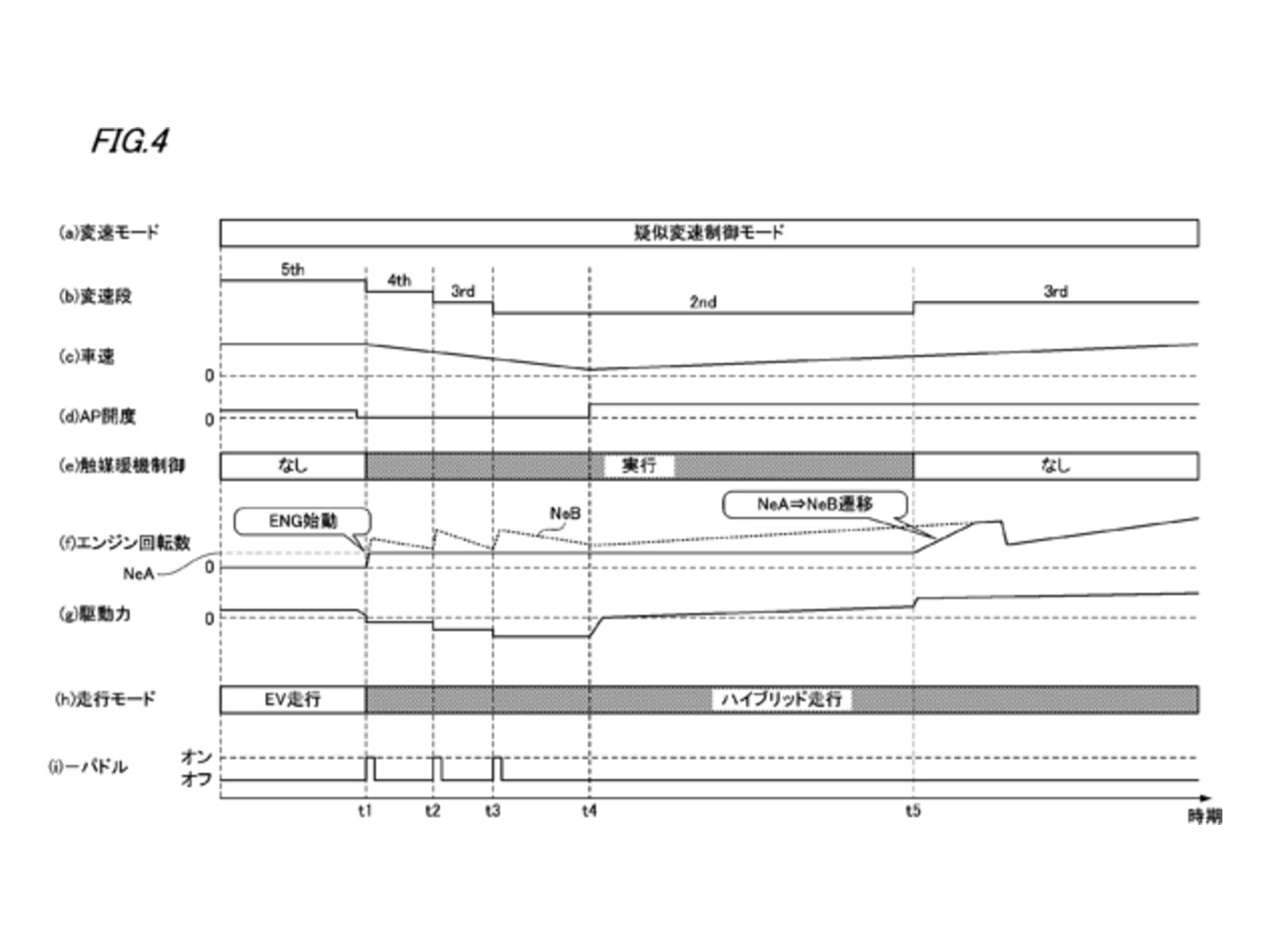
The controller also keeps calculating the engine speed that would normally match the selected gear and current road speed. Those calculations continue throughout warm-up, even though the engine does not follow them yet. Once heating finishes, actual rpm transitions to the updated target, retaining the latest gear selection.
Acceleration Can Change The Priority
The accelerator need not wait for the catalyst. In the main example, the traction motor supplies requested acceleration while the engine continues its heating routine. Honda also describes two alternatives that end warm-up control when acceleration is requested.
One restores engine speed according to the selected virtual gear. The other ends simulated shifting as well and connects the engine mechanically to the wheels. These are alternative responses, not successive stages, and their stated purpose is prompt acceleration.
Hyundai’s Ioniq 5 N already uses motor control to imitate an eight-speed dual-clutch transmission through its N e-Shift system, including simulated engine braking through regeneration. The electric Hyundai has no exhaust catalyst to heat. A hybrid has to coordinate that extra demand with the shift sensations it promises.
Honda supplies no warm-up duration, temperature threshold or measured emissions improvement. Nor does it establish how convincing the mismatch between braking response and engine revs would feel. A patent does not guarantee production.
The proposal nevertheless makes a sensible trade. Preserving the driver’s requested deceleration while the engine completes an emissions task gives the paddles a useful role during warm-up. That is a stronger engineering priority than reproducing every rev change of a conventional gearbox.