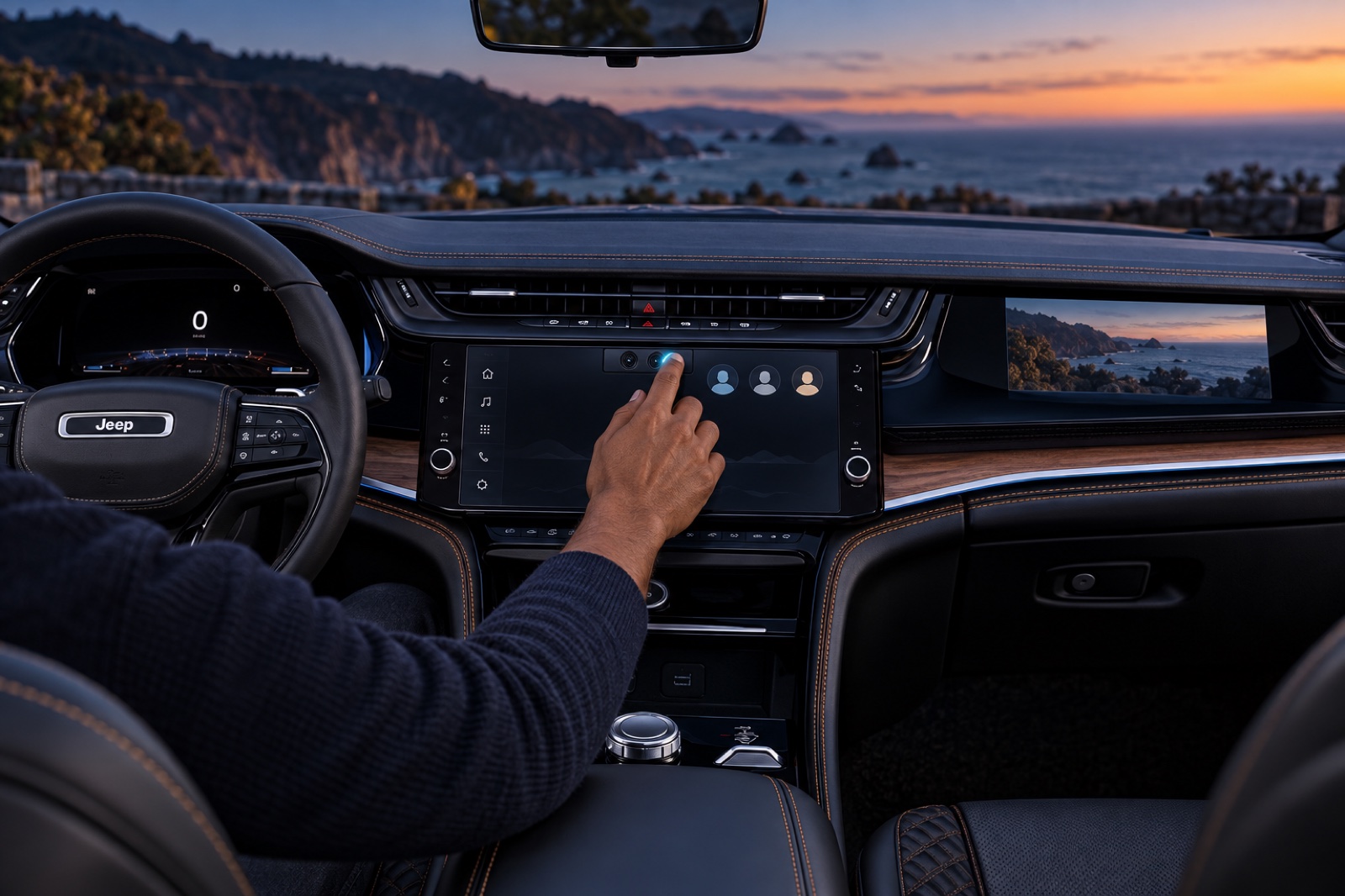
Jeep’s parent company has a new use for the camera lenses built into a car’s touchscreen. Sliding a finger across them would open the controls for choosing or creating a driver profile, according to a patent filing discovered by Carmoses. The cameras register which lens loses its view first, turning their own housing into an input surface.
Stellantis made the basic camera-covering gesture public earlier this year for displaying vehicle-function information. This month’s proposal, jointly from Stellantis Auto and FCA US, applies it to personal profiles. Remembering someone’s seat position and radio preferences is already familiar territory. The change is how the driver reaches those settings.
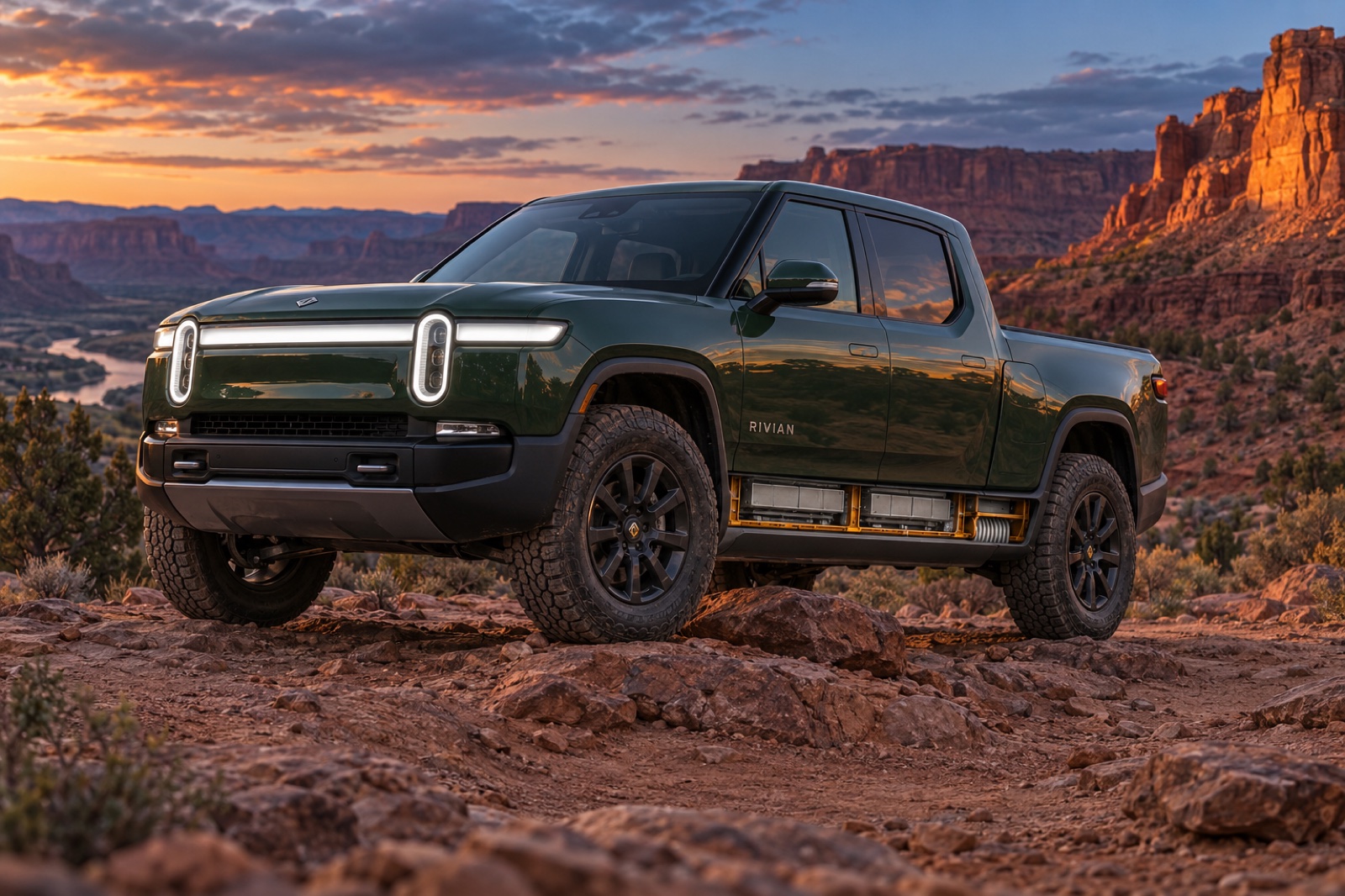
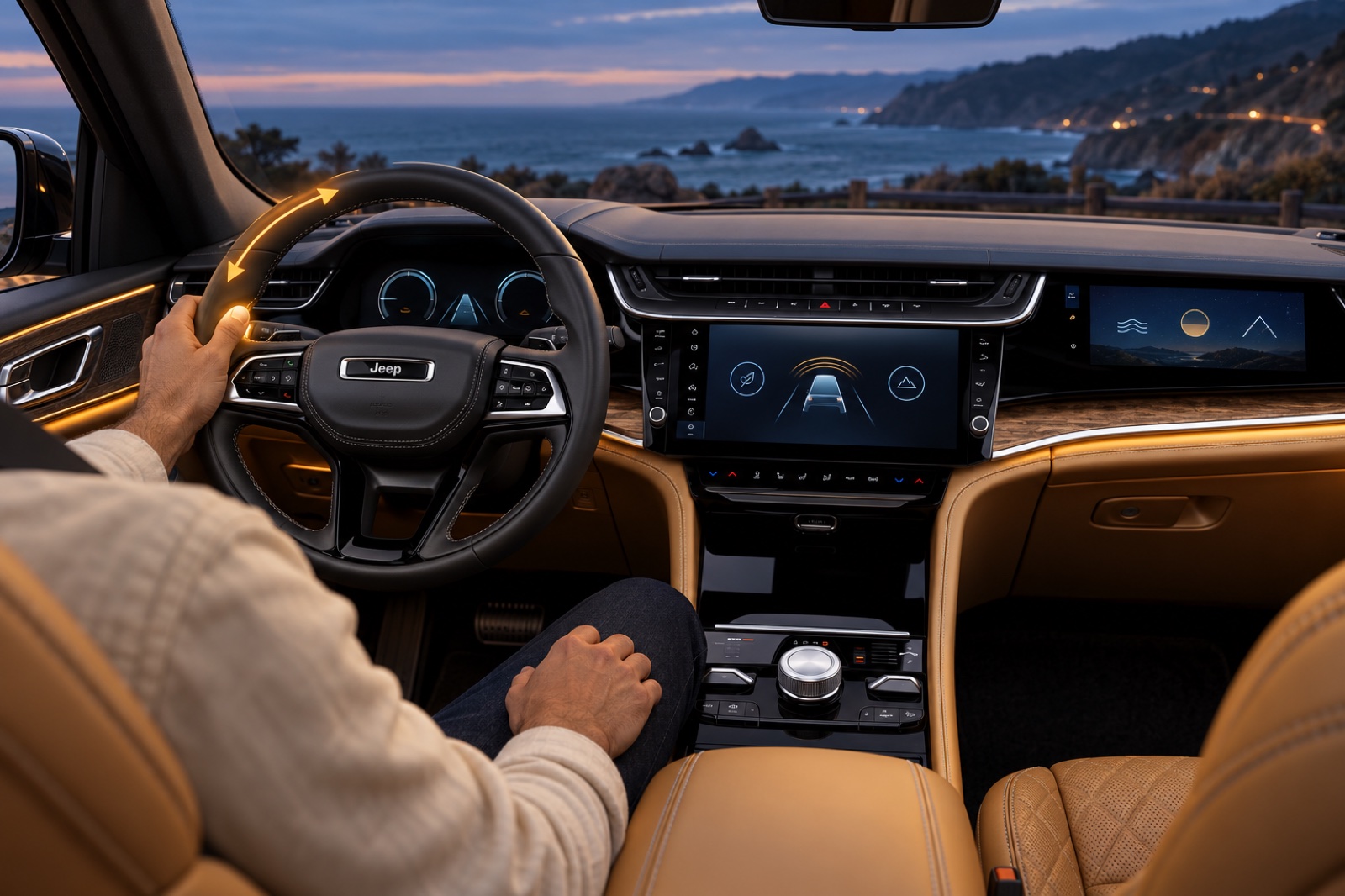
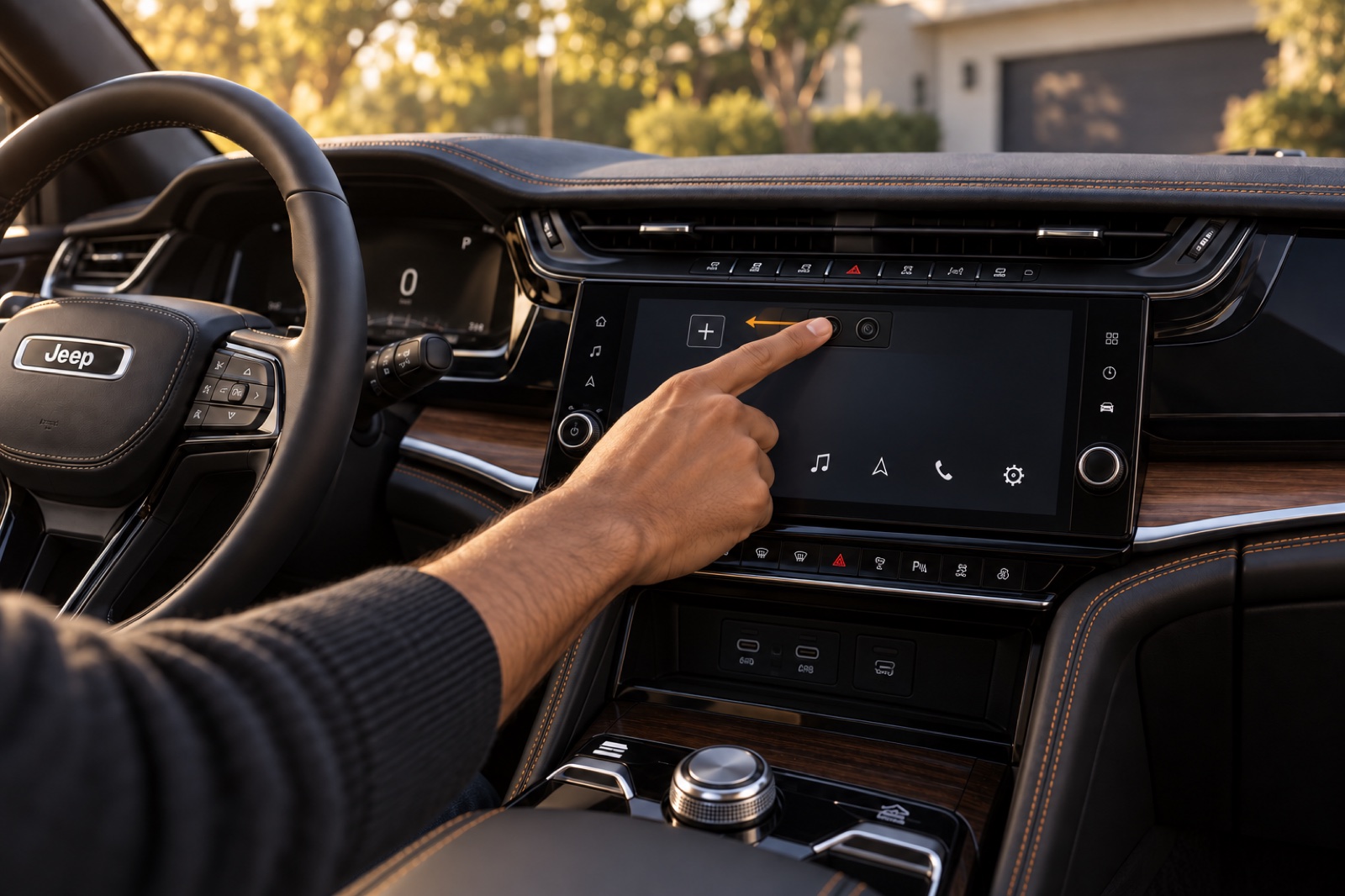
Nothing in the filing names a model. The Grand Cherokee’s central Uconnect touchscreen and suitability for shared family use make it a sensible setting for these renders, which add the proposed hardware to Jeep’s current cabin.
Cover The Cameras, Then Choose A Driver
The arrangement puts two cameras side by side in a strip at the screen’s edge. That insert is not touch-sensitive. Instead, image processing recognizes the changes in brightness, color and contours when a fingertip passes across each lens.
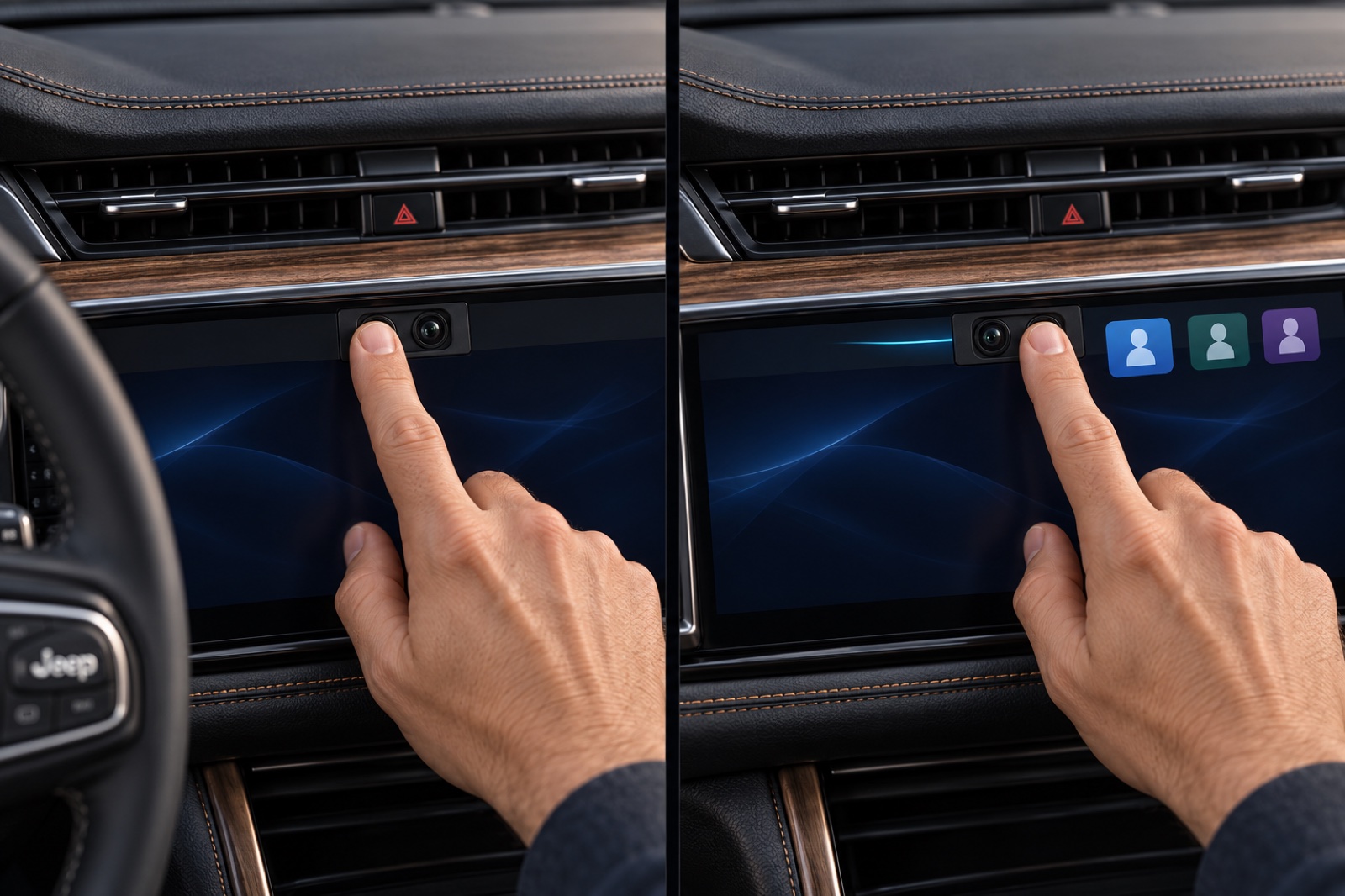
In the main example, a left-to-right swipe covers the left camera first and the right one second. That sequence opens a row of existing profiles beside the strip. The driver then taps the desired tile on the touchscreen to activate it. Lifting the finger away after covering only the first lens ends the process.
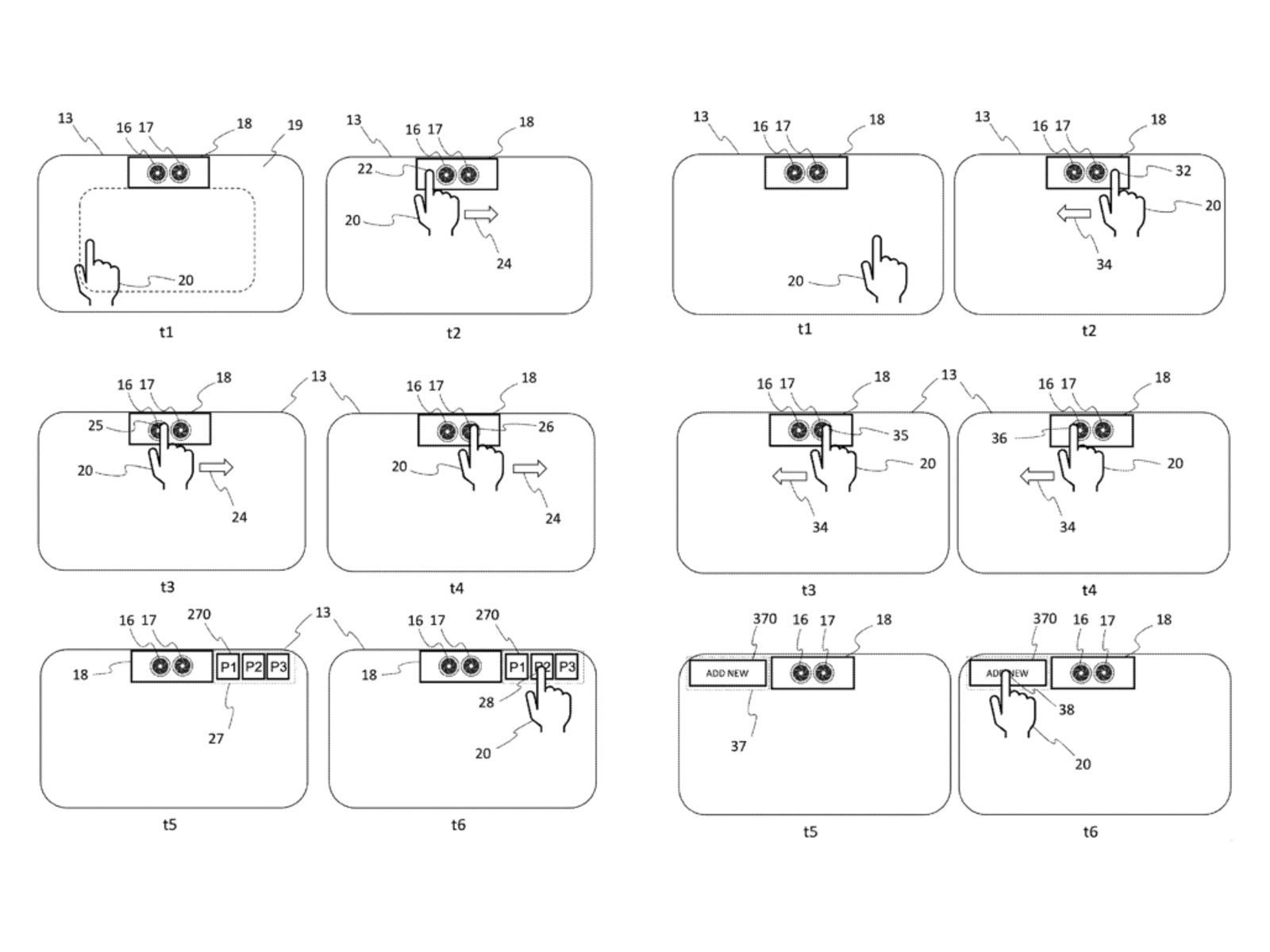
Reverse the movement and the system brings up an Add New control. Tapping that opens the profile-creation function, such as a form for entering personal information. Direction determines which menu appears, while the subsequent screen press chooses what happens next.
The gesture does not identify the finger’s owner. Authentication is handled separately, potentially through credentials or a connected device. Once selected, a profile can restore seat and mirror positions, climate preferences, infotainment settings and cabin ambience. Swiping the lenses is a way into that system, not a replacement for its identity checks.
More Gestures In The Same Small Space
There is also a browsing version. Briefly covering both lenses together brings up an initial group of profiles. Subsequent swipes across the cameras move through further groups, and reversing direction goes back. Those groups can overlap, keeping one user visible while the others change.
Another variation starts with a touch on the screen beside the camera bar. A small icon appears to confirm entry into profile management, fades as the finger moves across the lenses and disappears when the sequence finishes. That feedback would tell the driver that the system has recognized the intended command.
Cameras integrated into a display occupy space that cannot otherwise show information or accept ordinary touch commands. Giving their insert a second purpose recovers some usefulness from that occupied area.
It does not recover the lost pixels, however, and the driver must learn a gesture whose purpose is less visible than a labeled button.
The Benchmark Is Already One Touch
Uconnect 5 was announced with support for five user profiles plus valet mode, and its original launch description promised profile switching with a single touch. Jeep’s parent therefore has an existing interface against which to judge this swipe-and-tap approach.
Tesla’s Model Y lets an owner link a driver profile to a key, allowing automatic selection when that key is detected as the owner approaches and opens the driver’s door. Manual profile selection remains available through the screen.
The proposed camera shortcut aims to shorten interactions and reduce distraction, but no comparative user-test results establish those benefits. Performance with dirty lenses, gloves or changing cabin light is also unquantified.
A patent does not guarantee production. As an interface idea, this earns credit for making an otherwise inactive strip useful. As a convenience feature, it has yet to justify the extra gesture. A visible profile button remains the better starting point until covering cameras proves easier than tapping it.