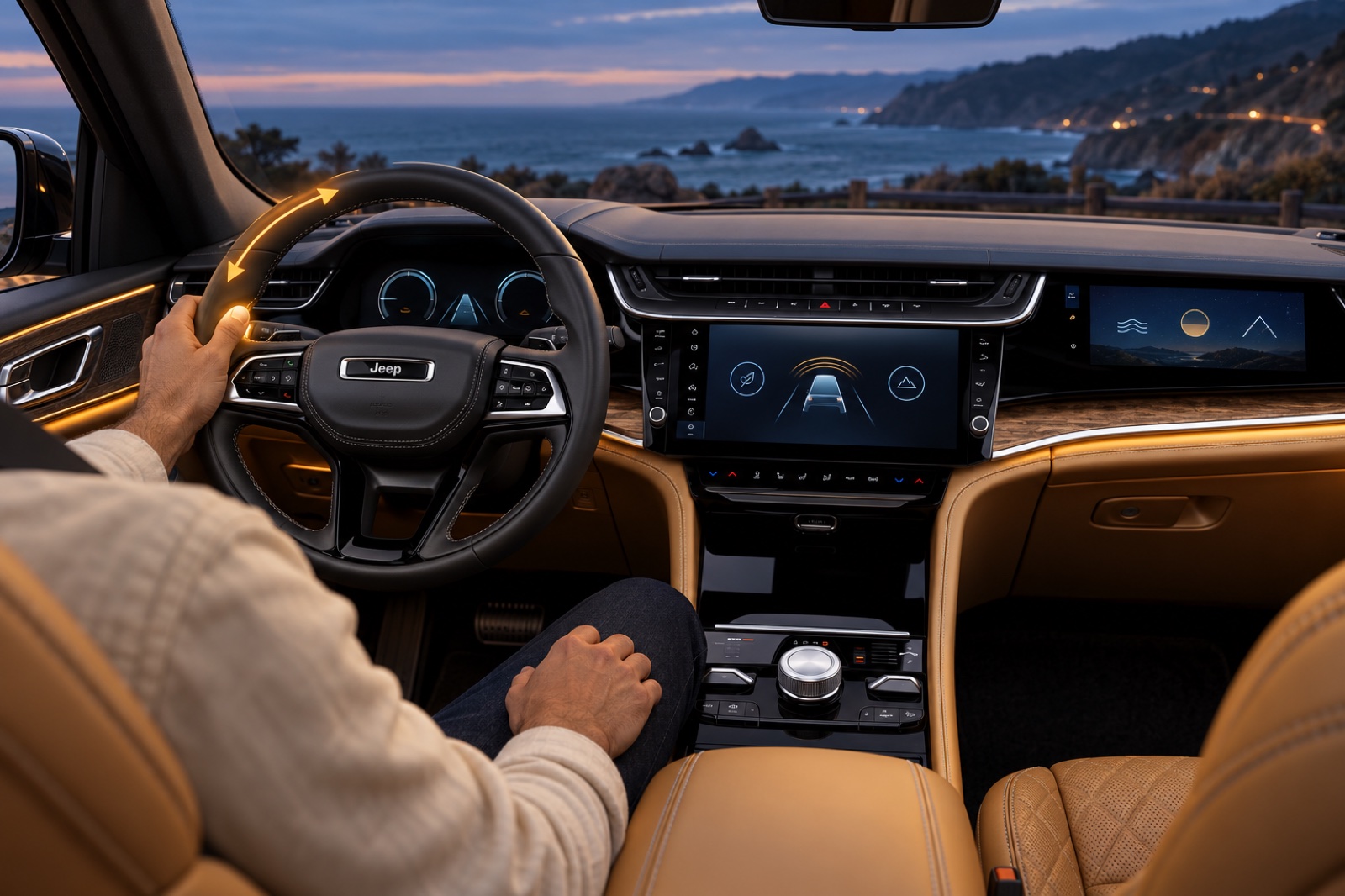

Pressing the clutch in a manual electric car can take away some of the braking just as the driver is trying to slow down. Toyota’s proposed answer is to have the hydraulic brakes compensate automatically, using clutch-pedal position to help preserve the deceleration requested by the right foot. The system is detailed in a patent filing discovered by Carmoses.
Lexus described a software-based manual EV prototype in 2022, so the broader idea is familiar. This proposal tackles the consequences of physically disconnecting an electric motor from the wheels.
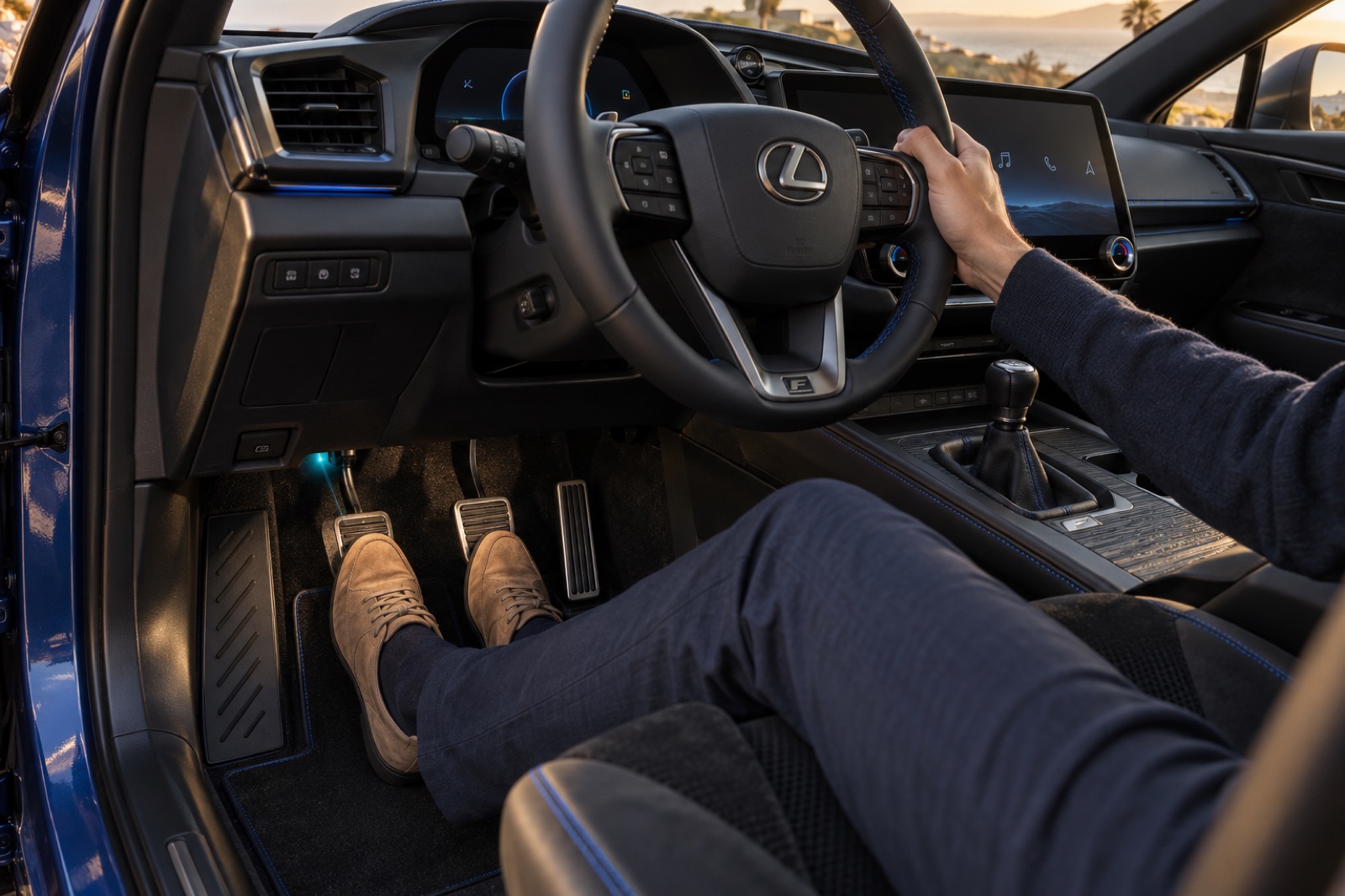
The filing doesn’t name a specific model. These renders use the Lexus RZ 550e F Sport AWD instead, chosen because its US-market M Mode already simulates eight-speed paddle shifting, a natural fit for illustrating electric driver engagement. The clutch pedal and mechanical gearbox pictured are an editorial addition, not something Lexus actually plans to build.
A Real Clutch Changes The Problem
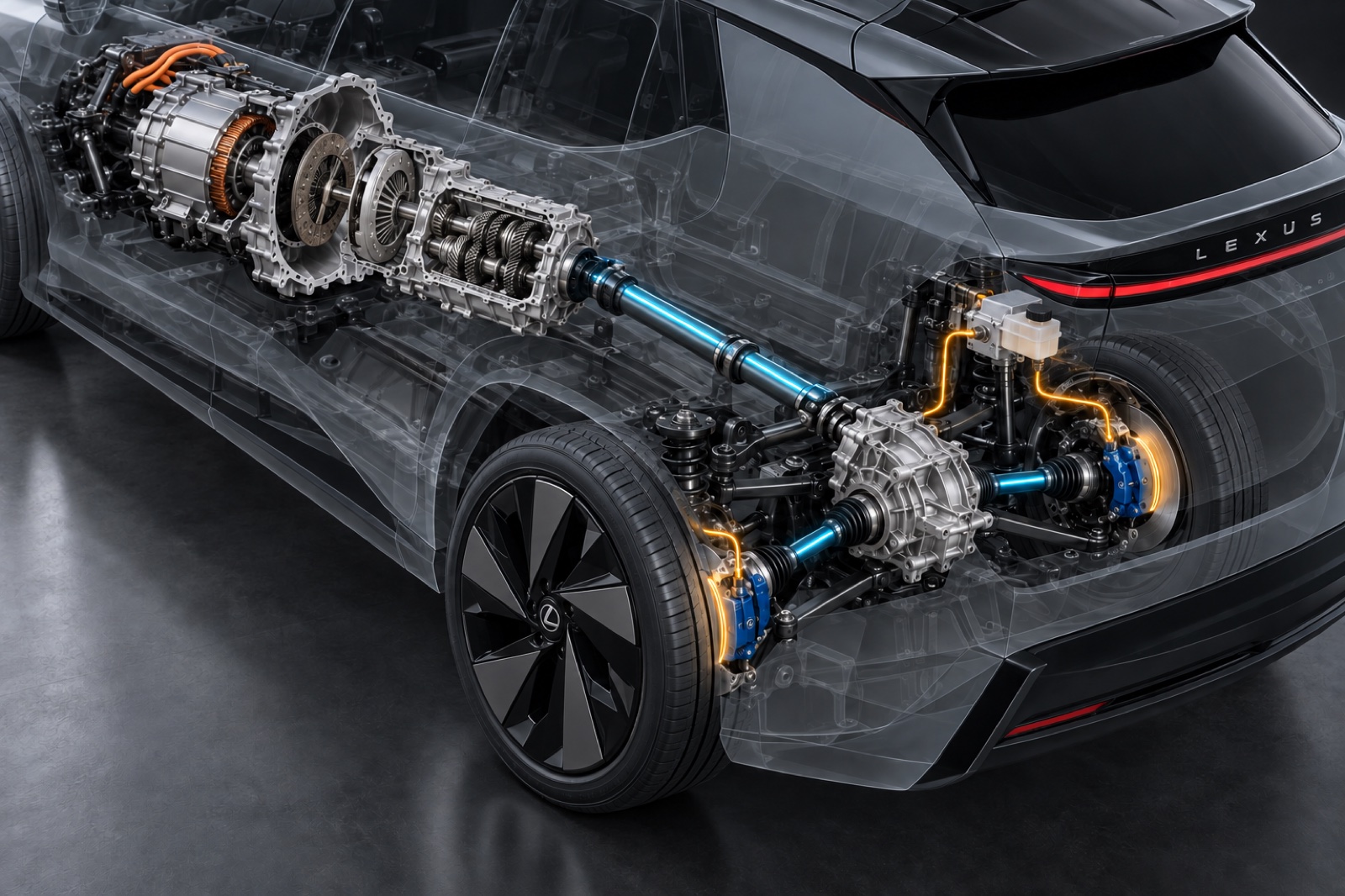
Toyota describes an electric motor connected through a clutch to a manual transmission. From there, a driveshaft, differential and axle shafts carry power to the driven wheels. The driver operates the clutch with a pedal, opening or closing a mechanical connection.
That connection matters when slowing down, too. During regenerative braking, the wheels drive the motor as a generator, recovering energy for the battery while resisting the car’s motion. Open the clutch and that braking contribution can disappear because the motor is no longer connected to the wheels.
Consider a driver already pressing the brake pedal, then pushing the clutch down. Without compensation, maintaining the same deceleration could require a firmer push on the brake. Toyota’s stated aim is to avoid or reduce that extra adjustment.
The proposed controller reads a sensor measuring clutch-pedal travel and uses that information to add hydraulic pressure at the wheel brakes. It can increase friction braking already in use or introduce it during a stop previously handled entirely by regeneration.
Why A Small Press Matters
Simply adding a fixed amount of brake pressure whenever the clutch moves would create another problem. Toyota explains that a small press could receive too much compensation, forcing the driver to adjust the brake pedal again.
Instead, the system uses a stored relationship between pedal travel and the clutch’s ability to transmit torque. An initial portion of travel retains maximum transmission efficiency. Farther into the stroke, that efficiency falls until the connection is fully disengaged.
The drive controller multiplies the normal regenerative braking limit by this calculated efficiency. That normal limit can already account for motor speed and battery charge. The brake controller then uses the reduced allowance to divide the driver’s braking request between regeneration and the hydraulic system.
A falling regeneration limit does not necessarily mean the friction brakes immediately join in. If the motor can still supply all the braking requested, it can continue doing so. Friction braking fills the shortfall once the revised limit falls below that request.
At full clutch disengagement, the regenerative allowance reaches zero. The entire requested braking torque then goes to the friction brakes. The driver’s brake input still determines how much slowing is wanted, while the clutch position helps determine how the car supplies it.
Toyota provides no numerical calibration for that transition, so the amount of pedal movement needed to change the braking split remains unspecified.
Consistency Has To Come First
Virtual shifting already offers a different way to make an EV more interactive. Hyundai’s Ioniq 5 N simulates an eight-speed dual-clutch transmission by adjusting motor torque, creating a shift sensation electronically.
Blending regenerative and friction braking is familiar territory, too. Hyundai’s performance EV uses both, with hydraulic braking supplementing the electric contribution. Toyota’s distinctive detail is bringing the driver’s clutch travel into that allocation.
There is a cost to the handover in energy terms. Braking handled by the pads and rotors cannot recover that energy through the disconnected motor. The proposal prioritizes maintaining the requested braking force during that interruption, and it supplies no test results establishing shorter stops or an imperceptible transition. A patent does not guarantee production.
Toyota’s proposal addresses a basic requirement for a credible manual EV. Drivers should be able to choose a gear and work the clutch without needing an unrelated brake-pedal correction. Matching hydraulic pressure to actual pedal travel is a sensible way to meet that requirement.