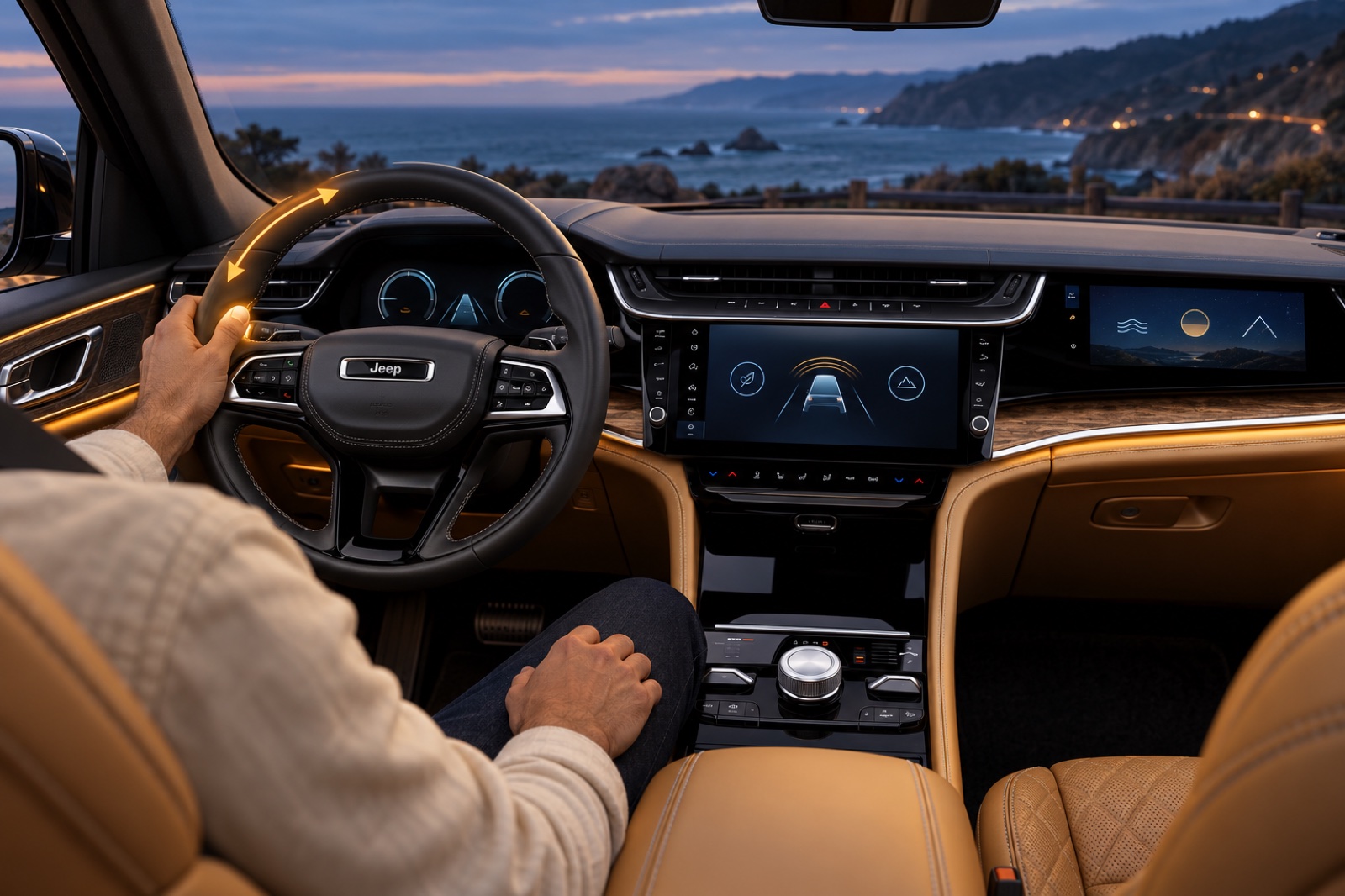
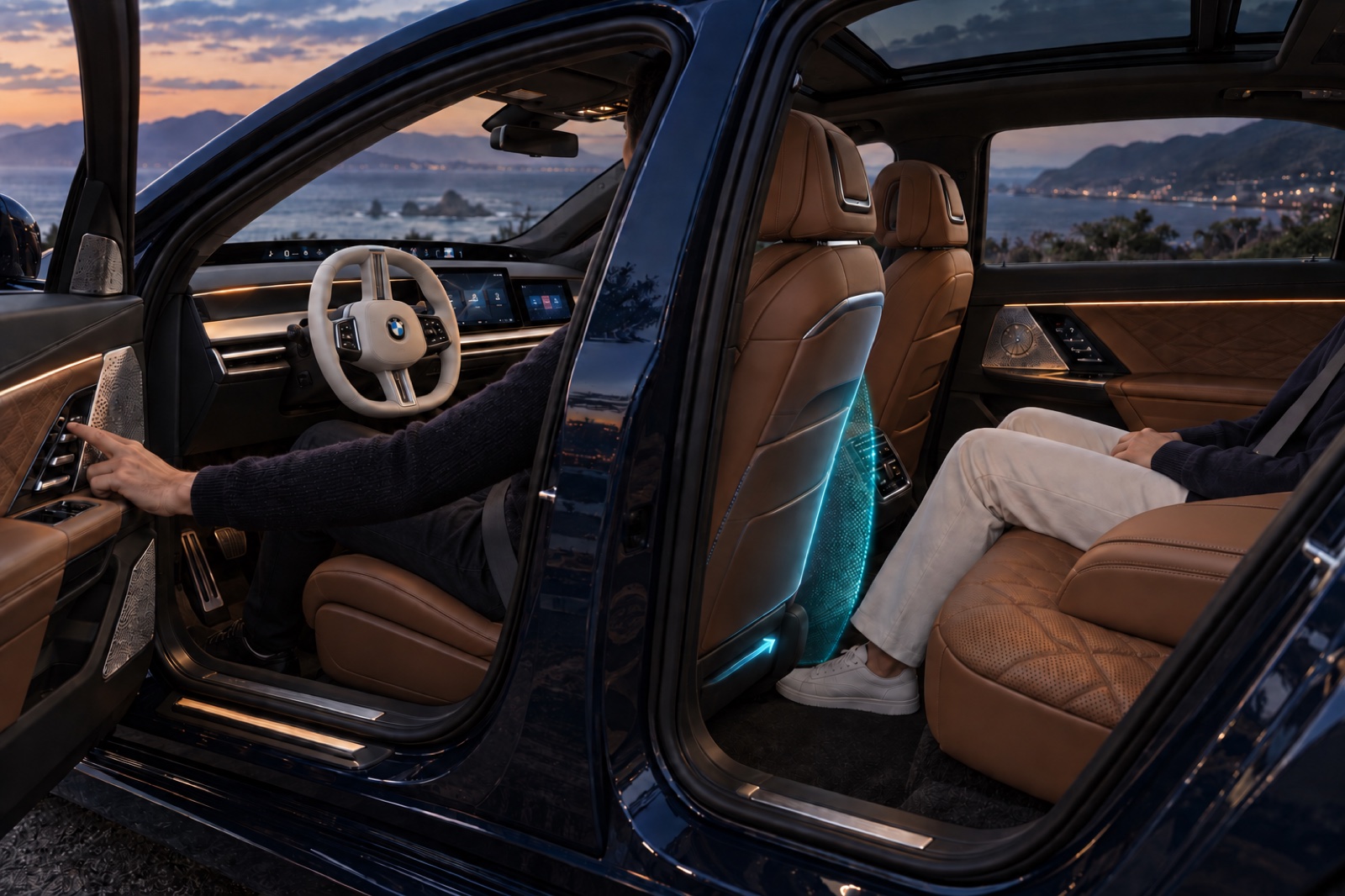
BMW is proposing power seats that account for a small change with consequences for the person behind you. A backrest can tilt or bend rearward under an occupant’s weight, taking up more room than it does when empty. The proposed controller would factor that change into how far the seat can move, protecting rear passengers without unnecessarily restricting front-seat adjustment.
BMW’s approach to managing clearance around occupied seats appears in a patent filing discovered by Carmoses. BMW also describes tailoring clearance to the person who needs it, potentially giving an older passenger more space to account for reduced mobility.
Occupant-aware adjustment has a history. Audi previously described measuring the distance between a moving seat component and a nearby person or object, then warning or stopping movement when that gap became too small. BMW’s proposal adds a useful consideration to that problem, because the furniture itself can change shape when someone sits down.
The Seat’s Position Is Only Part Of The Calculation
The driver’s part would remain familiar. Hold an adjustment control or select a preset position, and the seat moves toward the requested setting. Behind that command, the car detects occupants and determines where the relevant surfaces are, including any change caused by the people sitting against them.
BMW describes two ways to account for that influence. The controller could use characteristics such as weight, size and posture, or measure the seat’s actual position or movement directly. If both neighboring seats are occupied, it can account for the loading of both. An empty one need not be treated as though someone were leaning against it.
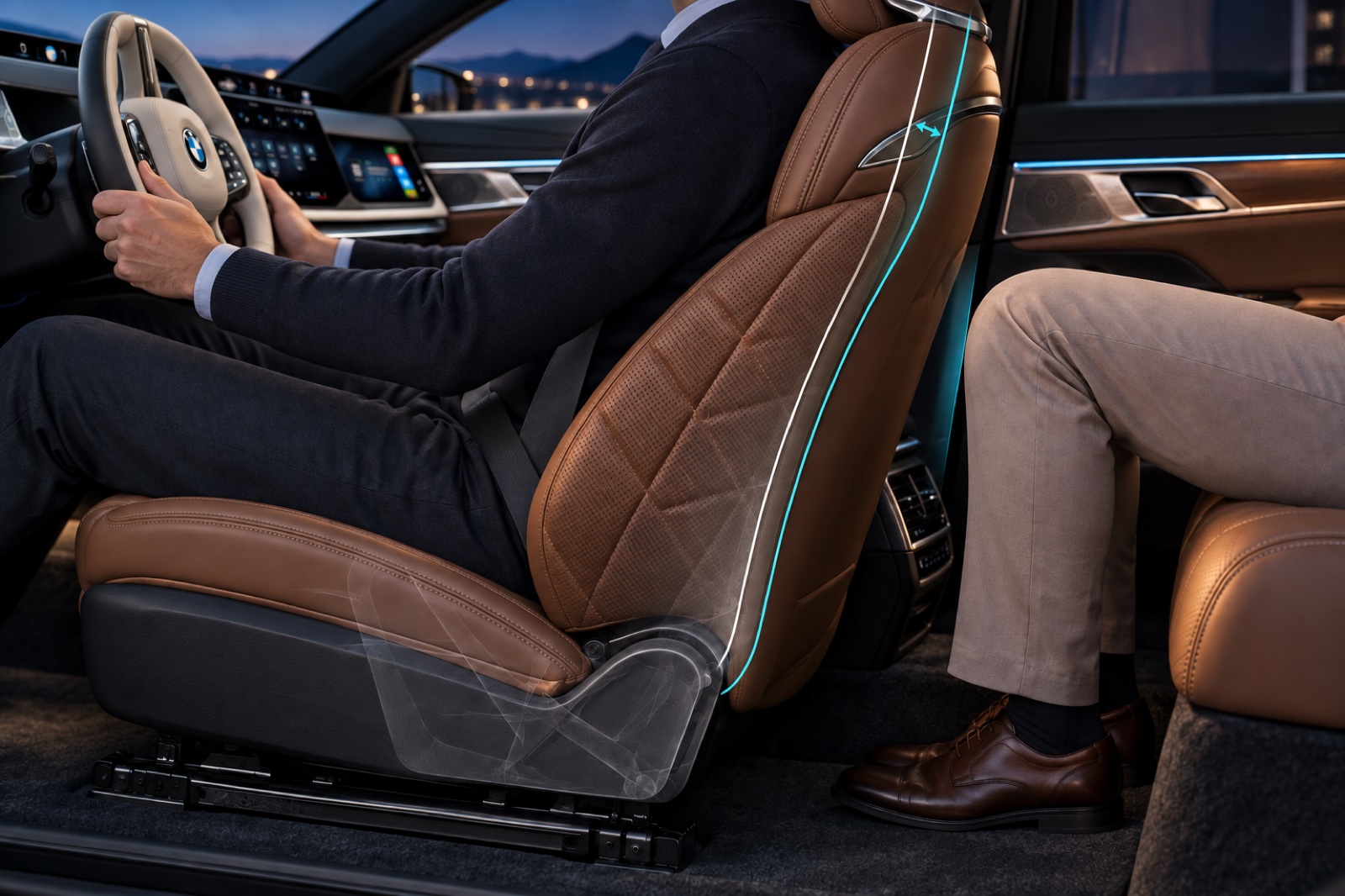
The car then stops an approaching surface before it violates the required separation. Where two adjustable components specify different minimum gaps, the larger can govern. BMW also allows for moving a component away if the clearance requirement increases.
That is more flexible than assigning every situation the same buffer. BMW says more accurate collision prevention could allow smaller safety margins, freeing up adjustment travel or personal space. No numerical clearance, sensing accuracy or measured improvement is supplied, so there is no basis for promising extra inches of legroom.
Personal Space Depends On Who Is Sitting There
An empty rear seat could permit more rearward travel up front. Put someone behind it, and the controller could preserve room according to that person’s position and physical characteristics. A larger passenger might receive a bigger gap, as might someone with limited mobility.
Age is one suggested input, alongside height and mass. The system could assess occupants with a camera or recognize them from stored characteristics, using those inputs to tailor the clearance around an occupied seat. Age alone would be a blunt way to make that judgment.
Nothing in the filing names a production model. The BMW i7 is the editorial setting for these renders because its adjustable luxury cabin fits the problem. BMW’s updated 7 Series, announced earlier this year, offers Executive Lounge seating that moves the front passenger seat fully forward and tilts its backrest to create room behind it.
That existing arrangement illustrates why coordinated movement matters. The same car offers a movable Theater Screen, while BMW’s proposal separately includes a panoramic display that folds between horizontal and vertical positions. There is no confirmed connection between the proposed controller and either production feature.
The Vacuum Cleaner Gets A Turn
Allowed movements could also change with what the car is doing. BMW describes preventing the driver’s seat from traveling so far rearward that the steering wheel or pedals cannot be operated safely, with the limit adjusted for driver height. The interface could show only adjustments appropriate to the current operating state.
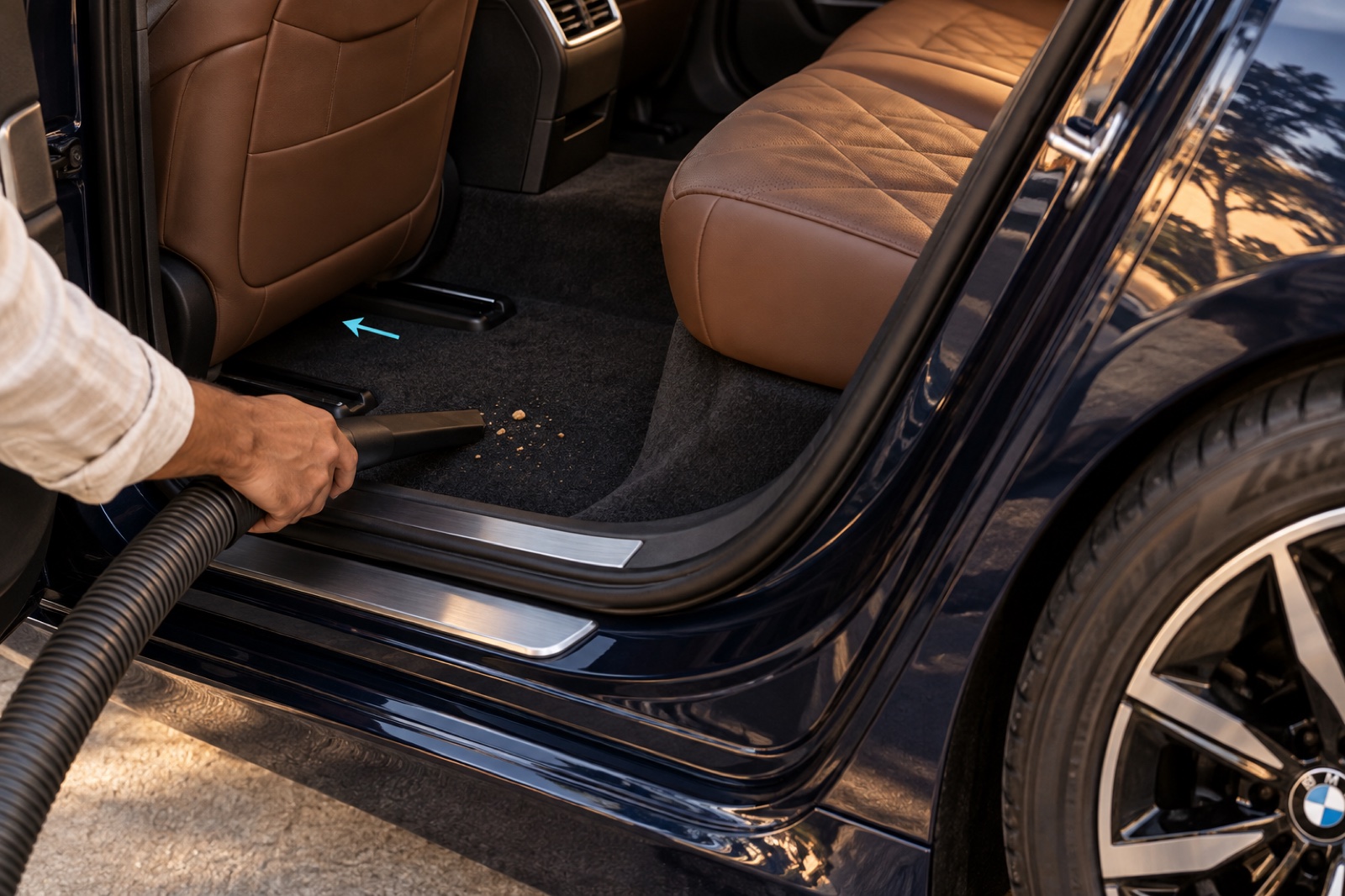
Parked-car functions take that thinking further. An optional cleaning mode could use an open door, an unoccupied cabin, vacuum-cleaner sounds or a location associated with vehicle cleaning as clues. The car could then offer or perform movements that expose more floor, including sending a front seat fully forward or backward.
A patent does not guarantee production. The useful idea here is the attention to occupied geometry, which addresses a real weakness in treating a powered seat’s position as a complete description of the space it occupies. Reliable measurement of the loaded backrest would make this a worthwhile refinement. Inferring someone’s needs from their age has a less convincing case than measuring the space they actually require.