BYD is seeking trademark protection for the name Predator in Thailand, according to a filing discovered by Carmoses. The name would suit a tougher version of the company’s Shark pickup, styled after trucks like the Ford F-150 Raptor R. Whether it means anything close to that depends on engineering, not just aggressive bodywork.
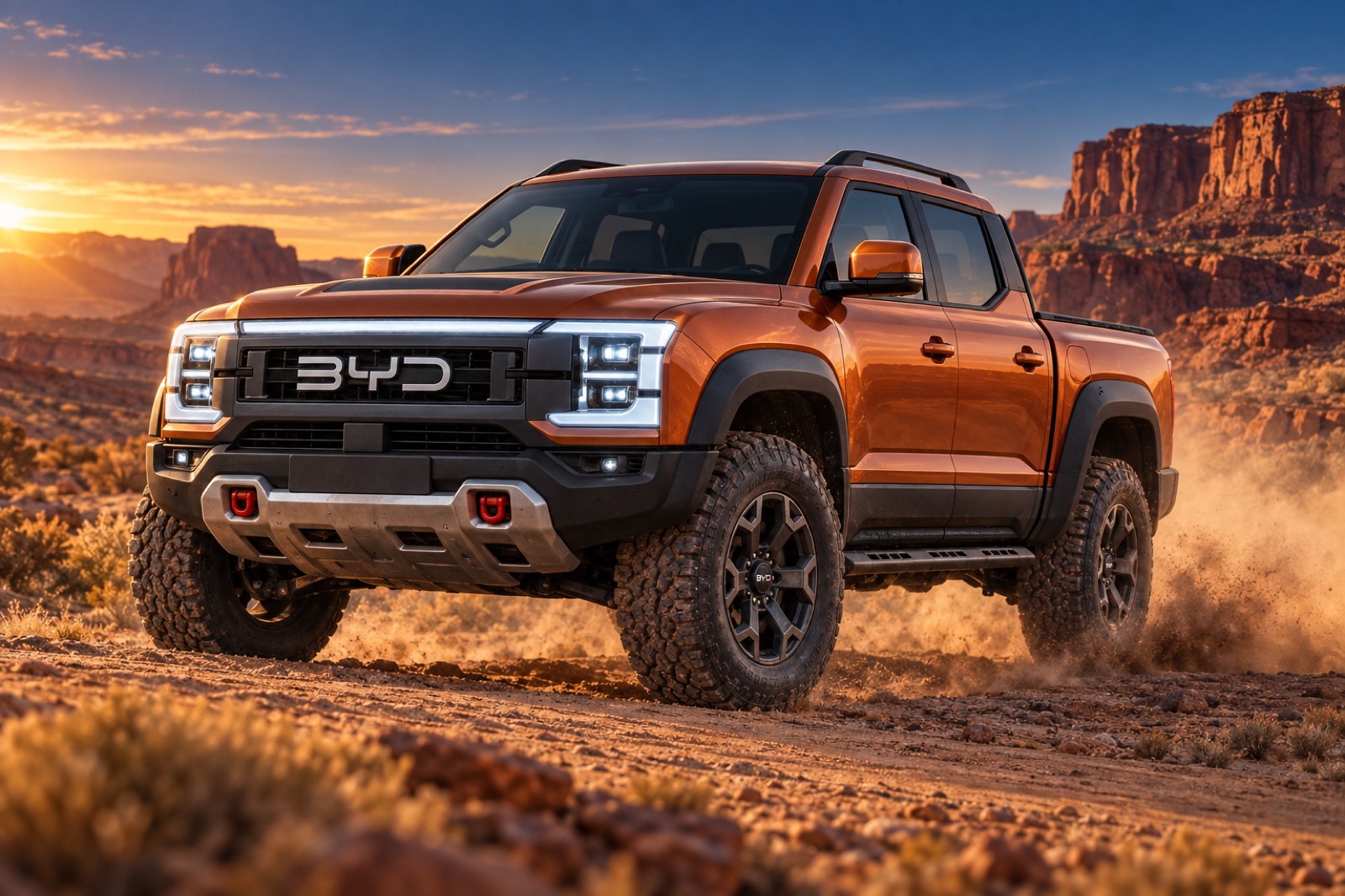
The trademark record identifies no specific model. The renders here use the Shark because BYD already builds that plug-in hybrid pickup, giving the name a plausible home. The wider fenders, larger tires and protective hardware shown are speculative additions. Nothing confirms a connection between the Predator name and the Shark specifically.
BYD does not sell passenger vehicles in the United States. Its pickup still matters to American readers, because it applies a hybrid-electric approach to a truck segment U.S. buyers know mainly through gasoline V8s, and BYD is expanding that approach into more markets overseas.
A Name Without A Job Yet
A UK trademark application for Predator surfaced in a database this month, meaning the Thai filing is not BYD’s first attempt to register the name. The UK filing covers cars, trucks, buses, forklifts, vehicle components and self-driving cars, a scope that leaves far more possibilities open than a single performance pickup.
The specific categories covered by the Thai filing are not public, and the UK filing’s broader scope does not establish what they are. There is no confirmed Predator body style, drivetrain or launch timetable, and a trademark filing does not guarantee a production vehicle.
Predator would make sense on a tougher Shark only if it described a genuinely different role within BYD’s truck lineup, not just a trim level. That means showing what the truck can do that the standard Shark cannot, whether that is crossing rougher terrain or holding a line over repeated hits at speed.
The Shark Already Has A Useful Foundation
BYD first launched the Shark in Mexico and announced its European introduction earlier this year, with the UK set to come first. The European specification combines a five-seat double cab, a ladder-frame chassis and a plug-in hybrid powertrain with electric motors at both axles.
The gasoline engine serves three roles: generating electricity, adding power during hard acceleration, and driving the wheels directly at efficient highway speeds. The truck can also run on electric power alone for shorter trips. BYD’s stated aim is to cover everyday driving electrically while keeping the range and flexibility needed for work and longer trips.
There is already off-road hardware to build around. The European Shark has double-wishbone suspension at both ends, all-wheel drive, hill-descent control and terrain modes for sand, mud, snow and gravel. Those features set a useful baseline, but they fall well short of the sustained rough-terrain performance expected of a dedicated desert truck.
The Raptor Comparison Starts Underneath
A broader stance and more tire sidewall would give a Predator derivative an immediate visual identity. The render’s exposed lower protection and compact bumper take that idea beyond a grille treatment, putting the emphasis on clearance around obstacles and protection beneath the nose.
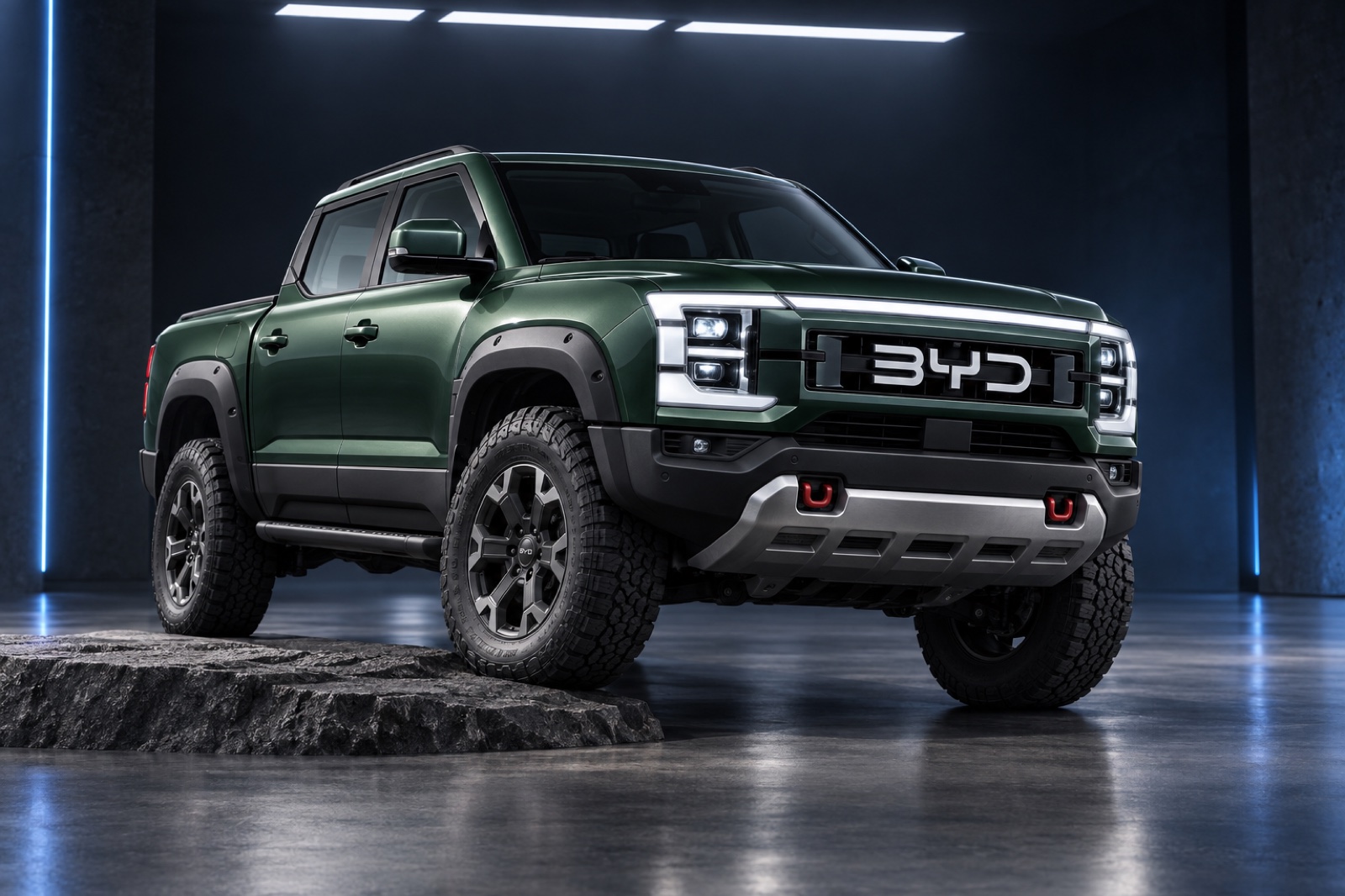
Ford’s F-150 Raptor R illustrates the engineering standard behind this kind of badge. Its supercharged V8 delivers 720 horsepower, but the package also includes 37-inch tires and FOX Dual Live Valve shocks. Ford says the shocks resist heat buildup and adjust to changing terrain during extended desert driving.
That is the more useful benchmark for a tougher BYD than a horsepower contest. A credible derivative would need to demonstrate how its suspension controls repeated impacts, how well its underside survives rough ground and how consistently it performs under load. None of those questions can be answered by the Predator name alone.
The Shark’s electric-driving capability gives a hypothetical Predator a reason to exist beyond copying an American V8 formula. The strongest use of the name would be a substantial chassis upgrade that keeps that versatility intact. Wider fenders will get attention, but suspension and durability would have to earn the badge.