Carmakers are always looking for ways to make the automotive world a better place through life-saving innovations and the brainboxes at BMW have looked to remove, or at least reduce, the stress that comes with crossing a well-traveled intersection with a clever new invention.
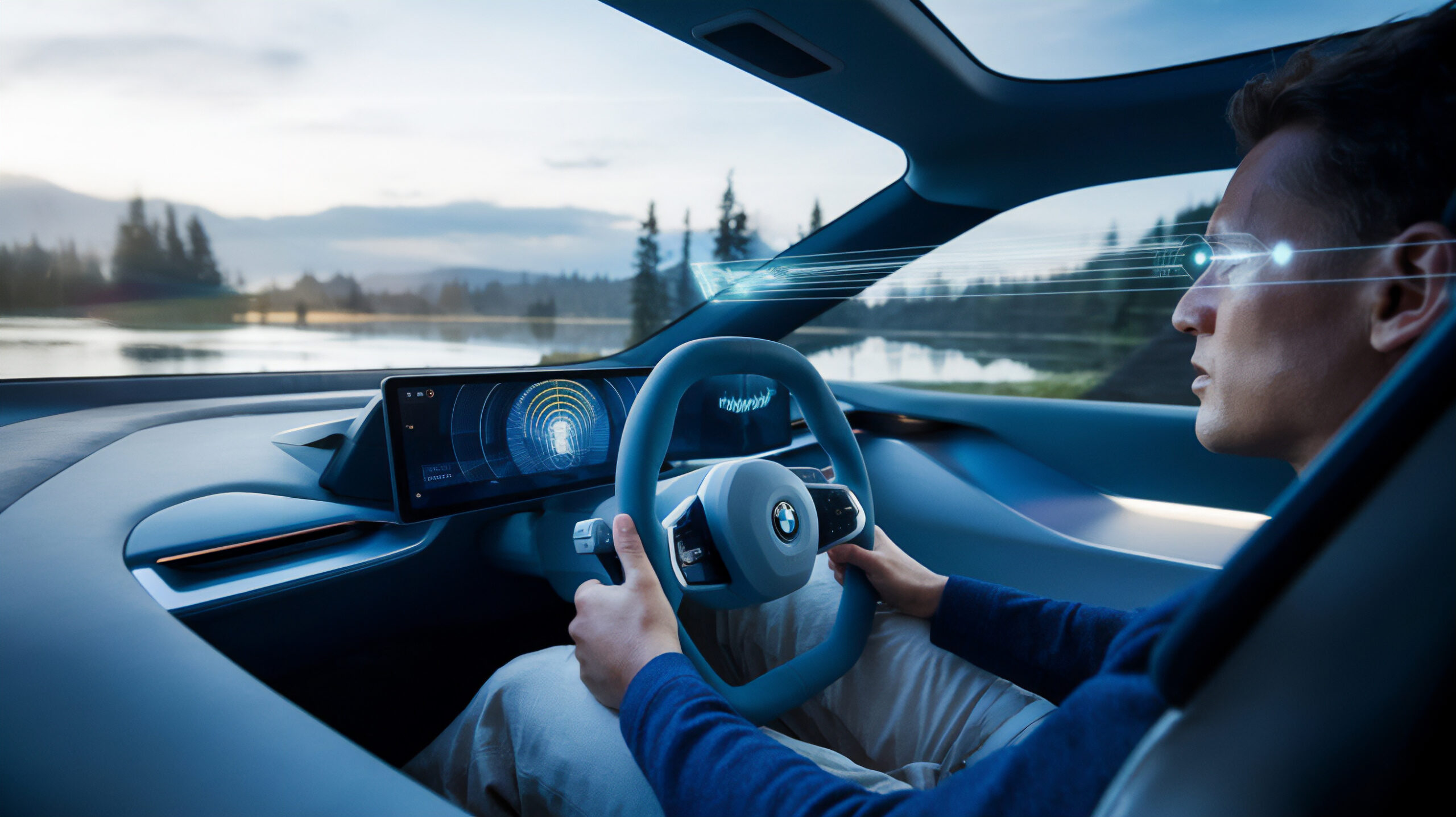
A patent filed with the German Patent and Trade Mark Office (DMPA) describes a method in which an interior sensor suite aimed at the driver’s face can determine the direction in which the car should turn and thus assist in the maneuvering required to achieve that with minimal obvious intejection.
How It Works
Existing driver attention systems form the basis of this patent thanks to hardware that monitors the face for signs of inattention, typically scanning for signs of health emergencies, smartphone use, and drowsiness. According to the patent, various sensors like these placed throughout the cabin could effectively map the trajectory of a driver’s gaze in order to determine where they want to steer the car. The system would process that information and combine it with data from external vehicle sensors (i.e.camera, radar, lidar) and information from the steering system (which would be steer-by-wire or, at the very least, electrically assisted). This cocktail of information would be used to predict whether the vehicle’s current trajectory is safest and make subtle adjustments as necessary.
Why It Matters
Whether we’re talking about navigating a tight alley, crossing a major intersection, changing/maintaining lanes, shuffling cars from street to garage, or making a U-turn, every driver has, at some point made a common driving mistake that causes physical damage, be it curb rash, a scraped fender, or a cracked bumper. Many have misjudged the distance from a nearby dumpster, turned too tightly or too widely into a side street, cut off a car they didn’t see in their blind spot, or misread their own turning circle. BMW’s patent aims not to take over driving duties completely (not yet). It doesn’t think it knows better than the average driver and it’s not a self-driving system. In isolation, this system must be considered a safeguard, a fallback; a buffer against substandard driving caused by inexperience and ignorance. By tracking the movements of the eye and how they correlate to subsequent steering inputs or lack thereof, machine learning may someday soon find a solution to self-driving. Although this is just a small part of that ultimate goal, ideas like this will form the basis of its realization.