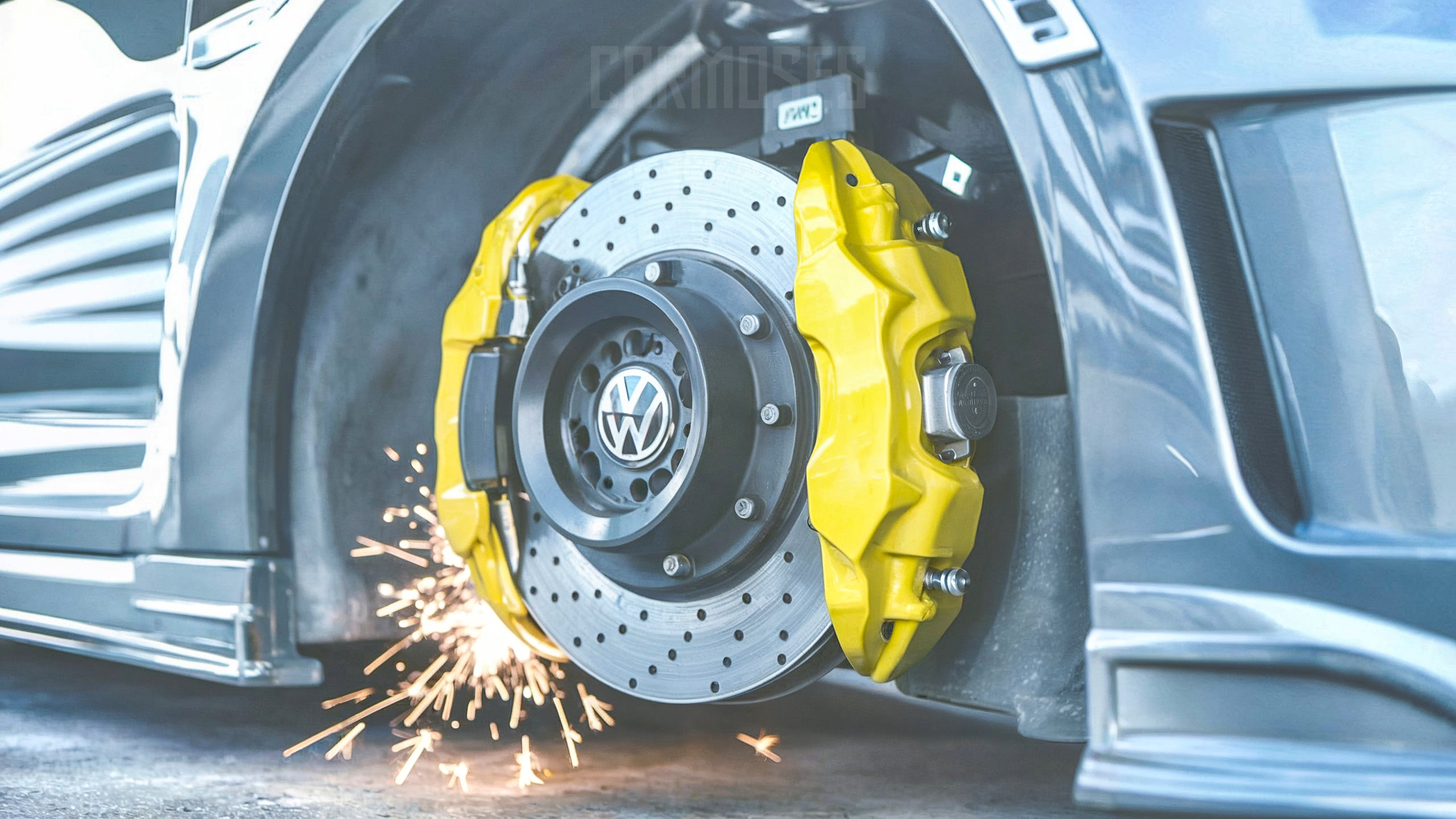
Volkswagen has filed a new patent for piezoelectric brakes with the German Patent and Trademark house. A material with piezoelectric properties has the ability to generate an electric charge when subjected to mechanical stress. When pressure is applied to such materials, the internal arrangement of its positive and negative charges shift, creating an external electrical field. With that in mind, VW’s patent can be described simply: brakes that generate electricity.
How It Works
Electric cars harvest energy under coasting and braking, but this recuperation only takes advantage of kinetic and heat energies; the energy released by the deformation of the discs is wasted. A brake disc experiences deformation on a minute level whenever heat and pressure are applied, and the more the brakes are used, the greater this heat and therefore the greater chance of the pressure causing deformation. To take advantage of this slight natural deformation, one of the materials in the braking system would be a piezoelectric or pyroelectric material, the latter being a material that generates electricity under changing thermal conditions. The rotor or brake pad could be made from a piezoelectric material, and the excess energy they create would be stored in a sort of battery pack for later deployment.
Why It Matters
The whole point of this innovation is to increase efficiency; saving as much energy as possible can contribute to lighter cars and smaller batteries. Another benefit of a piezoelectric material is that its effects can be reversed, which means that VW could use the application of an electrical field to create mechanical stress. This could mean making the pistons in the calipers smaller; using electricity to help slow the car. Volkswagen notes that this concept could also be applied to the tires, meaning that a rubber compound could be developed that interacts with the abrasion and friction caused by asphalt.
While the efficiency gains of piezoelectric brakes and tires are likely to be small, these are not the only areas where such a phenomenon can be taken advantage of, and many little improvements can contribute to a broadly cleaner vehicle.