
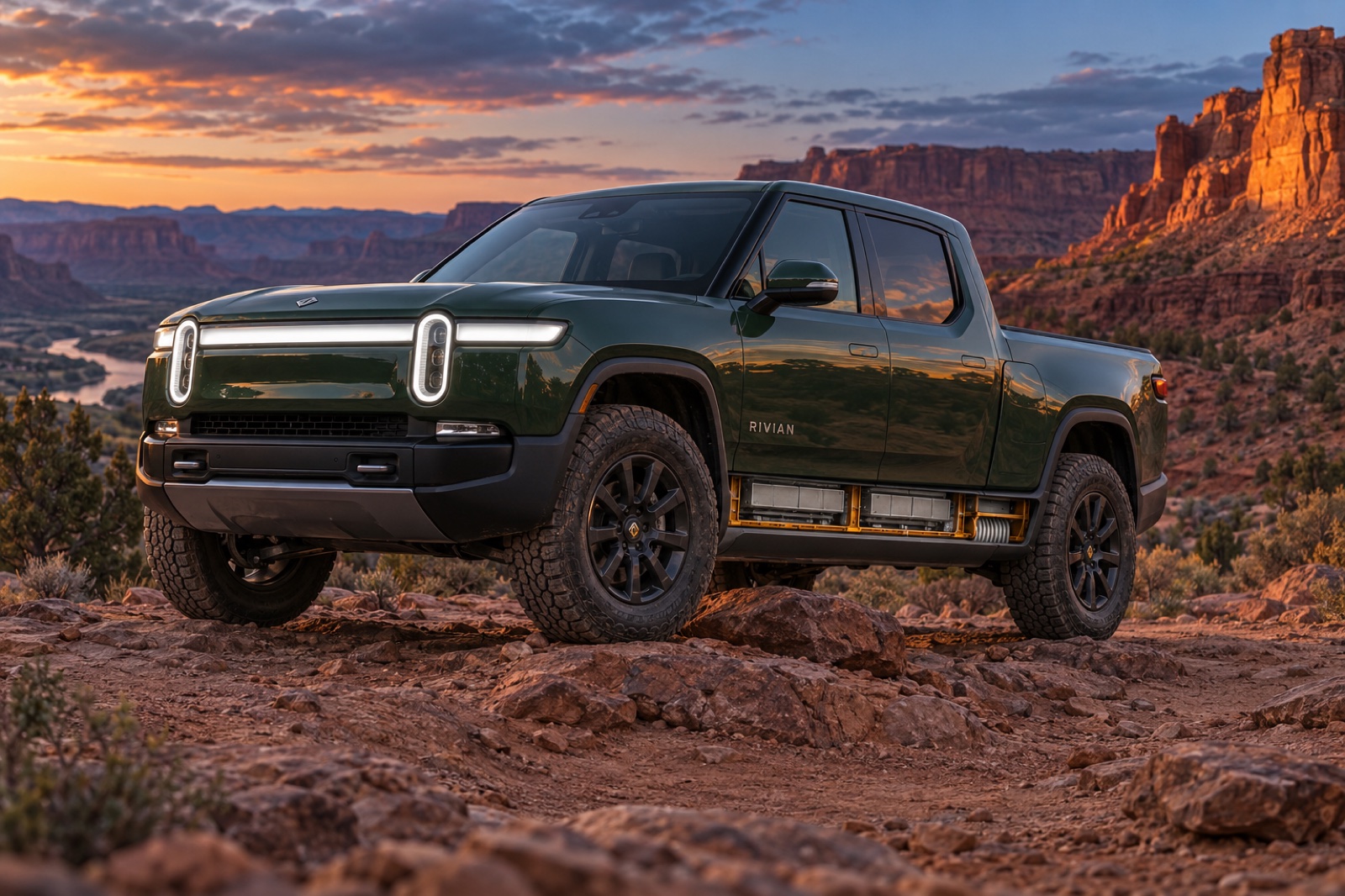
Rivian is proposing a way to make an electric truck’s battery protection stronger while leaving more ground clearance underneath for rocks. A redesigned lower tray puts most of the reinforcement at its ends, which could let it sit closer to the battery pack, according to a patent filing discovered by Carmoses. The idea is to free up space inside the assembly itself.
Rivian already disclosed a layered battery shield back in 2020. What’s different here is how the lower structure combines a ribbed center section, separately reinforced ends, and an outer skid plate that can be swapped out if it’s damaged.
No model is named in the filing. We used the R1T for the renders because it’s a pickup, and ground-strike protection is a natural fit for that kind of vehicle, not a confirmed link to this design. Rivian’s second-generation Quad trucks already come with a reinforced underbody shield.
Different Protection Along The Pack
There is nothing for the driver to activate. When an obstacle meets the underside, the proposed assembly resists the load through its shape and joined layers. Its lower tray closes the battery enclosure, with a separate skid plate attached underneath.
Across the center, the tray has a series of ribs. At the front, an added reinforcing plate covers another ribbed section. The rear starts with a flat floor, then gains a separate corrugated insert with a covering plate above it. Rivian calls that upper reinforcement a doubler, meaning an additional plate that strengthens the area beneath it.
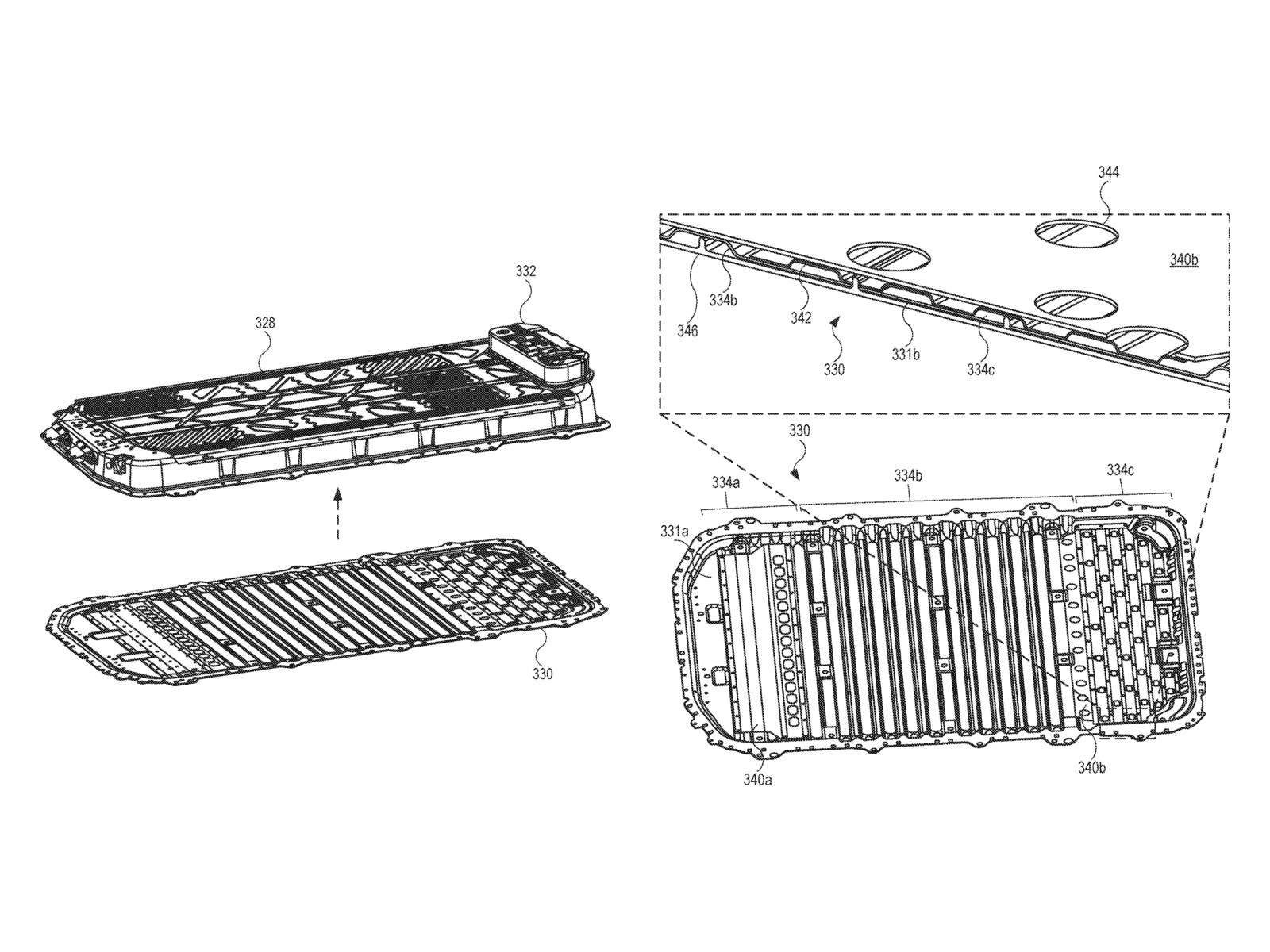
That unequal treatment follows an explicit assumption about impacts. For this design, Rivian anticipates lower-energy loads at the center, higher ones at the front and still higher ones at the rear. This is a proposed distribution of protection, not a claim that every rock strike follows the same pattern.
The ribs can also have different widths to adjust stiffness or provide room for fasteners. Other versions use attached ribs, a lattice or honeycomb in the central section. Those are alternative ways to stiffen that area, not additional layers piled into the same assembly.
The Reinforcement Stays Inside
The rear sandwich sits on the battery-facing side of the tray. Rivian places its welded joints there to shelter them from water, dust and salt, which could otherwise cause corrosion or weaken the connections.
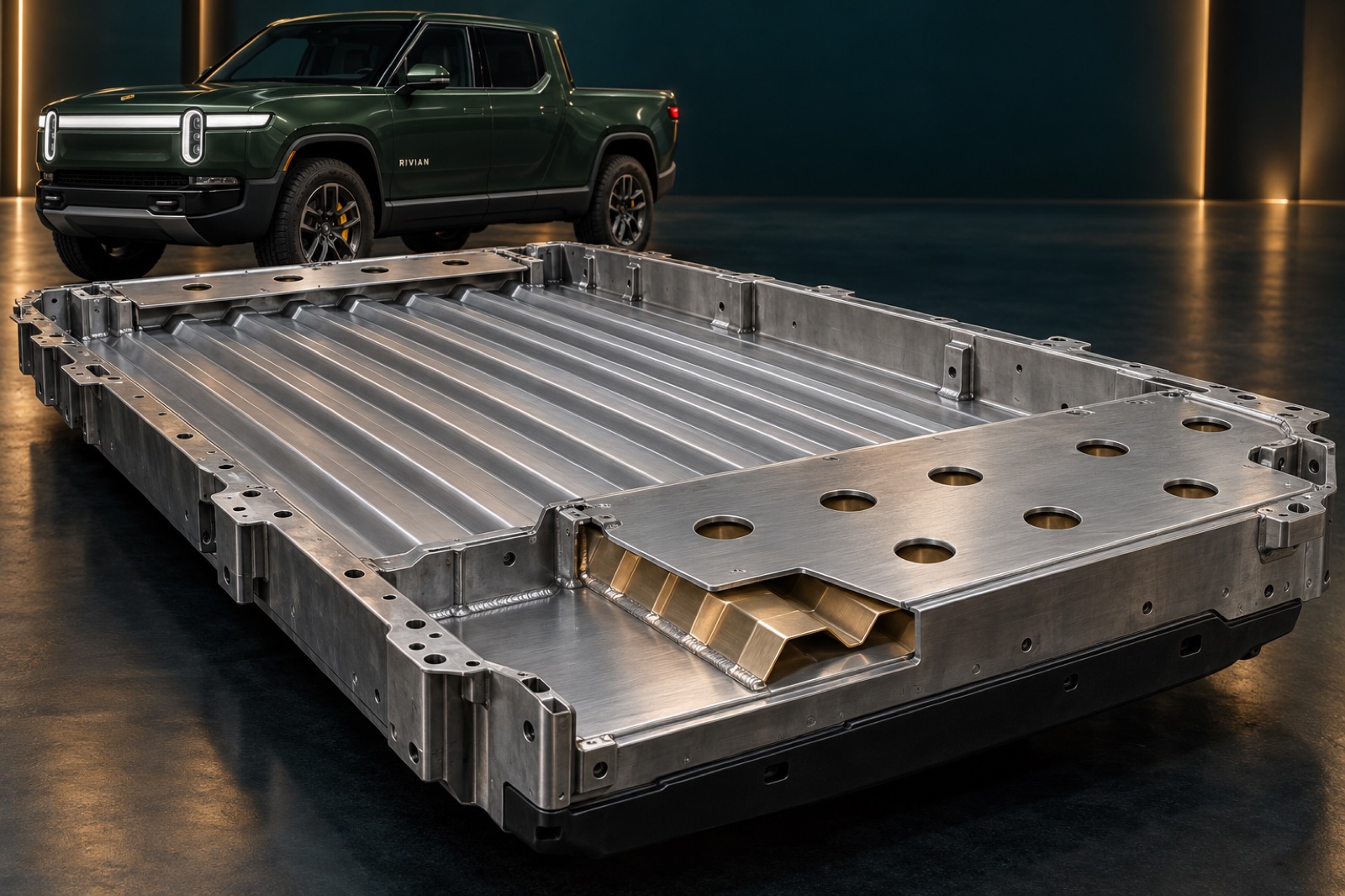
The round openings in the upper plate serve a manufacturing purpose. A welding tool can pass through them to join the buried corrugated insert to the floor beneath it. They are not described as cooling vents.
The covering plate can also join the tray’s surrounding wall, helping the structure retain its shape. Rivian says the increased stiffness would allow a smaller gap between the tray and the battery modules. Moving the protective structure closer to the cells could increase its distance from obstacles below.
That is the useful packaging argument, but its size remains unknown. Rivian gives no clearance improvement, impact-test results or weight comparison.
A Replaceable Outside Layer
The external skid plate has a separate job. It adds protection against ground strikes and can be removed and replaced if an impact damages it. Its smooth surface may also help aerodynamics, although Rivian gives no measured benefit.
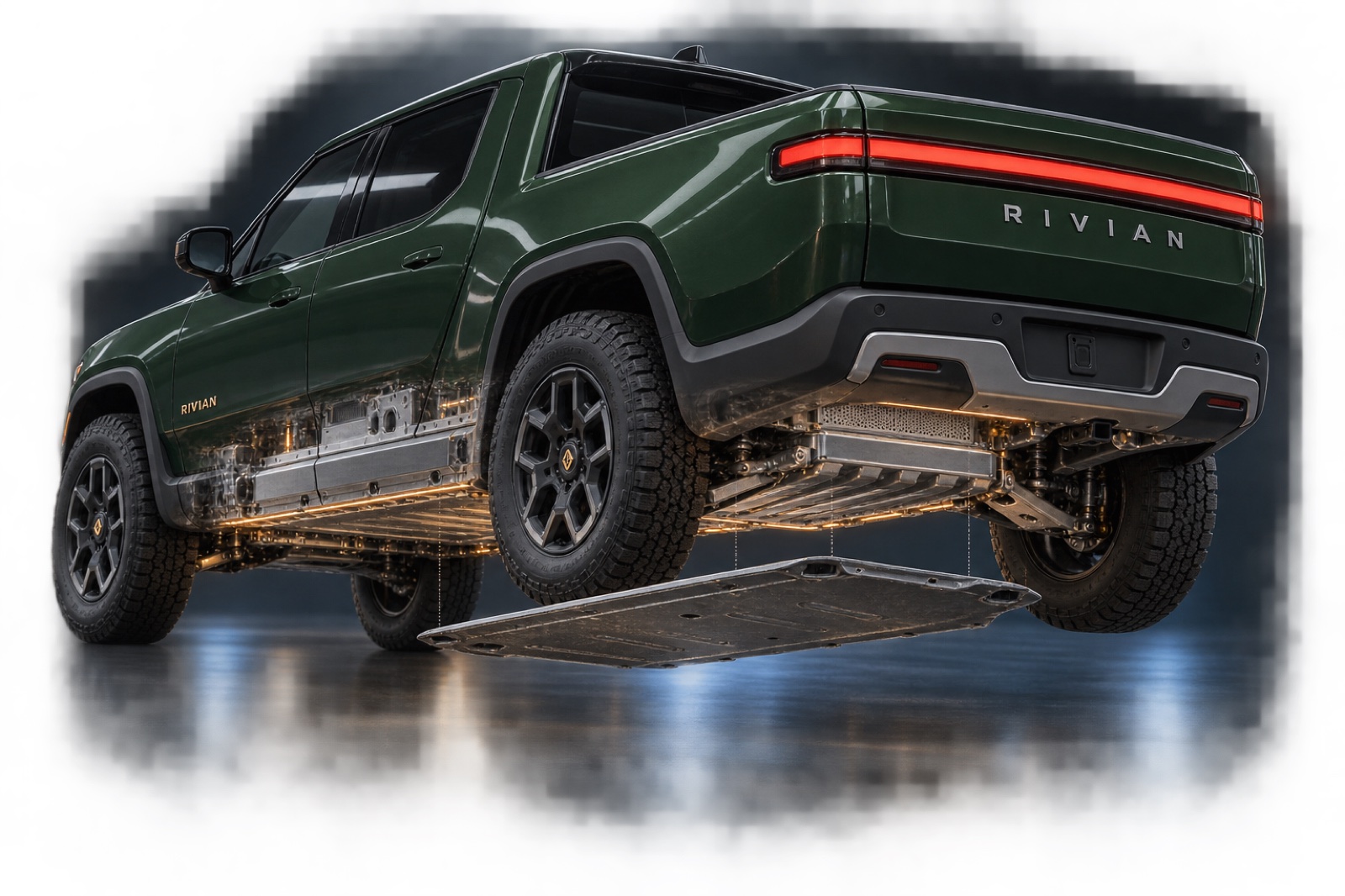
Repair costs will depend on both the replacement outer skid plate and the extent of any damage to the structure above it. There is no replacement price, service procedure or assurance that a damaged shield would leave the battery above it unharmed. The distinction between the removable outer plate and the welded internal reinforcement matters when considering what an impact might require replacing.
Ford has also proposed battery protection combining corrugated and flat sheets, including a version integrated into the enclosure tray. Rivian’s contribution is therefore a particular arrangement of familiar structural ideas. The practical question is whether concentrating them where loads are expected delivers useful protection within the space available.
A patent does not guarantee production. Even so, this is a sensible direction for an off-road EV because it addresses both impact resistance and the room that protection consumes. Demonstrating those benefits at a known weight and repair cost would make a stronger case than simply adding another layer beneath the battery.