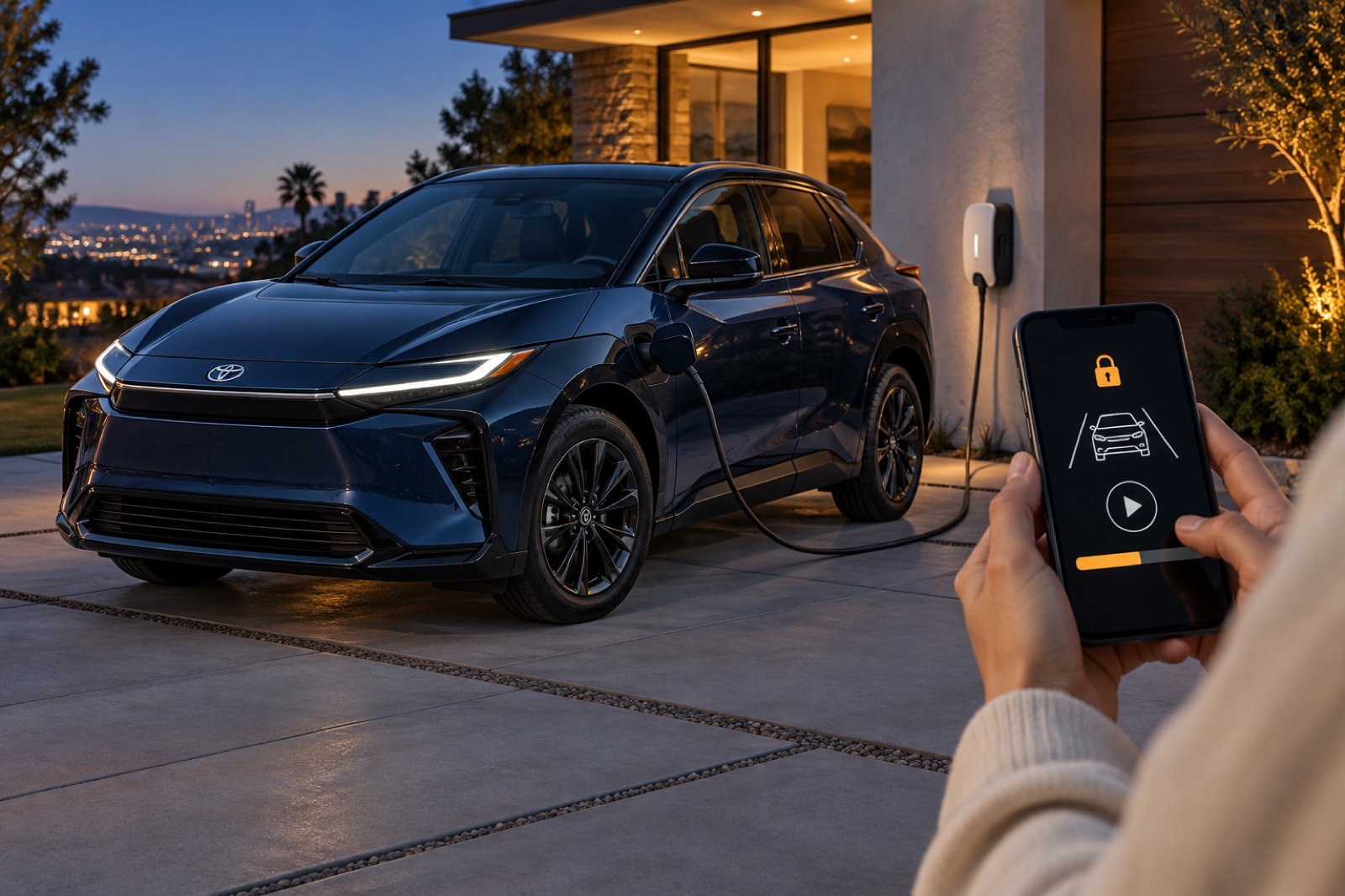
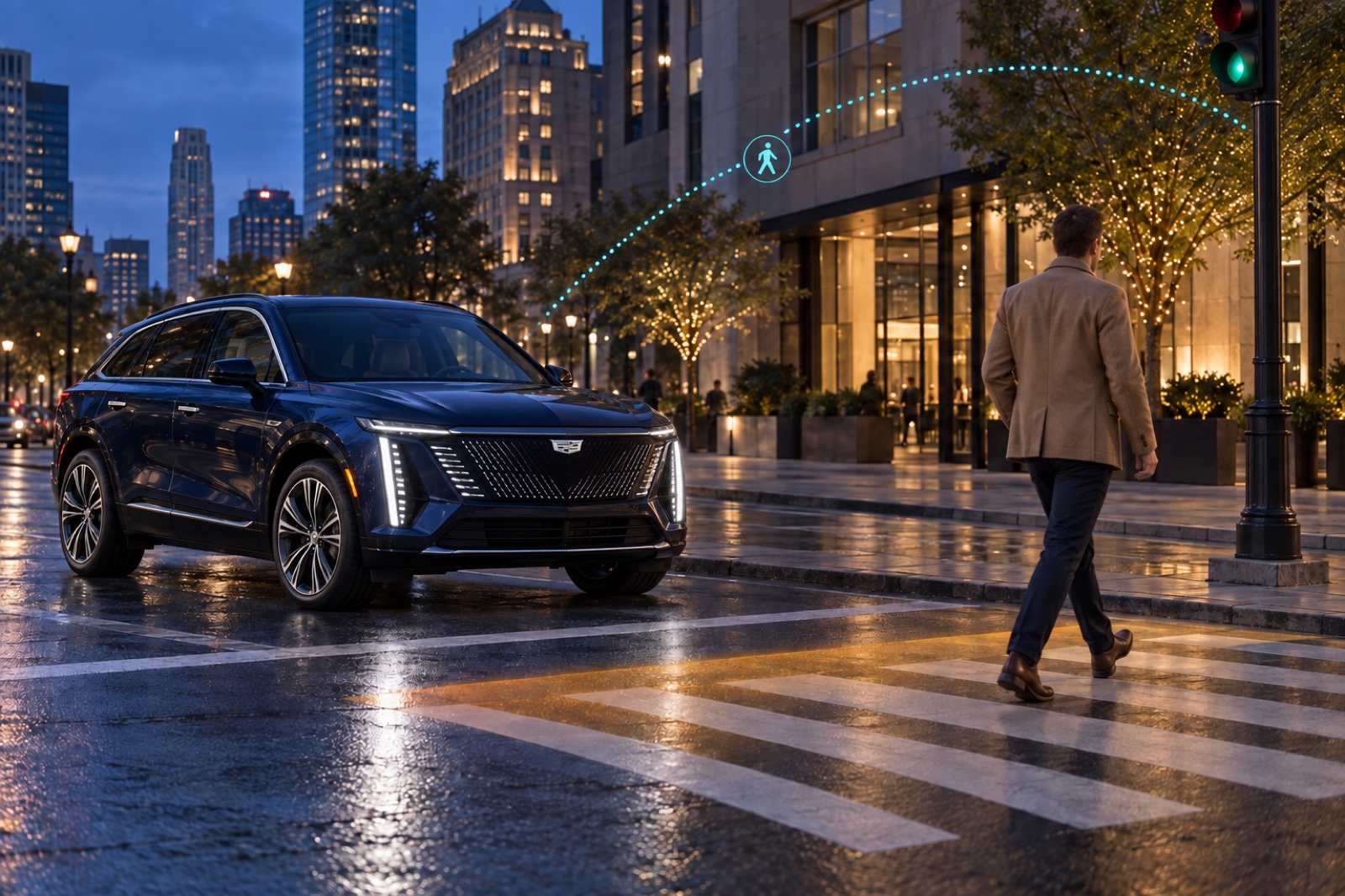
A green light doesn’t mean the crosswalk is empty. General Motors, Cadillac’s parent company, wants its automated cars to wait until pedestrians have fully cleared the road before pulling away. Better to make the safety decision before the car moves than to rely on a hard stop afterward.
The system combines wireless reports about nearby people with information about the intersection, according to a patent filing discovered by Carmoses. That information would help the car assess when someone has cleared its path. Its interesting contribution is the detail of when to intervene, including a virtual safety zone that expands with both the car’s speed and the pace of the person approaching its path.
The filing doesn’t name a specific model. We chose the Cadillac Lyriq for these renders because the electric SUV’s driver-assistance focus suits the urban crossing problem. Super Cruise is offered on the Lyriq, but this proposal isn’t an announced Lyriq feature or a promised addition to that system. And as ever, a patent doesn’t guarantee production.
Waiting For The Person, Not Just The Signal
At a signalized intersection, the proposed controller would use wireless information to identify the car’s lane, the immediate crosswalk and the location of a pedestrian. It would track when that person enters and leaves the crossing, then use those events to delay the automated driving system’s departure from a stop.
The driver could also receive a warning on the display. The intervention centers on automated departures, while the extent of any restrictions on a driver’s manual use of the accelerator to pull away from the light remains an open question.
There is a separate provision for combustion vehicles with automatic stop-start. Those could postpone restarting the engine while someone crosses. The distinction matters because delaying an engine restart and holding an electric vehicle stationary are different actions, even if both concern the same moment at the light.
A Safety Zone That Changes Size
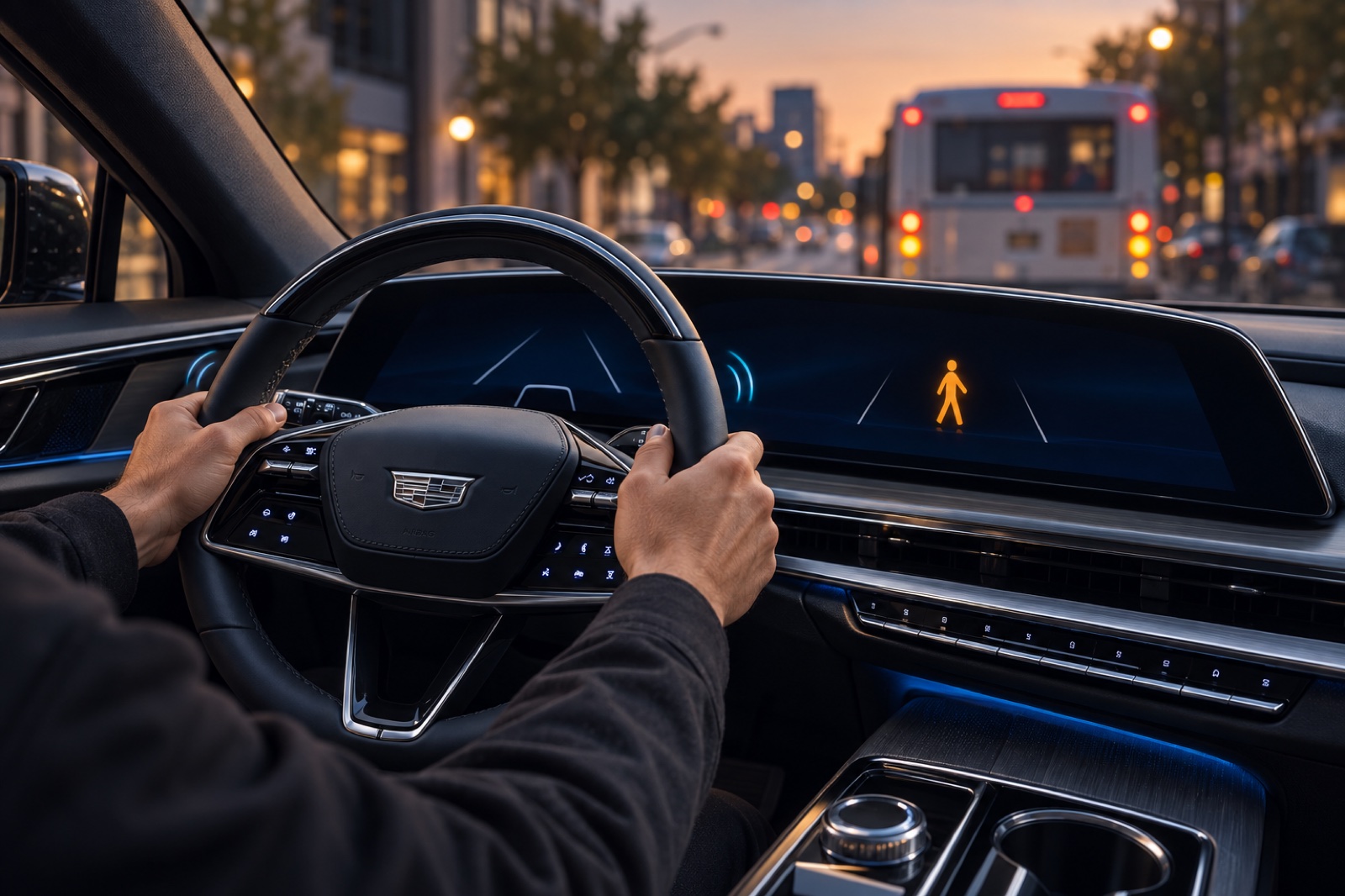
While the car is moving, wireless reports would provide a pedestrian’s or cyclist’s location, speed and direction. GM identifies obstructed views as one reason to use this information, including a person hidden from an onboard camera by a bus. Poor visibility and a sensor’s limited field of view are other stated problems.
The controller first distinguishes straight travel from a turn. For the straight route, it checks the relative direction of movement and the road user’s position before calculating where the two predicted paths intersect.
Around that meeting point, it creates a virtual “conflict box.” This is a software boundary, not a marking projected onto the pavement. The box can stretch along the road as vehicle speed rises and widen across it as the pedestrian or cyclist moves faster. Configurable time buffers determine the extra space.
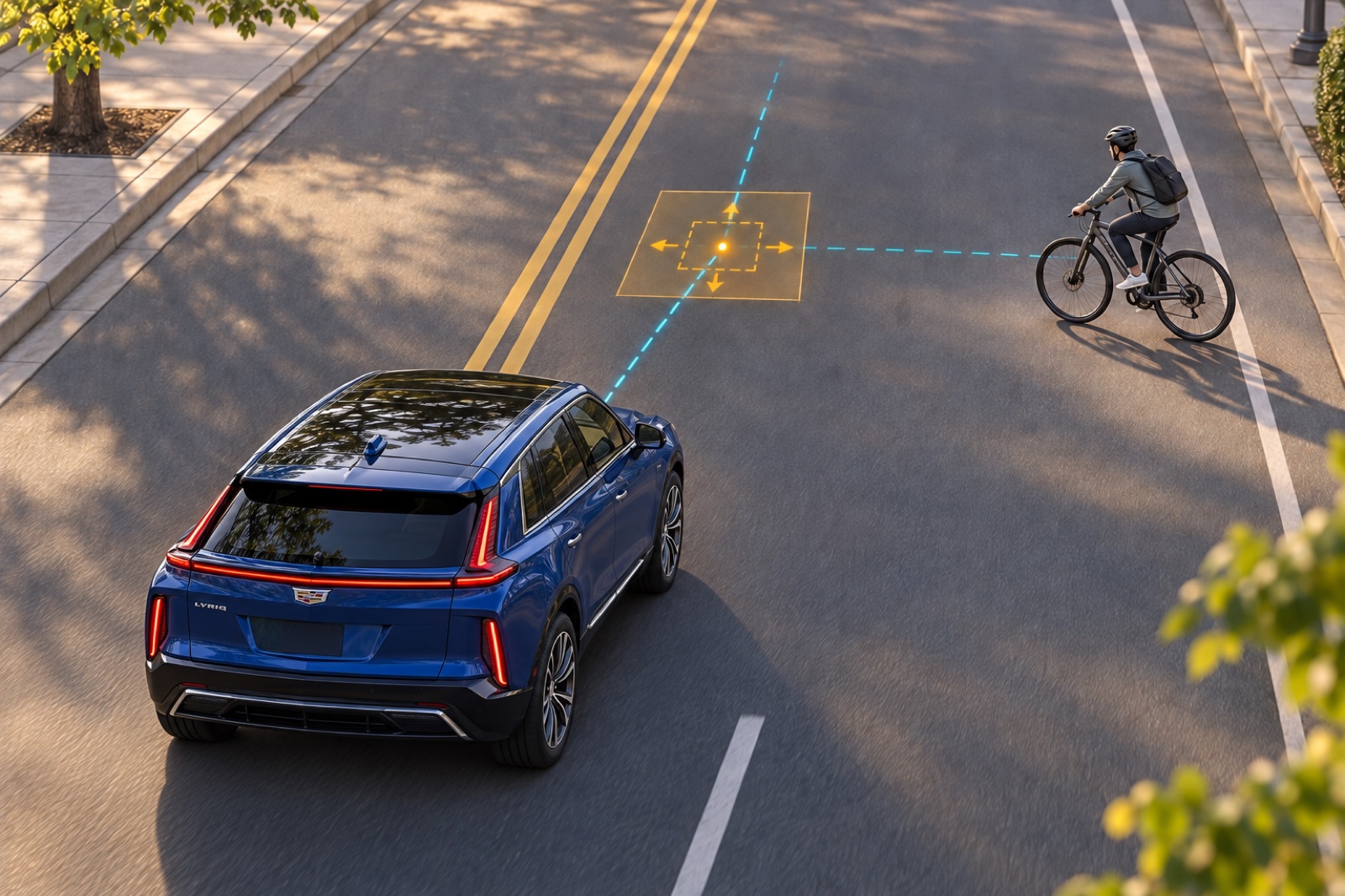
The crucial measurement runs from the front bumper to the nearest edge of that box. When this gap becomes smaller than the car’s stopping distance, the system identifies potential imminent contact and requests preventive action. It therefore evaluates the approach to a buffered region rather than only the distance to a person’s current position.
Turning receives separate treatment. Vehicle speed and yaw rate, the rate at which the car rotates, establish a predicted curved path. The screening area follows that curve, while steering-wheel angle or a turn signal can help distinguish a turn from a lane change.
Possible responses include slowing or stopping, changing the vehicle’s trajectory, displaying a warning and vibrating the steering wheel. The proposal accommodates driver assistance as well as fully automated driving.
The Missing Part Is Outside The Car
Cadillac already describes an Intersection Automatic Emergency Braking feature that uses a camera to monitor crossing vehicles. Its support guidance explicitly separates that function from pedestrian and bicyclist braking. GM’s wireless proposal addresses a different limitation by obtaining information about people who may be outside the car’s available view.
The messages could include personal safety reports or shared sensor information. Vehicle-to-everything communication is one option, but other wireless protocols are allowed. There is no blanket requirement here that every pedestrian carry a particular smartphone or install an app.
That flexibility leaves a substantial unanswered question. How consistently the car would receive those reports on real streets remains unresolved, along with the freshness and accuracy it would need and its response when that information is missing. It supplies no demonstrated collision-reduction results.
The crosswalk hold is the most persuasive part of this proposal because it addresses a specific decision before movement begins. It merits development, but credible safety gains will require evidence that the car receives dependable information about the people crossing ahead.