Toyota is proposing a car that can withdraw access to adaptive cruise control after a software update, then restore it only when the driver finishes a refresher lesson. Familiarity with the old controls would not necessarily be enough to keep using the revised system.
The idea appears in a patent filing discovered by Carmoses covering access to driver-assistance features. Individual driving aids would stay unavailable until their associated instruction was complete. Adaptive cruise control, lane tracing and lane-change assistance are among the examples, putting everyday conveniences within reach of the proposed restriction.
Toyota’s stated concern is that controls and displays differ between models, leaving drivers liable to activate assistance accidentally or believe it is working when it is not. The proposed remedy makes learning those controls a condition of using them.
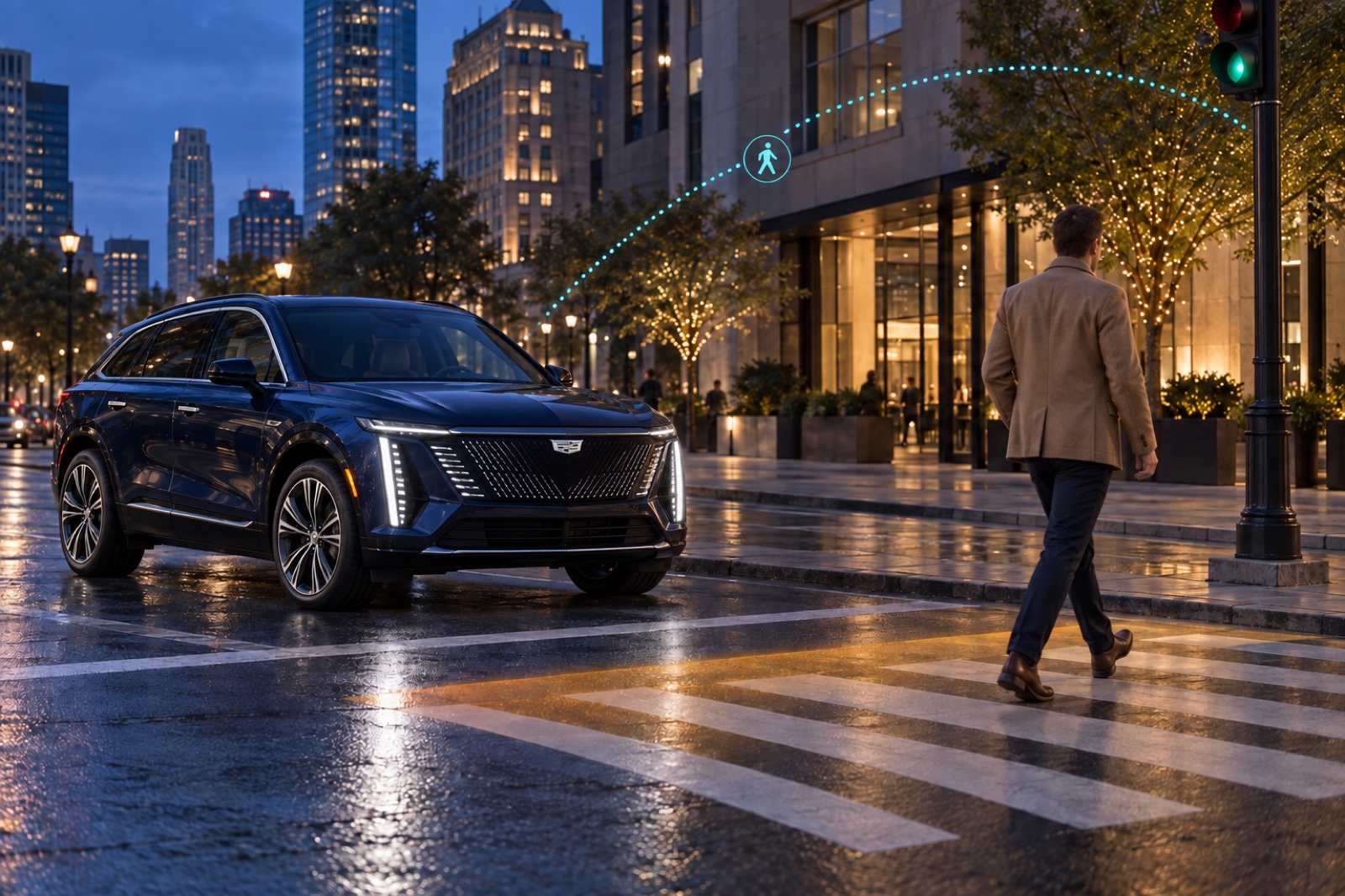
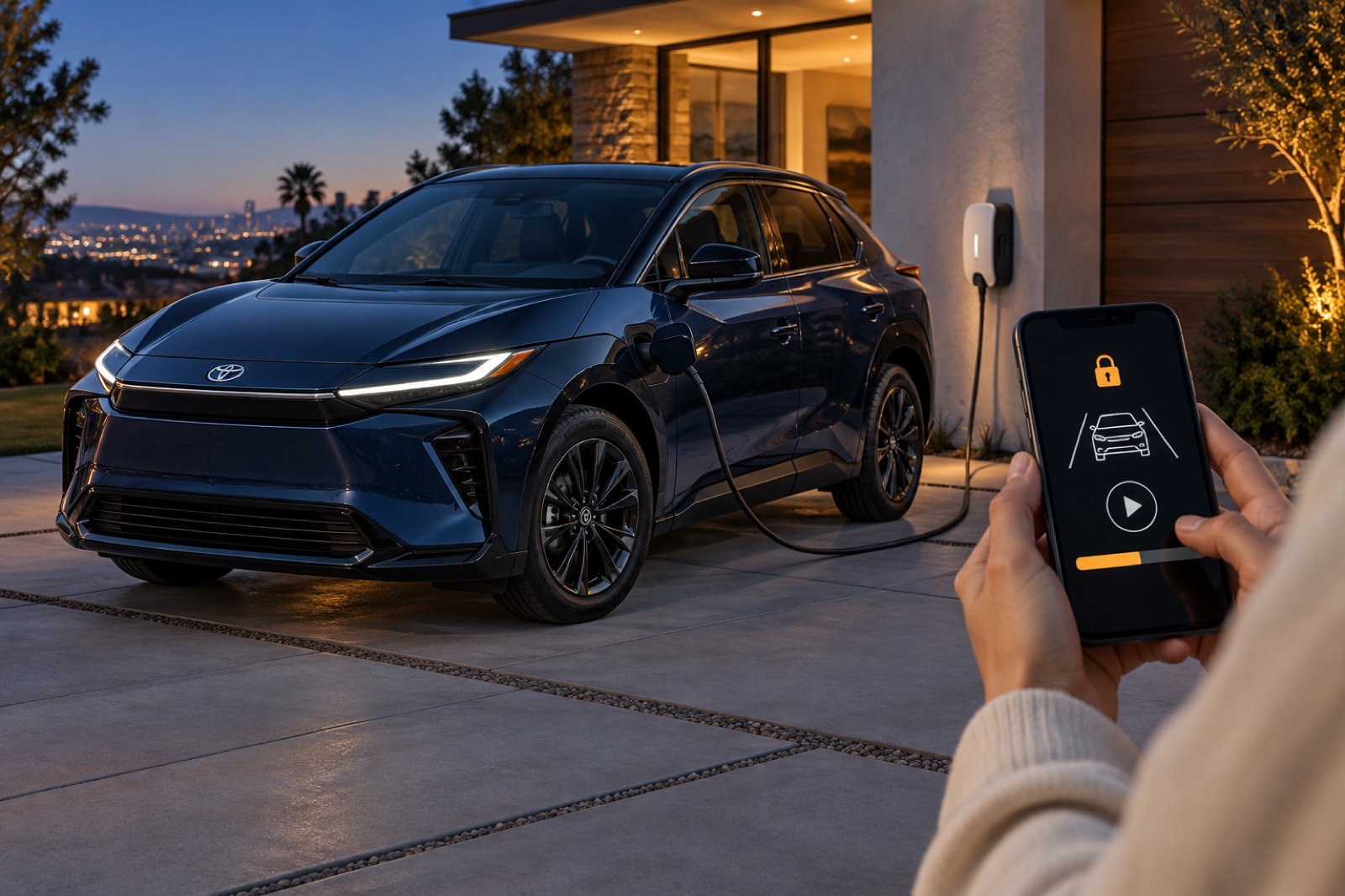
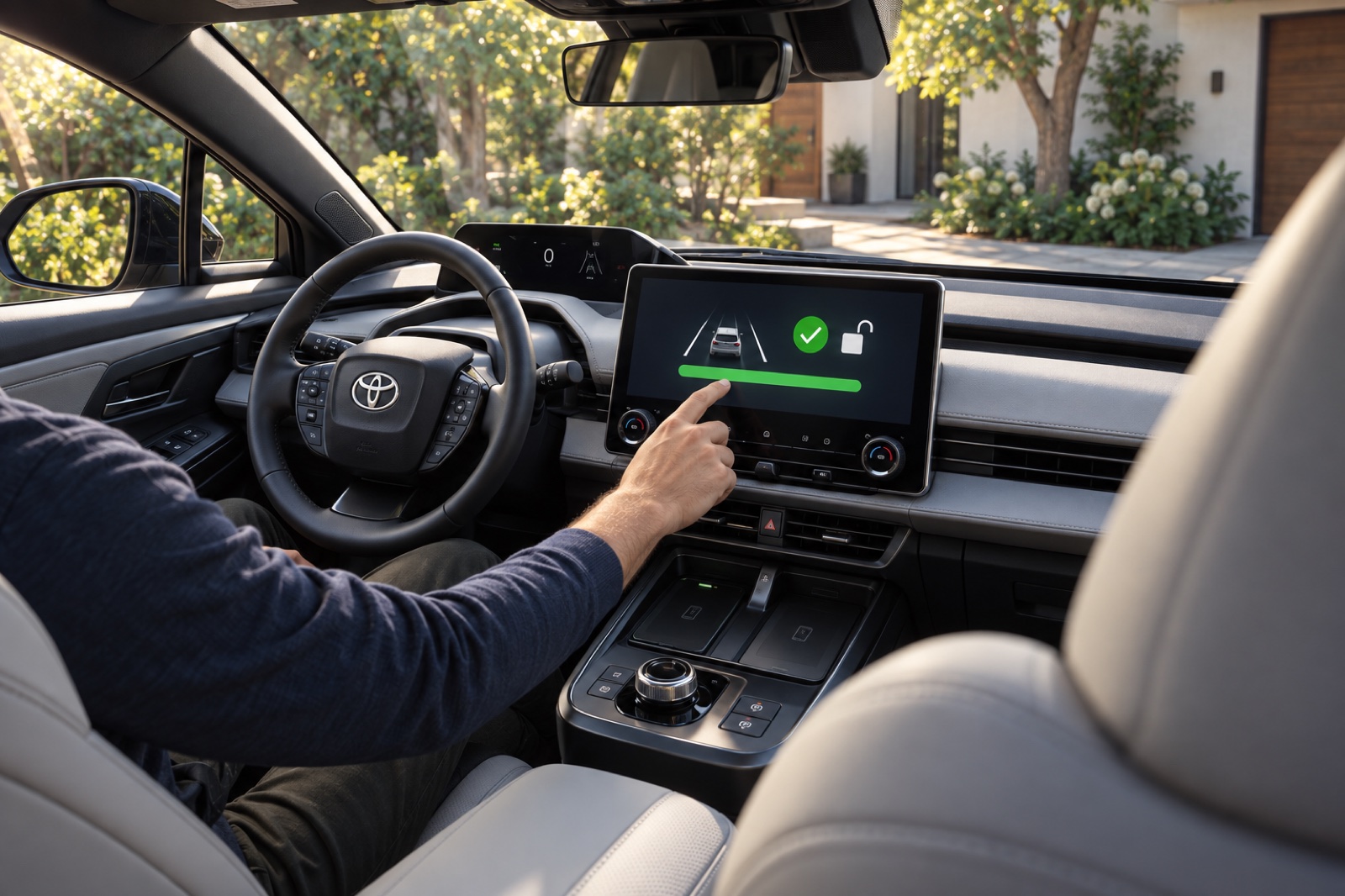
No model is named in the filing. We chose the Toyota bZ Limited for these renders because its electric powertrain, adaptive cruise control and lane-tracing assistance suit the proposed charging and training routines. The screen graphics illustrate the proposal and don’t represent a production interface.
An Update Can Change Your Access
When a driver presses a button, touches the screen or otherwise requests an assistance feature, the car checks the relevant training record. Completion permits access, while an unfinished course triggers an alert and can bring up recommended instruction.
That permission need not last for the life of the vehicle. After installing an update, the system can check whether it changes activation, deactivation, behavior, displayed information or training content. A qualifying change can lock the affected function again, even if the driver previously completed its course.
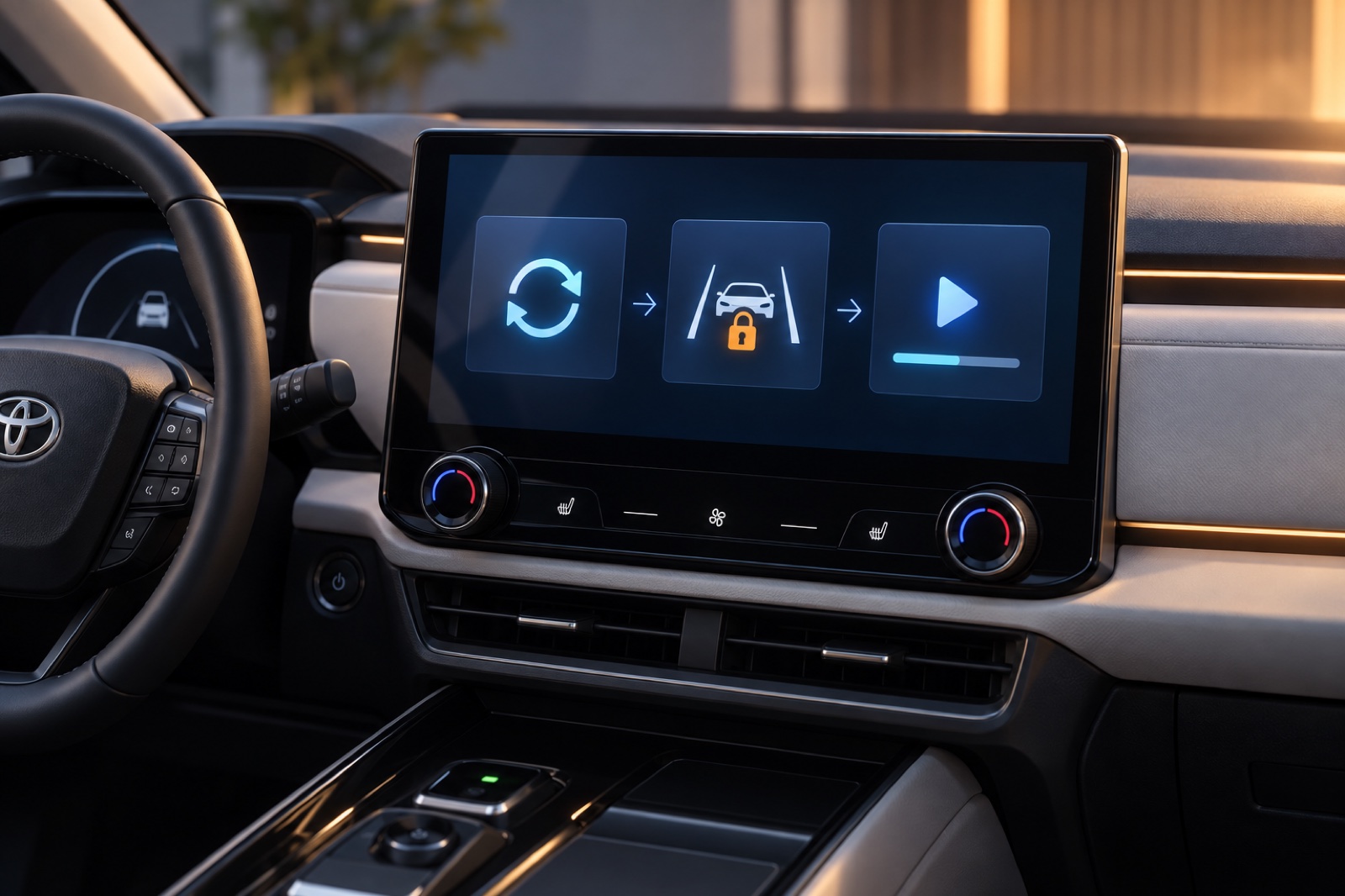
The driver would receive a warning about the update and lost access, with an option to display the new training material. A change invisible to the person driving, such as revised data compression, can leave the existing permission intact.
There is also provision for identifying who is behind the wheel through a selected profile, facial recognition or biometric information such as fingerprints. Records can belong to that person. In a shared household car, that could mean one driver has completed the lane-change course while another still cannot activate the feature.
The Lesson Has Its Own Conditions
Instruction could run on the vehicle display or a connected phone, using video and questions. Correct answers are one possible measure of completion. Another accepts at least 95% of the material having been displayed. That is a viewing threshold, not a required quiz score.
Interrupted progress can be saved, with access remaining locked until the course is finished. Completion then updates the stored record and makes the corresponding driving aid available.
Before starting, the car can check whether conditions suit a lesson. Examples include being stationary, in Park, connected to a charger or stopped away from active traffic. These are possible conditions, rather than a requirement to satisfy every one simultaneously.
The energy calculation can account for running the display, heating or cooling the cabin, and reaching a charging station afterward. One example preserves a battery reserve of 5% to 10% after the lesson. Insufficient charge can prevent training from starting and prompt directions to a charger.
A driver could therefore need instruction to regain an assistance feature, yet first need somewhere suitable to stop and enough energy to complete it. No lesson duration is specified, so the size of that interruption remains unknown.
Completion Is An Imperfect Measure
Toyota has previously proposed teaching drivers about automated-driving limitations through simulated unusual driving events. The approach here makes recorded completion a prerequisite for access and provides a way to revisit that permission after changes.
There is evidence that instruction helps, although its limits matter. An Insurance Institute for Highway Safety study using Mercedes-Benz E-Class display videos found that training helped participants recognize when lane centering was inactive. Even trained participants often could not explain why it had stopped working.
Toyota provides no measured safety benefit for this proposal, and does not explain how guest drivers or failed identity checks would be handled. A patent does not guarantee production.
Requiring a refresher after meaningful changes to driving assistance is defensible. Accepting content displayed as proof of learning is the weak point. Before making access conditional on education, Toyota should require evidence that the driver understands when the feature can help and when it cannot.